Attachment styles aren't fixed: here's how to change
Defining yourself by a single label like anxious attachment incinerates self-esteem and traps you in shame.
Clinical psychologist Perpetua Neo argues that the current discourse around attachment styles has become a destructive identity trap rather than a tool for growth. When individuals label themselves as "hard work" or fundamentally broken based on these categories, they inadvertently reinforce the very behaviors they seek to change. This rigid self-definition prevents the fluidity required for healing, turning a descriptive framework into a permanent sentence of inadequacy.
This article dismantles the myth that your childhood bond dictates an unchangeable future, exposing how insecure attachment patterns drive repetitive relationship cycles through self-fulfilling prophecies. You will learn how the 2026 Digital Disconnection Trend exacerbates these issues by encouraging superficial connections over genuine vulnerability, leaving millions feeling increasingly isolated despite constant connectivity. We explore concrete methods for reframing attachment identity, moving beyond static labels to regulate emotions and build secure, interdependent partnerships. By shifting focus from what is wrong with you to how you adapt, you can stop letting others get their way simply to compensate for perceived flaws.
The Role of Attachment Styles in Shaping Adult Relationship Dynamics
Defining the Four Attachment Styles from Bowlby to Ainsworth
John Bowlby's 1969 publication established attachment as the intimate infant-caregiver bond shaping adult survival strategies. This framework categorizes relational behaviors into four distinct patterns based on early environmental adaptation. Mary Ainsworth later operationalized these concepts through her Strange Situation experiments, identifying secure, anxious, and avoidant responses in infants that predict adult dynamics.
| Characteristic | Secure attachment | Anxious attachment | Avoidant attachment | Fearful-avoidant attachment |
|---|---|---|---|---|
| Prevalence | 58% | N/A | 20% | N/A |
| Core Dynamic | Trusts others; accepts love easily. | Seeks validation; fears abandonment. | Fears intimacy; prioritizes independence. | Craves affection but avoids it. |
| Risk Factor | Low | High distress | Rejection of partners | 55% correlation with dissociation |
Secure attachment represents the majority, allowing individuals to form loving relationships with relative ease. Anxious attachment manifests as a deep fear of abandonment, driving constant worry that partners will leave. Those with avoidant attachment struggle to trust others, often believing their emotional needs cannot be met within a relationship. The most complex pattern, fearful-avoidant attachment, combines these conflicting impulses, causing individuals to desperately crave affection while simultaneously attempting to avoid it at all costs. Research links this disorganized style to a 55% correlation with dissociation symptoms, indicating severe psychological costs. Avoidant individuals specifically reject partners when minor problems arise due to an inherent fear of intimacy. Understanding these definitions matters because relationship quality directly impacts physical health metrics like blood pressure and heart rate. Recognizing these patterns prevents individuals from viewing their wiring as a permanent defect rather than a mutable survival response. Self-awareness allows operators of their own psychology to break toxic cycles before they calcify into permanent relational failures.
Secure attachment enables cognitive reappraisal by framing stressors as manageable rather than threatening through established trust networks. Individuals with this style trust others and be trusted, love and accept love, and become close to others with relative ease, creating a buffer against emotional dysregulation. This internal stability allows for the reinterpretation of negative events without triggering defensive shutdowns or panic responses. Psychological safety emerges when partners feel confident that vulnerability will not result in rejection or exploitation. Secure individuals use this safety to communicate needs directly, whereas those with anxious attachment often misinterpret neutral cues as signs of impending abandonment. The constant vigilance required by insecure styles depletes cognitive resources needed for objective problem-solving during conflict.
Adolescents demonstrating secure attachment styles show notably lower rates of self-stigmatization when seeking help, indicating that early relational templates dictate adult coping mechanisms. The inability to reappraise situations objectively forces insecure individuals into rigid behavioral loops that reinforce their fears. Breaking these cycles requires recognizing that automatic reactions are survival strategies, not permanent personality defects. Focus on intentional choice over deterministic labeling to restore agency in relationship dynamics.
Anxious vs Avoidant Attachment: Contrasting Trust and Intimacy Barriers
Adult attachment operates on two dimensional scales measuring anxiety and avoidance to predict relational stability. Avoidant (Dismissive) Attachment These partners often reject others when small problems arise to maintain self-sufficiency. Conversely, anxious individuals employ hyperactivating strategies that intensify distress to secure validation from partners who may perceive this demand as suffocating.
Mary Ainsworth first described these three infant attachment styles through her Strange Situation experiments, establishing the behavioral templates observed in adults today. The divergence creates a specific tension where one partner chases closeness while the other flees it. This pursuit-distance flexible prevents the establishment of secure bonds because neither party feels safe enough to lower defenses. Jemma's personal transformation documents a shift from an anxious-avoidant style to a secure one by intentionally giving people space. Such behavioral changes prove that adult attachment patterns are not fixed personality defects but flexible responses. The cost of maintaining insecure patterns includes a 40% higher odds of adult anxiety diagnosis linked to insecure attachment. Operators of their own relationships must recognize these autopilot settings to break the cycle before physiological stress markers like blood pressure elevate permanently. Intentional choices replace shame as the primary mechanism for regulating nervous system responses during conflict.
How Insecure Attachment Patterns Drive Repetitive Relationship Cycles
Repetition Compulsion and the Nervous System Mistaking Chaos for Passion
Repetition compulsion drives the brain to unconsciously select partners who replicate early trauma storylines. This neurological mechanism misinterprets physiological arousal from danger as romantic passion. Secure relationships feel unbearably boring to trauma-shaped individuals because the nervous system equates safety with unpredictability. Chaos validates existence while stability triggers dissociation.
| Stimulus Type | Nervous System Response | Perceived Attraction |
|---|---|---|
| High Conflict | Adrenaline spike | Intense passion |
| Secure Consistency | Boredom signal | Low interest |
Individuals with insecure styles often prioritize independence to the exclusion of deep emotional intimacy. They reject partners when small problems arise to maintain familiar distance. This avoidant In 2026, digital disconnection trends exacerbate this by allowing hearts and minds to remain connected to screens rather than forming deep bonds with one person. Such digital behaviors keep multiple partners at arm's length. The strategy mimics the safety of emotional unavailability.
The drawback of this pattern is a measurable inability to recognize healthy love without external intervention. Breaking the cycle requires deliberate exposure to non-threatening environments where the brain learns that calm does not equal neglect. Secure partners provide the consistency needed to rewire these automatic threat responses over time. Without this intentional recalibration, the individual remains trapped seeking the familiar pain of past failures.
Training the Nervous System to Accept Secure Partners Through Digital Disconnection
Nervous systems conditioned by trauma often reject stable partners because they mistake chaos for passion. Retraining this biological response requires deliberate exposure to secure consistency while removing digital buffers that enable emotional distance. In 2026, a noted trend involves digital disconnection. This fragmentation prevents the sustained proximity needed to recalibrate threat detection algorithms in the brain. Operators must treat relationship building like protocol migration: gradual, monitored, and resistant to rollback triggers.
- Identify avoidant patterns where independence excludes deep emotional intimacy.
- Schedule offline interactions with securely attached peers to normalize low-drama environments.
- Reject the urge to interpret boredom as a lack of compatibility.
Some people may view securely attached individuals as boring, especially if they have had difficult childhoods, causing their nervous systems to misfire during calm moments. The constraint of this approach is the initial discomfort; the brain perceives safety as a threat until new neural pathways solidify. Unlike avoidant (dismissive) attachment
| Action | Immediate Feeling | Long-Term Outcome |
|---|---|---|
| Digital Disconnect | Anxiety spike | Reduced dissociation |
| Secure Exposure | Perceived boredom | Nervous system regulation |
Breaking repetitive cycles hinges on staying present when the urge to flee arises. Dr. Amir Levine advises setting realistic timing for interactions to reduce excessive self-reliance without overwhelming the system. Failure returns individuals to toxic dynamics where shame makes them prey for exploitative personalities. Success means redefining legitimate needs rather than suppressing them to accommodate others.
How Self-Labeling as Anxious Attachment Makes You Prey for Toxic Dark Personality Types
Defining oneself solely by a bad attachment style incinerates self-esteem and signals deficiency to exploitative partners. This internal narrative of being "hard work" compels individuals to overextend in relationships. Toxic actors immediately detect the resulting power imbalance. The shame spiral functions as a vulnerability radar. It draws predators who specialize in gaslighting those who feel inherently broken. Such dynamics prevent the establishment of psychological safety. The labeled individual accepts abuse as penance for their perceived emotional flaws.
| Self-Perception | Partner Response | Outcome |
|---|---|---|
| Deficient label | Exploitation | Increased anxiety |
| Legitimate needs | Boundary respect | Secure bonding |
Treating attachment categories as fixed identities justifies maladaptive behavior rather than correcting it. The repetition compulsion thrives when people believe their wiring excuses poor partner selection or lack of boundaries. Reframing these patterns requires viewing them as automatic reactions open to modification, not permanent character defects. Individuals must stop accepting the premise that they are difficult people deserving of mistreatment. Script direct requests for needs instead of apologizing for having them. Changing the internal story from "I am too needy" to "I require consistency" disrupts the cycle of seeking validation from unavailable partners. This shift removes the scent of shame that attracts dark personality types.
Practical Strategies for Reframing Attachment Identity and Regulating Emotions
Neuroplasticity as the Mechanism for Rewiring Attachment Pathways
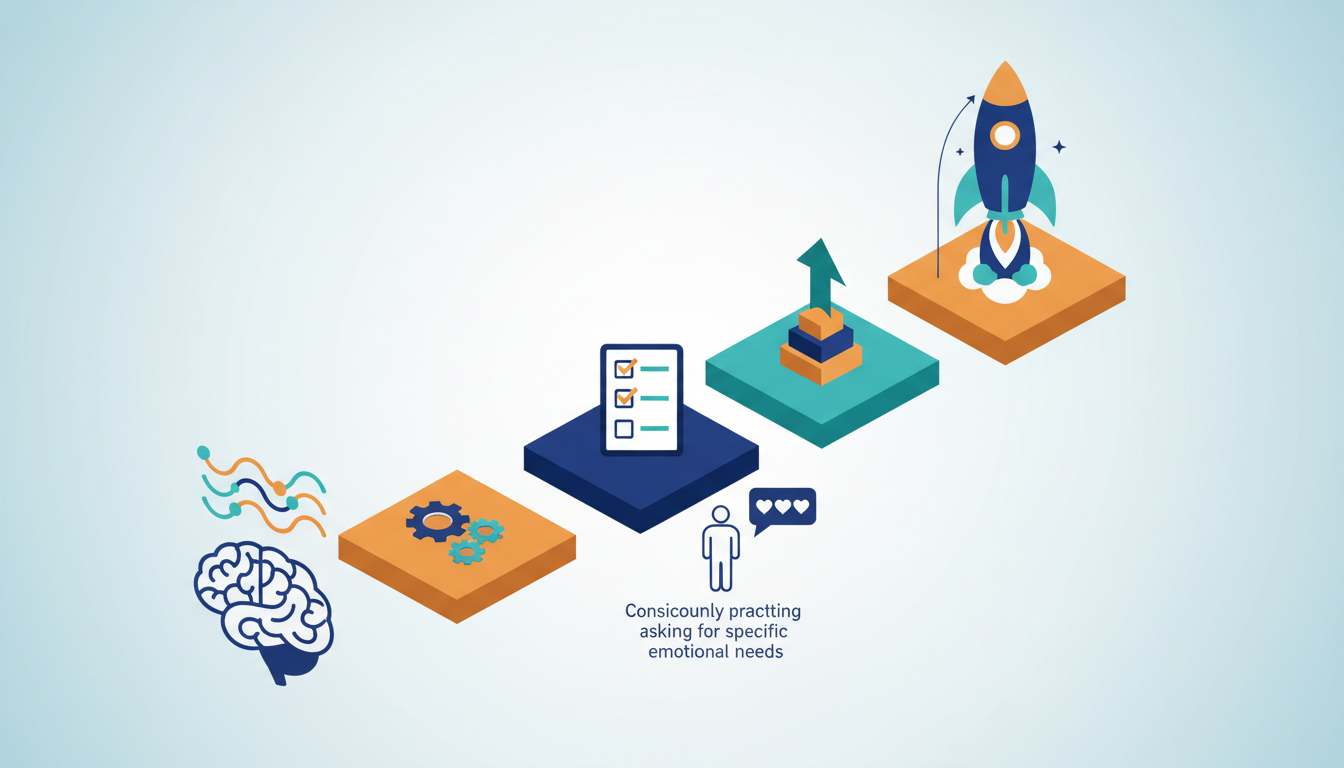
Neuroplasticity functions as the biological capacity to rig brain pathways to our benefit through deliberate intervention rather than passive time. This mechanism allows individuals to override automatic survival responses by engaging in conscious awareness and effortful practice.
- Identify the specific hyperactivating strategies or deactivating strategies currently driving relationship conflict.
- Interrupt the autonomic response with three deep breaths to regain cortical control before reacting.
- Script and vocalize needs explicitly to reinforce new neural connections associated with safety.
The limitation is that financial, time, or personal constraints often block access to professional guidance required for complex rewiring.
Three deep proper breaths interrupt the autonomic firing of hyperactivating strategies before an individual scripts their relationship needs.
- Inhale slowly to halt the adrenaline spike driving obsessive thought loops.
- Exhale fully to disengage the deactivating strategies that compel emotional withdrawal.
- Vocalize a specific request only after cortical control returns.
This sequence uses neuroplasticity to rewire the brain pathways responsible for threat detection. The mechanism fails if the operator skips the physiological pause, allowing shame to dictate the interaction. A case subject named Nadia successfully healed by reframing her narrative from being "too needy" to having legitimate requirements. She utilized this breathing protocol to stop pursuing incompatible partners and instead articulate her boundaries. Often prevent access to professional guidance during this recalibration process. Without external feedback, individuals may misinterpret the silence following their request as rejection rather than processing time.
Operators must recognize that psychological safety precedes any successful negotiation of intimacy. The cost of skipping this regulation step is the reinforcement of toxic cycles where needs remain unmet.
Validating Change Through EFT Success Rates and EMDR Healing Metrics
Tracking progress requires benchmarking against the 70% of couples who achieve secure attachment via Emotionally Focused Therapy (EFT).
- Measure reduction in hyperactivating strategies against the standard EFT improvement curve.
- Compare PTSD symptom resolution to the 60% of patients healed by EMDR protocols.
- Document narrative shifts where legitimate needs replace shame-based self-definition.
Operators often abort the process when immediate results fail to materialize, mistakenly viewing slow progress as total failure. Neural rewiring functions on a delay, meaning behavioral outputs may lag behind internal biological changes. Consistent practice eventually turns outcomes in favor of the individual, yet skipping the measurement phase obscures these subtle gains. Without comparing personal metrics to established therapeutic efficacy rates, operators cannot distinguish between a stalled intervention and a normal latency period in healing. Treat these statistics not as guarantees but as probability baselines for expected recovery trajectories.
Critical Indicators for Seeking Professional Help to Heal Attachment Trauma
Defining the Disturbing Phenomenon of Attachment Style Self-Labeling
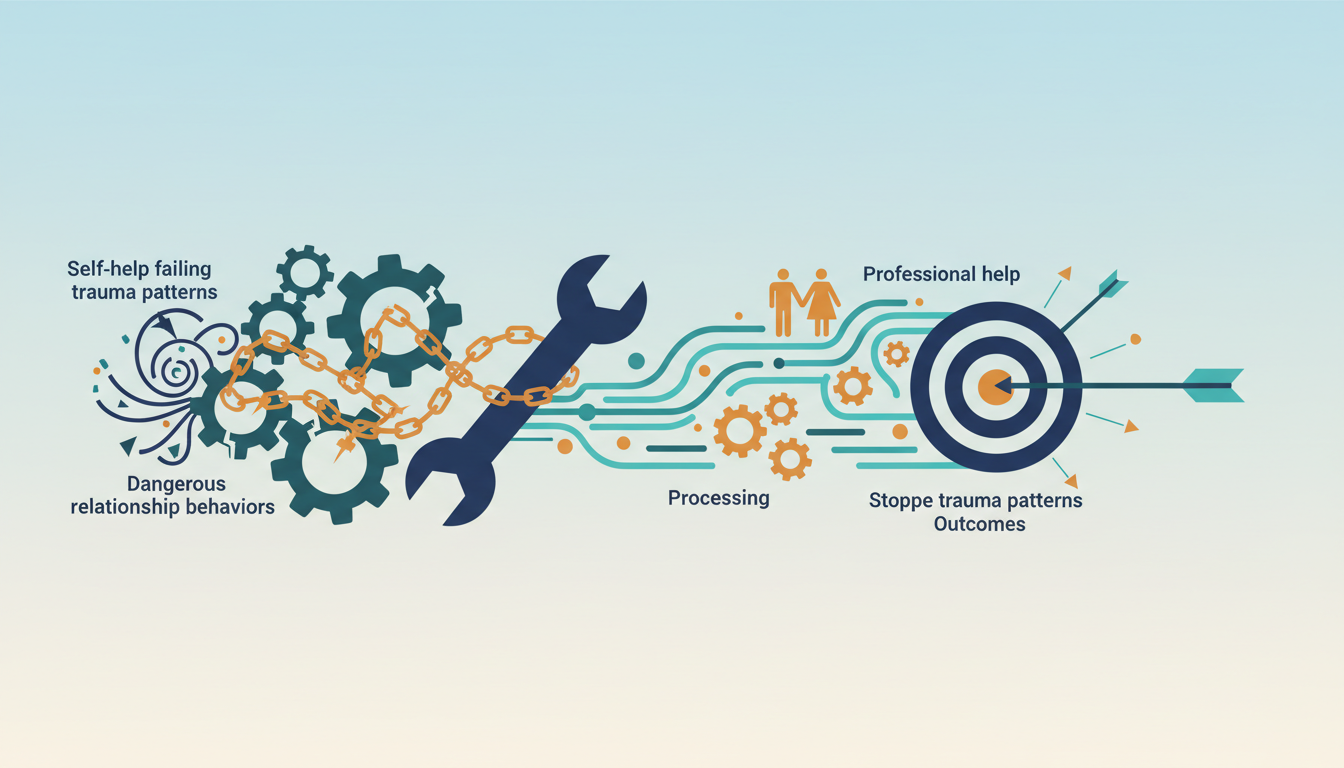
Labeling oneself with a bad attachment style burns through energy and destroys self-esteem, locking the mind into a fixed state that stops recovery. This trap forces people to accept a narrative of crippling shame where they see themselves as inherently broken or too difficult to love crippling shame . Such internal stigma acts as a bright signal for toxic partners who hunt for perceived weaknesses to exploit delicious.
The process works by turning a flexible response pattern into a rigid identity. People treat their attachment style as an unchangeable fact rather than a learned behavior.
Financial or personal constraints often block access to traditional therapy, forcing reliance on cheaper self-guides. These resources lack the real-time feedback needed to stop active predation. Passive time does not heal. Conscious effort is required to rewire brain pathways via neuroplasticity. Shame traps the individual in survival mode that mimics love but delivers trauma. Seeking professional help becomes vital when self-regulation scripts fail to stop the pattern of letting others get their.
Time fails to heal attachment trauma when passive habits allow neural pathways to calcify into a worse version of the self. Assuming recovery happens automatically ignores how repetition compulsion unconsciously pulls individuals into similar toxic storylines without intervention. Lack of access to professional help due to financial, time, or personal constraints drives many toward ineffective self-guides rather than targeted therapy. This gap creates a dangerous loop where self-stigma prevents necessary care, as insecurely attached individuals often seek social distance from mental health resources instead of engaging them.
| Passive Habit | Active Consequence |
|---|---|
| Ignoring early warning signs | Entrenched avoidance patterns |
| Accepting shame narratives | Increased vulnerability to exploitation |
| Skipping regulated breathing | Failed emotional reprocessing |
Waiting for organic improvement rarely succeeds against hardcoded defensive mechanisms. Tension exists between the comfort of familiar dysfunction and the friction required for neuroplasticity to rewire threat responses effectively. The nervous system defaults to known survival strategies that perpetuate isolation without conscious effort to script new interactions. Professional guidance becomes necessary when personal attempts to break these cycles repeatedly fail to produce lasting change.
About
Dr. Ethan Voss is a Relationship Psychologist and Intimacy Educator at mysteries. Love, specializing in the neuroscience of desire and adult attachment theory. His unique qualification to reframe attachment styles stems from his dual background as a former clinical psychologist in private couples therapy and a researcher at the University of Amsterdam. In his daily work, Voss moves beyond rigid labels to help partners understand how their attachment histories shape current intimacy and communication patterns. This practical experience directly informs the article's thesis, challenging static interpretations of attachment in favor of flexible, growth-oriented frameworks. Writing for mysteries. Love, a platform dedicated to evidence-based intimacy education, Voss bridges academic research with actionable relationship tools. His approach aligns with the blog's mission to normalize complex conversations about connection, ensuring readers view attachment not as a life sentence, but as a mappable path toward deeper, more secure relationships through informed self-awareness and practical application.
Conclusion
Scaling self-guided recovery fails when repetition compulsion overrides conscious intent, turning isolation into a permanent state rather than a temporary defense. The operational cost of ignoring this reality is a lifetime of managing acute anxiety symptoms that could have been prevented with early, targeted intervention. Relying on passive hope allows defensive mechanisms to harden, making future rewiring exponentially more difficult and expensive. You must treat attachment repair as an active engineering project, not a waiting game.
Commit to professional trauma-informed therapy within the next six months if your current self-regulation attempts have not yielded measurable changes in relationship stability after ninety days. Do not wait for a crisis to force your hand; the window for efficient neuroplasticity narrows as maladaptive patterns deepen. Self-help books cannot provide the real-time corrective feedback required to alter entrenched survival scripts.
Start by auditing your last three conflict interactions this week to identify exactly where you defaulted to silence or aggression instead of engagement. Write down the specific physical sensation that preceded that reaction and schedule a consultation with a specialist who focuses on somatic experiencing before Friday. This concrete data point will break the cycle of vague introspection and force a shift toward actionable, evidence-based healing.
Frequently Asked Questions
Secure attachment allows 58% of individuals to trust others and accept love easily. This majority group forms loving relationships with relative ease because their early bonds created a buffer against emotional dysregulation.
Avoidant attachment affects 20% of the population who fear intimacy and prioritize independence. These individuals often reject partners when minor problems arise because they inherently believe their emotional needs cannot be met.
Fearful-avoidant attachment shows a 55% correlation with dissociation symptoms, indicating severe psychological costs. This disorganized style causes people to desperately crave affection while simultaneously attempting to avoid it at all costs.
Yes, defining yourself solely by anxious attachment incinerates self-esteem and traps you in shame. This rigid self-definition reinforces the very behaviors you seek to change rather than allowing the fluidity required for healing.
Your childhood bond does not dictate an unchangeable future, as these patterns are mutable survival responses. Shifting focus from perceived flaws to adaptive strategies helps break toxic cycles before they calcify into permanent relational failures.