Secure attachment isn't fixed: how to rewire it
Over 3 million copies sold prove attachment style is no longer niche academic theory but a global cultural obsession. The mainstream explosion of Amir Levine's *Attached* has distilled complex neuroscience into a rigid four-category label system that often obscures the fluid reality of human bonding. While influencers like Tony Robbins and therapists like Julie Menanno monetize these static tags, the actual science suggests a far more flexible mechanism for relationship repair.
Readers will learn how the historical application of child development theories to adult romance created today's diagnostic confusion and why anxious and avoidant tendencies function improved as shifting coordinates on a spectrum rather than binary identities. We will also examine why Secure Priming Therapy and the CARRP framework offer superior, actionable paths to stability compared to the fatalism of online quizzes.
The data supports a shift from labeling to active recalibration. Frontiers in Psychology reports that 2026 meta-analytic insights confirm therapies targeting emotional awareness and partner support consistently improve attachment security and postnatal adjustment. Unlike the static categories popularized by Levine's 2010 bestseller, which he initially viewed as an embarrassing side gig, modern clinical approaches demonstrate that relational patterns are not life sentences but adaptable behaviors subject to change through targeted practice.
The Evolution of Attachment Theory from Child Development to Adult Relationships
From Bowlby's 1969 Attachment to Adult Theory
Psychiatrist John Bowlby launched his research trajectory during a 1950 collaboration with Mary Ainsworth that focused strictly on infant-caregiver bonds. Fieldwork conducted in Uganda during 1954 established the empirical basis for the secure base concept through direct observation of Ganda mothers. Bowlby formalized these findings in his 1969 publication by defining internal working models as cognitive blueprints formed in early life. Cindy Hazan and Phillip Shaver extended these principles to adult romantic partnerships in the 1980s. This transition redefined attachment styles from deterministic childhood labels into malleable adult patterns. The adult framework addresses how individuals navigate intimacy and independence within mature relationships rather than focusing on pediatric development. Child attachment research emphasizes stable outcomes based on early caregiver consistency. Adult theory acknowledges that relational history can be rewritten through new experiences. Conflating these distinct phases leads to erroneous assumptions about fixed personality traits. Clinicians must recognize that adult secure attachment is an achievable state rather than a genetic lottery result determined solely by infancy.
Applying Levine's Anxious and Avoidant Categories
Levine's framework defines secure attachment as comfort with intimacy and independence distinct from childhood determinism. Psychiatrist Amir Levine categorizes adults into four relational modes rather than fixed labels.
- Anxious individuals crave closeness while fearing rejection.
- Avoidant types prefer independence over proximity.
- Fearful-avoidant persons display a mix of the two conflicting drives.
- Secure individuals remain comfortable with closeness and easygoing in their interactions.
This taxonomy shifts focus from historical blame to current behavioral patterns. Operators often mistake these categories for permanent diagnoses yet the model functions as a malleable spectrum. The bestselling pop-psychology book popularized these terms by selling over 2 million copies globally. Conflating adult styles with infant outcomes creates a false sense of inevitability. Early experiences create an internal working model that guides perception instead of issuing a life sentence. Focusing exclusively on childhood ignores the capacity for neuroplasticity in adult relationships. Practitioners must assess current interaction cycles instead of excavating decades-old memories. Complex trauma histories rarely fit neatly into binary anxious or avoidant boxes. Network engineers managing human systems should prioritize building a secure village over analyzing past failures. Reliability and predictability in current partnerships rewrite the cognitive blueprint more effectively than retrospective analysis alone. Security emerges from consistent availability rather than just historical accuracy.
Debunking Determinism in Child-to-Adult Attachment
Original frameworks established by John Bowlby described infant-caregiver bonds yet adult relational patterns diverge notably from these infant origins. Research indicates that childhood friendships exert substantial influence on adult styles which expands intervention scope beyond the parent-child dyad. Operators focusing exclusively on parental history miss critical data points regarding peer relationship quality during development. Approximately 80% of individuals retain their childhood style without specific therapeutic intervention or conscious restructuring efforts. This statistical stability often masks the potential for change available through targeted cognitive reframing techniques.
Anxious and Avoidant Styles Operate as Flexible Dimensions on a Continuum
Mapping Attachment Topography on Anxiety and Avoidance Axes
Secure defines attachment topography as a coordinate grid plotting relational dynamics across varying contexts rather than fixed traits. Levine characterizes these styles as malleable, rejecting rigid categorization in favor of a fluid spectrum where individuals shift positions based on specific partners. The horizontal axis measures the distance from secure to anxious, while the vertical axis tracks the secure-to-avoidant gradient. This mechanical model accommodates disorganized attachment by allowing simultaneous high scores on both anxiety and avoidance dimensions without forcing a singular label.
| Axis Direction | Low Coordinate Value | High Coordinate Value |
|---|---|---|
| X-Axis | Secure | Anxious |
| Y-Axis | Secure | Avoidant |
Clinical observation reveals that trauma survivors often occupy volatile quadrants, displaying markers of both insecure-avoidant and insecure-resistant strategies depending on environmental triggers. Such complexity illustrates the limitation of binary diagnostic frameworks when assessing individuals with disrupted histories. Mapping these coordinates enables therapists to identify SIMIs that nudge a client toward the secure origin point. The operational implication requires abandoning static labels for flexible monitoring of relational fluctuations. Precision in plotting these vectors determines whether an intervention targets anxiety reduction or avoidance mitigation.
Variable Attachment Styles Across Different Relationship Contexts
Levine observes that individuals often display different attachment styles with different people, creating a flexible relational topography. A specific case involving a woman in Iran illustrates how shifting from an insecure partner to a secure one fundamentally altered her personal well-being and capacity for intimacy. She reported experiencing an orgasm for the first time because she could finally ask a partner for what she needed without fear. This transformation highlights the operational reality that emotional unavailability in partners often suppresses the expression of secure behaviors in otherwise capable individuals. Frontiers in Psychology (10.3389/fpsyg. 2015.00296) confirms that secure contexts drive closer connections in daily life.
A constraint of this model is that it requires active participation from a secure counterpart to initiate the shift. Without a partner capable of maintaining CARRP standards, the insecure individual often reverts to baseline defensive postures. Addressing emotional unavailability requires identifying whether the deficit lies in the individual's internal model or the external relational environment.
Avoiding Premature Conclusions When Assessing Attachment Style
Secure warns that jumping to conclusions when considering attachment style risks cementing false relational diagnoses. Popular online quizzes frequently misclassify disorganized attachment as purely avoidant because the test mechanics cannot capture the simultaneous presence of anxiety and avoidance strategies. This binary simplification ignores the mechanical reality where frightened caregiver behavior produces a confused operational mode combining both withdrawal and protest.
| Dimension | Simplified Quiz Output | Clinical Topography Reality |
|---|---|---|
| Anxiety Axis | Low score implies independence | May mask hyper-vigilance to rejection |
| Avoidance Axis | High score implies coldness | Often functions as pressure regulation |
| Context | Single global label | Shifts per relationship partner |
Levine argues that avoidant individuals get kind of a bad rap due to this reductive labeling practice. Data indicates insecure attachment links to a significantly higher odds of an adult anxiety diagnosis, yet static tests fail to distinguish between trait and state. The drawback of premature labeling is the reinforcement of negative perceptions rather than the identification of specific triggers. Operators must treat attachment topography as a flexible coordinate system rather than a fixed binary switch. Accurate assessment requires observing behavioral shifts across multiple relationship contexts instead of relying on a single self-report instrument.
Secure Priming Therapy and CARRP Provide Actionable Frameworks for Change
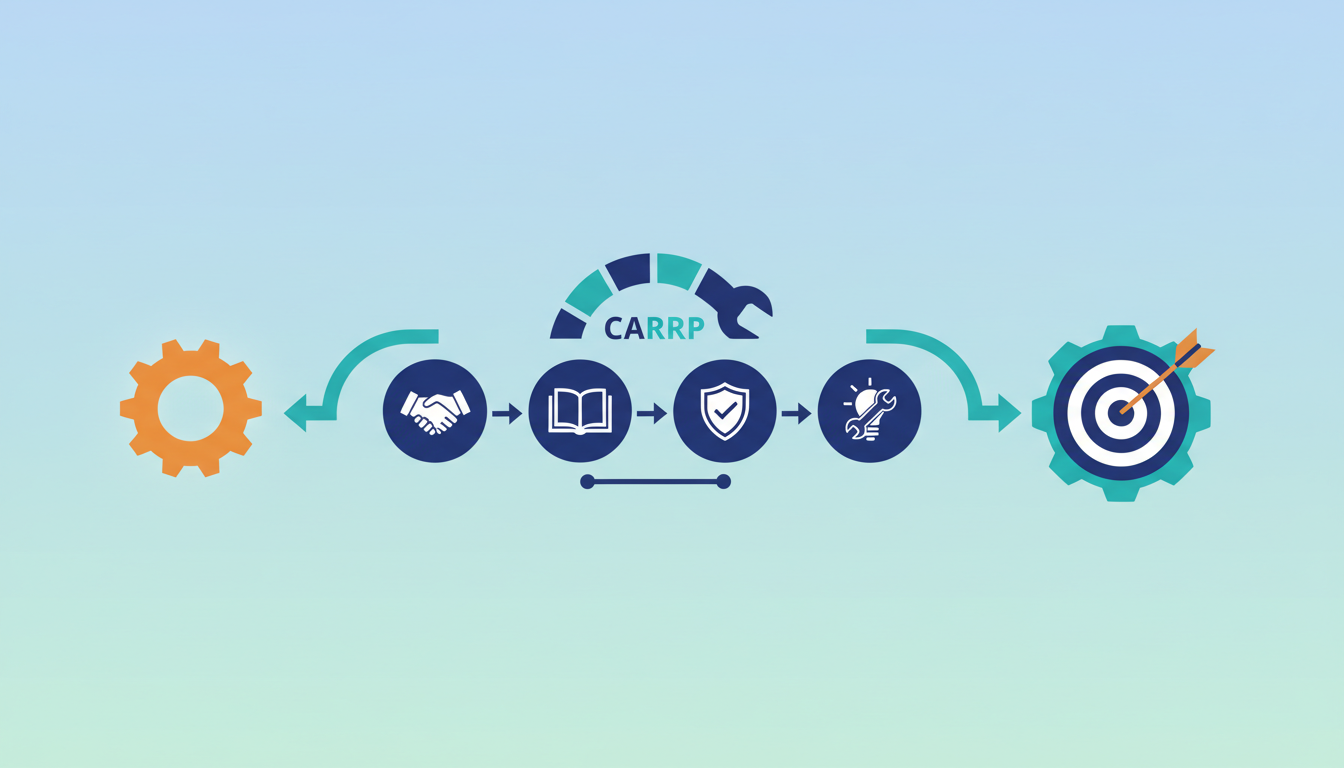
Secure Priming Therapy puts the CARRP standard into practice through consistency, availability, responsiveness, reliability, and predictability to build a functional "secure village. " This framework moves attention away from static labels toward actionable interaction metrics, treating secure attachment. The mechanism aggregates SIMIs, which are seemingly insignificant minor interactions like brief pleasantries with strangers, to generate cumulative safety signals. These micro-interactions act as low-latency pings that validate social continuity without demanding high-bandwidth emotional exposure. Success here depends entirely on volume. Isolated secure cues often fail to override entrenched neural pathways without repetition. The drawback involves the sheer quantity of SIMIs required to shift an individual's baseline, a hurdle that discourages adherence among those with avoidant tendencies. Unlike traditional psychoanalysis which dissects past trauma, this modality prioritizes present-moment data inputs to rewire expectation models.
| Component | Function | Operational Constraint |
|---|---|---|
| Consistency | Stabilizes expectation models | Requires sustained partner engagement |
| SIMIs | Provides frequency of safety cues | Low individual signal strength |
| Responsiveness | Validates distress signals | Demands real-time emotional bandwidth |
Practitioners must engineer environments that maximize these low-stakes contacts to achieve the 60% reduction in anxious symptoms observed in targeted therapies. The Editorial Mission emphasizes that building a secure life requires treating every minor exchange as a critical infrastructure component. Failure to maintain CARRP standards across the wider social network leaves the individual vulnerable to single-point failures in primary relationships.
Reframing Avoidant and Anxious Styles as Nature-Bestowed Talents
Levine writes that all attachment styles function as talents bestowed by nature, converting perceived deficits into operational assets. Avoidant individuals use hyper-independence for solo projects where minimal social overhead maximizes output efficiency.
Operators must match specific attachment traits to environmental demands rather than forcing a universal secure mold. Success depends on recognizing that nature-bestowed talents solve specific classes of problems improved than generic security.
Building a Secure Village Through Trusted Connections
Constructing a secure village requires deploying the CARRP standard across daily interactions to generate measurable safety signals. Operators must prioritize SIMIs, treating brief pleasantries as low-latency pings that validate social continuity without high-bandwidth emotional exposure.
| Interaction Type | CARRP Compliance | Security Yield |
|---|---|---|
| Deep Disclosure | High latency | Moderate |
| SIMI Exchange | High frequency | Cumulative |
| Silent Co-presence | Variable | Low |
Secure Priming Therapy operationalizes this by retrieving specific secure memories to temporarily lower defensive thresholds during stress events. The book *Secure*, released on April 14, 2026, expands this scope beyond romantic dyads to include the full network of trusted connections. The model fails if the village lacks diversity. Relying on a single node for all CARRP functions creates a critical single point of failure. Practitioners must audit their relationship topology to ensure no single contact bears the entire load of consistency and availability. This distribution strategy prevents system collapse when primary attachments undergo maintenance or outage.
Timing matters greatly for practitioners. Delaying specialized treatment allows maladaptive cycles to compound rather than resolve. Natural drift does not correct course, making the decision to seek professional therapy the sole variable that alters the probability trajectory. Operators must recognize that waiting for spontaneous improvement contradicts the observed persistence rates. Self-help strategies often fail to alter entrenched neural pathways because they lack the structured dyadic regulation inherent in clinical modalities. The decision matrix hinges on whether an individual accepts the statistical likelihood of remaining in their current relational configuration indefinitely.
| Strategy | Expected Outcome | Resource Overhead |
|---|---|---|
| Self-Directed Reading | Minimal pattern shift | Low time cost |
| General Talk Therapy | Variable insight gain | Moderate duration |
| Emotionally Focused Therapy | High resolution probability | Intensive engagement |
Operators seeking to fix insecure relationship patterns must recognize that general conversation rarely targets the specific attachment blueprint driving conflict cycles. The cost of inaction manifests as decades of repeated interpersonal friction rather than a one-time financial expense. Waiting for natural maturation to resolve these issues contradicts longitudinal data showing persistent stability in the absence of targeted professional therapy. Individuals should initiate contact with certified EFT practitioners immediately upon identifying recursive conflict loops that self-management cannot break. This approach treats relational health as an infrastructure project requiring specialized engineering rather than passive observation.
Ignoring these metrics traps individuals in a cycle where cumulative trauma compounds, rendering future therapeutic modalities less proven. The window for efficient recalibration narrows as the nervous system adapts to chronic insecurity. Editorial Mission advises prioritizing structured assessment over passive observation when odds ratios indicate high probability of deterioration. Waiting for natural resolution contradicts the data on persistence rates.
About
Dr. Ethan Voss is a Relationship Psychologist and Intimacy Educator at mysteries. Love, specializing in the neuroscience of desire and adult attachment dynamics. His deep expertise makes him uniquely qualified to dissect attachment styles, bridging the gap between clinical research and practical relationship application. Drawing from his former role as a clinical psychologist and researcher at the University of Amsterdam, Voss translates complex theories into actionable insights for modern couples. His daily work involves guiding individuals through communication frameworks rooted in secure, anxious, and avoidant patterns, directly mirroring the core concepts discussed in this article. At mysteries. Love, part of the Center for the Development of Intimate Relationships, he ensures that evidence-based psychology informs their mission to normalize intimacy conversations. By connecting academic rigor with real-world relationship challenges, Voss provides readers with a trustworthy, scientifically grounded perspective on how attachment styles shape romantic connections and sexual wellness.
Conclusion
Scaling relational repair without clinical oversight triggers a compounding inefficiency where minor friction evolves into systemic dysfunction. The operational cost of delaying intervention manifests as entrenched neural pathways that resist standard behavioral adjustments, effectively locking individuals into recursive conflict loops. Data suggests that waiting for organic resolution contradicts the biological reality of nervous system adaptation, where plasticity diminishes significantly after early adulthood. You must prioritize evidence-based modalities like Attachment-Based Family Therapy within the next six months if you observe persistent patterns of emotional withdrawal or escalation. This timeline is critical because the efficacy of shifting insecure patterns drops precipitously once comorbid anxiety diagnoses solidify. Do not rely on self-help literature to dismantle deep-seated trauma responses; the return on investment for amateur experimentation is negative when odds ratios indicate high probabilities of deterioration. Start by auditing your current conflict resolution methods against verified efficacy metrics this week. If your approach lacks structured professional guidance, schedule a consultation with a specialist trained in trauma-informed care immediately. This specific action prevents the calcification of maladaptive behaviors and secures a pathway toward measurable relational stability before the window for efficient recalibration closes.
Frequently Asked Questions
Viewing styles as static traits is a scientific error that ignores human fluidity. The mainstream obsession with rigid categories often obscures the dynamic reality of bonding seen in over 3 million copies sold globally.
Levine initially considered the project an embarrassing side gig unrelated to his serious scientific work. He wrote the text during subway commutes before it surprisingly sold more than 2 million copies worldwide.
Public figures like Tony Robbins and Jay Shetty have pontificated on these concepts to massive audiences. Additionally, couples therapists like Julie Menanno have built careers reaching 1.3 million followers on Instagram.
A woman from Iran stated the book inspired her to leave her relationship and find a secure partner. She reported experiencing an orgasm for the first time after finally asking for her needs.
The new guide broadens scope beyond romantic love to emphasize building a secure village of trusted connections. It integrates fresh neuroscience research rather than relying solely on the original four-category label system.