Attachment Styles Need Different Dates to Heal
Roughly 45% of adults carry insecure attachment, a statistic that turns "quality time" into a potential minefield. Generic date nights often backfire because they ignore the specific psychological wiring of anxious and avoidant partners. The solution isn't more time together; it's strategic activity selection. We must align shared experiences with distinct regulatory needs to stop the cycle of pursuit and withdrawal.
The 2026 "State of Our Unions" report flags a "dating recession," noting that durability against relationship volatility has collapsed even as half the population struggles with these exact patterns. Charlie Huntington points out that while humans crave a Goldilocks sensation of closeness, those high in avoidant or anxious traits consistently misjudge the distance. One fears engulfment; the other, abandonment. Schrage et al. Utilized daily diary studies to prove that generic quality time often exacerbates these fears rather than resolving them.
Avoidant individuals report improved relationship perceptions after engaging in novel tasks. Anxious partners, conversely, require familiar, comfortable routines to feel secure. This data contradicts the one-size-fits-all approach to couple's therapy. Activity mismatch drives much of the observed dissatisfaction. By understanding these divergent requirements, couples can stop guessing and start deploying evidence-based interactions that satisfy specific attachment demands without triggering defensive withdrawals or pursuit cycles.
The Dual Nature of Insecure Attachment in Romantic Partnerships
Defining Insecure Attachment via the ECR Scale
Insecure attachment marks relational patterns where individuals view partners as either too distant or suffocatingly close. John Bowlby established this framework, which the Experiences in Close Relationships (ECR) Scale now measures through two primary dimensions. Avoidant attachment manifests as a fear of intimacy that drives a desire for significant interpersonal space. Approximately a significant share of adults exhibit patterns specifically linked to this style as of 2026 data. Clinical observations note that people very high in avoidant traits often isolate themselves, struggling with heavy emotions while prioritizing independence. Anxious attachment stems from a fear of abandonment, creating an intense need for reassurance and connection. Research by Phillip R. Shaver established that these opposing needs create distinct relational friction points. High scores in either dimension correlate with less satisfying partnerships on average.
| Dimension | Core Fear | Desired State |
|---|---|---|
| Avoidant | Closeness | Space |
| Anxious | Abandonment | Reassurance |
Partners often unknowingly trigger each other's defenses within a single dyad. Pursuit by an anxious partner validates the avoidant partner's fear of engulfment. Withdrawal by the avoidant partner confirms the anxious partner's fear of rejection. This cycle persists because standard conflict resolution assumes shared goals, whereas insecure attachment creates fundamentally opposing objectives regarding proximity. Breaking this loop requires recognizing that "closeness" itself holds opposite valences for each style.
The Goldilocks Dilemma in Daily Relationship Dynamics
Desired closeness shifts hourly, yet partners with insecure styles consistently misalign on the Goldilocks sensation of intimacy. One partner perceives the other as suffocating while the other feels abandoned, despite physical proximity. The core issue involves opposing regulatory needs: avoidant individuals require autonomy to deactivate anxiety, whereas anxious individuals need reassurance to stabilize their attachment system. Research indicates that engaging in novel and exciting experiences specifically boosts relationship satisfaction for avoidant partners by expanding their self-concept without triggering engulfment fears. Anxious partners derive security from familiar, routine interactions that signal consistency and commitment.
| Attachment Style | Preferred Activity Type | Psychological Mechanism |
|---|---|---|
| Avoidant | Novel, high-arousal tasks | Self-expansion reduces intimacy threat |
| Anxious | Familiar, low-arousal tasks | Routine provides predictable reassurance |
Generic shared time often fails because it ignores these divergent requirements for emotional regulation. Partners mitigate insecurities through different behavioral adjustments. Offering autonomy buffers avoidant distress. Providing verbal reassurance addresses anxious fears. A tension exists where a single activity cannot simultaneously satisfy both needs, forcing couples to strategically alternate between novelty and familiarity rather than seeking a permanent middle ground. Failure to tailor activities results in a cycle where both partners feel their specific emotional requirements remain unmet, perpetuating relationship dissatisfaction even when together.
Population Risks: Anxiety Disorders and Homeless Demographics
Insecure attachment functions as a statistical predictor for severe psychopathology rather than a mere relational preference. Clinical data links these histories to a substantial increase in the odds of developing anxiety disorders compared to secure peers. This correlation drives substantial healthcare expenditures associated with treating resulting depression and substance use. The risk profile intensifies drastically within vulnerable demographics facing environmental instability. Studies of "rough sleepers" reveal a 100% rate of insecure attachment, a figure that diverges sharply from general population variance. The total absence of secure attachment in this group suggests that housing instability actively dismantles the capacity for relational safety. Operators must recognize that population variance dictates protocol; a single treatment model cannot address both moderate avoidance and total systemic collapse. Ignoring this stratification renders mental health support ineffective for the most at-risk individuals.
Psychological Mechanisms Driving Activity Preferences by Attachment Style
Novel shared experiences trigger self-concept expansion, allowing avoidant partners to engage without perceiving engulfment. This mechanism operates by shifting focus from relational closeness to personal growth, effectively bypassing the deactivating strategies typical of dismissive attachment. When an avoidant individual pursues a new skill or unfamiliar environment alongside a partner, the activity itself becomes the primary object of attention. Because this expansive experience occurs with a partner, avoidant individuals feel improved about the relationship, referencing Gere et al. 2013. The psychological benefit stems from the perception that the relationship enables independence rather than restricting it. Intimacy-building shared activities uniquely increase relationship satisfaction for individuals with avoidant attachment styles; in contrast, participants with secure or anxious attachment styles did not report increased satisfaction from these same activities, indicating a differential response to intervention based on attachment category. Specificity matters here because generic couple interventions often fail to address the autonomy needs of avoidant partners.
Execution presents a challenge. An activity perceived as novel by one partner may feel chaotic to an anxious partner, requiring careful negotiation of the Goldilocks sensation. Operators must recognize that successful expansion requires the avoidant partner to voluntarily include the other in their growth trajectory, transforming a solitary pursuit into a relational asset.
Using Reassuring Routine to Buffer Anxious Attachment
Familiar shared activities function as a regulatory mechanism for anxiously attached individuals by signaling consistency during moments of feeling overwhelmed in a relationship. Participants in the Schrage et al. (2026) study reported on activities done with partners every day for three weeks, revealing that routine interactions uniquely stabilize emotional responses. Unlike novel experiences that expand the self-concept, reassuring routine provides the specific predictability required to lower attachment-related hyperactivation. This approach directly addresses how attachment styles affect relationships by matching the intervention to the underlying fear of abandonment rather than the fear of engulfment. Efficacy relies on tailored behavioral adjustments rather than generic relationship advice. Partners mitigate insecurities through different behavioral adjustments Table 1 contrasts the divergent needs driving these activity preferences.
Relying solely on familiarity risks stagnation if the couple never introduces novelty for the avoidant partner. A constraint exists: emotional regulation via routine does not resolve the root cause of insecurity without broader therapeutic intervention. Clinical data suggests Emotionally Focused Therapy (EFT) achieves a 70% improvement rate for secure attachment, indicating that activity selection alone offers temporary relief rather than permanent structural change. Operators of relationship dynamics must therefore balance immediate soothing with long-term growth strategies.
Novelty vs Consistency: Divergent Pathways to Relationship Satisfaction
Schrage et al. (2026) data from three weekly diaries confirms that novel activities boost satisfaction for avoidant partners while familiar routines stabilize anxious ones. This divergence creates a mechanical failure in generic relationship interventions. Avoidant individuals require self-concept expansion to bypass deactivating strategies, whereas anxious partners need reassuring routine to lower hyperactivation. A single activity type cannot satisfy opposing regulatory systems simultaneously. Research indicates that intimacy-building shared activities uniquely increase relationship satisfaction for individuals with avoidant attachment styles. The mechanism relies on shifting focus from relational closeness to personal growth during new events. Familiar interactions signal consistency to anxious partners. Psypost. Generic strategies fail because they ignore this dual-path requirement.
Ignoring this split leads to measurable relationship deterioration. Couples who default to a single activity category risk alienating one partner while satisfying the other. This tension demands a rotational strategy rather than a static solution. Operators of relationship health must rotate between novelty and consistency weekly. Failure to alternate creates a feedback loop where one partner feels suffocated and the other abandoned. The Editorial Mission suggests that recognizing these distinct pathways prevents the erosion of relational security over time.
Strategic Selection of Shared Experiences to Balance Intimacy Needs
Partner Buffering Mechanics for Avoidant and Anxious Styles
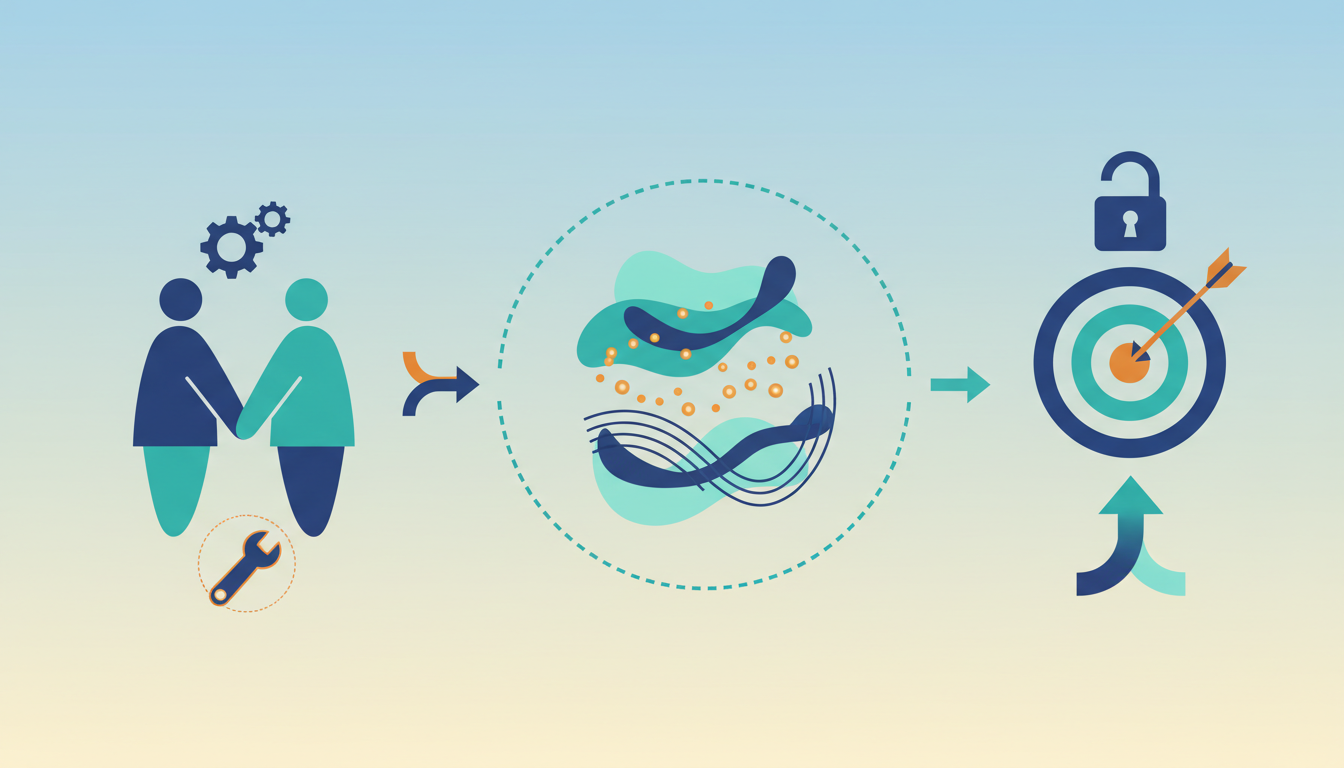
Distinct behavioral adjustments define partner buffering mechanics because autonomy supports avoidant partners while reassurance stabilizes anxious ones. This mechanism functions by matching the intervention to the specific regulatory failure mode of each attachment style. Avoidant individuals experience relationship growth through self-concept expansion triggered by novel environments, effectively bypassing deactivating strategies that reject intimacy. Data indicates that intimacy-building shared activities uniquely increase relationship satisfaction for individuals with avoidant attachment styles. Novelty signals threat to anxious partners but opportunity to avoidant ones. Anxious partners require reassuring routine to lower hyperactivation and confirm relationship stability. Psypost. Familiar activities like watching a favorite show function as a consistency proof, reducing the perceived risk of abandonment without demanding new emotional labor. A single shared activity cannot simultaneously satisfy opposing regulatory systems, forcing couples to alternate strategies rather than seek a universal solution. Current trends show 48% of survey respondents are open to parallel relationships, reflecting a broader fragmentation in how commitment buffers insecurity. Editorial Mission recommends alternating between novel trips and familiar routines to address both mechanical needs without triggering defensive responses.
Selecting unfamiliar environments like cooking classes or hiking trails triggers self-expansion for avoidant partners. Novelty functions as a regulatory tool by shifting focus from intimacy pressure to external challenge. This mechanism allows avoidant individuals to experience relationship growth without triggering deactivating strategies. The activity itself becomes the primary object of attention rather than the emotional closeness. Partners who offer autonomy during these new experiences effectively buffer attachment insecurities. Avoidant partners require specific conditions to perceive shared time as safe. The chosen activity must demand enough cognitive load to prevent over-analysis of the relationship flexible.
Validation Checklist for Routine-Based Anxious Attachment Support
Execute familiar activities daily to signal consistency and lower hyperactivation in anxious partners. This protocol verifies that shared routines deliver the required reassuring routine rather than stagnation. Operators must distinguish between passive co-presence and active engagement to ensure the intervention functions correctly.
| Activity Type | Anxious Response | Avoidant Response |
|---|---|---|
| Novel Experience | Increased Anxiety | Higher Satisfaction |
| Familiar Routine | Reduced Hyperactivation | Boredom |
| Passive Co-presence | No Change | No Change |
- Select a repeated activity with high predictability, such as watching a specific show together.
- Confirm the partner perceives the event as a committed relationship signal rather than filler time.
- Monitor for reduced distress signals over a three-week observation window.
- Escalate to clinical support if routine fails to stabilize emotional responses after one month.
Familiarity alone cannot ameliorate psychopathology without perceived intent. The mechanism relies on the partner interpreting the routine as proof of stability. Clinical data shows Attachment-Based Family Therapy targets a 60% reduction in anxious symptoms, suggesting routine acts as a behavioral analog to therapy. Without this explicit signaling, the activity remains inert. Couples seeking deeper structural change should note that earned secure attachment Editorial Mission recommends treating these routines as deliberate infrastructure, not accidental habits.
Implementing a Tailored Activity Plan to Improve Relationship Satisfaction
The Couples Satisfaction Index CSI-16 as a Baseline Metric

Schrage et al. (2026) deployed the Couples Satisfaction Index (CSI-16) across three daily diary studies to quantify baseline relationship feelings before activity interventions began. This 16-item scale provides the numerical anchor required to detect whether novel or familiar activities shift satisfaction scores for specific attachment profiles. Operators must administer this metric prior to intervention because generic advice often fails to address the divergent needs of insecure partners.
- Administer the full 16-item questionnaire to establish a pre-integration baseline score for both partners.
- Tag results by attachment style to predict which shared activities will drive positive variance in the data.
- Retest after three weeks of targeted engagement to measure delta against the initial CSI-16 reading.
Berkeley. The limitation of this approach is that without a precise baseline, operators cannot distinguish between natural fluctuation and intervention success. Amy Muise directs the Sexual Health and Relationships Lab where researchers analyzed how daily diary studies Editorial Mission recommends using the CSI-16 as the mandatory gatekeeper before deploying any tailored activity plan.
Executing the Three-Week Daily Diary Protocol for Activity Auditing
Couples must log daily shared activities for 21 consecutive days to capture the specific novelty or familiarity triggers that drive satisfaction shifts. This duration aligns with the methodology where participants provided data each day for at least a week, extended here to three weeks for higher resolution pattern detection.
- Record every joint activity and rate its novelty level on a 1–5 scale immediately after completion.
- Tag each entry by attachment style to correlate novel and exciting experiences
- Cross-reference familiar routines against anxious partner reports to verify if consistency lowers hyperactivation.
- Review weekly aggregates to adjust the upcoming schedule toward the activity type yielding positive variance.
| Activity Profile | Avoidant Outcome | Anxious Outcome |
|---|---|---|
| High Novelty | Satisfaction Increase | Neutral or Negative |
| High Familiarity | Boredom Signal | Reassurance Gain |
| Mixed Signals | Confusion | Heightened Anxiety |
The protocol fails if partners conflate passive co-presence with active engagement, as mere proximity does not trigger the self-expansion required for avoidant individuals. Operators often miss that offering autonomy Without this distinction, the diary captures noise rather than the causal link between activity type and relationship security. The Editorial Mission recommends strict adherence to the 21-day window to overcome initial reporting fatigue and reveal true behavioral trends.
Verify intervention fidelity by confirming novel tasks expand avoidant self-concepts while familiar routines deliver anxious reassurance. Generic advice often fails because it ignores that intimacy-building shared activities. The cost of misalignment is measurable: wrong activity types trigger deactivation or hyperactivation immediately.
- Select high-novelty experiences for avoidant partners to stimulate self-expansion without demanding emotional vulnerability.
- Execute predictable, low-variance routines for anxious partners to signal reassuring routine consistency.
- Audit outcomes weekly using the Couples Satisfaction Index (CSI-16) to detect style-specific satisfaction shifts.
Psypost. Editorial Mission recommends abandoning universal activity plans in favor of this bifurcated approach. Failure to segment activities by attachment profile renders the intervention inert.
About
Dr. Ethan Voss serves as a Relationship Psychologist and Intimacy Educator at mysteries. Love, where he specializes in attachment theory and the neuroscience of desire. His extensive background as a former clinical psychologist and researcher at the University of Amsterdam uniquely qualifies him to address the complexities of insecure attachment. In his daily practice, Voss helps couples navigate anxious and avoidant patterns, directly informing his practical strategies for rebuilding trust and emotional safety. This expertise aligns perfectly with mysteries. Love, a platform dedicated to evidence-based intimacy education that bridges psychological research with real-world relationship tools. By connecting academic insights on adult attachment with actionable guidance, Voss ensures that readers receive scientifically grounded advice. His work highlights the blog's mission to normalize conversations about vulnerability, offering a trusted resource for individuals seeking to change insecure dynamics into deeper, more secure connections within modern relationships.
Conclusion
Generic relationship advice actively harms couples by triggering opposite distress signals in each partner. When avoidant individuals face forced intimacy or anxious partners encounter unpredictability, the protocol accelerates deactivation and hyperactivation rather than resolving them. The operational cost of this misalignment is immediate emotional withdrawal, rendering months of effort inert. You must abandon the pursuit of a universal solution and instead implement a bifurcated activity strategy within the next 30 days. Success depends on rigorously matching high-novelty experiences to avoidant needs for self-expansion while reserving predictable, low-variance routines exclusively for anxious reassurance. Do not attempt to blend these approaches; the psychological mechanisms requiring activation are mutually exclusive.
Start this week by auditing your shared calendar to identify and separate activities based on their variance levels. Tag every planned interaction as either "high-novelty" or "high-predictability," then reassign them to match your partner's specific attachment requirement before the weekend arrives. This immediate segmentation prevents the accidental triggering of defense mechanisms that undermine long-term security. Consistent application of this targeted mapping, verified through weekly satisfaction checks, creates the necessary conditions for genuine behavioral change.
Frequently Asked Questions
Approximately 25% of adults exhibit avoidant patterns specifically linked to desiring significant interpersonal space. Clinical data confirms these individuals often isolate themselves to manage heavy emotions while prioritizing independence over closeness.
Between 40% to 45% of adults exhibit insecure attachment, causing specific activity choices to directly regulate relational distress. This large segment consistently misjudges intimacy distance, fearing either engulfment or abandonment in daily interactions.
Generic quality time often exacerbates fears rather than resolving them for insecurely attached partners. Research proves that activity mismatch drives dissatisfaction because avoidant and anxious styles require fundamentally different engagement types.
Novel and exciting experiences boost satisfaction for avoidant partners by expanding their self-concept without triggering engulfment fears. Familiar routines fail here because avoidant individuals require autonomy to deactivate anxiety effectively during shared time.
Engaging in familiar, comfortable activities helps anxious people feel more secure by signaling consistency and commitment. Routine interactions provide the predictable reassurance needed to stabilize their attachment system and reduce abandonment fears.