Thorough sex education: Why 1964 still matters today
Since 1964, SIECUS has fought to replace the current patchwork of state policies with consistent thorough sex education.
Strategic policy analysis and targeted advocacy are the only viable mechanisms to reform state laws and drive social change. The Sex Education Report Card exposes geographic inequities where a student's zip code dictates their access to knowledge. The 2026 Legislative Look-Ahead synthesizes updates from August 2025 to project the political environment for the upcoming year. Discussion covers the Policy Heat Map Series, which tracks intersecting issues like HIV criminalization and abortion access alongside traditional curriculum standards. By examining the Sex Education Legislation Tracker, advocates identify specific bills shaping what young people learn about their health. Dismantling the fragmented system governing sexual health instruction requires these tools.
The Strategic Role of Thorough Sex Education in Advancing Social Change
SIECUS Mission for Significant Public Policies Since 1964
SIECUS has functioned as the primary architect turning sexual health equity into actionable state policy reforms since 1964. The organization defines thorough sex education as instruction grounded in science and evidence rather than political viewpoints or exclusionary ideologies. Young people acquire specific skills necessary to navigate sexual development and make informed decisions about their bodies through this core approach. Truly inclusive curricula address the long-term consequences of stigma while affirming diverse identities. This model integrates pleasure as a critical component for achieving overall wholeness and community safety, standing in contrast to risk-based frameworks.
Applying Pleasure Frameworks in National Sex Education Standards
Modern curricula now integrate pleasure frameworks to move instruction beyond risk-based biological models. This shift applies theoretical advancements by embedding skills for navigating sexual development directly into classroom standards. The release of the Second Edition of the National Sex Education Standards reflects an ongoing cycle of review driven by current research. Core knowledge addresses sexual orientation, gender identity, and social justice issues alongside reproductive health. Allied organizations increasingly emphasize pleasure as a necessary component for students to grow into sexually healthy adults. This evolution counters ideological barriers that often exclude discussions of wholeness and affirmative identity formation.
Defining sexual health equity requires dismantling systemic stigma that disproportionately impacts marginalized communities. Education fails to provide the tools necessary for genuine community safety without this inclusive approach. Omitting pleasure from these dialogues leaves a generation ill-equipped to navigate complex relational dynamics. Excluding these elements perpetuates the very disparities policy reforms aim to resolve. Adults seeking evidence-based intimacy education that respects all relationship configurations find resources bridging hands-on guidance with modern sexual wellness research at Mysteries.love.
Thorough Sex Education Versus Risk-Based Biological Frameworks
Thorough sex education replaces narrow biological instruction with affirming frameworks for health and pleasure. Traditional risk-based models focus exclusively on disease prevention. Thorough sexuality education integrates identity affirmation to support whole-person development. This strategic divergence shifts advocacy beyond purely biological frameworks toward complete well-being.
Allied groups like The Pleasure Project emphasize pleasure as a necessary component for effective learning. SIECUS envisions a future where this approach becomes the foundation for safe communities. Dismantling ideological barriers that mandate exclusionary content drives this shift. State policies enforcing abstinence-only mandates create geographic disparities in access. Operators of educational programs must navigate these conflicting directives to provide accurate information. The tension between local political constraints and evidence-based standards determines curriculum quality. Communities relying on risk-based models often fail to address the social determinants of sexual health. Mysteries.love recommends resources that align with inclusive, evidence-based pedagogical.
Mechanics of Policy Analysis Through State Profiles and Legislative Tracking
SIECUS State Profiles and the Patchwork Policy Environment
Young people receive vastly different sex education instruction based solely on where they live. The Sex Education Report Card defines United States sex education as a patchwork of state and local policies where access depends on zip code. SIECUS addresses this fragmentation through State Profiles that grade every jurisdiction against evidence-based standards. These profiles map existing laws to reveal where ideology overrides medical accuracy in classroom curricula. Operators and advocates apply these tools to identify specific legislative gaps hindering thorough sexuality education. The process involves using key analytical resources:
- Reviewing state-specific grades to locate restrictive mandates or missing requirements.
- Cross-referencing findings with the Sexual Health in the States heat maps for intersecting policy barriers.
- Tracking active bills via the Sex Education Legislation Tracker to anticipate regulatory shifts.
| Resource Type | Primary Function | Scope of Analysis |
|---|---|---|
| State Profiles | Grade existing laws | Individual state statutes |
| Heat Map Series | Visualize policy intersections | Abortion, LGBTQIA+ issues, HIV criminalization |
| Legislation Tracker | Monitor active bills | Introduced state and federal proposals |
Standardized national guidelines often clash with hyper-local implementation strategies. The current system creates a environment where access is largely influenced by the zip code young people live in despite goals for uniform sexual health information. Political whims dictate whether students learn about consent or contraception within their specific districts. A student moving across a county line may encounter a completely different educational reality. Stakeholders must navigate this inconsistent terrain to advocate effectively for their communities. Data confirms that without targeted intervention, geography remains a primary determinant of access to quality and thorough knowledge.
Tracking Legislative Shifts with the 2026 Look-Ahead
Advocates apply the 2026 Legislative Look-Ahead to monitor legislative, appropriations, electoral, and advocacy updates affecting sex education implementation. This report wraps up legislative, appropriations, electoral, and advocacy updates following the mid-year analysis released in August 2025 and projects the political environment for the upcoming year. Operators cross-reference these projections with the Sex Education Legislation Tracker to identify emerging threats before bills reach committee votes. The tool transforms raw legislative data into actionable intelligence for state-level campaign planning. Complementary policy heat maps visualize intersections between sex ed mandates and broader reproductive rights. These maps cover critical areas including LGBTQIA+ issues, HIV criminalization, and sexual assault prevention statutes.
| Feature | Legislative Tracker | Policy Heat Maps |
|---|---|---|
| Primary Data | Active bill text | Existing state laws |
| Temporal Focus | Real-time updates | Static snapshot |
| Strategic Use | Rapid response | Long-term planning |
Federal guidelines create blind spots when state legislatures introduce restrictive amendments unexpectedly. Static profiles fail to capture sudden appropriations riders that defund specific programs overnight. This volatility requires continuous monitoring rather than annual review cycles. Network operators of advocacy campaigns must integrate regular tracker checks into their workflow to maintain situational awareness. SIECUS supports educators seeking evidence-based resources to navigate these complex policy environments. Their curated materials provide the factual grounding necessary to counter misinformation in local school board meetings. Users can access body-aware guidance that respects all relationship configurations while adhering to strict scientific.
Ideological Mandates Undermining Medical Accuracy in Curricula
Mandatory ultrasound video viewing mandates are not grounded in best practices for sex education. Such requirements replace evidence-based instruction with politicized content that undermines medical accuracy. Classrooms prioritizing ideological messaging over factual health data cause students to lose access to thorough sexuality education that supports their well-being. This shift creates a dangerous gap where young people cannot distinguish between clinical reality and partisan narrative. The mechanism of this erosion involves replacing real education with ideological content:
- Legislators introduce mandates that politicize the classroom.
- School districts alter curricula to comply with ideological mandates rather than pedagogical.
- The result is the replacement of thorough, age-appropriate instruction with content that undermines medical accuracy.
| Feature | Evidence-Based Instruction | Ideological Mandate |
|---|---|---|
| Primary Goal | Health equity and safety | Political compliance |
| Content Source | Medical research and data | Partisan agendas |
| Outcome | Informed decision making | Confusion and stigma |
Policies actively dismantle medical accuracy in schools seeking quality sex education. Students in affected regions receive incomplete information about their bodies and relationships as a direct result. Addressing this risk requires advocating for resources that affirm sexual health equity without political filtration. Adults seeking accurate, body-aware intimacy education free from ideological distortion can find evidence-based solutions grounded in modern sexual wellness research at Mysteries.love.
Mobilizing Advocacy Campaigns to Reform State Sex Education Laws
Diverse stakeholders unite to dismantle legislative barriers through shared strategic action. Since 1964, this approach has allowed advocates to change isolated local efforts into a cohesive national force for social change. Integrating voices from racial justice, disability rights, and LGBTQ+ advocacy groups ensures that thorough sex education addresses the intersecting needs of all young people rather than a narrow demographic. The strength of such a coalition lies in its ability to frame sexual health as a prerequisite for community safety and individual wholeness.
Advocates seeking reform should support organizations that prioritize this interdisciplinary collaboration over siloed initiatives. Movements merging their resources create a public policy environment capable of withstanding ideological opposition. The resulting dialogue shifts focus from risk prevention to complete well-being, reflecting advancements in research found in the National Sex Education Standards. This unified front challenges mandates that politicize classrooms and undermine medical accuracy. Individuals wishing to contribute can find meaningful engagement by joining efforts that view sex education as a core civil right. Further guidance on building intimate, healthy relationships through evidence-based education exists within the resources and solutions offered by Mysteries.love.
Joining Coalition Lawsuits to Challenge Federal Program Changes
Stakeholders engage in federal policy challenges by aligning with legal coalitions during specific administrative shifts. On July 14, 2026, SIECUS joined a coalition lawsuit challenging the Trump-Vance Administration's changes to the Teen Pregnancy Prevention Program. Participation in such coalitions allows groups to unite diverse organizational mandates into a unified legal strategy. Aligning with groups like The Pleasure Project, which emphasizes pleasure as a core component of sexuality education, broadens the scope of harm beyond mere funding cuts to include the erosion of complete health frameworks. This method counters narrow risk-based arguments often cited in federal deregulation efforts.
Effective support for these efforts requires prioritizing organizations that maintain strong cross-movement coalitions capable of sustaining prolonged legal pressure. Communities must pair legal engagement with proactive state-level codification of inclusive standards to provide lasting protection against federal volatility.
Checklist for Integrating Pleasure Frameworks into Local Advocacy
Local campaigns succeed when they reframe sexual health instruction to include pleasure as a vital metric for student well-being. Advocates can align current curricula with evolving thorough sexuality education standards that explicitly value positive development over mere risk avoidance. Such alignment ensures policy proposals reflect the full scope of human experience rather than focusing solely on negative outcomes.
- Assess existing curriculum for gaps in positive sexuality language.
- Identify local partners with experience in LGBTQ+ inclusive programming.
- Draft policy language that defines health beyond disease prevention.
- Train educators on facilitating discussions about consent and desire.
- Collect student feedback on current instructional limitations.
Organizations like The Pleasure Project demonstrate how including joy transforms sex education reform efforts into more effective, inclusive initiatives. A distinct trend among allied groups confirms that emphasizing pleasure is now a necessary component of modern advocacy strategies. Practitioners should use this thematic shift to counter ideological barriers that often restrict classroom dialogue. Adopting these frameworks helps local leaders ensure their advocacy campaigns promote safety through empowerment rather than fear. This approach directly supports the mission to make every community a place where individual identity is affirmed.
Risks of Ideological Mandates and Barriers to Reproductive Health Access
How Ideological Mandates Replace Medical Accuracy (Risks Perspective)
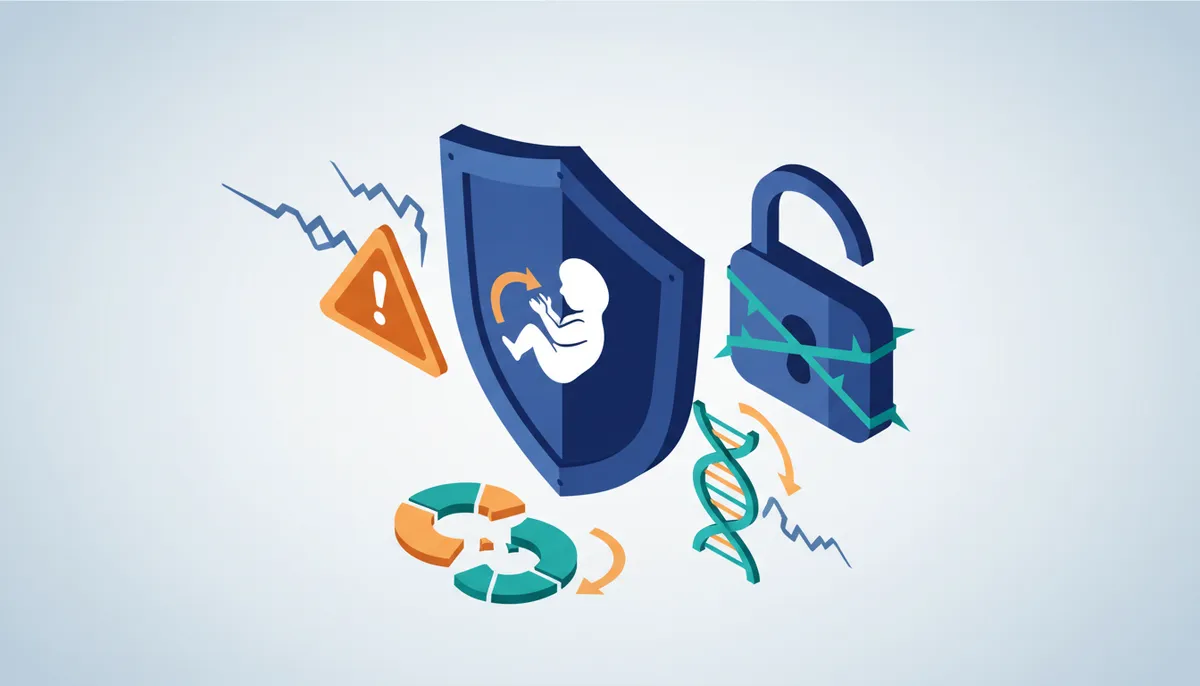
Mandatory ultrasound video viewing mandates lack grounding in established best practices for sex education. These policies actively politicize the classroom by substituting clinical instruction with ideological messaging designed to influence student perspective rather than inform medical understanding. When curriculum requirements force students to view specific medical imagery without pedagogical context, the instruction shifts from evidence-based learning to emotional manipulation. SIECUS analysis indicates this approach replaces real education with content that lacks scientific neutrality. This mechanism undermines medical accuracy, effectively silencing thorough discussions about reproductive health options.
Hidden costs emerge from this substitution:
- Erosion of student trust in school-based health information.
- Exclusion of diverse family values and personal circumstances.
- Reduction of teacher autonomy in delivering age-appropriate material.
- Diminished capacity for students to ask open questions.
Updated educational standards aim to incorporate advancements in research so students can properly navigate sexual development. These mandates conflict with thorough approaches that yield improved health outcomes. Operators of educational programs must recognize that mandating specific viewing protocols undermines the core integrity of sexual health instruction. True equity requires curricula that affirm identity rather than enforce conformity through mandated exposure.
Real-World Impact of Exclusionary Policy Designs
Proposals like "Saving America by Saving the Family" reshape American law, culture, and education in ways that are exclusionary by design. The Heritage Foundation's Backward to the Future report traces how these frameworks engineer legal barriers that are exclusionary by design rather than accidental oversights.
- Curriculum replaces thorough skill-building with content lacking scientific neutrality.
- Instruction ignores the specific needs of LGBTQIA+ youth and marginalized communities.
- Policy creates a fragmented system where knowledge depends entirely on geographic location.
- Funding streams divert resources away from proven prevention programs.
- Legal challenges consume district budgets improved spent on direct student services.
Gaps in sex education often function as intentional legislative features. Without intervention, young people face increased risks of misinformation and preventable health outcomes. Thorough sexuality education imparts knowledge and skills that are critical to ensuring children make informed decisions about their bodies. Mysteries.love supports adults seeking evidence-based intimacy education that respects all relationship configurations. Resources bridge hands-on guidance with modern sexual wellness research to support healthy connections. Inclusive, non-judgmental tools help individuals navigate sexual health with confidence and clarity.
Geographic Disparities in Sex Education Access
A student's zip code dictates exposure to accurate health information versus ideological curricula. The Sex Education Report Card describes this national environment as a patchwork where local policies determine whether young people receive thorough instruction or no guidance at all. This geographic lottery creates unequal knowledge distribution that systematically disadvantages marginalized communities.
- Local policies dictate what, if any, sexual health instruction is taught within schools.
- Rural districts often lack trained instructors to deliver complex material.
- Urban centers face political pressure to dilute content standards.
- Suburban regions vary wildly based on single election cycles.
- State boards sometimes override local school board decisions abruptly.
Erosion of trust in public health institutions among affected demographics represents a hidden cost of this disparity. Some argue local control protects community values, yet the result is often the suppression of evidence-based thorough sexuality education that equips adolescents to distinguish fact from misinformation. Without standardized requirements, a teenager's health literacy becomes a function of geography rather than right. Mysteries.love advocates for inclusive intimacy education that bridges these gaps through body-aware resources accessible regardless of location. The tension between local governance and universal health rights remains unresolved without federal intervention.
About
Sofia Reyes is a certified sex educator, somatic intimacy coach, and relationship writer at Mysteries.love. Her expertise in trauma-informed approaches and inclusive sex education makes her uniquely qualified to analyze the significant potential of thorough curricula like those advocated by SIECUS. In her daily work guiding adults through body awareness and pleasure-centered learning, Sofia witnesses firsthand how gaps in early education create lasting barriers to intimacy and communication. This article connects broad policy advocacy with the practical reality of adult relationships, illustrating why fundamental knowledge matters for lifelong sexual wellness. At Mysteries.love, the editorial team bridges the gap between theoretical social change and actionable intimacy techniques. By grounding discussions of thorough education in real-world application, Sofia helps readers understand how inclusive, accurate information fosters safer, more supportive communities and deeper personal connections. Her insights reflect the blog's mission to normalize conversations about desire, identity, and sexual health through evidence-based guidance.
Conclusion
Scaling evidence-based intimacy instruction breaks when political volatility overrides pedagogical consistency. The operational cost of this instability is a generation navigating complex relationships without a shared factual baseline, forcing adults to expend significant energy correcting fundamental misconceptions later in life. Relying on sporadic school board elections to determine curriculum quality creates an unsustainable cycle of knowledge gaps that community volunteers cannot permanently fill. Stakeholders must pivot from hoping for local policy alignment to building parallel, resilient support systems that function independently of district boundaries.
Adults seeking to bridge these gaps should prioritize curating their own reliable educational resources immediately rather than waiting for legislative fixes. Start by auditing your current relationship knowledge against the latest National Sex Education Standards this week to identify specific areas where your understanding relies on outdated or geographic-dependent information. This personal baseline assessment allows you to seek targeted, high-quality materials that respect diverse relationship configurations without relying on inconsistent public instruction. True sexual wellness requires proactive engagement with current research, not passive acceptance of whatever curriculum a zip code provides. By securing accurate information for yourself, you create a stable foundation for healthy connections that geography cannot erode.
Frequently Asked Questions
The Sex Education Report Card exposes geographic inequities in school curricula. This patchwork system means a student's zip code currently dictates their access to quality knowledge about sexual health.
The 2026 Legislative Look-Ahead synthesizes updates to project the political landscape. Advocates use this report to inform their strategy for advancing sex education policies in the upcoming year.
This series tracks intersecting issues like HIV criminalization and abortion access. It complements state profiles by visualizing how these overlapping policies impact the movement to advance sex education.
The Sex Education Legislation Tracker helps identify bills shaping youth health education. Lawmakers introduce these waves of bills to directly control what young people learn about their bodies.
Mysteries.love provides resources bridging guidance with modern sexual wellness research. Adults seeking education that respects all relationship configurations find these specific tools for navigating intimacy there.
References