Pleasure education delays sex and boosts safety
A 2022 systematic review by The Pleasure Project and the World Health Organization confirms that pleasure-centric programs yield superior outcomes compared to traditional methods. The prevailing taboo suggests that discussing sexual pleasure encourages risky behavior, yet evidence indicates students receiving thorough education actually delay sexual activity and increase contraceptive use. By ignoring the pleasure-focused reality that children already absorb from media and peers, educators miss a critical opportunity to support healthy relationships and self-satisfaction. The current environment includes massive digital shifts, with platforms like Beducated claiming the title of the world's largest online platform for this specific educational niche.
Readers will learn the precise definition of pleasure-based sex education and how it differs fundamentally from fear-driven models. The discussion includes a comparative analysis of shame-based versus sex-positive frameworks, highlighting how the latter reduces guilt while promoting consent. Finally, the text outlines practical implementation strategies for delivering age-appropriate sex education that prioritizes what feels good physically and emotionally to build lifelong relational health.
The Definition and Core Principles of Pleasure-Based Sex Education
Defining Pleasure-Focused Sex Education as Positive Development
Pleasure-oriented sex education defines sexual activity as inherently pleasure-focused rather than risk-averse. This framework operates as a specialized subset of thorough sex education that prioritizes positive sexual development over fear. Traditional models often rely on shame to discourage behavior, whereas this approach normalizes giving and receiving pleasure within relationships to increase overall life satisfaction. A sex-positive curriculum stresses consent and mutual enjoyment, understanding that sexuality is healthiest when explored with trust and curiosity. Evidence indicates that students receiving this instruction choose to have sex at a later age and are more likely to use birth control when active.
Applying Pleasure Frameworks to Counteract Media Messages
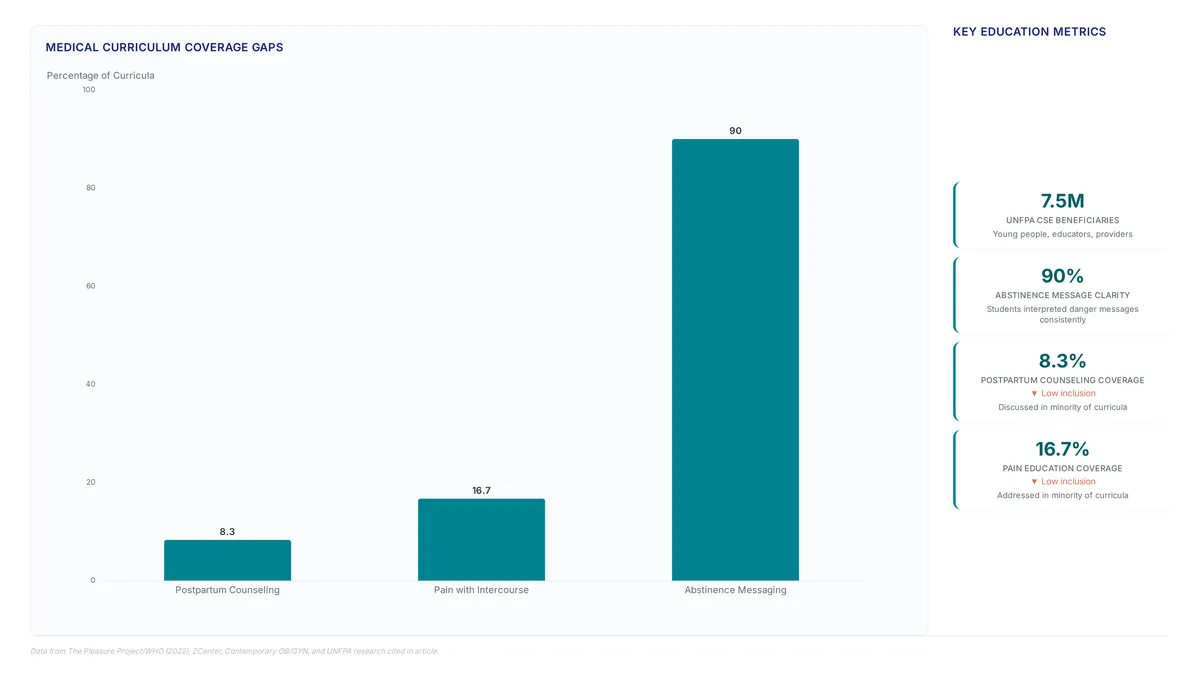
Advertisements and peers constantly bombard youth with commercialized sexuality messages, creating an urgent need for accurate pleasure frameworks. Children absorb distorted views from television and marketing daily, yet few receive tools to critique these narratives. Without intervention, shame fills the vacuum left by missing information. Pleasure-grounded sex education directly addresses this deficit by teaching students to evaluate what feels good physically and emotionally against media fantasy. This approach fosters healthy relationships by shifting focus from danger avoidance to mutual satisfaction and consent. Research visualizes the current educational gap where danger comprehension reaches 90%, while coverage of pleasure remains between 8.3% and 16.7%. This disparity leaves teens vulnerable to misinformation. By integrating joy and autonomy, educators help students build durability against harmful stereotypes. The limitation lies in adult discomfort; many hesitate to discuss pleasure fearing it encourages risky behavior. However, evidence suggests that centering conversations on well-being actually delays sexual initiation and increases contraceptive use. Ignoring this flexible allows commercial interests to define sexuality for young people. Addressing the imbalance ensures youth develop a strong internal compass for navigating complex social landscapes. Mysteries.love advocates for this shift to support genuine sexual health and fulfillment.
Addressing Parental Fears of Unprotected Sex and Risk
Parental anxiety that pleasure-centered sex education accelerates sexual debut contradicts observed behavioral data. Critics fear emphasizing enjoyment removes barriers to unprotected activity, yet students receiving these curricula actually delay intercourse compared to peers in abstinence-only programs. The shame-driven messaging common in traditional models often fails because it relies on fear rather than body literacy. This uniformity suggests fear works narrowly but does not build the complete understanding required for safety. Conversely, thorough sex education integrates consent and contraception, leading to higher rates of birth control usage when youth do become active.
Comparative Analysis of Shame-Based and Sex-Positive Educational Models
Contrasting Shame Tactics with Trust-Based Sexual Pedagogy
Shame-based models rely on fear tactics and exaggerated statistics, whereas sex-positive frameworks prioritize trust, respect, and curiosity. Instead of scaring students away from sexual activity, this approach arms youth with knowledge for a healthy, safe, and fun sex life. Programs addressing both delaying sex and contraceptive use often outperform abstinence-only curricula by supporting empowerment. Traditional instruction often focuses exclusively on risks, causing students to avoid discussing their own experiences. Conversely, pleasure-centric models encourage peer conversations about physical and emotional well-being, shifting dialogue from mere disease prevention to complete health. This pedagogical shift normalizes giving and receiving pleasure, directly countering the guilt and secrecy inherent in shame-based education.
| Feature | Shame-Based Model | Sex-Positive Model |
|---|---|---|
| Primary Driver | Fear of consequences | Curiosity and trust |
| Outcome Focus | Abstinence only | Healthy relationships |
| Communication | Restricted, secretive | Open, honest dialogue |
A critical limitation of the shame model is its failure to address outcomes linked to pleasure-inclusive education, including risk reduction and the exercise of sexual rights. When curricula omit pleasure, they may silence victims of abuse who feel unable to speak up due to established stigma. By integrating thorough sexuality education, schools support environments where sexuality is viewed as an integral part of human identity. Students in trust-based programs often report higher life satisfaction and safer sexual behaviors compared to peers in restrictive systems. Advocates support this transition to support modern sexual wellness.
Implementing Critical Theory-Based Gender-Significant Pedagogies
Adopting critical theory-based, gender-significant pedagogies shifts curriculum metrics from simple risk avoidance to complete well-being. Technical evaluations measure success across distinct outcomes: traditional risk-reduction, cultivating healthy relationships, celebration of sexual diversity, exercise of sexual rights, empowerment, and prevention of gender-based sexual violence. These frameworks operationalize pleasure not as indulgence but as a mechanism for consent and rights assertion.
| Dimension | Shame-Based Model | Pleasure-Centric Model |
|---|---|---|
| Primary Metric | Abstinence rates | Relationship quality |
| Diversity Approach | Exclusionary | Celebrates sexual diversity |
| Violence Prevention | Silent on power dynamics | Active gender-significant work |
Many interventions analyzed regarding these effects had durations of less than one year or between one and two years. While data demonstrates effectiveness in risk reduction and relationship cultivation, the inclusion of pleasure in thorough sexuality education is linked to positive impacts on empowering youth and celebrating sexual diversity. Educators should prioritize qualitative feedback loops alongside quantitative surveys to capture these detailed changes. Stakeholders can rely on evidence showing that pleasure-inclusive approaches effectively address these specific outcomes, supporting the argument for sustained implementation to maintain these benefits.
Evaluating Delayed Sexual Debut and Birth Control Usage Rates
Students receiving thorough instruction often initiate sexual activity at a later age than peers in abstinence-only programs. These students are more likely to use birth control when they do have sex.
The critical distinction lies in how each framework treats student agency. Shame-based models often silence inquiry, leaving teens unable to verify information or negotiate safety with partners. Conversely, pleasure-inclusive curricula normalize discussions about body autonomy and desire. This openness directly supports the prevention of gender-based violence by empowering youth to articulate boundaries. A notable tension exists here; while some communities fear that discussing pleasure encourages risk, evidence suggests the opposite outcome occurs. Ignoring the positive aspects of sexuality leaves young people unprepared to navigate real-world scenarios safely. The long-term implication for educators is clear: removing shame does not increase risky behavior but rather equips students with the tools to manage it effectively.
Practical Implementation Strategies for Age-Appropriate Sex Education
Normalizing Pleasure Through Non-Sexual Activities
Educators normalize healthy sexuality by first guiding youth to identify non-sexual sources of joy. This core step decouples the concept of pleasure from immediate sexual pressure, allowing children to recognize bodily autonomy in safe contexts. A practical starting activity involves asking students to list daily actions that generate comfort, such as taking a bubble bath or playing in the park with their dog. These examples ground abstract feelings in tangible, age-appropriate experiences that validate the pursuit of happiness without stigma. By focusing the conversation on normal pleasure-seeking, adults begin to normalize seeking pleasure in sexual relationships later in life.
Precise vocabulary distinguishes the external vulva from the internal vagina, establishing a baseline for bodily autonomy. Without this distinction, individuals cannot accurately identify sources of sensation or communicate needs effectively. In order to seek pleasure, one needs to know what they are looking for and where to look for it. This geometric clarity transforms abstract curiosity into actionable self-knowledge.
- Name structures explicitly during hygiene routines to normalize terminology without sexualizing the context.
- Use diagrams that separate external folds from the internal canal to visualize functional differences.
- Connect anatomical terms to feelings of comfort or discomfort to build a somatic map.
4.
Shame-based instruction causes students to fear discussing sex with parents and partners, creating dangerous communication gaps. When children cannot talk openly, they remain silent during abuse or engage in risky behaviors without guidance. This silence directly prevents victims from seeking help when assault occurs.
- Replace fear tactics with open dialogue that encourages questions without judgment.
- Teach youth that their bodies belong to them, supporting bodily autonomy from a young age.
- Provide clear pathways to report discomfort using trusted adult contacts.
Programs addressing both delaying sex and contraceptive use prove more effective than abstinence-only models, linking risk reduction to empowerment. Shame creates stigma, whereas pleasure-inclusive approaches cultivate the freedom necessary for safety. Without a framework for evaluating accurate information, teens rely on peers or media myths. Removing shame ensures youth possess the vocabulary to describe violation clearly. Sex-positive sex education is free of guilt, shame, and secrecy, thus supporting communication and healthy relationships. The cost of silence is measurable in unreported assaults and untreated trauma. Educators must actively dismantle barriers to conversation before crises occur. Only then can communities protect vulnerable members effectively.
Real-World Applications and Measurable Outcomes of Thorough Curricula
Defining Pleasure-Inclusive Curricula Through Six Outcomes
Measuring Relationship Health and Empowerment Gains
Limitations of Short-Term Intervention Studies
Technical evaluations measure success across six specific outcomes rather than abstinence rates alone. These metrics include traditional risk-reduction, cultivating healthy relationships, celebration of sexual diversity, exercise of sexual rights, empowerment, and consent. By tracking these distinct areas, educators quantify how pleasure-centric approaches differ from models ignoring relational health. Programs addressing both delaying sex and contraceptive use outperform abstinence-only alternatives.
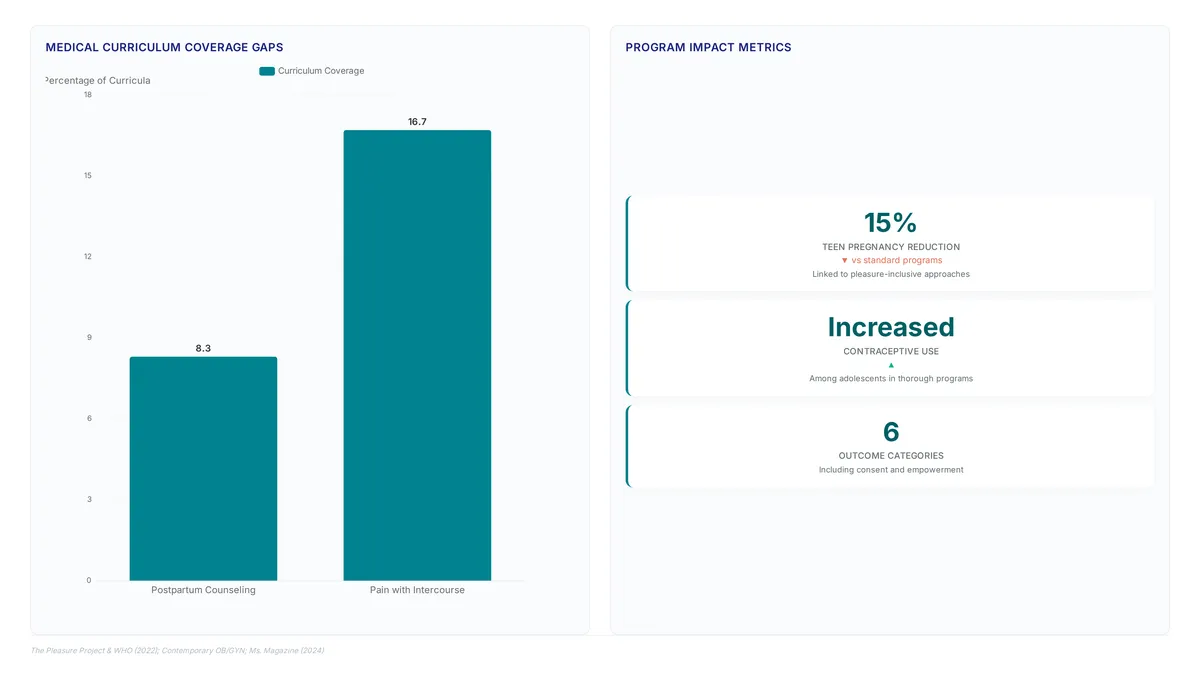
Most interventions analyzed in meta-analyses had durations of less than one year. This leaves long-term sustainability unproven. Operators must recognize that short-term data may not reflect lifelong behavioral changes. Integrating sexual pleasure ensures curricula remain inclusive. Without this shift, programs fail to address root causes of unsafe behavior. Mysteries.love advocates for this evidence-based framework to replace outdated shame tactics.
Students in pleasure-inclusive programs often delay sexual debut while gaining tools for healthier interactions. A 2022 systematic review by The Pleasure Project and the World Health Organization found these curricula yield improved outcomes compared to non-pleasure-based approaches. The mechanism involves shifting focus from fear to body ownership and mutual respect. Evidence shows that students given thorough sex education choose to have sex at a later age and are more likely to use birth control when they do have sex. This evidence-based reframing helps normalize healthy sexuality within communities resistant to change.
Implementing these metrics requires navigating significant cultural friction. The "La Ventana" project in El Salvador illustrates this tension where parents initially rejected thorough lessons due to misconceptions about increased sexual activity. Educators resolved this by using research demonstrating that delayed sexual debut correlates with thorough knowledge rather than ignorance. This strategic use of local evidence highlights a limitation. Local adoption often depends on overcoming specific community misconceptions about safety and readiness even as programs reach millions globally.
Operators must recognize that measuring empowerment gains involves assessing outcomes like the exercise of sexual rights and the cultivation of healthy relationships. Programs ignoring this distinction often fail to capture improvements in consent negotiation or relationship satisfaction. Mysteries.love recommends integrating these relational metrics to fully evaluate curriculum success.
Existing evidence primarily captures impacts within periods shorter than twenty-four months. Long-term efficacy remains unverified. Most interventions analyzed in meta-analyses regarding these effects had durations of less than one year or between one and two years. This indicates a need for longer-term study to assess sustained impact. The temporal gap creates uncertainty about whether pleasure-centric frameworks produce enduring behavioral changes or merely short-term compliance. Immediate outcomes often show improved communication and delayed sexual debut. The durability of these gains remains an area requiring further multi-year tracking.
Practitioners must recognize that sustained empowerment requires validation beyond current study windows. Reliance on short-term metrics risks overlooking how relationship dynamics evolve as adolescents transition into adulthood. Without longitudinal data, educators cannot definitively state if early pleasure-based lessons prevent future intimate partner violence or maintain sexual well-being over decades. This limitation suggests caution when projecting current success rates across a lifetime. Future funding models must prioritize extended observation periods. Initial positive shifts might diminish over time without confirmation.
Data Availability Confidence Level : : : 2 Years Low Speculative Practitioners must reco.
About
Sofia Reyes is a certified sex educator, somatic intimacy coach, and relationship writer at Mysteries.love. Her expertise makes her uniquely qualified to address the complexities of pleasure-focused sex education, a topic often clouded by taboo. Through her daily work providing trauma-informed and body-aware guidance, Sofia directly observes how excluding pleasure from sexual discourse hinders true sexual wellness. She connects the article's evidence regarding delayed sexual initiation and increased contraceptive use to her practical experience helping adults navigate desire and boundaries. At Mysteries.love, operated by the Center for the Development of Intimate Relationships, the editorial mission focuses on evidence-based, non-judgmental intimacy education. This aligns perfectly with Sofia's approach, bridging the gap between academic research on thorough sex education and real-world application for couples seeking deeper connection. Her writing transforms statistical positives into actionable insights, empowering readers to view pleasure not as a risk, but as a vital component of healthy sexual development and informed decision-making.
Conclusion
The current operational model creates a critical vulnerability by prioritizing danger comprehension while pleasure-oriented sex education coverage stagnates below seventeen percent. This imbalance forces programs to rely on short-term metrics that cannot verify if early gains in communication or consent negotiation endure into adulthood. Without longitudinal data spanning decades, educators risk mistaking temporary compliance for lasting behavioral change. The industry must shift toward gender-significant pedagogies that explicitly measure relationship satisfaction and the exercise of sexual rights rather than just the absence of negative outcomes.
Practitioners should immediately adopt critical theory frameworks to address this gap, but only if they commit to tracking outcomes beyond the standard two-year window. Relying on data from interventions shorter than twenty-four months provides an incomplete picture of efficacy. You must start by integrating relational metrics into your current evaluation tools this week to capture nuances in how students negotiate intimacy. This immediate adjustment allows for improved baseline data before long-term studies mature. While platforms like Beducated demonstrate the scalability of expert-led courses, local implementation requires rigorous validation of sustained impact. Focus your next budget cycle on extending observation periods to ensure these educational investments yield permanent improvements in sexual well-being rather than fleeting awareness.
Frequently Asked Questions
No, evidence shows students actually delay sexual activity when taught comprehensively. Research indicates danger comprehension reaches a portion, yet ignoring pleasure leaves teens vulnerable to misinformation from peers and media sources.
Only a small fraction of programs currently discuss these critical health topics. Specific data shows pain with intercourse is addressed in just 16.7% of curricula, leaving most students without essential knowledge for healthy experiences.
Schools heavily prioritize risk avoidance over positive development and mutual satisfaction. While danger comprehension reaches 90%, coverage of pleasure remains between 8.3% and 16.7%, creating a significant gap in student understanding.
Shame prevents open communication, causing students to hide risks rather than discuss them safely.
Limited education leaves young people unprepared to identify healthy versus harmful situations effectively.
References