Sexless marriage? Why screen time kills desire
Three years. That is the marker ABC Lifestyle used to define a sexless marriage. Beyond the headline, the real story involves desire discrepancy, the way screen time strangles eroticism in marriage, and why grand gestures fail where daily habits succeed.
Modern fatigue drives this collapse. In a 2026 case study featured by ABC Lifestyle, a 41-year-old woman named Alice described a husband who retreats to phone games or PC sessions with friends to quiet his mind after stressful days. This isn't just downtime; it creates a barrier where sexual incompatibility with partner becomes the default state. The 2025 We-Vibe report on long-term relationships confirms the pattern: satisfaction metrics plummet when digital distractions replace direct engagement.
Recovery demands more than a single night away. Alice noted that while a booked city stay helped temporarily, she cannot sustain intimacy through isolated events. Sex therapist Georgia Grace emphasizes that both partners must invest in change to stop the cycle of burnout. The following sections detail how to identify the loss of connection and provide concrete steps to restore marital intimacy in an era of constant distraction.
The True Definition of a Sexless Marriage and Desire Discrepancy
Defining Sexless Marriage and the Myth of Spontaneous Desire
Clinicians define a sexless marriage by the persistent absence of sexual activity causing distress to at least one partner, not by a rigid frequency count. The real friction arrives with desire discrepancy, where mismatched libidos replace mutual understanding. For decades, couples operated under a false assumption: that sexual urge should arise automatically without prior emotional engagement. Relationship paradigms projected for 2026 indicate a decisive shift away from this myth of spontaneous desire. Experts now identify emotional foreplay as the necessary precursor to physical intimacy, requiring partners to feel consistently seen before arousal can occur. Reconnection demands significant emotional labor rather than financial expenditure on dates or retreats.
Waiting for hunger to arrive before cooking guarantees starvation. Sporadic romantic gestures fail because desire thrives specifically where people feel seen consistently over time. Couples must instead schedule the conditions for desire, treating intimacy as a practice built on curiosity rather than a reflex triggered by proximity. Automatic expectation is a developmental stage couples must navigate to sustain long-term passion.
Applying Emotional Foreplay and Consistent Visibility in Relationships
Consistent visibility functions as the primary catalyst for desire, requiring partners to feel continuously seen rather than occasionally noticed. This state establishes the necessary foundation for emotional foreplay, a practice where connection builds long before physical undressing occurs. Experts forecast that desire grows specifically where people feel "seen consistently," predicting a move away from sporadic romantic gestures toward sustained emotional presence. Unlike physical intimacy, which can be intermittent, this model demands that couples prioritize being witnessed in daily life to reignite eroticism.
Sex therapist Georgia Grace states that to prioritise eroticism and intimacy, "both people in the relationship need to be invested to make a change." Mutual investment transforms eroticism in relationships from a spontaneous event into a cultivated skill set. Emotional intimacy serves as the gateway to physical satisfaction, not merely its byproduct. Maintaining such high levels of awareness amidst daily stressors requires significant effort. Digital distractions often compete for attention at bedtime, causing couples to struggle with sustaining focus. Partners revert to parallel existence rather than shared experience without deliberate practice. Success depends on replacing passive cohabitation with active curiosity about a partner's internal world.
Risks of Structural Stressors and Competing Responsibilities on Libido
Sexual desire in long-term partnerships functions as a hopeful "David" facing a myriad of "Goliath" stressors that erode intimacy. This desire discrepancy emerges not from a lack of love, but from compounding structural barriers like competing responsibilities and pent-up resentments that block connection. Therapy contexts distinguish these logistical and emotional loads, noting that addressing only one category often fails to restore sexual desire. Partners feel invisible rather than desired when couples ignore these stacked pressures. A 2025 report highlights that small interventions can boost satisfaction, yet many relationships remain stalled by unaddressed life demands. Affection alone cannot override the mechanical reality of exhaustion and unresolved grief. Even committed partners may find their erotic life non-existent despite deep attachment without actively dismantling these specific stressors. Restoring intimacy requires recognizing that desire cannot survive when basic emotional safety is compromised by external chaos.
How Digital Distractions and Stress Sabotage Marital Intimacy
Defining Consistent Visibility as the Antidote to Digital Disconnection
Partners require a state of being seen continuously rather than relying on intermittent romantic events to sustain desire. This model contrasts sharply with previous reliance on sporadic romantic gestures or immediate physical escalation. Smartphones frequently interrupt this necessary state by creating a "cone of silence" where burnout leads to screen-based isolation instead of shared presence. A partner choosing phone games over eye contact causes the relationship to lose the specific frequency of attention required for desire to grow. The concept of "consistent" visibility is presented as an ongoing timeline requirement, distinguishing it from superficial or event-based interaction.
Daily discipline replaces occasional grand gestures as the primary cost of this approach. Couples cannot build emotional intimacy if they wait for low-stress moments that rarely occur without intervention. The shift toward purposeful pleasure in 2026 marks a return to physical presence as a counterbalance to digital overload. Partners who do not prioritize being present before physical undressing risk cementing a pattern of disconnection. Desire cannot flourish in pockets of availability. It requires a foundation where both individuals feel actively observed and valued every day.
Applying Alice's Case Study: From Burnout to Reconnection
Alice reports her sex life is non-existent because both partners face exhaustion by day's end. Her husband quiets a stressful mind by playing games on his phone rather than engaging. This behavior creates a cone of silence where digital hyper-stimulation blocks the transition to physical closeness. Switching directly from screen engagement to intimacy feels impossible for many couples facing similar burnout. The brain requires a decompression period to shift from high-speed digital input to slow relational presence.
Troubleshooting unmet intimacy needs requires identifying that phone usage often masks underlying emotional avoidance. Alice notes she wants to feel desired, not perform sexual acts. This distinction highlights how competing responsibilities and pent-up resentments act as Goliath stressors against desire. Addressing only the schedule without fixing the emotional disconnection fails to restore the bond.
Sporadic romantic gestures cannot overcome daily digital interference. Alice cannot keep booking nights in the city to force connection artificially. Sustainable change demands reducing phone use to allow consistent visibility between partners. One partner remaining glued to a screen makes the other feel invisible and unwanted. Restoring the feeling of being seen requires deliberate removal of these electronic barriers. Curiosity can replace the silence that currently dominates their evenings.
Risks of the David vs Goliath Struggle Against Compounding Stressors
Sexual desire in long-term partnerships functions as a hopeful David facing a myriad of Goliath stressors that mechanically suppress erotic response. Research frames this erosion as a vulnerability where desire loses against compounding pressures like competing responsibilities. Partners prioritizing digital decompression over connection inadvertently reinforce a cone of silence that isolates them within the relationship. The specific risk involves a shift from mutual engagement to parallel isolation, where one partner plays games while the other waits.
The performance versus connection dilemma emerges when couples attempt scheduled intimacy without resolving underlying disconnection. Partners often mistake the absence of conflict for the presence of closeness, ignoring how digital distractions fragment attention. This fragmentation prevents the consistent visibility required to reignite desire. Well-intentioned efforts to reconnect may fail because the foundation remains eroded by unaddressed stress. The consequence is a relationship that survives on commitment but lacks the vibrancy of active desire. Desire cannot compete effectively when Goliath-sized stressors dominate the relational environment.
2026
Actionable Strategies for Reconnecting Emotionally and Sexually
Defining the Hyper Stimulation Barrier to Intimacy
Switching from the hyper stimulation of a phone screen to sexual presence can feel impossible without an intentional break in the pattern. When a device serves as the final visual focus before sleep, it interrupts natural opportunities for connection. This digital engagement prevents the mind from settling into the shared space required for vulnerability and trust to flourish between two people. Couples who feel emotionally connected are more likely to explore fantasies because they have successfully transitioned away from external distractions. Reducing phone use is not merely about screen time statistics; it addresses the difficulty of switching from rapid-fire content consumption to the attentive rhythm of intimacy. The barrier is often a failure to manage the transition from digital noise to human touch. Partners must recognize that the phone is often a third-party in the bedroom, silently demanding attention that belongs to the relationship. Creating a phone-free zone in the bedroom allows couples to prioritize the person lying next to them.
Executing Specific Initiation Scripts for Sexual Preferences
Taking responsibility for your sex life requires explicitly asking how a partner prefers to approach intimacy rather than relying on vague hints. Partners must get across how they like to approach sex and ask each other directly. This shift moves couples away from the performance scripts often learned from movies, which prioritize immediate penetration over genuine human connection.
- "Would you like me to initiate sex with you?"
- "What ways do you want me to move towards you?"
These specific questions create an environment where individuals can express their unique preferences. Therapy trends are shifting toward recognizing that great conversations start with improved questions, acknowledging that one partner cannot know more about the other's body than they do themselves. This curiosity is particularly vital when raising children, as parents must compartmentalize daily stressors to access a shared space for desire.
| Distraction Type | Impact on Initiation |
|---|---|
| Digital Noise | Interrupts transition to presence |
| Assumed Scripts | Blocks authentic preference |
| Lack of Questions | Prevents mutual understanding |
Small changes, such as open dialogue, can significantly boost sexual satisfaction compared to maintaining silence. However, initiating these talks requires navigating the tension between wanting clarity and fearing rejection. The limitation here is that verbalizing desire feels vulnerable, yet avoiding it guarantees disconnection. Partners who cultivate this curiosity often find that emotional foreplay begins long before physical touch, transforming the entire flexible of their relationship.
Checklist for Disrupting Digital Bedtime Routines
Most individuals keep phones within arm's reach, making the screen the final visual stimulus before unconsciousness. This proximity creates a hyper stimulation barrier that renders switching to sexual presence nearly impossible without intervention. Couples must be willing to do things differently by physically separating from devices to restore emotional visibility.
- Replace evening scrolling with specific questions about each other's day.
- Establish a device-free zone that prioritizes consistent emotional visibility.
The absence of digital noise allows partners to build the emotional foreplay necessary for physical connection long before anyone takes anything off. This sequence is becoming dominant as couples recognize that connection requires deliberate cultivation rather than spontaneous occurrence. The cost of this transition is the emotional labor required to break established habits, yet the investment yields higher satisfaction scores compared to doing nothing. Without removing the phone, the nervous system remains alert, blocking the path to responsive desire.
Implementing a Structured Plan to Restore Desire and Connection
Defining New Sexual Scripts Through Explicit Communication
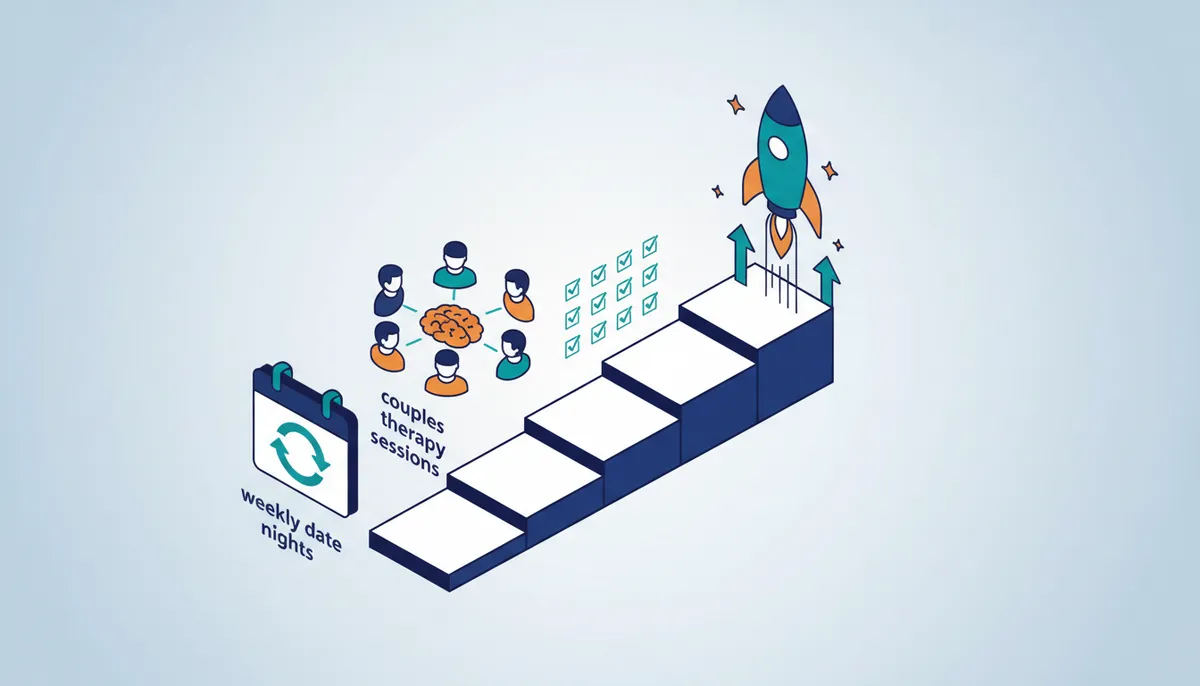
Explicitly defining sexual scripts replaces the failure of spontaneous expectation with clear, actionable communication. Couples need to be willing to do things differently by abandoning performance narratives learned from media. The sexual template represents a unique, individualized framework of preferences that requires active discovery rather than assumption. Many partners struggle because they attempt to switch from the hyper-stimulation of digital devices to intimate connection without a transition period.
To restore desire, partners must take responsibility by asking specific questions that remove ambiguity. Georgia Grace suggests inquiring, "Would you like me to initiate sex with you?" to clarify approaches to intimacy. This method shifts the flexible from guessing to knowing, supporting a environment where curiosity drives interaction.
- Identify current phone use patterns that interrupt potential connection windows.
- Formulate specific inquiries about how a partner prefers to be approached physically.
- Discuss how life stages currently influence individual energy levels and stimulation thresholds.
A critical tension exists between the desire for natural flow and the necessity of structure; without explicit definition, partners often default to silence. While some fear that scripting intimacy removes romance, the alternative is often a complete cessation of physical contact due to uncertainty. Modern therapy trends move toward shame-free environments that address these unique templates rather than pathologizing low frequency. By cultivating curiosity, couples create a sustainable path forward that accommodates changing bodies and minds.
Executing Staycation Strategies to Counteract Daily Burnout
Booking dedicated off-site time breaks the cycle of exhaustion that suppresses desire. Alice, a 41-year-old from Sydney, recalls her husband used to look at her with awe before burnout created a cone of silence. She notes they are both usually burnt out by the end of the day, making environmental change necessary. Her solution involved booking a city stay after three years without sex, proving that altering location can reset intimacy dynamics. However, she admits she cannot keep booking nights in the city, highlighting the need for sustainable, lower-cost alternatives like home-based staycations.
Couples must actively manage stimulation to bridge the gap between digital distraction and presence. Transitioning from the hyper stimulation of phones to sexual connection feels impossible without a buffer zone. Partners should implement a structured plan to reduce phone use before attempting intimacy. This approach addresses the specific stressor of competing responsibilities that often blocks desire.
- Designate a specific room in your home as a technology-free zone for the evening.
- Agree on a start time where all screens are turned off one hour before bed.
- Prepare the space with fresh linens or lighting to signal a change in context.
- Ask specific questions like what ways your partner wants you to move towards them.
The limitation of this strategy is that it requires both partners to invest in changing approaches. Without mutual commitment to cultivate curiosity, the environment alone cannot restore the spark. The cost of failing to adapt is a continued reliance on performance scripts rather than genuine connection.
Checklist for Validating Readiness for Professional Sex Therapy
Couples should seek professional sex therapy when their sex life feels non-existent despite sincere attempts at reconnection. Self-guided strategies often fail when partners cannot transition from digital hyper-stimulation to presence without external support. A distinct inability to address both competing responsibilities and pent-up resentments signals that logistical fixes alone are insufficient. This distinction validates that a lack of desire is often a reaction to identifiable stressors rather than a personal failure.
- Assess if digital distraction consistently blocks the switch to intimacy.
- Determine if emotional baggage persists after resolving schedule conflicts.
- Evaluate whether medical factors like menopause require specialized psychological intervention.
| Indicator | Self-Help Suitable | Therapy Required |
|---|---|---|
| Desire Level | Fluctuates with stress | Consistently absent |
| Resentment | Manageable via talk | Blocks physical touch |
| Focus | Distracted but present | Impossible to switch |
The publisher recommends intervention when couples cannot independently cultivate the curiosity needed to navigate body image issues or life stage changes. Externalizing these problems helps partners see their situation as a shared challenge requiring skilled guidance. Professional support becomes necessary when the gap between wanting connection and achieving it widens despite good faith efforts.
About
Sofia Reyes is a certified sex educator and somatic intimacy coach at mysteries.love, where she specializes in sexual wellness and pleasure-centered education. Her expertise makes her uniquely qualified to address the complexities of sexless marriages, a topic deeply aligned with her daily work supporting individuals navigating desire discrepancies. Through her role, Reyes applies trauma-informed and somatic approaches to help couples rebuild physical connection, directly mirroring the article's focus on reconnecting after intimacy fades. At mysteries.love, a platform dedicated to evidence-based intimacy education, she bridges the gap between relationship psychology and practical tools for reigniting passion. Her experience guiding adults through difficult conversations about libido and body awareness ensures that the advice offered is both compassionate and grounded in modern sexual wellness research. By connecting daily professional practice with the real-world struggles of long-term relationships, Reyes provides actionable insights for those seeking to restore eroticism and trust within their partnerships.
Conclusion
Scaling intimacy efforts fails when partners treat desire as a mechanical output rather than a relational byproduct. The operational cost of ignoring this distinction is a permanent reliance on performance scripts that drain emotional reserves without restoring connection. When digital distraction consistently blocks the switch to presence, self-guided fixes become counterproductive because they cannot address the deep-seated resentments blocking physical touch. You must recognize that sexual incompatibility often masks a failure to build the necessary emotional groundwork long before physical escalation occurs.
Start professional sex therapy immediately if your desire level remains consistently absent despite sincere attempts to resolve schedule conflicts. Do not wait for a specific crisis point; the window for effective intervention closes when resentment fully blocks physical touch. Your first action this week is to audit your last three attempts at intimacy and identify if digital distraction or unresolved emotional baggage caused the failure. If you cannot switch focus from screens to your partner without external prompting, self-help is no longer sufficient. Prioritize building a improved connection through skilled guidance rather than forcing physical outcomes. This approach addresses the root cause of a non-existent sex life by treating the relationship flexible instead of just the symptom.
Frequently Asked Questions
Experts recommend implementing exactly 5 things to overcome diminished libido in partnerships. These actionable steps help couples rebuild connection by replacing sporadic gestures with consistent emotional presence and curiosity.
Switching from phone games to meaningful connection feels impossible without deliberate practice and reduced screen time. The 2026 trends show emotional foreplay must precede physical acts to effectively restore desire.
A single city stay cannot sustain intimacy if daily stressors and digital barriers remain unaddressed at home. Lasting change requires both partners to invest in consistent visibility rather than occasional events.
Partners must feel seen consistently over time because the myth of spontaneous desire no longer serves long-term relationships. This shift demands active curiosity about a partner's internal world daily.
Couples should ask direct questions about initiation preferences to navigate sexual incompatibility with their partner. Great sexual partners stay curious about each other's bodies instead of relying on old scripts.
References