Communication tools that actually stop arguments
Comparing 15 items across 14 brands reveals a stark reality: structured workbooks and card decks outperform casual conversation for lasting relationship repair. Empathy-driven frameworks provide the architecture couples need to navigate conflict without escalating tension. Unguided dialogue often lacks the guardrails necessary for true vulnerability.
The analysis dissects core principles in leading methodologies, showing how specific prompts reduce defensive reactions during high-stress interactions. Conversation card decks excel at breaking ice, while traditional workbook exercises offer the depth required for recurring issues. Data from The Happy Loved Life Team indicates that tools focusing on daily routine integration sustain engagement longer than sporadic, high-intensity sessions.
We move beyond theory to operationalizing emotional intelligence through consistent practice. Daily practice routines embedded in journals help partners build durability over time, turning communication strategies into automatic responses rather than forced techniques during arguments. By prioritizing practical application, couples achieve measurable improvements in trust and intimacy levels.
Core Principles of Empathy-Driven Communication Frameworks
Defining Nonviolent Communication and Emotional Intelligence
Nonviolent Communication functions as a structured empathy framework that separates observation from evaluation to lower defensive reactions. *Nonviolent Communication: A Language of Life* stands as the overall best pick due to its specific focus on empathy and understanding. The text outlines a four-step process designed for clear expression. This method differs from casual dialogue by demanding specific identification of feelings and needs prior to making requests. Open and honest communication requires clear language, positive coping strategies, and a sustained commitment to relational health.
Emotional intelligence within relationships measures the capacity for self-awareness and regulated responses during interpersonal stress. Smart intimacy devices apply hardware to boost physical connection, yet verbal skills prevent misunderstandings through cognitive reframing rather than sensory input. Relationship improvement tools show a clear split between these verbal protocols and physical aids. Structured tools like workbooks support deeper conversations quickly but can feel less natural than unstructured interaction.
Partners seeking quick repairs often find the rigorous self-inquiry of emotional intelligence challenging during acute conflict. The publisher mission emphasizes bridging hands-on product guidance with body-aware intimacy education to address this gap. Adopting these vocabularies demands initial cognitive load before yielding automaticity in high-stress moments.
Applying Structured Tools Like BestSelf Intimacy Deck
Structured relationship tools like the BestSelf Intimacy Deck accelerate emotional intimacy by replacing ambiguous casual dialogue with specific, empathy-driven prompts. Unstructured conversations often stall on surface-level topics. These conversation starters force a departure from routine scripts to address deeper relational needs. The mechanism relies on externalizing topic selection, which lowers the cognitive load required to initiate vulnerable discussions.
The Questions for Couples Journal excels at deepening daily connection through written reflection. Rigid frameworks carry a cost: a potential loss of conversational fluidity. Partners may feel the interaction is mechanical rather than organic during initial uses. This perceived artificiality serves a functional purpose by bypassing defensive avoidance patterns that typically silence difficult topics in natural speech. High-intensity cards can overwhelm couples lacking baseline safety. These tools work best when paired with established positive coping strategies. Value lies in the forced regularity of engagement, transforming sporadic check-ins into a disciplined practice of mutual understanding.
Self-Guided NVC vs Clinical Sensate Focus Exercises
Self-guided Nonviolent Communication workbooks prioritize peer-to-peer application through written frameworks rather than clinical oversight. This modality contrasts with Sensate Focus Exercises that rely on expert-guided structures to regulate physical and emotional responses.
NVC materials emphasize cognitive reframing of needs. Clinical approaches often address somatic barriers that text alone cannot resolve. Self-guided tools lack real-time feedback when partners misinterpret emotional cues during high-conflict states. Clinical settings provide immediate correction but require scheduling coordination and financial investment. Operators of relationship health must weigh the accessibility of workbooks against the precision of professional intervention. Convenience of asynchronous practice conflicts with the safety of supervised exposure to vulnerability. Couples with entrenched trauma patterns risk re-injury without the containment a therapist provides. The Happy Loved Life Team notes that premium options often include guided exercises to bridge this gap. Selection depends on whether the primary barrier is linguistic clarity or physiological dysregulation.
Comparative Analysis of Workbooks Versus Conversation Card Decks
Workbook Depth Versus Card Deck Flexibility Mechanisms
Choosing between a workbook vs card game for couples depends on whether the goal is deep structural learning or immediate conversational flexibility. The Nonviolent Communication: A Language of Life text spans 368 pages, offering thorough frameworks that require significant practice to fully integrate techniques. This volume allows for profound skill acquisition but demands a higher initial time investment than flexible prompt decks.
| Feature | Thorough Workbooks | Conversation Card Decks |
|---|---|---|
| Primary Mechanism | Structured, linear learning paths | Randomized,-based prompts |
| Engagement Depth | High; requires dedicated study sessions | Moderate; supports casual interaction |
| Learning Curve | Steep; needs consistent practice | Low; instant deployment possible |
| Best Use Case | Core skill building | Daily maintenance and ice-breaking |
Publishers like PuddleDancer Press design these extensive volumes for partners committed to long-term behavioral change rather than quick fixes. Conversely, card decks sacrifice technical depth for ease of use, making them ideal when energy levels are low or time is scarce. Couples should select structured tools when addressing recurring conflict patterns and flexible tools for maintaining connection during stable periods. This distinction prevents the frustration of applying superficial prompts to deep-seated relational issues.
Deploying Talk to Me Like I'm Someone You Love for Rapid Repair
Couples requiring immediate conflict de-escalation benefit from the flash repair capability found in *Talk to Me Like I'm Someone You Love*. This 144-page resource, subtitled *Relationship Repair in a Flash*, prioritizes swift intervention over the deep theoretical study required by longer texts. While thorough workbooks build core empathy over months, this guide offers straightforward strategies to mend trust during acute distress. The text lacks extensive explanations of underlying psychological mechanisms. Operators should deploy this tool specifically for rapid stabilization rather than long-term skill architecture.
| Feature | Rapid Repair Guide | Thorough Workbook |
|---|---|---|
| Primary Goal | Immediate conflict resolution | Long-term skill integration |
| Time Investment | Low; designed for quick access | High; requires dedicated study |
| Depth | Surface-level actionable tips | Deep theoretical frameworks |
Speed and sustainability rarely coexist in a single tool. Relying solely on quick fixes may prevent partners from developing the empathetic communication skills necessary to prevent future ruptures. Conversely, attempting deep structural work during a crisis often exacerbates tension due to cognitive overload. The optimal approach sequences these tools: use the revised edition for immediate triage, then transition to Nonviolent Communication: A Language of Life for lasting behavioral change. This workflow ensures that rapid repairs do not become substitutes for genuine connection.
Repetitiveness Risks in BestSelf Intimacy Deck Usage
Frequent deployment of the BestSelf Intimacy Deck often yields diminishing returns as partners exhaust the finite prompt pool. While the tool effectively encourages deep conversations initially, the static nature of the cards creates a ceiling for long-term engagement. Couples who rely exclusively on this format may encounter a plateau where conversation starters feel recycled rather than revelatory. This limitation contrasts sharply with thorough guides that offer evolving theoretical frameworks for continuous learning.
| Dimension | Card Deck Prompts | Thorough Workbooks |
|---|---|---|
| Content Volume | Fixed set of questions | Expansive textual depth |
| Longevity | High risk of repetition | Sustained via new chapters |
| Adaptability | Low; rigid structure | High; contextual application |
The primary risk involves couples mistaking prompt fatigue for relationship stagnation. When the structured tools no longer surprise, partners might incorrectly assume their emotional intimacy has peaked. Card decks function best as supplemental warm-ups rather than sole curricula for relationship development. Operators should transition to flexible, text-based resources once the initial novelty of randomized questions fades. The lack of evolving content means the tool cannot scale with a relationship's expanding complexity. Users seeking enduring growth must eventually migrate from static queries to flexible, skill-based learning systems.
Operationalizing Emotional Intelligence Through Daily Practice Routines
Daily Mechanics of Nonviolent Communication Techniques
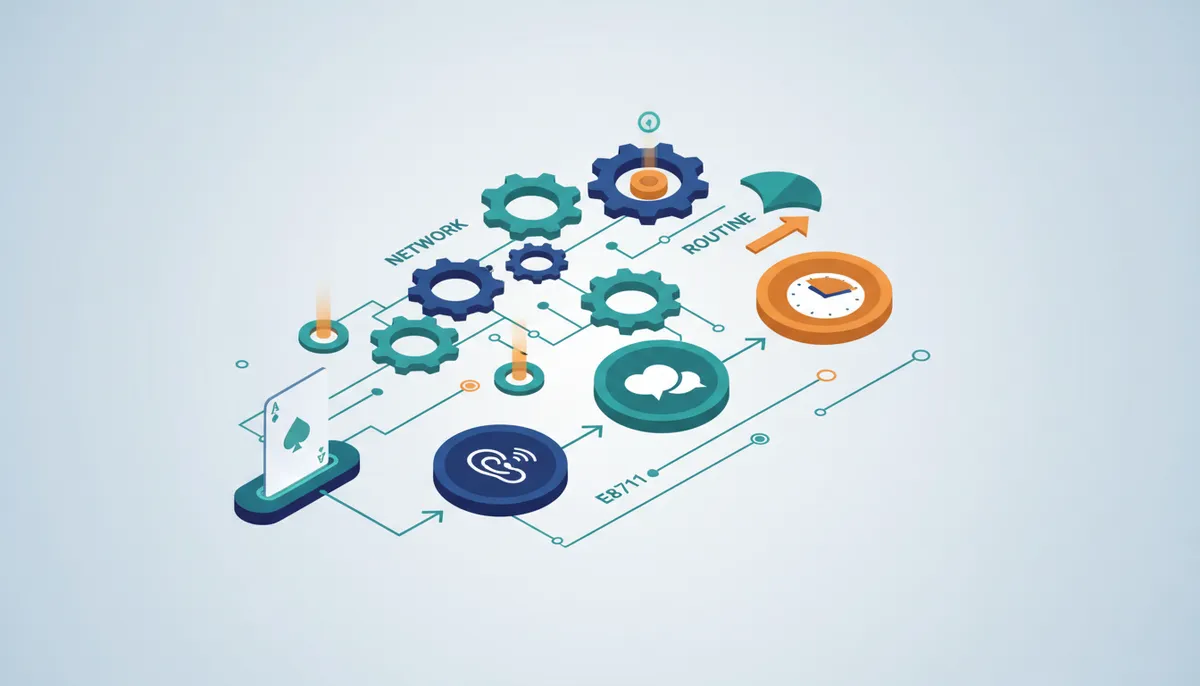
Integrating Nonviolent Communication into daily routines requires converting abstract empathy concepts into concrete verbal patterns like observation and request. The cognitive mechanics involve pausing automatic reactions to identify specific feelings and needs before speaking. Users may initially find this structured approach repetitive or challenging, a noted characteristic of thorough guides published by PuddleDancer Press.
- Observe the situation without evaluation or judgment.
- Identify the specific feeling triggered by the observation.
- Connect the feeling to an unmet need.
- Formulate a clear, actionable request.
| Feature | Passive Reading | Active NVC Practice |
|---|---|---|
| Engagement | Low cognitive load | High cognitive friction |
| Outcome | Theoretical knowledge | Behavioral change |
| Duration | Single session | Continuous routine |
To sustain this practice, integrate journal prompts that force articulation of needs rather than complaints. Unlike quick-fix manuals from HarperOne, deep skill acquisition demands consistent repetition despite early awkwardness. The operational cost is time; the benefit is replacing reactive conflict with collaborative problem-solving. Open and honest communication involves clear language, positive coping strategies, and commitment. Addressing disagreements respectfully leads to healthier interactions, yet many skip the difficult practice phase where techniques feel artificial. This friction indicates the brain is rewiring habitual responses, a necessary step for lasting intimacy.
Mechanics: Implementing Talk to Me Like I'm Someone You Love for Rapid Repair
Deploy the "Relationship Repair in a Flash" methodology from the HarperOne text to interrupt conflict escalation cycles immediately. This 144-page guide prioritizes speed over depth, offering straightforward strategies that couples can apply during high-tension moments without requiring extensive study. Unlike thorough frameworks that demand significant cognitive load, this approach functions as an emergency brake for deteriorating conversations.
- Pause the current interaction to prevent further emotional flooding.
- Select a specific prompt card or page targeting the immediate friction point.
- Read the suggested phrasing aloud to reframe the narrative collaboratively.
- Resume dialogue using the provided syntax to maintain emotional safety.
| Feature | Immediate Repair Mode | Deep Dive Analysis |
|---|---|---|
| Primary Goal | De-escalate tension quickly | Understand root causes |
| Time Required | Minutes | Hours or days |
| Cognitive Load | Low | High |
| Best Used When | Emotions are volatile | Both parties are calm |
Rapid repair tools lack the detailed technical content necessary for resolving complex, systemic relationship issues. Practitioners risk masking deep incompatibilities if they rely exclusively on quick-fix syntax without addressing underlying patterns. For couples needing to integrate conversation cards daily, this book serves best as a triage mechanism rather than a complete curriculum.
Daily implementation requires distinguishing between moments needing immediate stabilization versus those requiring the structured introspection found in longer workbooks. Recognizing when a quick repair suffices and when a relationship requires the heavier lifting of sustained therapeutic work is critical. Ignoring this distinction can lead to a cycle of superficial resolutions that fail to prevent recurring conflicts.
Validation Checklist for Self-Guided NVC Versus Clinical Structures
Determine if self-guided peer-to-peer application suffices by monitoring for persistent errors in applying empathy techniques during conflict.
| Indicator | Self-Guided Sufficiency | Clinical Structure Needed |
|---|---|---|
| Conflict Pattern | Resolves with clear language | Escalates despite positive coping |
| Tool Response | Workbooks reduce tension | Techniques feel repetitive or invalid |
| Outcome | Strengthens relationship bond | Requires expert-guided intervention |
- Assess whether open and honest communication restores stability after using Nonviolent Communication frameworks.
- Verify if the Couples Communication Workbook exercises generate clarity or increase confusion regarding specific needs.
- Evaluate if commitment to daily practice yields collaborative disagreement resolution within two weeks.
Materials published by PuddleDancer Press emphasize long-term skill building but may initially feel challenging without external feedback loops. HarperOne titles offer rapid repair strategies yet often lack the technical depth required for complex trauma processing. The critical distinction lies in whether the error involves technique execution or fundamental safety; clinical structures become mandatory when safety is compromised or when self-guided attempts consistently fail to de-escalate tension. Operators must recognize that emotional intelligence tools cannot replace professional therapy when underlying psychological hazards exist.
Executing Targeted Strategies for Relationship Repair and Trust Restoration
Application: Defining the Scope of Nonviolent Communication for Relationship Contexts
Nonviolent Communication functions as a rigorous discipline requiring sustained practice rather than a quick fix for immediate conflict. The framework outlined in *Nonviolent Communication: A Language of Life* provides techniques for rebuilding trust, yet the text explicitly notes it may require significant practice to fully integrate these methods into daily interaction. This learning curve distinguishes deep structural repair from superficial relationship repair techniques found in quicker guides. The cost involves exchanging immediate relief for long-term emotional intimacy gains that simpler tools cannot sustain. The scope of this work extends beyond resolving single arguments to fundamentally altering how partners perceive each other's humanity during distress.
Application: Deploying Talk to Me Like I'm Someone You Love for Rapid Repair
Partners fix communication breakdown in relationship contexts by using the concise, 144-page framework found in *Talk to Me Like I'm Someone You Love*. This text, subtitled *Relationship Repair in a Flash*, prioritizes immediate de-escalation over the deep theoretical study required by heavier volumes. Operators facing acute conflict need straightforward strategies that function without extensive prior training or complex psychological mapping. Speed creates a functional drawback: the guide lacks detailed technical content or extensive explanations regarding the underlying emotional mechanics. While the book offers practical strategies to mend relationships swiftly, it does not provide the extensive depth found in longer manuals. The publisher HarperOne positions this volume specifically for those needing fast, effective tips to repair communication and rebuild trust quickly.
Application: Mitigating Repetitiveness Risks in BestSelf Intimacy Deck Usage
Frequent reliance on the BestSelf Intimacy Deck may lead to repetitiveness for partners who apply the system without variation. The source notes that while the deck encourages deep conversations, it may become repetitive for couples who use it frequently. Yet the BestSelf Intimacy Deck remains a valuable tool for sparking deep conversations when used as part of a varied approach to relationship maintenance. This suggests a hybrid approach where structured prompts serve as entry points rather than the entirety of relationship repair techniques. Sustainable trust restoration requires balancing rigid frameworks with the fluid unpredictability of organic human connection. Data from 15 brands compared in 2026 supports this mixed-method strategy. The year 2026 marks a shift toward adaptable tools.
About
Dr. Ethan Voss is a relationship psychologist and intimacy educator at mysteries.love, where he specializes in attachment theory and the neuroscience of desire. His expertise makes him uniquely qualified to evaluate relationship communication tools, as his daily work involves translating complex clinical research into actionable strategies for couples. In this article, Dr. Voss applies his deep understanding of emotional bids and conflict resolution to assess which tools genuinely support empathy versus those that merely offer surface-level prompts. By using his background in couples communication, he critically analyzes how structured resources like journals and decks align with evidence-based psychological principles. As part of the Center for the Development of Intimate Relationships, Dr. Voss ensures that every recommendation supports the blog's mission to provide non-judgmental, practical intimacy education. His review bridges the gap between academic theory and real-world application, helping adults navigate modern intimacy challenges with tools grounded in scientific rigor rather than fleeting trends.
Conclusion
Rigid adherence to static prompts eventually stifles the very organic connection these tools aim to support. While frameworks like the BestSelf Intimacy Deck effectively spark deep conversations, relying on them exclusively creates an operational ceiling where novelty decays into routine. The ongoing cost of this stagnation is a false sense of progress, where partners mistake completing a card cycle for genuine emotional breakthrough. Treat structured prompts as temporary scaffolding rather than the permanent architecture of your intimacy.
Adopt a hybrid protocol within the next thirty days that limits deck usage to twenty percent of your interaction time, reserving the majority for unscripted dialogue. This balance prevents the mechanical repetition that undermines long-term engagement. Start this week by identifying the single prompt category your partner responds to most positively, then deliberately discard the deck to discuss that specific theme without any written aid. This forces the transition from guided response to authentic expression. True relationship enhancement tools function best when they eventually become invisible, allowing the relationship communication tools to serve as catalysts rather than crutches. Your goal is to internalize the framework so thoroughly that external aids become optional.
Frequently Asked Questions
Structured workbooks can feel mechanical rather than organic during initial uses. This perceived artificiality helps bypass defensive patterns that usually silence difficult topics in natural speech conversations.
Card decks excel at breaking ice while workbooks offer depth for recurring issues. This distinction allows couples to select tools based on whether they need immediate engagement or deep analysis.
High-intensity cards can overwhelm couples lacking baseline safety within their dynamic. These tools work best when paired with established positive coping strategies to ensure productive and safe interactions.
Tools focusing on daily routine integration sustain engagement longer than sporadic sessions. This consistent practice helps communication strategies become automatic responses rather than forced techniques during arguments.
Specific books provide practical strategies for trust and intimacy restoration. Couples working to rebuild these elements should prioritize resources centered on emotional intelligence and empathy driven approaches.
References