Sensate Focus Technique: Why We Skip Genitals First
Sensate focus is a structured touching series developed by Dr. William H. Masters and Virginia E. Johnson in the 1960s to dismantle goal-oriented sexual patterns. This therapeutic protocol operates on the premise that removing the demand for arousal allows couples to rebuild intimacy through mindful touching. The technique explicitly shifts attention away from performance metrics toward immediate sensory inputs like temperature and texture.
Modern sex therapy uses this five-step process to treat specific dysfunctions including erectile dysfunction, premature ejaculation, and desire discrepancies. SMSNA reports that the method requires couples to designate a toucher and receiver while keeping genital regions off limits during initial phases. This restriction prevents partners from defaulting to ingrained sexual behaviors before establishing a foundation of non-judgmental awareness.
Readers will examine the internal mechanics of the full protocol and the specific rules governing non-genital exploration. The discussion details how therapists apply these touching exercises to address body image issues and communication breakdowns. We also analyze the practical execution required to maintain the distinction between sensual experience and sexual stimulation.
The Therapeutic Role of Sensate Focus in Modern Sex Therapy
Masters and Johnson's 1960s Sensate Focus Definition
Dr. William H. Masters and Virginia E. Johnson created sensate focus during the 1960s as a direct response to sexual performance anxiety. Their structured protocol relies on non-goal-oriented touching exercises to shift attention away from sexual outcomes. Partners engage in structured touching exercises that prioritize immediate sensory experiences like temperature, texture, and pressure. Removing the expectation of intercourse or arousal allows couples to experience mindful touching without the burden of preconceived notions regarding what "should" happen during intimacy. The original framework defines distinct steps, beginning with non-genital contact and gradually progressing to include genital areas only after the couple establishes comfort with non-demanding physical presence. Communication improves as distress associated with body image, desire, or erectile dysfunction diminishes through this presence-based mechanism. Modern adaptations increasingly clarify the original model to address persistent confusion about its application in treating sexual distress. This approach prioritizes the sensory process over any specific physiological result, creating a safe container for exploring intimacy without the pressure of performance.
Executing Non-Orgasmic Touch Stages in Therapy
Strict prohibition on genital contact defines the non-orgasmic touch stages, prioritizing sensory awareness over sexual arousal. Early protocol phases recommend a specific exploration window per session to maintain focus on temperature, texture, and pressure without escalating to stimulation. This temporal constraint prevents fatigue while reinforcing the distinction between mindful touching and goal-oriented sexual activity. Therapists guide partners to observe physical sensations like the warmth of a palm or the roughness of skin rather than monitoring their own or their partner's level of excitement.
Movement proceeds systematically from non-genital areas to mutual touching, eventually permitting intercourse only after specific milestones are met. Participants must avoid turning the experience into a sexual encounter even if arousal occurs naturally during the process. Discipline breaks ingrained patterns where touch automatically demands a sexual response, allowing couples to rebuild intimacy without performance pressure. The technique is designed to be performed over multiple sessions, progressing through stages from non-genital touching to mutual touching and eventually intercourse.
Rushing toward genital contact before establishing a solid foundation of non-sexual trust presents a significant drawback. Skipping the initial non-genital phase often undermines the therapy by reintroducing the very performance anxiety the protocol aims to eliminate. Successful execution depends on the couple's ability to remain present with neutral sensations rather than striving for a specific erotic outcome. The ultimate goal remains the reduction of anxiety through disciplined, non-judgmental observation of physical contact.
Sensate Focus Versus Traditional Goal-Oriented Sex Patterns
Performance metrics give way to immediate sensory data in sensate focus, disrupting anxiety cycles effectively. Traditional patterns often prioritize intercourse as a mandatory endpoint, creating pressure that inhibits natural arousal mechanisms. By contrast, this protocol mandates non-demand pleasuring, where partners engage in touching exercises with a strict prohibition on goal-oriented activity. This structural shift forces a transition from "doing" to "sensing," allowing couples to observe temperature and texture without judgment.
| Feature | Traditional Pattern | Sensate Focus Approach |
|---|---|---|
| Primary Goal | Orgasm or intercourse | Sensory awareness |
| Touch Focus | Genital stimulation | Whole body exploration |
| Success Metric | Physical arousal | Mindful presence |
| Outcome | Performance anxiety | Reduced pressure |
Limiting exploration to fifteen minutes per session helps maintain focus on sensory aspects like pressure and warmth without escalating to stimulation. External devices claim to assist relaxation, yet the therapeutic core remains the dyadic interaction rather than commercial hardware. A substantial constraint involves the difficulty partners face when abandoning ingrained habits; without strict adherence to the no-intercourse rule, couples often revert to familiar but anxiety-inducing scripts. Success depends on the couple's ability to tolerate non-genital intimacy without seeking immediate gratification. The primary aim is for partners to let go of expectations and judgements regarding mutual touching, focusing instead on sensory aspects such as temperature, texture, and pressure.
Internal Mechanics of the Five-Step Sensate Focus Protocol
Neural Rewiring via Non-Genital Touch Constraints
Limiting physical contact to non-genital areas compels the brain to interpret tactile signals without activating automatic arousal circuits. Masters and Johnson assigned genital regions as 'off limits' during this initial phase to prioritize sensuality above sexual stimulation. Such a constraint breaks the conditioned reflex demanding immediate performance upon physical contact. Removing the expectation of intercourse separates touch from outcome-based anxiety. This mechanism depends on non-demand pleasuring, where partners engage in touching exercises under a strict ban on goal-oriented activity core mechanism. The structural change shifts neural processing from future anticipation to immediate sensory observation.
Rigid exclusion of erogenous zones might feel artificial or frustrating for partners used to linear sexual progression. A drawback exists: without strict boundary adherence, couples frequently revert to ingrained habits bypassing intended cognitive restructuring. Success requires viewing the body as a collection of varied textures rather than a map leading to a specific destination. This approach lets individuals experience mindful touching free from preconceived notions about what intimacy should entail. The result involves a recalibrated nervous system distinguishing simple presence from sexual demand.
Executing Hand-Riding and Lubricant Warming Techniques
Step 2 introduces hand-riding to resolve arousal fixation by letting the receiver guide pressure without verbal negotiation. Placing a hand over the partner's enables subtle directional cues maintaining mindfulness during genital inclusion. This non-verbal channel stops the mind from fixating on performance expectations when sensitive areas receive touch. Should arousal emerge, the couple continues the exercise rather than escalating to intercourse, preserving the therapeutic frame.
Transitioning to Step 3 alters the tactile medium to deepen sensory discrimination through thermal variation. Masters and Johnson suggested changing the touch medium enhances awareness, specifically advising against cold applications triggering defensive muscle tension. Partners may warm lotion in their palms or heat the container in warm water before use. Thermal preparation ensures initial contact signals safety rather than shock, facilitating deeper relaxation.
Couples proceed only when both partners feel comfortable with the current sensory load, ignoring rigid timelines. Too quickly reintroduces the very performance anxiety the protocol aims to eliminate. Discipline is required to stop before arousal dictates the next action. Some individuals struggle separating tactile pleasure from the urge for sexual release, needing repeated sessions at one stage. Rushing carries the cost of returning to goal-oriented patterns undermining the entire exercise.
Preventing Relapse into Goal-Oriented Sexual Patterns
Avoiding kissing and oral sex prevents reverting to old sexual patterns while discovering a new level of sensuality. This specific prohibition blocks the automatic pivot toward instinctive thrusting that typically hijacks the therapeutic process before sensory integration occurs. Without this boundary, partners often slip back into familiar routines prioritizing genital stimulation over mindful observation of texture and pressure.
The protocol demands strict adherence to non-demand principles during Steps 4 and 5, where mutual touching replaces sequential role-playing. Insert and remove fingers or the penis into the vagina slowly several times before engaging in instinctive thrusting patterns to maintain focus on physical sensation rather than friction or speed. Deliberate pacing disrupts the conditioned reflex rushing toward climax, forcing the nervous system to process touch without an expectation of orgasm.
Therapeutic success relies on recognizing that default emotional cycles often resurface when sexual tension builds, requiring couples to pause and reset rather than escalate. Clinical observations indicate that addressing these rigid belief systems alongside behavioral exercises creates a dual-intervention model effective for lasting change schemas. Skipping these constraints costs couples a return to performance anxiety, undoing neural rewiring achieved in earlier stages. Partners must remain vigilant against the urge to "fix" arousal levels, understanding that the goal is awareness, not erection or lubrication. Maintaining this discipline allows the couple to build a new sexual language grounded in presence rather than outcome.
Practical Execution of Non-Genital and Genital Touching Exercises
Defining Step 1 Non-Genital Touching Protocols
Partners designate clear toucher and receiver roles while keeping breast and genital regions strictly off-limits. Both individuals should ideally be clean, well-rested, and unclothed. Loose clothing serves as an acceptable alternative if full nudity creates discomfort, maintaining the therapeutic frame without forcing exposure. The receiver lies in a comfortable position to focus entirely on internal sensations without guiding the toucher's movements. This structural constraint forces the brain to process tactile input as pure sensation rather than a demand for sexual performance. A limitation exists within this phase regarding arousal. If one or both partners find themselves becoming aroused, they should avoid turning the experience into a sexual encounter. Succumbing to this impulse may lead to falling back on ingrained sexual behaviors or patterns. The couple can instead experience touch at a purely sensory level, feeling the fingers or body of their partner without judgement, expectations, or preconceived notions.
Executing the Hand-Riding Technique in Step 2
Step 2 introduces hand-riding to give the receiver direct, non-verbal control over touch pressure and placement. Partners take turns as toucher and receiver, following the same structure as Step 1. The receiver sits between the legs of the toucher, a position that enables easy access for the receiver's hand to rest atop the toucher's moving hand. By physically overlaying their hand, the receiver can gently increase or decrease pressure without breaking the silence or shifting focus to verbal instruction. This silent guidance loop prevents the anxiety often triggered by spoken critique during intimate contact.
The execution follows a specific physical arrangement to maximize feedback efficiency:
- The toucher initiates contact on allowed areas, maintaining a slow, exploratory rhythm.
- The receiver places their hand over the toucher's hand to modulate force or redirect movement.
- Both partners focus on the shared sensation of temperature and texture rather than sexual arousal.
This configuration creates a closed feedback system where the receiver's nervous system directly influences the input, bypassing the cognitive load of speech. Unlike earlier stages where the receiver remains passive, this active participation reduces the fear of unwanted stimulation. Exploration remains the goal rather than sexual stimulation, so the toucher should not devote more or less time to the genitals than other parts of the body. It is okay if one or both partners become aroused during the process, but they should avoid turning the experience into a sexual encounter. Partners explore genital regions without triggering the performance anxiety the protocol aims to resolve through this structural constraint.
Pre-Exercise Medical Screening and Role Switching Checklist
Completing a physical exam to rule out other potential causes of sexual dysfunction before beginning the exercises is recommended.
- Schedule a clinical evaluation to exclude organic dysfunction contributing to intimacy issues.
- Decide who will be the toucher and who will be the receiver for the first phase of the process.
- Switch roles halfway through the step so each person will have a chance to touch and to receive touches.
Therapeutic integration pairs this technical execution with cognitive identification of schemas to address dysfunction layers effectively. Overlooking medical screening risks misattributing physiological barriers to psychological resistance, potentially stalling progress in later stages. Verifying physical readiness ensures the protocol targets behavioral patterns rather than untreated conditions.
Measurable Impact of Sensate Focus on Sexual Dysfunction and Intimacy
Sensate Focus Applications for Erectile Dysfunction and Low Desire
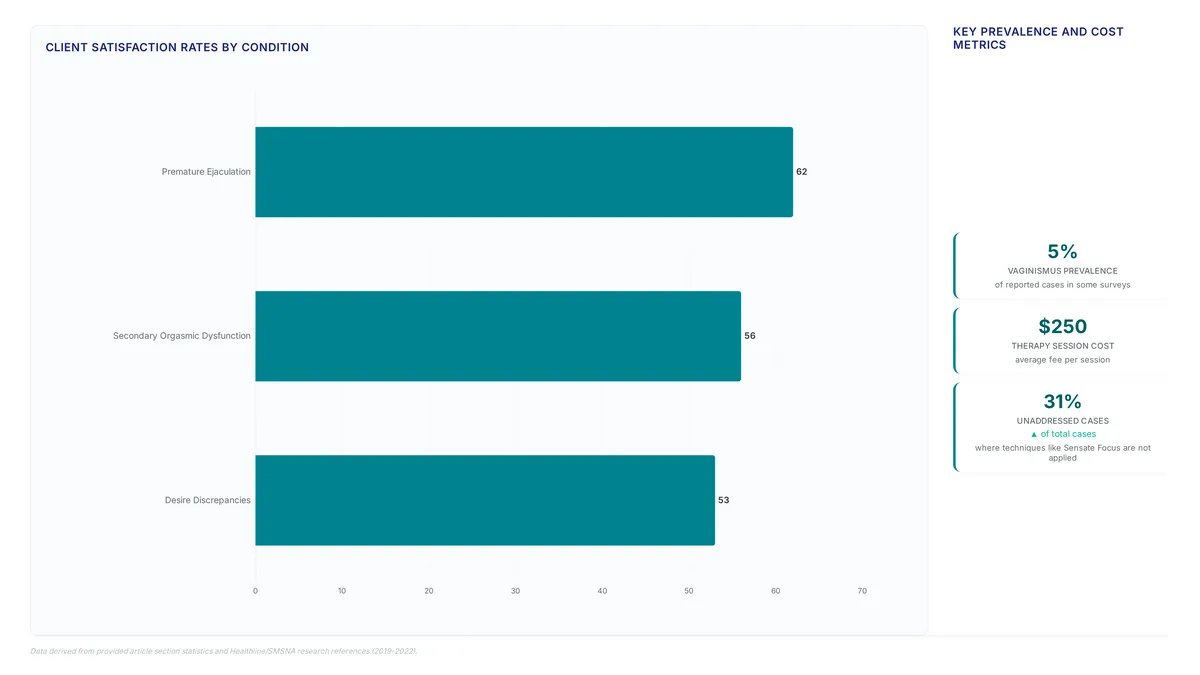
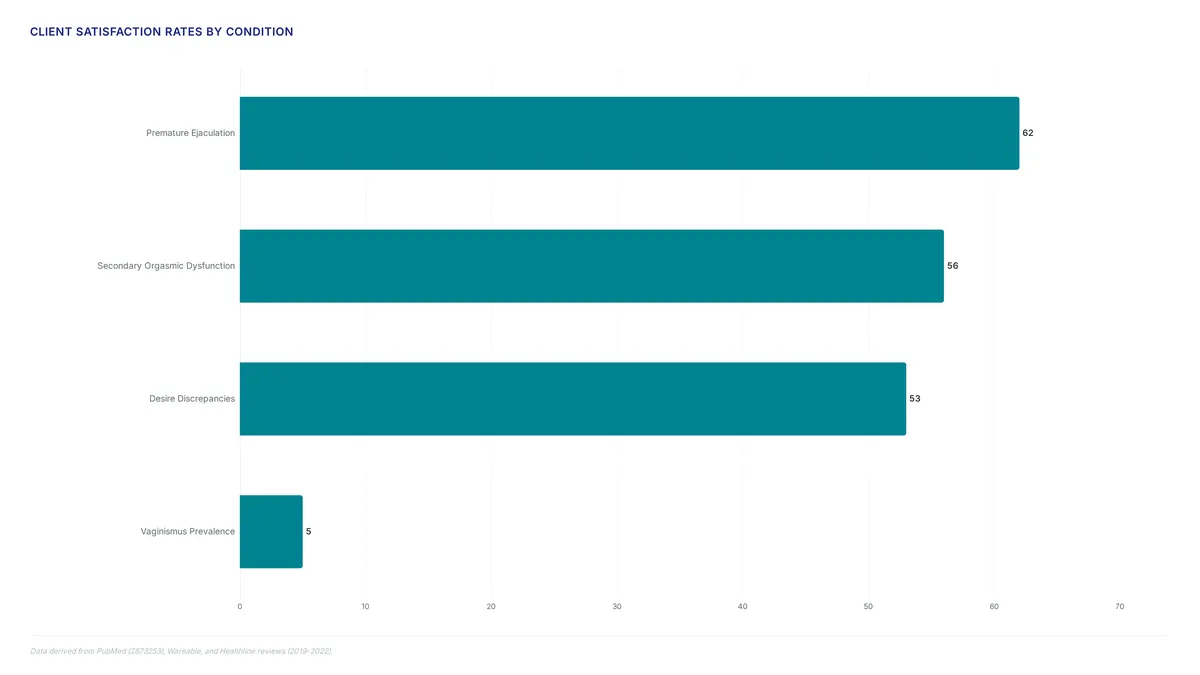
Partners exploring sensate focus often seek relief from the anxiety driving erectile dysfunction and low desire. This protocol addresses such conditions by removing mandates for erection or orgasm, allowing the nervous system to reset without performance pressure. Sex therapists frequently recommend these structured exercises for issues involving arousal, desire, and erectile dysfunction, provided a physical exam has first ruled out underlying medical causes. Clinical data indicates that client satisfaction rates reach a majority for desire discrepancies and show promise for erectile concerns when performance goals are eliminated. The mechanism works by shifting cognitive focus from genital response to the tactile sensations of temperature and texture. Strict adherence to non-demand principles remains necessary because attempting to force arousal during the exercise recreates the very pressure it aims to resolve. If arousal occurs during the exercises, couples are advised to avoid turning the experience into a sexual encounter to prevent falling back on ingrained sexual behaviors. Therapeutic value lies in the willingness to remain present with sensation even when sexual response is absent. Decoupling touch from the expectation of intercourse creates a safe container where intimacy can re-emerge organically.
Integrating Mindfulness and Schema Therapy into Modern Protocols
Modern protocols merging touch exercises with mindfulness approaches benefit many partnerships. Emerging frameworks guide partners to identify how unmet needs may drive current sexual distress cycles. Recent publications map belief systems to specific intimacy barriers, treating the technique as mindfulness for touch that shifts focus from performance to sensory presence. Therapists now use these combined methods to alter default emotional modes that block connection. Traditional steps address mechanical anxiety while adding cognitive work targets the root psychological schemas. A 2019 review linked the practice of Sensate Focus exercises with statistically significant improvements in both sexual and marital satisfaction scores. Modern adaptations of the protocol emphasize mindfulness and somatic approaches, updating the original Masters and Johnson model to reflect contemporary understandings of sexual distress. The distinction between therapeutic protocol and hardware adjuncts remains vital for clear expectations. Unlike vagus nerve toning tools or competitors, these psychological adaptations require no equipment. The true cost lies in the time commitment needed to untangle childhood narratives from adult interactions. Successful application depends on recognizing that sensory awareness alone may not resolve deeply embedded relational trauma.
Therapeutic Touch Technique Versus Commercial Sensate Device
Distinguishing the original equipment-free protocol from the commercial Sensate device is necessary for couples asking should I try sensate focus with my partner. The therapeutic method relies entirely on mindful touching exercises developed by Masters and Johnson to reduce performance anxiety without hardware. Conversely, the commercial tool is a vagus nerve toning apparatus designed for physiological stress reduction rather than direct intimacy training. The core Sensate Focus technique itself requires no equipment and is typically included in the cost of sex therapy sessions, which vary by provider but do not require the purchase of the similarly named "Sensate" device. Buying the device does not replicate the therapy since the mechanism of action in the protocol is the partner interaction, not the relaxation state itself. The hardware may support general calm yet cannot enable the specific non-judgmental feedback loop between partners that resolves sexual dysfunction. Publishers bridging product guidance with education must clarify that the device is an adjunct for nervous system regulation, not a substitute for the relational work of the five-step model.
About
Dr. Ethan Voss is a relationship psychologist and intimacy educator at mysteries.love, specializing in attachment theory and the neuroscience of desire. His expertise makes him uniquely qualified to explain the sensate focus technique, a fundamental exercise developed by Masters and Johnson to reduce performance anxiety. In his daily work, Dr. Voss translates complex clinical research into practical guidance for couples seeking deeper connection, directly aligning with the non-goal-oriented nature of sensate focus. By bridging relationship psychology with body-aware intimacy education, he helps readers understand how shifting attention to sensory experiences can intimate dynamics. At mysteries.love, part of the Center for the Development of Intimate Relationships, Dr. Voss ensures that discussions around sexual wellness remain evidence-based and non-judgmental. His approach demystifies therapeutic concepts, offering adults actionable tools to improve communication and emotional safety within their relationships, grounded in both academic rigor and real-world application.
Conclusion
Scaling intimacy work reveals that emotional resistance often spikes when couples mistake relaxation for resolution. While client satisfaction rates reach a majority for desire discrepancies, this metric masks the operational reality that sensory awareness alone cannot dismantle deep relational trauma. The ongoing cost is not financial but temporal, demanding consistent hours to separate childhood narratives from adult interactions without the crutch of hardware. Relying on vagus nerve tools as a primary fix creates a false economy where couples buy calm but fail to build the specific non-judgmental feedback loops required for genuine dysfunction repair.
Therapists and individuals must stop treating nervous system regulation as a substitute for the five-step relational model. You should commit to the equipment-free protocol exclusively if your goal is repairing partner dynamics rather than merely reducing individual stress. Hardware serves as an adjunct for physiological grounding, but it cannot replicate the mutual vulnerability needed to shift satisfaction scores. Start this week by scheduling a dedicated thirty-minute session with your partner to practice mindful touching without any devices, explicitly agreeing to discuss only physical sensations like warmth or pressure while forbidding any conversation about performance outcomes.
Frequently Asked Questions
Dr. William H. Masters and Virginia E. Johnson developed this technique in the 1960s. Their structured protocol helps couples dismantle goal-oriented patterns by focusing on immediate sensory inputs rather than sexual performance outcomes.
Early protocol phases recommend a maximum exploration time of 15 minutes per session. This specific duration prevents fatigue while reinforcing the distinction between mindful touching and goal-oriented sexual activity during therapy.
The initial stages keep genital regions off limits to prioritize sensuality over arousal. Partners touch non-genital areas to rebuild intimacy without the pressure of performance or expectations regarding sexual stimulation.
Modern sex therapy utilizes this five-step process to treat specific dysfunctions including erectile dysfunction. It addresses these issues by shifting attention away from performance metrics toward immediate sensory inputs.
Participants must avoid turning the experience into a sexual encounter even if arousal occurs. This discipline breaks ingrained patterns where touch automatically demands a sexual response, allowing couples to rebuild intimacy.
References