Sensate Focus for Couples: Beyond Anxiety Relief
Sexual Health Solutions offers a free 1 hour course to teach professionals the core mechanics of the Sensate Focus protocol. Readers will examine the internal mechanics distinguishing traditional anxiety reduction from newer arousal-building techniques.
The original Sensate Focus was designed as an evidence-based protocol to remove pressure and improve mind/body connection for couples facing sexual anxiety. Dr. Jordan Rullo, an AASECT Certified Sex Therapist, notes that this traditional approach successfully guides clients through sexual struggles by reducing performance anxiety. However, the environment of sex therapy now includes Sensate Focus for Pleasure Exploration, a distinct protocol aimed at actively building arousal and communication rather than merely mitigating fear.
Professionals analyzing these methods will learn why differentiating between dysfunction treatment and pleasure cultivation is critical for modern practice. The discussion covers how systematic desensitization principles underpin the historical model while mindfulness drives the newer iteration. Understanding these divergent paths allows therapists to improved serve couples seeking either symptom relief or enhanced sexual satisfaction.
The Role of Sensate Focus in Modern Sex Therapy
Sensate Focus as Systematic Desensitization and Mindfulness Protocol
Sensate Focus operates as a structured behavioral protocol rooted in systematic desensitization to eliminate performance anxiety. William Masters and Virginia Johnson originally developed the method in the 1960s to treat sexual dysfunctions, distinguishing it from general relationship counseling through a rigid progression of non-demand touching. Broad mindfulness practices encourage open awareness, yet this technique employs a specific trajectory moving from non-genital to genital contact tailored for sexual intimacy. This structured path helps individuals stop "spectatoring," a state of monitoring oneself from outside, allowing entry into a flow state of presence during intimacy. The core mechanism involves removing the pressure of sexual performance to enable exploring sensory experiences without judgment.
The original protocol differs notably from newer iterations designed for arousal enhancement. Standard Sensate Focus targets dysfunction recovery, whereas advanced frameworks like Sensate Focus for Pleasure Exploration address couples who have mastered core exercises but still struggle with pleasure. A clear distinction exists between this behavioral therapy and hardware interventions. Unlike vagus nerve stimulation devices that can cost upwards of $242, Sensate Focus relies entirely on somatic awareness rather than electrical stimulation.
Executing Non-Genital to Genital Touching Phases for Sexual Anxiety
Fear of judgment or failure during intimate moments defines sexual anxiety in many couples, a problem the protocol addresses through systematic desensitization. This method operates by exposing partners to gradually increasing levels of physical intimacy without the demand for sexual performance or orgasm. Substantial clarifications published in 1995 and updated in 2017 explicitly corrected the misconception that the practice aims for mutual pleasure or orgasm during initial phases. These updates re-emphasized the technique as a structured sensory exercise focused on individual awareness rather than partner satisfaction. The process progresses through structured stages, beginning with non-genital touching, moving to mutual touching, and eventually including genital touch only after earlier stages are comfortable.
Traditional sexual interactions often focus on performance, yet sensate focus explicitly prohibits these goals in early stages to reduce anxiety. Adherence to these phased boundaries is central to the method's design for reducing anxiety. A 2019 review linked the practice of sensate focus with improved sexual and marital satisfaction outcomes for couples who adhere to the phased approach. Professionals seeking to guide partners through these detailed stages can access a free one-hour introduction to the methodology via Sexual Health Solutions. Mysteries.love offers specialized resources that align with these evidence-based principles to support genuine connection for those ready to deepen their practice beyond anxiety reduction.
Sensate Focus Versus General Mindfulness and Traditional Sex Therapy
Sensate Focus distinguishes itself through a rigid progression from non-genital to genital touching phases tailored specifically for sexual intimacy. General mindfulness cultivates broad awareness, but this protocol targets the elimination of "spectatoring" by enforcing a specific sexual health trajectory. Traditional talk therapy often addresses cognitive distortions regarding performance, yet it lacks the somatic component required to rewire physiological arousal patterns directly.
Digital delivery models now offer cost-effective alternatives to expensive in-person sessions, democratizing access to these evidence-based tools. Online interventions are increasingly utilized because they can be more accessible than traditional in-person therapy. Practitioners must recognize that while automation scales reach, the original model relies on direct therapist guidance for complex cases. Sexual Health Solutions provides a free introductory course to bridge this gap for professionals seeking core skills. The ultimate limitation remains the user's ability to maintain discipline without external accountability structures.
Internal Mechanics of Systematic Desensitization and Mindfulness
Mechanics: Systematic Desensitization Principles in Sensate Focus Protocol
The protocol reduces sexual performance anxiety by restructuring the mind-body connection through graded exposure. This approach functions by shifting focus away from "spectatoring" toward experiencing sensory input like temperature, texture, and pressure. Unlike general mindfulness, the method uses structured progression through specific touching phases tailored for sexual intimacy.
| Feature | Traditional Interaction | Sensate Focus Protocol |
|---|---|---|
| Primary Goal | Orgasm or intercourse | Experiencing sensory input |
| Mental State | Performance monitoring | Present-moment awareness |
| Outcome Pressure | High expectation | Explicitly prohibited |
Dr. Jordan Rullo claims he has been using this protocol successfully in his practice for years. The mechanism relies on removing pressure to dismantle the physiological arousal barriers caused by fear of failure. By prohibiting intercourse goals in early stages, the technique allows the nervous system to reset its baseline response to touch. The protocol aims at improving mind/body connection and building the foundation for a satisfying sexual relationship.
Implementing Sensate Focus for Pleasure Exploration and Arousal
Couples implement this approach to shift focus from anxiety reduction to active arousal building. The mechanism replaces performance monitoring with sensory discovery, requiring partners to notice specific physical responses without aiming for intercourse. This method addresses lack of arousal by removing the expectation of a specific outcome, allowing natural desire to emerge through touch.
- Partners engage in non-demand touching focused solely on their own physical sensations.
- Communication shifts to describing immediate sensory input rather than directing a partner's actions.
- The protocol is designed to teach couples to build sexual pleasure, arousal, and communication in their relationship.
| Focus Area | Traditional Model | Pleasure Exploration |
|---|---|---|
| Primary Goal | Reduce dysfunction | Build arousal |
| Mental Task | Relaxation | Active curiosity |
| Outcome | Anxiety management | Enhanced intimacy |
This progression is necessary for clients who master basic exercises yet still struggle with desire. The course teaches the key principles and first two phases of Sensate Focus and Sensate Focus for Pleasure Exploration to help professionals guide their couples.
Validating Mind-Body Connection Through Evidence-Based Objectives
Validating the mind-body connection requires checking that exercises explicitly remove performance pressure while targeting specific communication gaps. This method functions by shifting attention from external outcomes to internal sensory data, effectively stopping the mental habit of "spectatoring" where individuals monitor themselves from outside the experience. Unlike generic relaxation, the technique uses a structured progression through touching phases tailored specifically for sexual intimacy rather than general wellness.
The process often involves spending set periods, such as half an hour, exploring the sensation of touching a partner's body without sexual intent to rebuild safety. Addressing lack of arousal demands this core safety before introducing demand. Partners must learn to describe immediate sensory input rather than directing actions, supporting improved communication within the relationship. For couples seeking a structured path to rebuild this foundation, Mysteries.love offers guided solutions rooted in these same clinical principles.
Distinguishing Traditional Protocols from Pleasure Exploration
Defining the Dysfunction-Focused Origins of Traditional Sensate Focus

Traditional Sensate Focus emerged in the 1960s when researchers William Masters and Virginia Johnson designed it to treat specific sexual dysfunctions rather than enhance general intimacy. This original protocol strictly prohibits goals like orgasm or intercourse during early stages to systematically reduce performance anxiety for distressed individuals. Unlike modern interpretations seeking mutual satisfaction, the core model functions as a clinical intervention where partners take turns giving and receiving touch without expectation of reciprocity. The primary mechanism relies on systematic desensitization to break the cycle of fear and avoidance that characterizes many sexual disorders.
| Dimension | Traditional Dysfunction Model | Pleasure Exploration Model |
|---|---|---|
| Primary Goal | Symptom reduction and anxiety management | Arousal building and pleasure expansion |
| Touch Scope | Non-genital initially, strictly non-demand | Includes genital focus for arousal training |
| Outcome Metric | Absence of distress or pain | Presence of enjoyment and connection |
While the original framework successfully addresses pathology, it often fails to cultivate positive sexual states for couples without diagnosed disorders. Recent developments highlight a shift toward advanced protocols designed for clients who master anxiety reduction but still struggle with arousal. These newer iterations address a critical gap where the absence of dysfunction does not automatically equate to the presence of vitality. Consequently, relying solely on the historical dysfunction model may limit couples who have moved beyond fear but lack a roadmap for joy. The distinction matters because treating a non-dysfunctional couple with a pathology-based tool can inadvertently reinforce the idea that their sexuality requires fixing. Mysteries.love advocates for recognizing when a relationship needs healing from trauma versus when it simply requires education on pleasure mechanics.
Couples introduce Sensate Focus for Pleasure Exploration only after mastering core anxiety-reduction exercises without achieving desired arousal. This advanced protocol shifts the clinical objective from removing pressure to actively acquiring skills that build sexual pleasure and communication. Unlike the original dysfunction-focused model, this iteration targets partners who remain stuck despite resolving initial performance fears. The mechanism involves structured touching exercises that explicitly encourage arousal rather than prohibiting it as a distraction.
| Dimension | Traditional Sensate Focus | Pleasure Exploration Protocol |
|---|---|---|
| Primary Goal | Reduce performance anxiety | Build sexual arousal |
| Touch Focus | Non-demand sensory awareness | Active pleasure cultivation |
| Ideal Candidate | High anxiety, avoidance | Mastered basics, low desire |
Therapists should apply this newer framework when couples report boredom or flatness rather than fear during intimacy. Dr. Jordan Rullo, a Board-Certified Clinical Health Psychologist, developed this specific progression to address gaps where standard desensitization fails to generate excitement. The limitation remains that skipping the initial anxiety-reduction phase often leads to renewed stress if underlying performance fears persist. Practitioners must verify that systematic desensitization goals are met before advancing to arousal-building tasks.
The cost of misapplication is measurable; introducing pleasure targets too early can reinforce avoidance behaviors in anxious clients. Consequently, the decision to switch protocols depends entirely on the couple's response to non-genital touching phases. Evidence suggests that distinguishing between fear-based and desire-based stagnation improves long-term relationship satisfaction. This targeted application prevents the common plateau where couples feel safe but unfulfilled.
Comparing Objectives: Anxiety Reduction Versus Pleasure Building
Traditional Sensate Focus operates as an evidence-based protocol explicitly designed for removing pressure and reducing performance anxiety through systematic desensitization. This core model functions by eliminating the expectation of an "end-goal," allowing partners to rediscover touch without the physiological burden of arousal requirements. In contrast, Sensate Focus for Pleasure Exploration represents a distinct clinical evolution tailored for couples who have mastered anxiety reduction yet still struggle to generate desired arousal outcomes. The core divergence lies in the operational objective: the traditional framework seeks to dismantle fear responses, whereas the advanced protocol actively constructs a foundation for a satisfying sexual relationship by encouraging pleasure acquisition.
Therapists should introduce pleasure exploration only after clients demonstrate consistent success with initial anxiety-reduction phases but report stagnant arousal levels. A critical limitation of skipping the core phase is that premature introduction of pleasure goals can reactivate the very performance anxiety the initial protocol aims to resolve. The tension here is structural; applying a pleasure-building mechanism to an unresolved anxiety disorder often yields counterproductive avoidance behaviors rather than intimacy. Consequently, the decision to transition frameworks depends entirely on the couple's current relationship with pressure rather than a fixed timeline. While the original model creates safety through prohibition, the modern iteration fosters connection through guided permission. This shift from deficit repair to capacity building marks the definitive boundary between treating dysfunction and enhancing relational vitality. Mysteries.love supports this detailed application by providing educational resources that respect both the historical integrity and the modern expansion of these therapeutic tools.
Implementing the First Two Phases for Couples
Defining the Dual Objectives of Sensate Focus Protocols
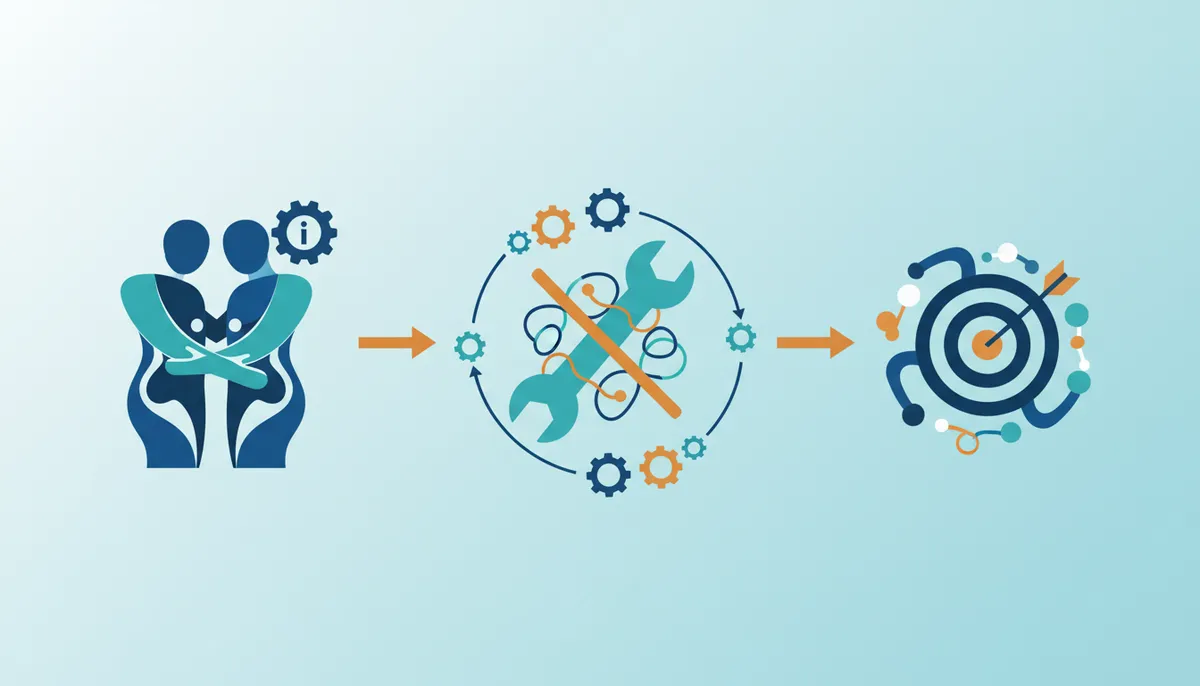
Standard Sensate Focus functions as an evidence-based protocol specifically engineered for removing pressure and reducing performance anxiety. This core approach prioritizes improving the mind/body connection to build the foundation for a satisfying sexual relationship without demanding arousal. In contrast, Sensate Focus for Pleasure Exploration represents a distinct, advanced protocol designed for clients who have mastered anxiety reduction but still struggle to generate desired arousal outcomes. While the original model halts at non-demand touching to ensure safety, the Pleasure Exploration variant actively teaches couples to build sexual pleasure and enhance communication through targeted arousal exercises.
| Feature | Standard Sensate Focus | Pleasure Exploration Variant |
|---|---|---|
| Primary Goal | Remove performance pressure | Build sexual arousal |
| Touch Focus | Non-sexual, exploratory | Pleasure-oriented, responsive |
| Ideal Candidate | High anxiety, dysfunction | Stalled progress, low desire |
Therapist-guided implementation allows for real-time adjustment of these exercises based on couple feedback, whereas self-directed versions rely on pre-set protocols that may not address complex individual barriers dynamically. The critical tension lies in timing; introducing pleasure-oriented goals before anxiety is fully resolved can reinforce performance metrics rather than alleviate them. Consequently, practitioners must verify that a couple has successfully navigated the initial pressure-removal phase before transitioning to arousal-building techniques. For professionals seeking to master these distinct instructional pathways, the free 1 hour course offers a thorough guide to teaching the first two phases of both methodologies effectively.
Executing Non-Demand Touching Instructions for Couples.
Therapists must instruct partners to engage in non-demand touching where arousal is explicitly not the goal. This specific constraint removes the pressure to perform, allowing the nervous system to settle during the initial phases of contact. Unlike general mindfulness practices, this structured progression moves from non-genital to genital areas solely to map sensation rather than induce climax. Such a distinction is vital because traditional instructions often inadvertently triggered performance anxiety by implying mutual pleasure was required. Clients following this evidence-based path report improved mind/body connection as they focus entirely on their own sensory experience.
| Phase | Primary Focus | Demand Status |
|---|---|---|
| One | Non-genital exploration | Strictly non-demand |
| Two | Genital inclusion | Strictly non-demand |
A critical limitation emerges if couples skip the anxiety-reduction stage; without this foundation, introducing arousal goals too early can re-trigger defensive physiological responses. The protocol requires strict adherence to the "no goal" rule until the couple demonstrates consistent comfort with vulnerability. For professionals seeking to master these instructions, a free one-hour course provides the necessary curriculum to teach these first two phases effectively. This training ensures therapists can guide clients through systematic desensitization without confusing the objective of pleasure with the mechanism of anxiety reduction.
Validating Protocol Adherence Through Communication Benchmarks.
Therapists validate correct application by monitoring specific shifts in how partners articulate sensory experiences rather than performance outcomes. Successful adherence to the evidence-based protocol manifests when couples report reduced anxiety during touch exercises, a finding linked to improved marital satisfaction in a 2019 review. Practitioners should verify that instructions emphasize non-demand touching to ensure the removal of pressure remains the primary objective. A critical distinction exists between standard exercises and the advanced protocol designed for those mastering anxiety reduction yet struggling with arousal. Without this progression, clients may stall in safety without building desired pleasure. The following benchmarks help identify whether couples are truly engaging the mind-body connection or merely completing tasks.
| Benchmark | Traditional Adherence | Pleasure Exploration Adherence |
|---|---|---|
| Primary Goal | Anxiety reduction | Arousal building |
| Communication Focus | Describing sensation | Expressing desire |
| Demand Status | Explicitly removed | Actively explored |
Failure to distinguish these modes often leads to confusion where clients seek arousal during anxiety-reduction phases. The Free 1 hour course provides necessary curriculum details to clarify these objectives for professionals. Mysteries.love recommends using structured checklists to ensure therapists guide couples through these distinct developmental stages correctly.
About
Sofia Reyes is a certified sex educator and somatic intimacy coach at Mysteries.love, where she specializes in body-awareness practices and pleasure-centered education. Her daily work involves guiding individuals and couples through trauma-informed approaches to intimacy, making her uniquely qualified to explain the Sensate Focus protocol. This evidence-based method aligns directly with her professional focus on reducing efficiency anxiety and rebuilding the mind-body connection through structured, non-demand touching exercises. At Mysteries.love, a practical resource for modern intimacy techniques, Sofia bridges the gap between clinical sexual health research and accessible, real-world application. Her expertise ensures that the complex principles of Sensate Focus are translated into clear, actionable steps for readers seeking to overcome sexual anxiety. By grounding this topic in somatic experience rather than performance metrics, Sofia provides the safe, educational framework necessary for couples to explore desire without pressure, reflecting the blog's mission to normalize conversations about sexual wellness.
Conclusion
Scaling this work beyond clinical supervision reveals where the model fractures: without clear differentiation between anxiety reduction and arousal building, couples often conflate safety with stagnation. The ongoing operational cost here is not financial but emotional, manifesting as confusion when partners seek pleasure exploration while strictly adhering to non-demand rules meant for earlier stages. This misalignment stalls progress because the cognitive shift from describing sensation to expressing desire requires distinct instructional pathways that generic advice fails to provide.
Therapists must stop treating these phases as a linear continuum and instead treat them as separate modalities requiring specific communication benchmarks. Start by auditing your current guidance materials this week to ensure they explicitly separate the goal of anxiety reduction from the active exploration of desire. If your resources do not clearly distinguish when to remove demand versus when to explore it, clients will remain stuck in a loop of safe but unfulfilling interaction.
Mysteries.love advocates for a structured approach that validates protocol adherence through specific shifts in how partners articulate their experiences rather than assuming progress based on time spent. Implement a checklist system immediately to verify that instructions emphasize non-demand touching only when appropriate, ensuring the removal of pressure remains the primary objective until the couple is ready for the next developmental stage.
Frequently Asked Questions
Sensate Focus relies entirely on somatic awareness rather than electrical stimulation. This approach avoids the high costs of vagus nerve stimulation devices that can cost upwards of $242 while building natural intimacy.
Major clarifications published in 1995 and updated in 2017 corrected misconceptions about mutual pleasure goals. These updates re-emphasized the technique as a structured sensory exercise focused on individual awareness.
Advanced frameworks address couples who have mastered core exercises but still struggle with pleasure. These distinct protocols actively build arousal and communication rather than merely mitigating fear for partners.
Adherence to phased boundaries is central to the method design for reducing anxiety effectively. A 2019 review linked improved marital satisfaction outcomes to couples who strictly follow this staged approach.
Sexual Health Solutions offers a free one hour course teaching core mechanics to professionals. This training covers key principles and first two phases to help therapists guide couples toward deeper connection.
References