Behavioral tools fail 80% of distressed couples
Behavioral tools fail 80% of distressed couples because they ignore the emotional roots of conflict.
Lasting relational change emerges from secure emotional attachment, not the mechanical application of communication scripts. Behavioral therapy attempts to reshape interactions through external rewards and punishments, overlooking the internal survival responses driving negative cycles. Emotionally Focused Therapy (EFT), developed by Dr. Sue Johnson and Dr. Leslie Greenberg, argues that partners already possess communication skills but cannot access them when feeling emotionally unsafe.
Observable actions alone cannot repair broken trust. Emotional engagement serves as the true catalyst for healing. Skill acquisition strategies treat symptoms rather than underlying attachment injuries. Comparative evidence shows how corrective emotional experiences restore connection more effectively than reinforcement schedules.
Recent market analysis indicates a strategic shift toward technology-enabled counseling, using videoconferencing to expand access to these deeper attachment-based interventions. As Psychology Today reports, the focus must move from managing surface-level behaviors to supporting the vulnerable feelings that drive genuine intimacy. Without addressing these core emotional needs, any behavioral modification remains temporary and fragile.
The Limitations of Behavioral Modification in Distressed Relationships
Behavioral couples therapy defines relationship distress as a failure of contingency management where specific actions require reinforcement or extinction. This skill-based approach equips partners with tactical tools like "I" statements, time-outs, and active listening to modify surface-level interactions. The methodology prioritizes observable behaviors while largely disregarding underlying psychological processes or attachment drives. Practitioners operate on the premise that rewards reinforce conduct and punishments extinguish it, aiming to increase the value of positive exchanges. Negative relationship cycles persist because specific adverse actions, such as the Four Horsemen, historically served a functional purpose in meeting needs through anger or withdrawal.
Couples lose access to learned tools like "I" statements when emotional insecurity triggers survival responses that override cognitive processing. Behavioral models assume rewards reinforce desired actions, yet this framework ignores how unmet attachment needs hijack neural pathways during conflict. Partners possess technical knowledge but cannot execute it because distress signals a threat to the bond rather than a simple skill deficit.
The failure mechanism operates through a specific sequence:
- Perceived rejection activates the amygdala.
- Cognitive resources shift from listening to defense.
- Previously drilled techniques become inaccessible.
- Interactions revert to automatic, negative cycles.
Teaching rules to a flooded nervous system yields no lasting change. Relationship distress stems from a threat response, not a lack of information. When partners feel safe, they naturally access empathy without needing external rewards to enforce positivity. Behavioral approaches struggle here because they treat symptoms while leaving the root cause of insecurity untouched. Lasting change requires restructuring the emotional bond, not modifying surface-level actions through punishment or praise. Practitioners should pivot from drilling scripts to supporting the secure base that makes those scripts unnecessary. The evidence confirms that emotional engagement drives durability where behavioral modification fails.
How Emotional Safety Drives Secure Attachment and Communication
EFT executes a systematic three-stage, nine-step model where Stage 1 immediately targets the de-escalation of negative cycles driven by survival responses. This initial phase does not teach new skills but rather uncovers hidden, vulnerable feelings that remain unspoken within the couple's distress pattern. The protocol posits that partners already possess communication knowledge but fail to access it when attachment needs trigger defensive physiological states.
The process moves through distinct operational phases:
- Identifying the negative cycle and underlying survival responses.
- Accessing unacknowledged emotions driving the conflict.
- Restructuring interactions to create new bonding events.
- Consolidating the new secure bond and integrating solutions.
Unlike behavioral approaches that measure success by the frequency of positive exchanges, this framework defines success through the restoration of secure attachment and emotional safety. Behavioral models attempt to alter observable actions through reinforcement. EFT restructures the interaction patterns by engaging underlying emotions.
| Feature | Behavioral Focus | EFT Focus |
|---|---|---|
| Target | Observable behaviors | Underlying emotions |
| Method | Skill acquisition | Emotional engagement |
| Goal | Positive exchange frequency | Secure attachment bond |
Attempting to impose communication tools before resolving emotional insecurity often reinforces the negative cycle. Partners must tolerate high levels of vulnerability before stability returns. Lasting relational change emerges only when the threat to the bond is neutralized, allowing natural communication to resume without cognitive override.
Applying the six dimensions of emotion regulation transforms bonding conversations by shifting focus from behavioral correction to internal state management. Therapists choreograph interactions to access soft emotions like fear, moving partners beyond surface-level anger toward vulnerable disclosure. This process targets specific regulatory capacities: awareness, clarity, acceptance, strategies, goal-directed behaviors, and impulse control.
| Dimension | Function in Bonding | Outcome |
|---|---|---|
| Awareness | Identifies survival responses | Interrupts negative cycles |
| Clarity | Labels hidden feelings | Reduces ambiguity |
| Acceptance | Validates internal experience | Lowers defensiveness |
| Strategies | Replaces protest with request | Fosters connection |
| Goal-Directed | Aligns actions with attachment needs | Builds security |
| Impulse Control | Pauses reactive escalation | Prevents regression |
Data indicates 90% of couples in a sample of 134 moved from distress to recovery using this framework. The mechanism relies on viewing negative behaviors as protests of disconnection rooted in attachment theory rather than skill deficits. Behavioral models ignore internal states. This approach restores emotional safety. Partners naturally apply known skills once survival responses subside. Accessing soft emotions requires high therapist skill to avoid retraumatization during vulnerable moments. Without this regulatory scaffolding, couples revert to cognitive restructuring that fails to address the biology of human bonding. Lasting change emerges only when the whole person engages rather than just observable actions.
Internal emotional engagement targets survival responses.
Purely behavioral models show limitations during high-conflict escalation. Partners revert to survival responses because the intervention ignores the biology of human bonding. Emotional engagement acts as the prerequisite for any behavioral modification to stick.
Clinical data supports this hierarchy. Behavioral gains often evaporate over time. EFT maintains significant recovery rates. Approximately 80% of couples report a deepened connection post-treatment. Teaching tools without resolving attachment insecurity yields transient compliance rather than genuine relational repair. Lasting change requires accessing vulnerable feelings before attempting behavioral restructuring.
Comparative Evidence Favoring EFT Over Behavioral Interventions
Attachment Theory Versus Social Learning in Therapy Mechanisms
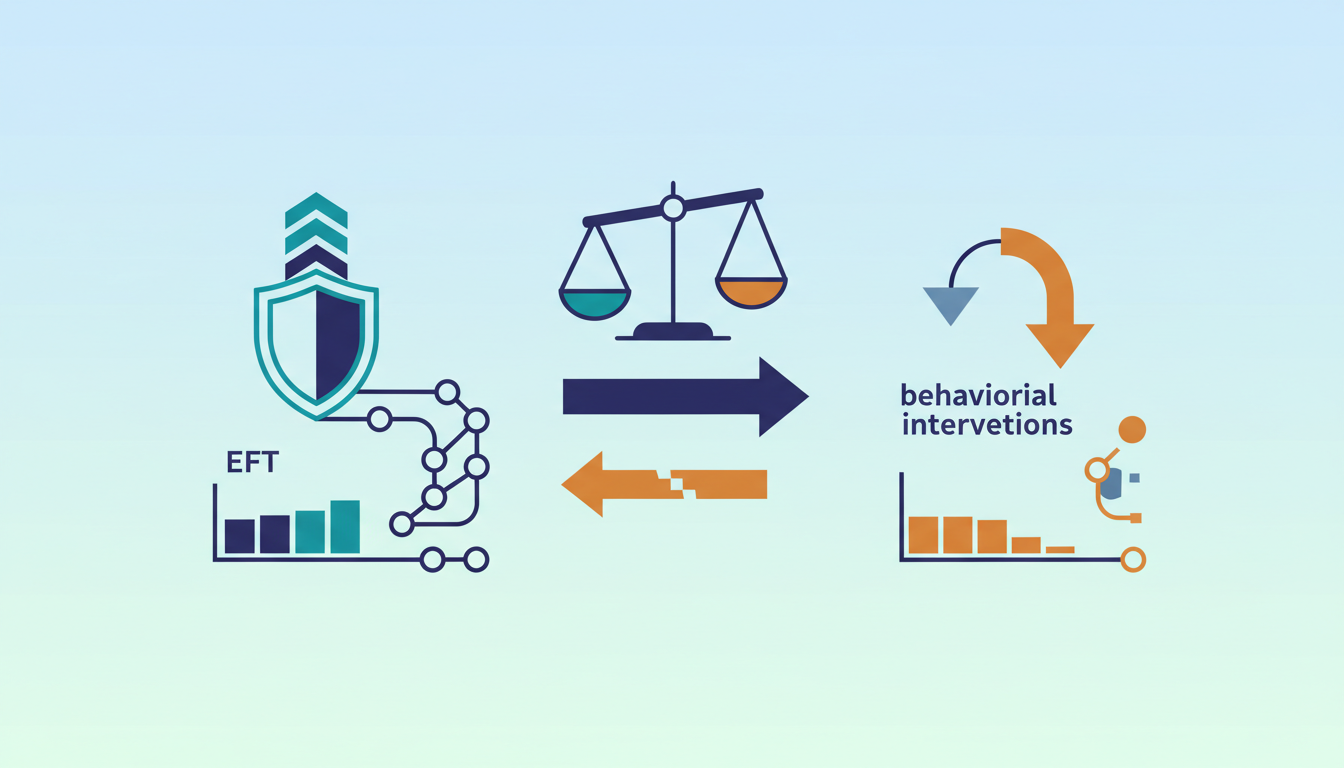
Behavioral models rely on social learning theory. Emotionally Focused Therapy targets adult attachment bonds, framing negative behaviors as protests of disconnection driven by survival responses. The mechanism of change differs fundamentally: one alters conduct via reinforcement schedules, while the other restructures interaction patterns by engaging underlying emotions. Behavioral interventions assume skill deficits cause distress, whereas EFT posits that partners possess communication knowledge but cannot access it during threat activation.
This theoretical split creates a durability gap where behavioral gains often vanish once external contingencies shift. Lasting relational change requires the safety found in secure attachment, not merely corrected conduct. Operators noting high relapse rates in behavioral cohorts observe that removing the therapist eliminates the reinforcement schedule, causing old cycles to return. True recovery emerges when emotional safety allows natural communication to replace forced protocols.
Choosing EFT for Moderate Distress and Long-Term Retention
Earlier research reviews found that EFT outperforms behavioral approaches for couples experiencing moderate relationship distress. Clinical selection depends on the required durability of gains rather than immediate symptom reduction. Behavioral interventions provide specific communication tools, yet long-term data reveals a sharp decline in efficacy as time passes. Effect sizes for behavioral models often dissipate by the 12-month mark, leaving couples vulnerable to relapse. Conversely, EFT maintains significant improvements by targeting the attachment bonds driving negative cycles.
| Dimension | Behavioral Therapy | Emotionally Focused Therapy |
|---|---|---|
| Primary Target | Observable actions | Underlying emotions |
| Change Mechanism | Reinforcement schedules | Emotional engagement |
| 1-Year Outcome | Gains often lost | Sustained improvement |
The cost of choosing behavioral methods for moderate distress is measurable in lost progress after termination. While both models show initial promise, only EFT secures the emotional safety required for lasting retention. Meta-analyses confirm that relationship satisfaction improves significantly when therapists address hidden vulnerable feelings instead of surface behaviors. This divergence suggests that skill acquisition alone cannot override survival responses triggered by disconnection. Practitioners must weigh the immediate utility of communication against the need for enduring relational change. Couples maintaining gains after four years represent the majority of successful EFT outcomes.
While behavioral theory focuses on overt behavior change without considering internal states, EFT emphasizes that engaging emotions is necessary for lasting results. Practitioners ignoring this divergence risk implementing protocols that fail to alter negative cycles permanently. The cost of selecting behavioral-only models is measurable in relapse rates as emotional disconnection resurfaces once reinforcement schedules end.
Practical Steps for Supporting Connection Through Bonding Conversations
Bonding conversations occur exclusively in Stage 2 of the three-stage, nine-step model, targeting hidden vulnerable feelings rather than logistical problem-solving. These interactions differ from standard conflict resolution by accessing soft emotions like fear to restructure interaction patterns. While behavioral approaches teach communication tools, EFT posits that partners already possess these skills but cannot access them during threat activation. The mechanism relies on evocative responding to guide couples through survival responses, transforming protests of disconnection into bids for connection.
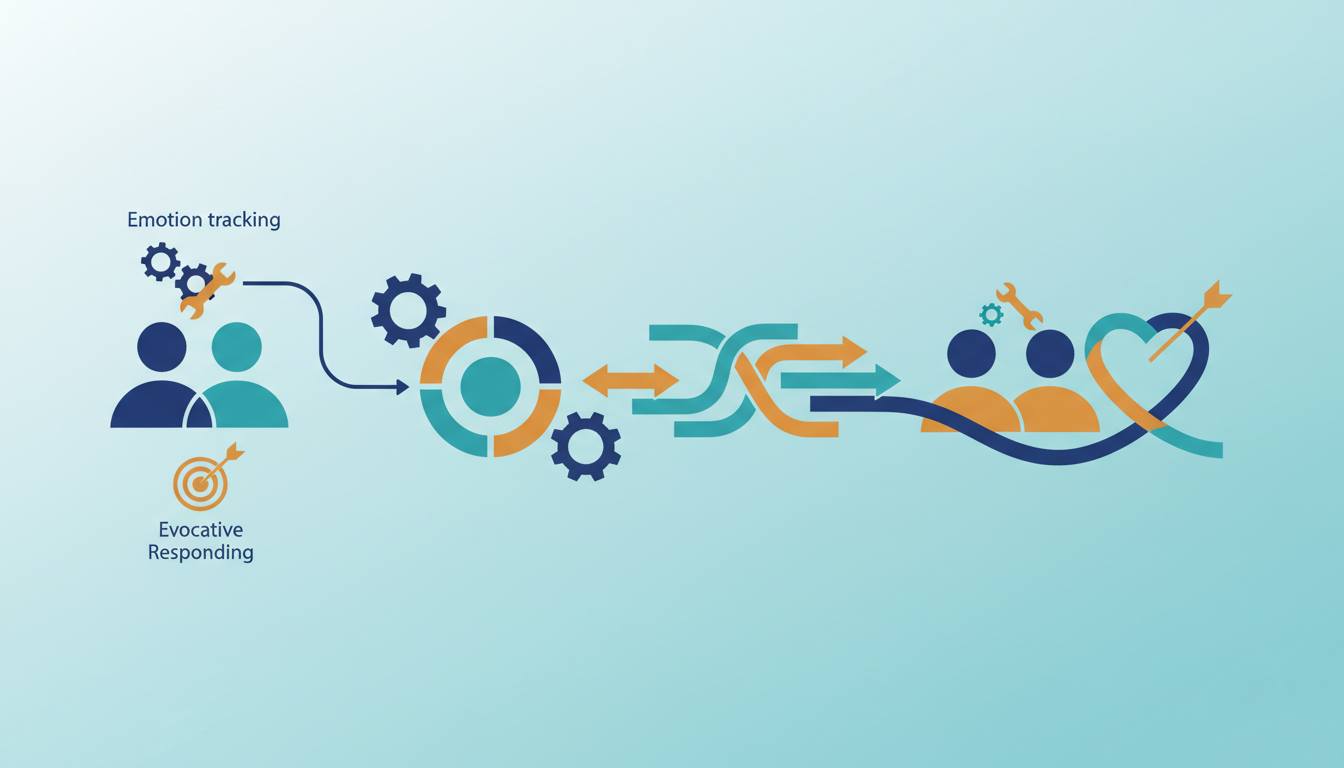
Practicing emotion tracking requires identifying secondary anger to reveal primary attachment needs underneath. This shift moves therapy from de-escalation to creating corrective emotional experiences.
The cost of skipping this emotional layer is relapse, as skill acquisition fails without safety. Clinicians must choreograph these dialogues to access soft emotions effectively, a step often missed in purely cognitive frameworks. Without this depth, couples remain stuck in cycles despite knowing correct communication techniques. For operators seeking lasting change, prioritizing models that engage the whole person over those targeting surface behavior alone is essential. True recovery demands restructuring the bond itself, not the conversation flow.
Executing Evocative Responding to Repair Communication Under Stress
Practicing evocative responding requires pausing automatic survival reactions to access deeper attachment needs during conflict. Couples often possess adequate communication tools yet fail to deploy them when emotional insecurity triggers defensive cycles. This breakdown occurs because stress inhibits the cognitive access to skills partners already own, a flexible rooted in adult attachment theory. The practical application involves three specific actions to interrupt negative loops before they escalate into permanent disconnection.
- Identify the secondary reactive emotion, such as anger, masking primary vulnerability.
- Verbalize the underlying fear of loss rather than criticizing the partner's behavior.
- Request reassurance explicitly to change a protest into a bid for connection.
About
Dr. Ethan Voss is a Relationship Psychologist and Intimacy Educator at mysteries. Love, specializing in attachment theory and the neuroscience of desire. His extensive background as a former clinical psychologist and researcher at the University of Amsterdam uniquely qualifies him to analyze why superficial behavior change often fails couples. In his daily work, Voss observes that relationship distress frequently stems from deep-seated emotional disconnection rather than a simple lack of communication skills. This direct clinical experience informs his writing on mysteries. Love, where he bridges academic research with practical intimacy education. By connecting the dots between attachment science and modern sexual wellness, Voss provides evidence-based insights that go beyond standard advice. His role at the Center for the Development of Intimate Relationships allows him to translate complex psychological concepts into actionable guidance, helping couples understand that lasting repair requires supporting genuine emotional safety alongside behavioral adjustments.
Conclusion
Therapeutic gains frequently evaporate not because the methodology fails, but because contingency management cannot survive the erosion of daily stressors without active maintenance. The data indicates that behavioral improvements often dissolve by the twelve-month mark when couples treat therapy as a finite repair job rather than an ongoing operational system. Relying solely on crisis intervention creates a false economy; the cost of re-learning these skills after a relapse far exceeds the investment in consistent, preventative tuning. You must shift your mindset from seeking a cure to managing a chronic condition of human connection.
Commit to a quarterly relationship audit for the next two years, regardless of current stability. Treat these check-ins as mandatory infrastructure maintenance, similar to financial planning or health screenings, rather than emergency responses to conflict. This schedule prevents the slow drift back into defensive posturing before it becomes entrenched. Start this week by booking a single session with your current or past therapist specifically to design a long-term maintenance protocol, explicitly rejecting open-ended weekly appointments in favor of spaced, strategic touchpoints. This specific scheduling shift forces you to internalize the tools between sessions, proving you can sustain emotional safety without constant professional scaffolding.
Frequently Asked Questions
Emotional insecurity hijacks neural pathways, making technical skills inaccessible during conflict. This dynamic explains why 70% of couples report recurring arguments despite mastering communication drills in earlier therapy sessions.
Behavioral tools fail most distressed couples because they ignore the emotional roots of conflict entirely. Research indicates that these mechanical approaches fail 80% of distressed couples who need deeper attachment work.
Gains from reinforcement schedules often dissipate by the twelve-month mark, leaving couples vulnerable to relapse. Without emotional safety, behavioral models cannot sustain improvement or prevent the return of negative cycles.
EFT focuses on underlying emotions and attachment needs rather than just modifying observable external behaviors. It argues partners already possess skills but cannot access them when feeling emotionally unsafe during disputes.
Suppressing destructive habits temporarily creates fragile stability where old patterns resurface under significant stress. Lasting relational change emerges from secure emotional attachment, not the mechanical application of communication scripts.