ADHD Sexual Satisfaction: What 98 Adults Revealed
A qualitative study of 98 ADHD adults exposes a hard truth: neurotype-specific traits dismantle sexual satisfaction when left unaccommodated. The divergence between ADHD and neurotypical populations stems from inherent neurological mechanics, not interpersonal failure. Psychologists increasingly lean on AI-driven tools to simplify workflows, as noted by PAR Inc. These technologies often miss the nuance required to address the specific intimacy deficits identified in recent SpringerLink research.
Neurotype-specific traits like difficulty focusing and reassurance-seeking behaviors create unique barriers that standard relationship models ignore. Qualitative methodology exposes hidden patterns in ADHD intimacy, moving beyond surface-level dysfunction to identify root causes. The data confirms a stark clinical divergence in sexual satisfaction metrics, validating why traditional therapeutic approaches frequently fail this demographic.
Without explicit neurotype accommodations, individuals with ADHD face compounded challenges in maintaining sexual well-being. This aligns with broader findings by Soldati et al. Which documented higher rates of sexual dysfunction and masturbation frequency alongside lower overall satisfaction compared to general population controls. Understanding these mechanics is necessary for developing adequate assessment practices that actually improve intimate relationships for the ADHD community.
Neurotype-Specific Traits Define the ADHD Sexual Experience
Emotional dysregulation and novelty dependence set the operational constraints for ADHD sexuality. Adults with this neurotype report lower sexual satisfaction than neurotypical peers because arousal regulation remains inconsistent. The Arizona Sexual Experiences Scale pinpoints specific deficits in orgasm ability and overall satisfaction among symptomatic populations. Volatile emotions alter the sustained attention intimacy demands, creating a feedback loop driven by rejection sensitivity. Novelty seeking acts as a compensatory mechanism for dopamine deficiency rather than a simple preference. Interest declines rapidly once routine stabilizes, directly contradicting standard relationship counseling models that prioritize consistency. Most therapeutic frameworks lack neurotype accommodations. Relationship dissolution accelerates without targeted interventions addressing the need for novelty.
Standard assessments like the Female Sexual Function Index (FSFI-S) capture domain scores yet miss these flexible failure modes. Static metrics cannot measure the volatility inherent in ADHD intimacy. Therapeutic success requires shifting from symptom suppression to neurotype-aligned accommodation strategies. Continuing to ignore this distinction guarantees persistent dissatisfaction.
Real-World Intimacy Challenges Across 98 Study Participants
Seventy-two women, 17 men, and eight non-binary individuals described mind-wandering that severed emotional sync with partners. A cohort of 98 participants reveals how difficulty focusing disrupts physical connection during sexual encounters. Written responses analyzed via latent thematic analysis 1007/s10508-025-03386-x) identified attention lapses as a primary barrier to sustained arousal. Neurotypical intimacy relies on continuous non-verbal cue monitoring, a process fractured by ADHD executive dysfunction. This cognitive gap forces partners into repetitive reassurance cycles, draining the interaction of spontaneity. Social cognition deficits further complicate these dynamics by misaligning partner expectations.
The Female Sexual Function Index (FSFI-S) dominates ADHD sexual assessment at 40% prevalence, overshadowing simpler single-item tools used in 23% of records. This multidimensional instrument evaluates six distinct domains: sexual satisfaction, orgasms, sexual desire, lack of pain, lubrication, and erectile function. Single-item measures offer lower administrative burden but fail to isolate specific physiological deficits caused by neurotype traits.
| ADHD Utility | High; isolates arousal vs. The Female Sexual Function Index (FSFI-S) provides the necessary granularity to distinguish between lubrication failures and orgasmic delays. However, the six-domain structure increases participant fatigue, potentially skewing data from individuals with severe executive dysfunction. Researchers must weigh the need for diagnostic precision against the risk of incomplete responses from overwhelmed subjects. Standard relationship counseling often fails because it treats satisfaction as a unitary metric rather than a composite of distinct biological functions. Therapeutic interventions require domain-specific data to address the actual mechanical breakdowns occurring during intimacy. |
|---|
Qualitative Methodology Reveals Hidden Patterns in ADHD Intimacy
Latent thematic analysis moves beyond surface descriptions to interpret underlying ideas like the 'need for novelty' within written participant responses. This method differs fundamentally from semantic approaches that merely summarize explicit content without inferring deeper psychological drivers. Researchers coded written answers from 98 ADHD adults 1007/s10508-025-03386-x) to identify patterns invisible to standardized metrics. Quantitative tools often miss these nuances because they prioritize frequency counts over contextual meaning.
| Approach | Data Output | ADHD Insight Capability |
|---|---|---|
| Semantic Analysis | Explicit topic summary | Low; ignores hidden motives |
| Latent Thematic | Underlying concept mapping | High; reveals neurotype traits |
| Quantitative Scales | Numerical domain scores | Moderate; fixed variable sets |
The process follows a strict sequence to guarantee analytical rigor. 1. Familiarization with raw text transcripts occurs before any coding begins. 2. Initial codes generate across the entire dataset without pre-set categories. 3. Potential themes emerge by clustering related codes into broader concepts. 4. Reviewers validate themes against the original written responses 1007/s10508-025-03386-x) to ensure accuracy. 5. Final definitions articulate the specific essence of each discovered theme. Standardized instruments like the Female Sexual Function Index (FSFI-S) capture physiological domains but fail to detect why satisfaction drops during specific interactions. Latent analysis exposes how executive dysfunction fractures attention mid-act, a causal mechanism numbers cannot isolate. The limitation remains subjectivity; different analysts might interpret the same text differently without strict inter-rater reliability checks. Clinical applications require this depth because treating surface symptoms ignores the root cognitive barriers driving dissatisfaction. Therapeutic accommodations must target these identified latent constructs rather than generic relationship advice.
Executing Snowball Sampling for 98 ADHD Participants Online
Recruiting 98 ADHD adults required anonymous online surveys to bypass stigma barriers inherent in clinical settings. Snowball sampling used existing social networks to reach a demographic where 57.1% of participants resided in Australia, creating a distinct geographic concentration. This method prioritized depth over breadth, capturing non-binary individuals often excluded from binary-focused quantitative studies.
- Distribute initial invitations through specialized ADHD community forums.
- Request respondents to share the survey link with peers meeting diagnostic criteria.
- Collect written responses to five open-ended questions regarding sexual history.
- Verify self-reported diagnosis against evolving DSM-5 standards during screening.
The reliance on self-selection introduces sampling bias, yet it enables access to sensitive topics like sexual satisfaction that structured interviews often miss. Standard instruments like the Female Sexual Function Index (FSFI-S) quantify deficits but fail to capture the lived experience of emotional dysregulation during intimacy. Qualitative data reveals how novelty-seeking behaviors directly impact partner dynamics, a nuance lost in aggregate scores.
| Recruitment Mode | Data Type | Demographic Reach |
|---|---|---|
| Clinical Referral | Quantitative metrics | Limited to diagnosed patients |
| Online Snowball | Narrative experiences | Includes undiagnosed & non-binary |
Online recruitment enables larger sample sizes for sensitive personal topics compared to traditional clinic-based approaches. The trade-off is reduced control over participant verification, requiring rigorous thematic analysis to filter noise from signal. Researchers must accept geographic skew as the cost of accessing hidden populations willing to discuss intimate relationships openly.
Ethical Constraints Limiting Data Sharing in Sensitive Qualitative Studies
Research study number 210502 mandates that sexual history data remain private, preventing public repository access despite open science pressures. This restriction blocks the replication of latent thematic findings regarding ADHD sexual satisfaction challenges by external analysts. Ethical approval from the Institute for Social Neuroscience Human Research Ethics Committee prioritizes participant anonymity over dataset transparency.
| Constraint Type | Impact on Research | Alternative Validation |
|---|---|---|
| Data Embargo | Prevents secondary analysis of intimacy themes | Peer review of coding frameworks |
| Small Sample Size | Limits statistical generalizability | Deep contextual narrative depth |
| Geographic Skew | Reduces global applicability | Focus on specific cultural cohorts |
The approach contrasts sharply with emerging trends where large-scale initiatives compile massive datasets including temporal dynamics. Psychological researchers increasingly apply anonymous online surveys to gather sensitive personal topics, yet ethical walls still halt sharing. A significant majority of psychologists now offer teletherapy, facilitating recruitment while complicating data governance across borders. Operators cannot verify thematic codes without raw text, forcing reliance on author interpretation alone. This creates a single point of failure for validating the 'need for novelty' construct in clinical settings. Future studies must balance privacy with the necessity of auditable qualitative evidence.
Clinical Divergence Between ADHD and Neurotypical Sexual Satisfaction
Defining the Sexual Satisfaction Gap in ADHD Neurotypes
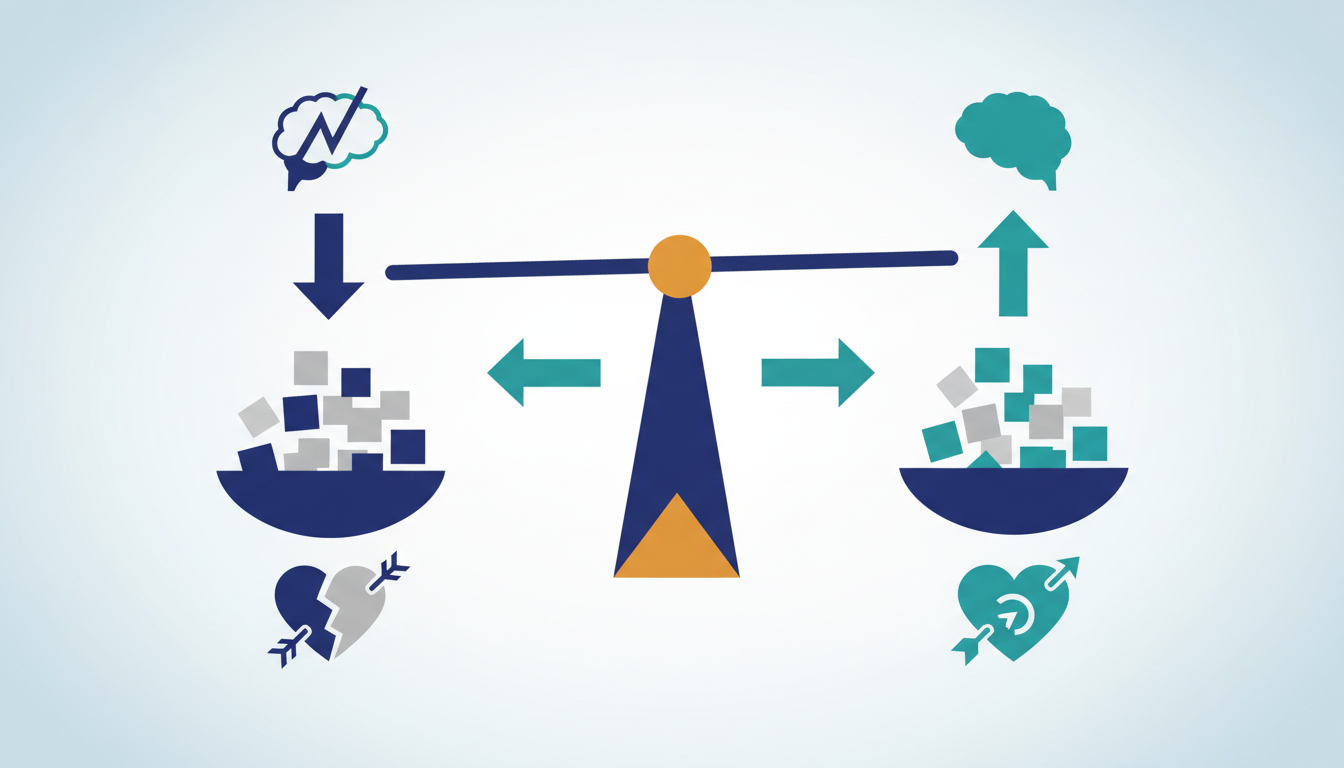
Specific trait conflicts drive sexual satisfaction disparities for ADHD neurotypes instead of general relationship dysfunction. Qualitative findings identify a need for novelty and difficulty focusing as primary drivers of intimacy navigation failures. Standard metrics often miss these nuances while the Arizona Sexual Experiences Scale Large-scale data involving 68,275 individuals 1007/27546330241287655) across 22 countries links childhood ADHD diagnoses to worse employment outcomes. These stressors directly corrode sexual well-being. Reliance on global satisfaction scores masks the specific physiological deficits caused by these neurotype traits. Therapeutic approaches must shift from standard counseling to targeted accommodations that address reassurance seeking behaviors directly. Ignoring the emotional dysregulation component renders traditional intimacy advice ineffective for this population. Operationalizing this definition requires clinicians to abandon one-size-fits-all frameworks. The limitation of maintaining generic protocols is measurable in continued relationship distress and unaddressed sexual dysfunction. Future assessments must integrate qualitative depth to capture the lived experience invisible to quantitative scales.
Applying Qualitative Insights to Identify Novelty-Seeking Friction
Standardized metrics fail to capture how the ADHD need for novelty actively dismantles static intimacy routines. Quantitative scales like the Female Sexual Function Index (FSFI-S) 1007/s10508-025-03386-x) prioritize frequency counts over the contextual friction caused by sensory monotony. A split-screen analysis reveals that general population brains tolerate routine. ADHD neurotypes experience sensory overload when stimulation drops below a critical threshold. This divergence explains why partners often misinterpret novelty-seeking as rejection rather than a neurological requirement for arousal. Latent thematic analysis of written responses identifies difficulty focusing as a secondary barrier that prevents sustained arousal during repetitive acts.
Implementing Neurotype-Accommodating Strategies for Relationship Health
Defining Neurotype-Accommodating Strategies for ADHD Intimacy

Clinical definitions for ADHD intimacy must target specific trait management instead of relying on generic relationship counseling. Standard assessment tools like the Female Sexual Function Index (FSFI-S) frequently miss the need for novelty that drives sexual dissatisfaction in this population. Accommodations require addressing the neurological demand for variable stimulation to prevent arousal collapse during static routines. Generic advice fails because it misidentifies reassurance seeking behaviors as insecurity rather than a regulatory mechanism for emotional dysregulation.
| Strategy Component | Generic Counseling Approach | Neurotype-Accommodating Definition |
|---|---|---|
| Novelty Management | Encourages routine stability | Schedules structured variation in sensory input |
| Focus Drift | Labels as lack of interest | Implements multi-sensory engagement protocols |
| Reassurance Seeking | Frames as anxiety symptom | Validates as necessary co-regulation loop |
Research on adolescents with ADHD 1177/1087054720914371) demonstrates how early behavioral patterns evolve into adult intimacy barriers without targeted intervention. Current practice suffers from a heavy reliance on self-reports where participants claim no effect of treatment on conflict-inducing behaviors due to mismatched therapeutic goals. Proven accommodation demands shifting focus from symptom suppression to trait integration within the sexual dyad. Editorial Mission advises clinicians to adopt these specific definitions to avoid misdiagnosing neurodivergent intimacy styles as relationship pathology.
Implementing Teletherapy and AI Tools for ADHD Couples Counseling
Therapists must deploy the ex-PLISSIT model within digital workflows to address symptom-subtype variances in relational challenges. Standard counseling fails because couples where the ADHD partner displays only inattentive symptoms face fewer obstacles than those with hyperactive presentations, demanding differentiated intake protocols. The global telemedicine market scaling toward $459.8 billion by 2030 provides the infrastructure necessary for these specialized remote interventions.
AI-driven assessment tools now offer a distinct advantage by detecting temporal dynamics in patient responses that static forms ignore. Early adopters report that simplify workflows via automation, freeing clinical time for detailed discussion of novelty-seeking behaviors. This shift allows practitioners to move beyond the rigid domains of traditional metrics like the FSFI-S.
| Traditional Intake | AI-Enhanced Teletherapy |
|---|---|
| Static frequency counts | Real-time response latency tracking |
| Generic relationship advice | Symptom-subtype specific modules |
| Scheduled weekly sessions | Asynchronous mood logging |
Reliance on algorithmic scoring risks overlooking the qualitative depth of reassurance-seeking behaviors identified in recent thematic analyses. Human oversight remains necessary to interpret whether a low desire score stems from emotional dysregulation or medication side effects. Editorial Mission recommends integrating these digital tools only when clinicians maintain final authority over treatment plans. Technology simplifies data collection but cannot replicate the empathetic validation required for sexual well-being. Operators must balance efficiency gains against the potential loss of contextual nuance in text-based interactions. Standard intake forms often overlook how sensory monotony triggers arousal collapse, requiring a shift toward latent thematic evaluation 1007/s10508-025-03386-x) techniques during history taking. The following checklist validates neurotype-specific barriers that generic tools ignore.
- Query frequency of sensory overload events during routine intimacy.
- Screen for reassurance seeking behaviors mislabeled as insecurity.
- Map temporal volatility of desire against environmental static.
- Identify hyperfocus episodes that exclude partner participation.
| Assessment Gap | Standard Metric Result | Neurotype-Accommodating Finding |
|---|---|---|
| Routine Stability | High Satisfaction Score | Arousal Collapse |
| Partner Distraction | Low Desire Domain | Hyperfocus Exclusion |
| Repetitive Acts | Normal Frequency | Sensory Monotony |
Ignoring these dynamics leads to treatment plans that fail to address the root cause of dissatisfaction. Teletherapy adoption now reaches 20% of practices, yet many still lack these specific diagnostic protocols. Editorial Mission recommends integrating these four steps to prevent misdiagnosis of relational conflict as purely emotional dysregulation.
About
Dr. Ethan Voss serves as a Relationship Psychologist and Intimacy Educator at mysteries. Love, bringing specialized expertise in the neuroscience of desire and attachment theory to this critical discussion. His background as a former clinical psychologist and researcher at the University of Amsterdam uniquely qualifies him to analyze how ADHD neurotypes impact sexual satisfaction and intimate connection. In his daily practice, Dr. Voss works directly with couples navigating communication barriers and sensory challenges, mirroring the specific struggles identified in recent ADHD studies. This hands-on clinical experience allows him to translate complex psychological findings into practical, evidence-based guidance for adults seeking deeper intimacy. Writing for mysteries. Love, a platform dedicated to non-judgmental sexual wellness education under the Center for the Development of Intimate Relationships, Dr. Voss bridges the gap between academic research and real-world application. His insights ensure that individuals with ADHD receive compassionate, scientifically grounded support for their unique relational experiences.
Conclusion
Scaling teletherapy without neurotype-specific protocols creates a dangerous illusion of progress, where increased access masks deepening diagnostic errors. When clinicians rely on generic metrics, they systematically misinterpret sensory monotony as low libido and hyperfocus exclusion as emotional withdrawal. This operational blind spot inflates treatment failure rates, forcing patients into cycles of ineffective counseling that ignore the neurological roots of their distress. The cost is not merely financial but relational, as partners internalize these misdiagnoses as personal failures rather than manageable symptoms.
Practices must mandate the integration of latent thematic assessment into all digital intake workflows by the next fiscal quarter. Do not adopt new scoring algorithms until your team can distinguish between medication side effects and genuine arousal collapse. This shift requires moving beyond simple frequency counts to map the temporal volatility of desire against environmental static. Start by auditing your current intake forms this week to ensure they explicitly query sensory overload events during intimacy. If your existing templates lack these four specific diagnostic vectors, pause any further technology deployment until you redesign the data collection layer to capture contextual nuance.
Frequently Asked Questions
Standard models prioritize consistency, which contradicts the ADHD need for novelty. This mismatch causes interest to decline rapidly once routine stabilizes, leaving 57.1% of participants struggling with sustained arousal.
The Female Sexual Function Index dominates assessment protocols at 40% prevalence. However, this multidimensional instrument often misses dynamic failure modes like attention lapses that static metrics cannot accurately measure.
Attention lapses sever emotional sync during encounters, forcing partners into repetitive reassurance cycles. This cognitive gap drains spontaneity and creates friction that standard communication skills training fails to resolve effectively.
Neurodivergent pairs navigate friction points more effectively because shared cognitive styles reduce the exhaustion of constant explanation. This alignment prevents the neurodivergent partner from absorbing blame for perceived disinterest.
The study recruited adults primarily through online networks where 57.1% of participants resided in Australia. This specific geographic concentration highlights the need for broader global data collection in future research.