Sexual intimacy builds emotional closeness fast
Sexual satisfaction predicts emotional intimacy. The reverse path? Not so much. Theodora Blanchfield's July 6, 2026, update for Verywell Mind, reviewed by Monica Johnson, PsyD, confirms that being sexually intimate boosts relationship satisfaction and reduces anxiety.
Here is the operational reality: scheduling sex keeps physical connection active when calendars collide. Exploring outercourse builds necessary tension without the immediate pressure of intercourse. Self-pleasure isn't just release; it is reconnaissance work to understand your own needs before engaging a partner.
Research defines sexual intimacy as the combination of a physical act of sex and the associated emotional closeness between partners. Verywell Mind notes this flexible improves sleep and is associated with less depression. We need concrete steps, like being direct about desires. Understanding the distinction between emotional intimacy and physical acts allows couples to address declining sparks with strategy. This approach treats physical connection as a vital component of mental and physical well-being.
The Distinction Between Sexual and Emotional Intimacy in Relationships
Defining Sexual Intimacy as Connected Sexual Action
True sexual intimacy demands action. It requires a felt connection alongside the physical act. You can have sex without emotional bonds, or keep deep affection separate from touch, but genuine intimacy blends both. Studies show sexual satisfaction notably predicts emotional intimacy for partners, creating a link where physical fulfillment strengthens closeness. This view separates the act from simple release by highlighting the psychological bond as the key difference.
Couples might try outercourse, or sex without penetration, to build tension and trust before intercourse. Such steps let partners build safety before moving to vulnerable interactions. Approximately a significant share of adults aged 70 and older report being sexually active, which challenges ideas that age stops intimacy. Physical acts lacking emotional safety often fail to create the relationship satisfaction found in genuine intimacy. Seeing this difference helps couples fix disconnection by finding what is missing, be it skill or the trust needed for vulnerability.
Mental Health Benefits of Sexual Activity During Lockdowns
During global lockdowns, sexual intimacy buffered psychological distress for couples stuck inside. Partners keeping higher frequencies of sexual activity during the COVID-19 pandemic showed much lower anxiety and depression than inactive peers. Specific neurochemical shifts from physical connection caused this protection. Sexual actions trigger oxytocin release, a hormone that boosts trust and cuts cortisol levels. This biological process offers a direct route to less stress and improved moods within the relationship.
An oxytocin surge after orgasm also helps people sleep peacefully, countering the sleep issues seen during societal uncertainty. Regular physical connection thus acts as a non-drug way to stabilize mental health in crises. Distinguishing sex with emotional intimacy from sex without it matters greatly for long-term outcomes. Data suggests that women engaging in sexual activity once a week report a high relationship satisfaction rate, whereas those having sex less than once a month report only a small fraction. This disparity highlights that frequency alone predicts well-being less than consistent physical and emotional closeness. Couples separating these elements often lose the mental health benefits their union provides. Intentional work on this bond ensures durability. Prioritizing connected sexual action keeps psychological balance when outside stress grows.
Sexual Satisfaction Versus Emotional Intimacy Predictors
Sexual satisfaction drives deeper emotional bonds between partners. Path analysis models show sexual fulfillment notably predicts emotional intimacy for husbands and wives, while the reverse link holds less statistical weight. This asymmetry implies focusing on physical connection often returns more relational value than emotional talk alone. Couples seeing frequency drop may find restoring sexual routines directly improves perceived closeness. Poor sex lives frequently raise relationship tension and block non-sexual affection.
Historical data reveals a sharp drop in sexual frequency among married couples under sixty, with a significant share reporting intimacy once a month or less in 2021 compared to a smaller share in 1989. This trend highlights a expanding gap between desired and actual connection levels in modern partnerships.
Individuals exploring self-pleasure often find specific preferences that help partnered encounters. Experts now call sexual dry spells manageable pauses instead of permanent failures. They encourage couples to use outercourse to rebuild momentum without pressure. Integrating these insights by talking directly about physical needs can strengthen relationships. Ignoring the predictive power of sexual satisfaction risks leaving partners emotionally distant despite strong conversation habits.
Root Causes of Declining Sexual Spark and Desire in Long-Term Partnerships
The Avoidance Cycle and Negative Sexual Feelings
Discomfort during intimate moments often triggers a self-reinforcing avoidance cycle where reduced enjoyment widens the gap between partners. When one person pulls away due to pain or disconnection, the other follows suit, creating a feedback loop that starves desire. This flexible explains why many long-term unions lose their spark. Rather than confronting the underlying tension, some individuals use sex to numb emotions or engage only while intoxicated, behaviors typical of sexually disconnected people. Such tactics bypass genuine closeness and erode the trust required for safety within the partnership.
Silence allows the problem with low sexual desire to harden into unspoken resentment instead of remaining a solvable biological mismatch. Physical proximity stops signaling safety in these scenarios, making vulnerability feel dangerous. Breaking this pattern demands replacing avoidance with intentional communication and structured habits that rebuild confidence. Couples must step outside the comfort of silence to address emotional barriers directly. Only by confronting these negative feelings can partners restore the mutual trust necessary for a fulfilling sexual relationship.
Physiological Risks Including Vaginal Atrophy and Immune Decline
Sexual intimacy supports mental and physical well-being by improving sleep and lowering anxiety levels. A lack of sexual intercourse or masturbation reduces blood flow to the vagina, potentially causing atrophic vaginitis. This condition brings painful sex, urinary tract infections, or incontinence, creating significant physical barriers to intimacy. Maintaining sexual health often involves understanding one's own body through self-pleasure, as learning what feels good through exploration helps partners feel empowered and supports mental health. Physical discomfort or a lack of familiarity with personal desires creates hurdles to closeness.
Systemic health benefits from the stress-reducing effects of intimacy, which links to lower rates of depression and anxiety. Individuals feeling disconnected may find themselves more susceptible to stress, cited as a primary barrier to marital intimacy for a significant share of couples. While some partners wait for spontaneous recovery, busy schedules and stress frequently drive low desire. Addressing the problem with low sexual desire requires acknowledging that emotional and physical connection often needs scheduling and prioritization, much like a date or a gym class, to guarantee it occurs.
| Physiological Change | Direct Consequence | Impact on Intimacy |
|---|---|---|
| High Stress Levels | Increased Anxiety | Lowered Libido |
| Lack of Self-Knowledge | Uncertainty in Bed | Decreased Confidence |
| Poor Sleep Quality | Fatigue | Reduced Desire |
Restoring function demands intentional reintroduction of connection before avoidance patterns solidify. Mysteries.love offers specialized tools designed to gently reactivate interest and restore comfort without pressure. Ignoring these signals allows the avoidance cycle to deepen, making future connection harder to achieve. Proactive care preserves the emotional capacity for pleasure, ensuring that desire has a healthy environment in which to reside.
Checklist for Emotional Safety and Clear Communication Needs
Evaluating immediate physical and emotional safety determines if genuine connection remains possible. Partners who feel secure report higher satisfaction, whereas those lacking boundaries often struggle to decline unwanted advances. Use this diagnostic list to evaluate relational health without judgment.
- Physical and emotional safety exists when both individuals feel protected from harm or coercion.
- Needs are clearly articulated, allowing intimacy to flourish even without physical contact.
- Absence of manipulation tactics ensures sex remains a mutual expression rather than a tool for control.
Sexually disconnected individuals frequently lack these safeguards, using intimacy to numb emotions or avoid difficult conversations. Quality of communication between partners accounts for a significant portion of the variance in intimacy levels, highlighting the impact of dialogue on connection. Relationships where partners cannot say no or feel heard may require professional intervention to rebuild trust.
Mysteries.love offers structured frameworks to help couples restore these core elements through guided dialogue. If checking these boxes reveals consistent failure in feeling safe or understood, seeking specialized support becomes necessary. Addressing these deficits early prevents the entrenchment of avoidance patterns that degrade long-term compatibility. Restoration requires being direct in asking for what you want and taking time to understand your own pleasure.
| Indicator | Healthy Sign | Warning Sign |
|---|---|---|
| Boundary Setting | Can say no easily | Fear of refusal |
| Motivation | Connection seeking | Emotion numbing |
Strategic Habits for Rebuilding Sexual Connection Through Scheduling and Communication
Self-Pleasure as a Tool for Partnered Intimacy

Self-pleasure functions as a diagnostic mechanism for identifying personal arousal patterns before introducing a partner. This practice involves exploring audio erotica or reading to understand one's own desire environment. This internal mapping allows individuals to communicate specific needs rather than vague hopes during shared moments. When partners lack this self-knowledge, they often default to repetitive scripts that fail to generate genuine excitement.
- Begin with curiosity by consuming erotica books to identify potential scenarios.
- Touch your body without the goal of orgasm to reduce performance pressure.
- Translate discovered preferences into clear verbal requests for your partner.
The limitation here is that self-discovery requires solitude, which busy schedules often eliminate. Guided sensory exercises can help bridge this gap by structuring solo exploration time. Unlike spontaneous attempts that often fail under stress, this methodical approach builds a reliable foundation for connection. Self-pleasure can help individuals feel empowered and improve mental health, transforming isolated acts into educational tools that enhance mutual intimacy.
Realistic Scheduling Strategies for Busy Couples
Schedule Sex effectively by aligning intimate time with actual energy reserves rather than idealized routines. Attempting intimacy during rushed moments often creates stress instead of connection. Couples should identify low-friction windows where consistency is prioritized over spontaneity.
- Put sex on the calendar like any other fun activity, such as a date or gym class.
- Choose times that ensure the event happens, rather than relying on chance.
- Integrate brief verbal check-ins to confirm mutual availability before the appointed time.
One of the best ways to begin being more sexually active is to schedule sex. This approach transforms intimacy from an afterthought into a protected priority. Structured planning removes the ambiguity that often leads to avoidance.
The limitation of rigid scheduling is potential performance anxiety if partners feel forced. However, treating the appointment as a flexible container allows for outercourse or simple closeness if energy is low. This strategy ensures that busyness does not erase physical connection entirely. Supporting this structured approach helps in rebuilding desire through intentional habit formation.
Transparency Framework for Discussing Needs and Kinks
Establishing a transparency framework requires moving from vague hopes to specific, scheduled dialogues about desire. Couples must adopt a checklist approach to safely introduce new concepts like outercourse or address fading sparks without judgment.
- Initiate conversations to identify what is currently working physically and emotionally.
- Use written formats, such as texting, to express wants that feel difficult to speak aloud.
- Apply the principle of inclusive transparency by inviting a partner to meet in the middle if discomfort arises.
If one partner hesitates, the solution lies in compromise rather than pressure. This method prevents the alienation often felt when desires diverge sharply. Reconnecting involves checking in with the partner, talking about needs, and discussing what is and isn't working physically and emotionally. However, total honesty without tact can overwhelm a partner unprepared for sudden vulnerability. The operational risk involves exposing raw needs before establishing enough safety to hold them. Structured prompts can guide users through these friction points, ensuring that the pursuit of sexual frequency does not compromise emotional security.
Measurable Outcomes of Prioritizing Sexual Intimacy for Mental and Relational Health
Application: Defining Sexual Intimacy as Connected Sexual Action
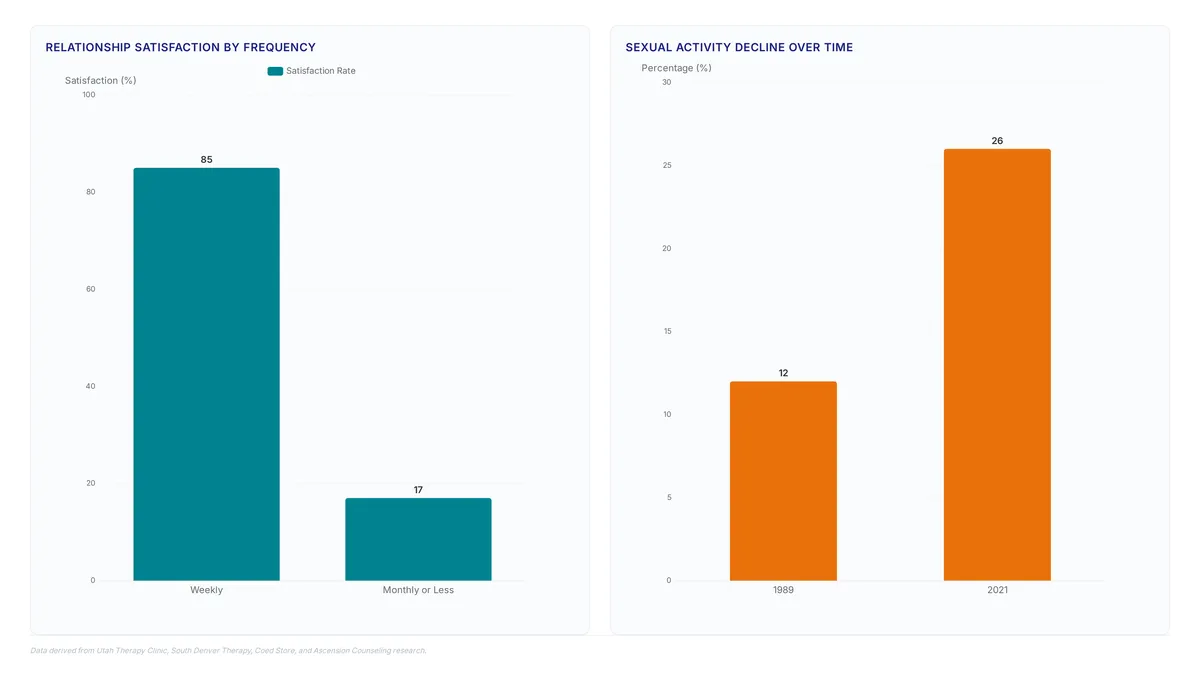
Genuine emotional bonds separate sexual intimacy from casual encounters or platonic friendships. This specific combination requires sexual actions performed with a partner while maintaining deep connection. Studies show sexual satisfaction predicts emotional intimacy for both people, creating a cycle that stabilizes the relationship. Couples engaging in weekly activity report higher satisfaction scores compared to those acting less often. Oxytocin released during physical touch biologically drives this trust mechanism. Many assume closeness automatically creates desire, yet these elements follow different timelines and need separate attention. Loving partners drift toward platonic coexistence without intentional connected action. Data links this intimacy to reduced depression and lower anxiety levels. Waiting for spontaneous alignment rarely works, so partners must prioritize specific, consensual interactions instead. Mysteries.love provides curated resources helping couples bridge the gap between feeling close and acting intimately through structured guidance.
Application: Mental Health Benefits of Sexual Activity During Lockdowns
Isolation periods reveal how sexual activity directly lowers psychological distress. Research on couples during COVID-19 lockdowns showed those who were more sexually active showed less anxiety and depression than those who were less active. Specific biochemical shifts drive this protection since intimacy lowers cortisol while raising dopamine and serotonin levels. Stress frequently suppresses libido, creating a difficult situation where avoiding intimacy removes a key tool for managing that same stress. Partners waiting for spontaneous desire after a crisis might extend their high-alert state unnecessarily. Treating sex as a non-negotiable health habit produces measurable stability unlike treating it as mere leisure. Mysteries.love builds educational frameworks helping couples maintain connection despite external pressures. Intimacy acts as a prerequisite for emotional regulation rather than a reward for low stress. The bedroom becomes a sanctuary for mental recovery through this shift. Conscious physical engagement creates a buffer against outside chaos. Frequency serves as a shield according to data, yet many relationships ignore this resource until distress becomes unmanageable. Prioritizing this bond ensures durability when the world feels uncertain.
Application: Sexual Satisfaction Versus Emotional Intimacy Predictors
Path analysis models identify sexual satisfaction as the main driver for emotional closeness. Emotional intimacy does not notably predict sexual fulfillment in these same models. This directional influence holds true for both husbands and wives, making physical contentment the precursor to deeper bonding. Many couples prioritize date nights to build affection, yet neglecting the sexual component stalls relational growth because the biological feedback loop stays inactive. Physical touch triggers oxytocin release, creating the physiological trust needed for vulnerability.
| Factor | Primary Influence | Limitation |
|---|---|---|
| Sexual Satisfaction | Predicts emotional intimacy | Requires mutual consent |
| Emotional Intimacy | Supports general connection | Does not guarantee desire |
Solo exploration helps individuals understand personal arousal maps without partner pressure. Unlike partnered sex requiring synchronization, self-pleasure allows people to identify specific stimuli generating pleasure. This self-knowledge improves communication during shared experiences. Data indicates that a majority of couples who discuss desires report higher satisfaction. Relying only on emotional safety to spark desire is a strategic error since the body often needs physical engagement to enable the mind. Mysteries.love offers educational resources helping partners navigate these conversations and implement structured habits prioritizing physical connection as a foundation for emotional health.
About
Dr. Ethan Voss is a relationship psychologist and intimacy educator at Mysteries.love, specializing in attachment theory and the neuroscience of desire. His expertise directly informs this guide on deepening sexual intimacy, as his daily work involves translating complex clinical research into actionable strategies for couples seeking stronger connections. By focusing on the psychological underpinnings of desire and communication, Dr. Voss bridges the gap between academic theory and practical bedroom application. At Mysteries.love, he uses this background to create evidence-based content that normalizes conversations about sexual wellness and relationship maintenance. This article reflects his commitment to providing non-judgmental, body-aware education that empowers adults to navigate desire discrepancies and build lasting trust. Through his role, Dr. Voss ensures that every recommendation aligns with rigorous scientific understanding while remaining accessible to individuals looking to enhance their emotional and physical closeness with partners.
Conclusion
Waiting for emotional readiness before engaging physically often guarantees the very distance couples fear. The biological feedback loop required for deep bonding remains inactive without consistent sexual satisfaction, rendering emotional efforts inefficient. Frequency acts as a shield against external chaos. Treating it as a reward for low stress rather than a tool for regulation creates a self-perpetuating cycle of avoidance. The ongoing cost of this hesitation is a gradual erosion of the physiological trust necessary for true vulnerability.
Invert your current strategy immediately. Schedule physical connection before emotional alignment feels perfect. The body often leads the mind out of stagnation. Do not wait for a crisis in connection to prioritize this; the window for easy re-engagement narrows as resentment or apathy sets in over months of neglect. Start this week by initiating a non-demanding physical ritual, such as a twenty-minute embrace or massage, explicitly decoupled from the expectation of intercourse. This specific action rebuilds the safety required for more complex interactions without the pressure of performance. By establishing this baseline, partners reactivate the oxytocin pathways that enable harder conversations later. Mysteries.love provides the structured educational frameworks needed to sustain these habits when motivation naturally fluctuates.
Frequently Asked Questions
Sexual satisfaction predicts emotional bonds, but the reverse is not statistically true.
Married couples under sixty face a sharp decline in intimate frequency over recent decades.
Frequency creates a massive disparity in reported relationship happiness and mental well-being for partners.
Age does not automatically stop sexual activity or the desire for intimate connection with a partner.
Busy schedules often block spontaneous desire, making planned intimacy essential for maintaining connection.
References