Situated intimacy: reclaiming untracked moments
Sixty percent of respondents admit to using AI in their intimate lives. This statistic marks a breaking point. The Analogue Counter-Movement is not a Luddite retreat; it is a strategic pivot away from algorithmic mediation toward raw, unscripted human connection. We must define situated intimacy against the backdrop of digital exhaustion, drawing a hard line between being reachable and being emotionally understood. The path forward requires implementing phone-free bedrooms and offline rituals that reclaim privacy from the surveillance of smart devices.
This shift resists the transformation of the bedroom into a media platform. As Tracey Follows notes, the future splits between saturated intimacy, trackable and scripted, and moments that are embodied and local. Understanding these diverging paths allows us to navigate the tension between digital convenience and the awkward, mutual reality of being with another person without a digital intermediary.
Defining Situated Intimacy Against Digital Saturation
Distinguishing Being Connected From Feeling Connected
Functional connectivity keeps partners reachable, visible, and responsive. It fails to provide the psychological safety necessary for deep bonding. True connection demands being recognized and understood, a distinction central to the emerging Analogue Counter-Movement. Skepticism regarding the capacity of algorithmic tools to support genuine closeness is growing for a reason.
| Dimension | Digital Saturation | Situated Reality |
|---|---|---|
| State | Reachable and responsive | Recognized and safe |
| Medium | Trackable and scripted | Embodied and local |
| Record | Persistent data trail | Unrecorded |
Body language drives the demand for tech that replicates eye contact and general 'vibe' to build authentic attraction. Yet relying on algorithms to mediate affection introduces sharp friction: the very tools designed to optimize romance strip away the awkward, mutual presence that defines situated intimacy. Tracey Follows predicts romantic futures will split into two distinct paths: Saturated Intimacy and Situated Intimacy. The operational risk for modern relationships is clear. Mysteries.love advocates for intentionally untracked rituals that restore the luxury of private, unmediated presence.
Saturated Intimacy as an Always-On Digitally Assisted Medium
Saturated Intimacy functions as an always-on medium that is digitally assisted, trackable, scripted, and personalized. This configuration transforms private moments into data streams where algorithms curate romantic narratives based on historical inputs rather than spontaneous emotion. Technical implementations now prioritize satisfying multisensory desires by synchronizing haptic feedback with visual stimuli to mimic physical presence. Such precise scripting explains what causes intimacy fatigue, as the cognitive load of maintaining a perfect, recorded persona exhausts partners who crave unmediated presence. Virtual satisfaction rates reportedly double compared to traditional media, yet this efficiency comes at the cost of authentic vulnerability.
| Feature | Saturated Path | Situated Path |
|---|---|---|
| Presence | Reachable and responsive | Recognized and understood |
| Data State | Trackable and recorded | Unrecorded |
| Experience | Scripted and personalized | Awkward and mutual |
When every gesture is optimized for a machine-learned pleasure profile, the unexpected friction required for deep bonding disappears. Couples seeking to reclaim agency from these predictive loops often find refuge in Mysteries.love solutions designed for untracked, tactile exploration. The ultimate limitation of saturated systems is their inability to validate silence, leaving partners technically connected yet emotionally isolated.
Situated Intimacy Versus Saturated Intimacy Frameworks
Situated Intimacy happens in one moment with someone, remaining embodied, local, private, mutual, awkward, and unrecorded. This framework contrasts sharply with Saturated Intimacy, an always-on medium that is digitally assisted, trackable, scripted, and personalized. Virtual tools satisfy multisensory desires better than static media, but the resulting data permanence creates a unique vulnerability for couples seeking genuine vulnerability.
High-fidelity recording often inhibits the very risks required for deep bonding. Partners perform for an audience of one rather than connecting with the person present when every gesture is captured. Choosing Situated Intimacy prioritizes the security of total privacy over digital augmentation. Rejecting the urge to quantify affection allows partners to reclaim the unmeasurable value of unmediated presence.
The Mechanics of AI Mediation and Emotional Fatigue
AI as Romantic Mediator and Confidence Booster
Artificial intelligence now functions as a technical intermediary for a significant portion of individuals navigating modern intimacy. This mediation splits into distinct operational modes: many users seek algorithmic relationship advice, while others apply these systems as a confidence booster to draft messages or plan interactions. A smaller segment directs AI to inspire fantasies and role-play scenarios, effectively outsourcing the creative load of desire.
Body language constitutes the majority of human communication, yet text-based AI strips this non-verbal data, leaving only sterile logic to manage emotional nuance. Augmented environments attempt to simulate presence. They cannot replicate the unscripted tension of real interaction. Consequently, a notable portion of respondents remain critical of these digital findings, sensing the hollowness of machine-generated affection. Couples seeking to restore true connection are increasingly exploring untracked rituals, such as phone-free bedrooms and offline dating nights, which prioritize raw human presence over optimized scripts.
From Static Hardware to Machine-Learned Pleasure Profiles
The engineering priority for intimacy hardware has shifted from raw power output to adaptive systems capable of responsive dialogue. Early devices relied on fixed scripts, but current market analysis confirms a transition toward biometric sensors and predictive algorithms that generate machine-learned pleasure profiles. This architecture allows hardware to anticipate physiological needs rather than merely reacting to manual input.
Some users admit to passing off AI-written messages as their own, yet the integration of AI into physical devices introduces a different tension: the conflict between optimized pleasure and authentic presence. Algorithms excel at pattern recognition. They cannot replicate the unscripted awkwardness that defines genuine human connection. Relying entirely on predictive algorithms risks creating a flexible where partners become accustomed to data-driven stimulation that differs from human interaction. The transition moves the industry from static hardware upgrades to adaptive systems that apply biometric sensors and predictive algorithms to create machine-learned pleasure profiles. Situated intimacy requires technology to serve as a bridge rather than a barrier. Couples seeking to fix emotional disconnection should view these adaptive profiles as supplementary aids, not replacements for the detailed, untracked communication that builds lasting trust. True luxury lies in the ability to disconnect from the machine and reconnect with the partner.
The Risks of Passing Off AI-Written Messages as Your Own
Using these tools to mediate arguments often bypasses the necessary friction required for genuine emotional processing. This avoidance strategy introduces a specific authenticity deficit into the partnership flexible. The danger escalates when partners pass off generated text as their own, a behavior admitted by a segment of survey respondents. Such actions challenge the core trust required for situated intimacy, where unscripted vulnerability is paramount.
Skeptics correctly identify that algorithmic findings lack the nuance of human experience. A smaller but significant group views this technological intrusion as actively harmful to romantic bonds. The core risk involves replacing mutual understanding with optimized but hollow rhetoric. True connection requires the courage to speak without a digital safety net. Mysteries.love advocates for rituals that emphasize raw, unmediated presence over curated perfection.
Implementing Phone-Free Bedrooms and Offline Rituals
Defining the 2026-2028 Intimacy Fatigue Timeline
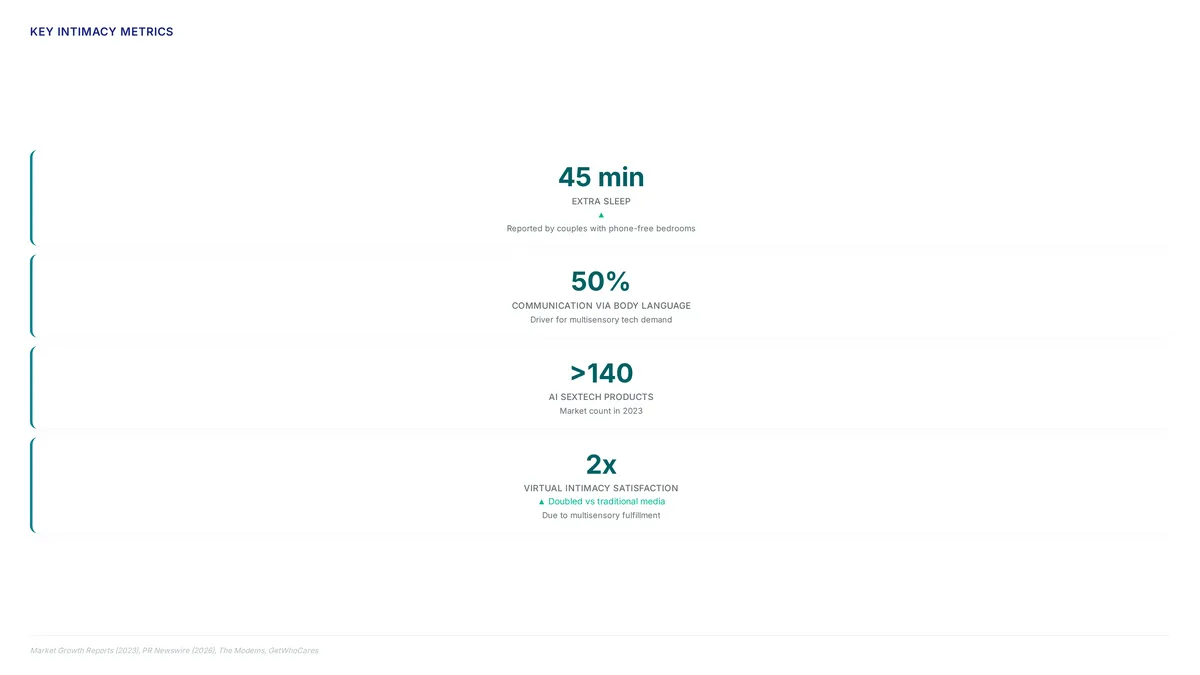
Marking the 2026 to 2028 window identifies Intimacy Fatigue as the specific interval where digital sexual wellness becomes ubiquitous yet creates emotional distance. Couples feel highly informed by data but strangely removed from actual experiences, prompting a necessary shift toward phone-free bedrooms. This era marks the arrival of Purposeful Pleasure, a trend distinguishing intentional connection from the preceding years of fluid relationship structures and sexual liberation. As AI makes digital companionship more available, analogue experiences become increasingly valuable, driving an Analogue Counter-Movement where human presence becomes the ultimate luxury.
- Identify saturated intimacy patterns where technology scripts interaction rather than facilitating it.
- Establish offline dating nights to encourage unscripted human connection.
- Prioritize situated intimacy rituals that remain private, unrecorded, and unavailable to digital systems.
Ignoring this timeline carries a measurable cost; couples who embrace these boundaries gain the rare privilege of private, untracked connection. Various curated solutions are emerging designed specifically for the Analogue Counter-Movement to help partners enhance these unmediated moments.
Executing Offline Dating Nights and Untracked Retreats
Rebuilding relational confidence requires couples to intentionally design spaces where they sit in silence without digital tracking. This practice directly addresses the need for a generation raised on AI companions to learn how to handle rejection and read a room.
- Designate a specific evening as a phone-free bedroom zone to eliminate algorithmic interruptions.
- Create offline dating nights where partners engage in unscripted conversation or touch.
- Schedule untracked retreats to practice being present without data collection.
The highest form of luxury in future relationships is predicted to be the rare privilege of private, unmediated human presence. Virtual intimacy technology deployments show user satisfaction rates have doubled by satisfying multisensory desires, yet this saturation creates a distinct tension. Constant digital mediation erodes situated intimacy, which remains entirely unrecorded and local. Partners face a choice between the comfort of scripted interactions and the vulnerability of real connection.
Industry offerings like the MONA Spectra support these analogue rituals through tactile feedback rather than data tracking. By rejecting the urge to quantify every moment, partners reclaim the awkward, mutual reality of being together. This shift transforms the home into a sanctuary for human presence, ensuring that intimacy remains a shared experience rather than a recorded dataset.
Checklist for Validating Situated Intimacy Privacy
Validate situated intimacy by confirming rituals remain unrecorded and unavailable to digital systems. From 2028 to 2032, Trust Becomes the Fault Line as consumer focus shifts from 'Does this help me?' to 'What does this know about me?'. Couples must actively reject saturated intimacy to preserve the raw, unscripted nature of human presence.
- Declare specific zones as phone-free bedrooms to eliminate algorithmic mediation during private moments.
- Schedule offline dating nights where no devices record conversation, location, or biometric data.
- Ensure that physical interactions and emotional states remain local and unlogged by cloud services.
The following table contrasts these approaches:
This validation ensures couples rebuild relational confidence without external surveillance. Virtual tools claim to enhance connection through multisensory data, yet true luxury lies in experiences that leave no digital footprint. Experts recommend prioritizing these unmediated moments to support genuine closeness. The shift toward purposeful pleasure demands that partners choose silence over notifications. By 2032, the market will reflect this demand for privacy as the defining characteristic of premium relational products.
Strategic Lessons from the Shift to Human Presence
Defining Private Untracked Human Presence as Luxury
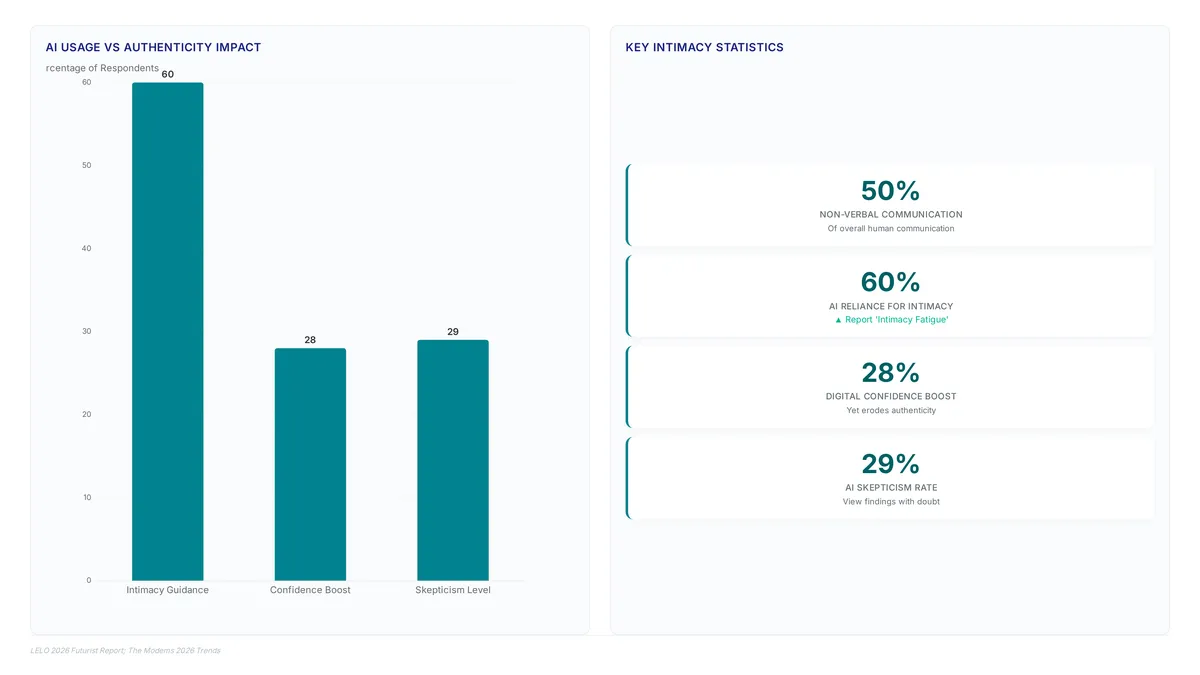
Analogue experiences gain infinite value as artificial intelligence makes digital companionship ubiquitous. This flexible establishes situated intimacy as a rare privilege where connection remains entirely unrecorded and immune to data extraction. Experts foresee a future where users toggle between humans and avatars in augmented environments, yet the highest market value now rests on interactions leaving no digital exhaust. The LELO 2026 Futurist Report labels this era "Intimacy Fatigue," a period where 60% of respondents admit using AI for intimate guidance yet feel removed from actual experience. Saturated intimacy depends on algorithmic scripting and constant tracking, whereas unmediated presence demands full cognitive engagement without technological intermediaries. Digital tools offer confidence boosts for 28% of users, yet that same mediation erodes the authenticity required for deep bonding. Couples seeking purposeful pleasure must actively reject automated convenience to reclaim the awkward, unscripted reality of another person. The price of this luxury is the deliberate forfeiture of data analytics in favor of raw, unverified human error.
Rebuilding Relational Confidence Through IRL Intimacy
Partners must relearn unscripted social navigation between 2032 and 2035 to overcome algorithmic dependency. Relational confidence diminishes when individuals rely on synthetic prompts rather than reading organic cues as digital mediation saturates daily life. Body language accounts for approximately 50% of overall human communication, yet AI tools cannot replicate the subtle tension of eye contact or the awkwardness of silence. The LELO report predicts this era requires rebuilding skills like handling rejection face-to-face rather than through buffered screens. Virtual environments simulate presence to increase user satisfaction, but they ultimately fail to provide the raw data needed for genuine emotional growth. Ignoring this shift produces a generation unable to sustain situated intimacy without technological crutches. Restoring the capacity for authentic attraction forces reliance on non-verbal signals and immediate feedback loops. Avoiding digital comfort zones feels initially inefficient compared to scripted interactions. Partners develop the durability required for deep connection only through this friction. True luxury now lies in the discipline of being fully present without a digital safety net.
Navigating Intimacy Fatigue and the Trust Fault Line
A critical psychological pivot occurs as users transition from digital saturation to Intimacy Fatigue, feeling informed yet removed from experience. Disconnection intensifies between 2026 and 2028 as couples recognize that constant connectivity erodes the feeling of being truly present with another person. Although 36% of individuals currently seek relationship advice from algorithms, this reliance creates a barrier to authentic emotional exchange.
A deeper trust fault line emerges when partners shift their primary concern from utility to data privacy. Consumers begin asking what their devices know about them rather than how the technology helps them. This skepticism is warranted; 29% of respondents already view AI findings in romance as critical or potentially harmful. Intimate moments become data points, risking the transformation of relationships into mediated performances rather than shared realities. Modern couples must retreat into situated intimacy to preserve relational authenticity. Emerging markets prioritize the rare luxury of human presence without digital exhaust, unlike platforms logging every interaction. Unmediated contact allows couples to navigate the awkwardness and beauty of real connection.
About
Dr. Ethan Voss is a relationship psychologist and intimacy educator at Mysteries.love, specializing in attachment theory and the neuroscience of desire. His expertise makes him uniquely qualified to analyze LELO's "Analogue Counter-Movement" report, as his daily work involves helping couples navigate the tension between digital saturation and authentic human connection. While the report highlights how AI and robotics are reshaping companionship, Dr. Voss applies clinical research to offer practical, evidence-based strategies for reclaiming raw, unscripted intimacy. At Mysteries.love, part of the Center for the Development of Intimate Relationships, he translates complex psychological concepts into actionable guidance for adults seeking deeper bonds. Rather than relying on third-party technologies, his approach emphasizes body awareness and communication skills fostered through Mysteries.love's own educational resources. This perspective ensures that discussions about the future of sex remain grounded in human psychology and genuine emotional fulfillment, aligning perfectly with the blog's mission to provide non-judgmental, practical sex education.
Conclusion
Ignoring Intimacy Fatigue creates a relational environment where partners prioritize data privacy over emotional presence. As algorithms increasingly mediate affection, the friction required for genuine bonding disappears, leaving couples with efficient but hollow interactions. This trajectory demands an immediate shift toward situated intimacy, where the absence of digital logging becomes the primary metric of trust. Relying on scripted AI responses creates a fragile foundation that collapses when real-world unpredictability strikes, forcing a choice between curated perfection and messy authenticity.
Couples must commit to a strict analogue protocol starting this week to reclaim their relational autonomy. Begin by designating specific hours where all screens are physically removed from shared spaces, forcing reliance on the non-verbal cues that constitute half of human communication. This deliberate disconnection is not a retreat from progress but a necessary investment in authentic attraction that technology cannot simulate. The market for unmediated experiences will grow as users recognize that true luxury lies in moments that leave no digital exhaust. Prioritize face-to-face vulnerability over algorithmic confidence boosts to build durability against future disconnects. Start today by turning off notifications during your next conversation to restore the raw feedback loops necessary for deep connection.
Frequently Asked Questions
Thirty-six percent of individuals seek relationship guidance from artificial intelligence. This reliance creates emotional fatigue by replacing spontaneous human interaction with scripted, algorithmic responses that lack genuine vulnerability.
Eighteen percent of people admit sending AI-written messages pretending they are personal. This practice erodes trust because partners eventually sense the lack of authentic voice in their digital conversations.
Digital tools keep partners reachable but often fail to make them feel truly understood or safe. True connection requires unrecorded moments that algorithms cannot replicate or optimize for data.
Thirteen percent consider artificial intelligence actively harmful to their romantic lives. This skepticism drives the analogue counter-movement where people prioritize untracked, private experiences over digitized intimacy.
Situated intimacy is embodied and unrecorded while saturated intimacy is trackable and scripted. Couples choosing the former reclaim privacy by removing devices from the bedroom entirely.
References