Somatic sexology guide for nonmonogamy transitions
A narrow slice of American adults practices consensual non-monogamy, yet this demographic drives a critical market for structured relationship transitions. Janelle, operating as The SexTechnologist, merges technical architecture with somatic sexology to guide clients through these shifts.
This guide defines the intersection of somatic sexology and digital intimacy to build safer emotional containers. We detail the 4-month Monogamy To Non-Monogamy Pipeline, a framework using joint sessions and text support to dismantle couple's privilege. We also examine the 3-month Build Your Own Pipeline, which implements mindful sexual practices to resolve performance anxiety.
Navigating these dynamics requires skills most lack. Regular check-ins build the trust necessary for safety. Psychology Today notes that staying warm during emotionally charged discussions invites partners to bring their best selves. Structured approaches move individuals beyond theory into expansive, conscious connection, discarding outdated societal scripts.
Defining the Intersection of Somatic Sexology and Digital Intimacy
Defining Consensual Non-Monogamy and Novogamy Structures
Consensual non-monogamy is an agreement where every partner explicitly authorizes multiple intimate connections. This distinction separates the practice from infidelity, which violates established trust boundaries. Maintaining emotional safety across a network demands rigorous communication protocols. Digital intimacy complicates this by enabling bonds that ignore physical distance. Researchers now describe these modern arrangements as thoughtfully considered practices, distinct from the unstructured experiments of previous decades. Technology enables the connection, but explicit negotiation of boundaries clarifies expectations for everyone involved. Dr. Jorge Ferrer introduced novogamy as a flexible meta-structure. This framework allows individuals to adopt varying relationship configurations without binding themselves to a rigid identity. Partners shift between monogamous and non-monogamous modes as life circumstances evolve, avoiding static labels.
Stability must coexist with structural fluidity. Janelle identifies as a student of sexuality and a guide to modern intimacy who fuses technical expertise with somatic sexology knowledge. Successful navigation requires rebuilding healthy relationship agreements. These documents must reflect current desires rather than past assumptions.
Applying Somatic Sexology to Digital Intimacy and AI Companions
Somatic sexology grounds digital interactions by prioritizing bodily sensation over abstract cognitive processing during virtual connection. This approach defines erotic intelligence as the capacity to navigate desire and boundaries consciously, whether interacting with humans or artificial entities. AI companions function as simulated partners that allow individuals to practice communication scripts and explore fantasies without immediate interpersonal risk. Coaching modalities diverge based on relational configuration. Individual sessions often focus on internal blocks, while couples work reconstructs shared agreements. Recent observations note a demographic migrating from strategic gaming communities into ethical non-monogamy. These individuals apply strategic planning skills to map complex relationship networks. Digital natives may possess unique aptitudes for negotiating the explicit contracts required in non-traditional structures.
Simulated intimacy offers safety, yet human vulnerability remains unpredictable. AI companions provide a space to practice without immediate interpersonal risk, but practitioners must integrate somatic checks. Digital tools should enhance rather than replace embodied presence. Blending these technologies with tactile awareness exercises helps maintain physiological regulation.
Monogamish Arrangements Versus Strict Monogamy Ideals
In a national survey conducted by YouGov in 2020, only a minority of respondents cited complete monogamy as their ideal relationship style. This data signals that relationship architecture is increasingly viewed as a configurable spectrum rather than a binary switch between exclusivity and infidelity. Operators of modern intimacy often adopt monogamish configurations. Such arrangements permit occasional external sexual encounters while maintaining a primary emotional bond. This differs from novogamy, which allows relationship styles to evolve across different life stages without a fixed identity.
The communication protocol separates these arrangements from nonconsensual non-monogamy. Consensual frameworks apply open dialogue as a protective factor against sexual risk behaviors, whereas secrecy correlates with negative health outcomes. Modular partnerships enable granular customization unlike the rigid perimeter of strict monogamy. Individuals pursue strictly sexual or strictly emotional external connections based on negotiated terms.
Cognitive load required to maintain flexible boundaries presents a significant limitation often overlooked. Agreement drift can convert a consensual arrangement into a source of distress without intentional maintenance and regular communication. The framework addresses this by treating relationship agreements as living documents requiring regular somatic auditing. This approach ensures that the shift away from traditional ideals does not compromise emotional safety or clarity.
Architecting Conscious Relationships Through Custom Agreements and Communication
Defining Custom Relationship Agreements and Couple's Privilege
Custom relationship agreements replace societal defaults with explicitly negotiated boundaries tailored to specific emotional and sexual needs. Unlike static monogamous scripts, these flexible contracts allow partners to modularly configure connections that are strictly sexual, strictly emotional, or both modularly configured. This granular customization requires dismantling couple's privilege, a hidden flexible where established pairs unconsciously prioritize their bond over new or less-entrenched connections.
The transition from default monogamy often reveals unexamined assumptions about time allocation and decision-making authority. Without intentional restructuring, existing dyads may inadvertently marginalize new partners, replicating hierarchical power imbalances despite claims of equality. Coaching containers like the Monogamy To Non-Monogamy Pipeline address these friction points by guiding couples through a structured 4-month process to rebuild healthy agreements. This process unpacks jealousy and attachment styles that surface when moving beyond traditional exclusivity.
| Default Flexible | Conscious Agreement Feature |
|---|---|
| Assumed exclusivity | Negotiated boundaries |
| Hierarchical priority | Equitable time allocation |
| Implicit expectations | Explicit communication protocols |
Simply declaring a relationship non-monogamous does not automatically erase internalized mononormative behaviors. Ignoring couple's privilege costs relationship stability; unaddressed power differentials often lead to conflict when new partners are introduced. Successful design requires ongoing revision rather than a one-time contract signing. Those ready to move from theory to practice can sign up for a research call to explore personalized coaching options.
Applying Somatic Techniques to Communicate Desires and Boundaries
Somatic practices convert abstract relationship desires into tangible bodily sensations that partners can articulate without cognitive overload. Individuals accessing the Build Your Own Pipeline engage in weekly guided activities designed to bypass intellectual defenses and locate authentic boundaries within the nervous system. This structural approach mirrors the strategic planning observed in communities transitioning from tabletop gaming to ethical non-monogamy, where participants meticulously define connections before acting.
The coaching container typically provides 3 × 60-minute joint sessions alongside Monday, Friday text support to reinforce these somatic skills during real-world interactions. Such consistent scaffolding allows polycules to process complex emotional data, similar to the deliberate architectural choices made by long-term triads practicing conscious relationship design. Without this embodied framework, partners often revert to default monogamous scripts that fail to address current relational realities.
Somatic awareness alone cannot resolve structural incompatibilities regarding time or resources. The 3-month custom experience addresses this by pairing body work with explicit agreement drafting.
| Component | Function |
|---|---|
| Joint Sessions | Enable real-time boundary negotiation |
| Text Support | Provides immediate containment for jealousy spikes |
| Guided Activities | Anchors desires in physical sensation |
Integrating these tactile communication tools prevents the accumulation of unspoken resentments that frequently dismantled early non-monogamous experiments.
Checklist for Navigating Jealousy and Selecting Intimacy Coaching
Start by mapping specific jealousy triggers to bodily sensations before evaluating relationship structures. This somatic grounding reveals whether distress stems from unmet needs or genuine incompatibility. Compare your readiness against available support models using the table below.
| Feature | Monogamy To Non-Monogamy Pipeline | Build Your Own Pipeline |
| Duration | 4-month guided process | 3-month custom experience |
| Focus | Transitioning couples, couple's privilege | Individuals, breakups, performance anxiety |
| Sessions | 3 joint, 1 individual each | 3 joint, 1 individual (30-min) |
| Support | Weekly activities, text access |
Those not ready for full coaching can book a confessional or a free intake session before committing to a package. This lower-barrier entry allows clients to test the coaching container without immediate long-term obligation. Research indicates that people practicing ethical non-monogamy experience equal levels of sexual satisfaction compared to monogamous peers, suggesting the work involves structural redesign rather than fixing deficits.
Scope defines the choice: the standardized four-month arc addresses systemic relationship agreements, while the three-month option targets specific hurdles like tantric connection or grief processing. Attempting deep trauma work within a general transition framework often dilutes both outcomes. Operators must select the vessel matching their primary friction point. The SexTechnologist framework validates that structured intervention prevents the erosion of trust during these transitions. Choosing the wrong duration creates a false sense of progress while leaving root dynamics unaddressed.
Implementing Mindful Sexual Practices to Resolve Performance Anxiety
Defining the Build Your Own Pipeline Coaching Structure
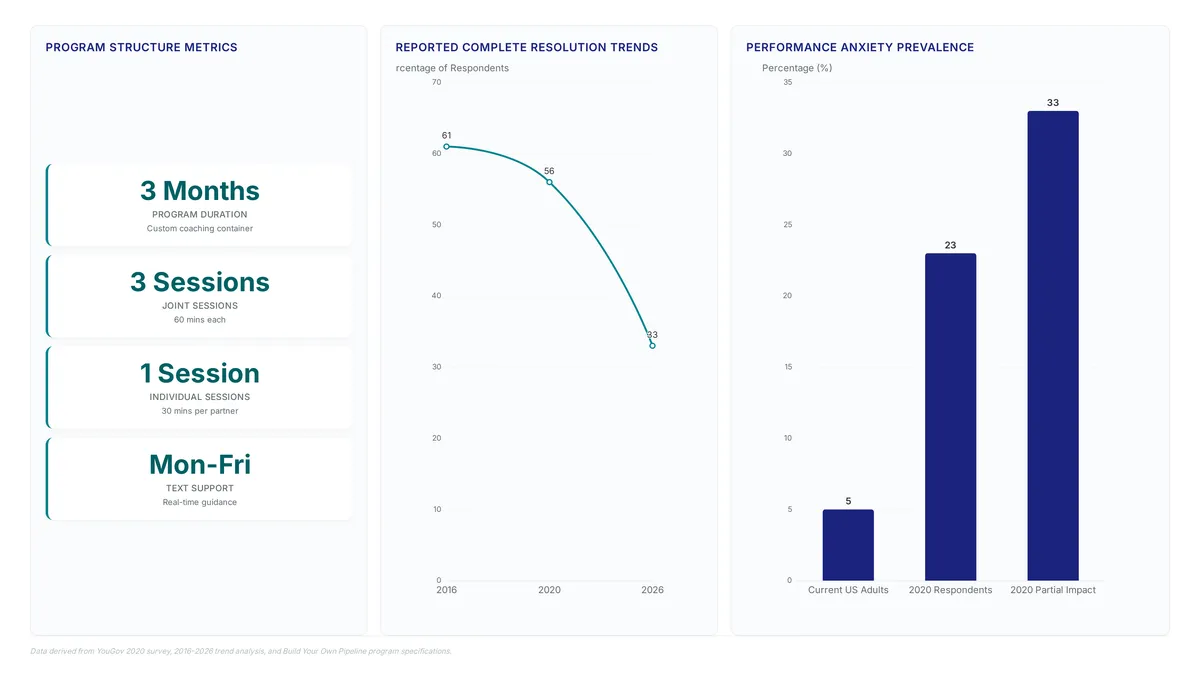
The Build Your Own Pipeline operates as a 3-month custom coaching experience designed to address specific intimacy barriers like performance anxiety. This structure allocates 3 × 60-min joint sessions for couples, supplemented by one 30-min individual session for each partner. Individual clients receive three dedicated coaching hours alongside weekly guided activities that support relational evolution. The inclusion of Monday, Friday text support ensures access to guidance during the week outside scheduled calls.
- Identify specific somatic triggers causing relational friction.
- Execute joint sessions to renegotiate relationship agreements.
- Integrate somatic dating techniques to rebuild erotic autonomy.
The program is tailored to meet clients where they are, whether exploring new relationship structures, deepening intimacy, or rediscovering pleasure. The 3-month container offers a framework for those who want to explore, expand, or heal with a structure that flexes to fit their needs. This duration allows partners to move from theory to practice with structure, compassion, and guidance.
Applying Weekly Guided Activities to Resolve Performance Anxiety
Real-time text support bridges the gap between weekly somatic lessons and immediate intimacy hurdles. Clients apply Monday, Friday text support to navigate performance anxiety spikes and communication challenges throughout the week. This continuous access allows partners to apply mindful sexual practices when physiological arousal threatens to overwhelm communication.
- Identify the specific bodily sensation signaling performance pressure during the week.
This iterative loop transforms isolated incidents of sexual performance anxiety into opportunities for deepening trust. Individuals in consensual arrangements often report higher safety compliance because they must explicitly negotiate terms that monogamous scripts assume safety compliance. The Monday, Friday text support ensures that partners are not left without resources between sessions. The 3-month duration provides a consistent container for these micro-interventions to take root. Immediate relief differs from long-term structural change; text support provides the former while joint sessions build the latter. This dual approach helps couples address symptoms while working toward resolving underlying fears. Integrating these digital check-ins helps maintain momentum between the appointments.
Checklist for Booking Confessional Sessions Versus Full Coaching
Book a confessional session if you need immediate clarity before committing to a structured 3-month container.
- Assess whether your goal is single-issue resolution or deep structural change.
- Select full coaching to access payment plans available for the custom experience.
Modern intimacy work has shifted toward a therapized practice rather than casual experimentation, requiring precise tool selection. While a confessional offers a starting point, the full coaching pipeline provides the sustained support needed to navigate complex nervous system responses to jealousy.
| Feature | Confessional / Intake | Full Coaching Pipeline |
|---|---|---|
| Commitment | One-time | 3-month process |
| Best For | Triage, specific questions | Performance anxiety, kink exploration |
| Support | Single session only | Monday, Friday text support |
Brief consultations serve a different function than the thorough pipeline, which includes weekly guided activities to ensure insights are embodied rather than remaining purely intellectual.
Using SexTech Tools and Community Resources for Relationship Growth
Defining the SexTech App Directory and Digital Intimacy Scope
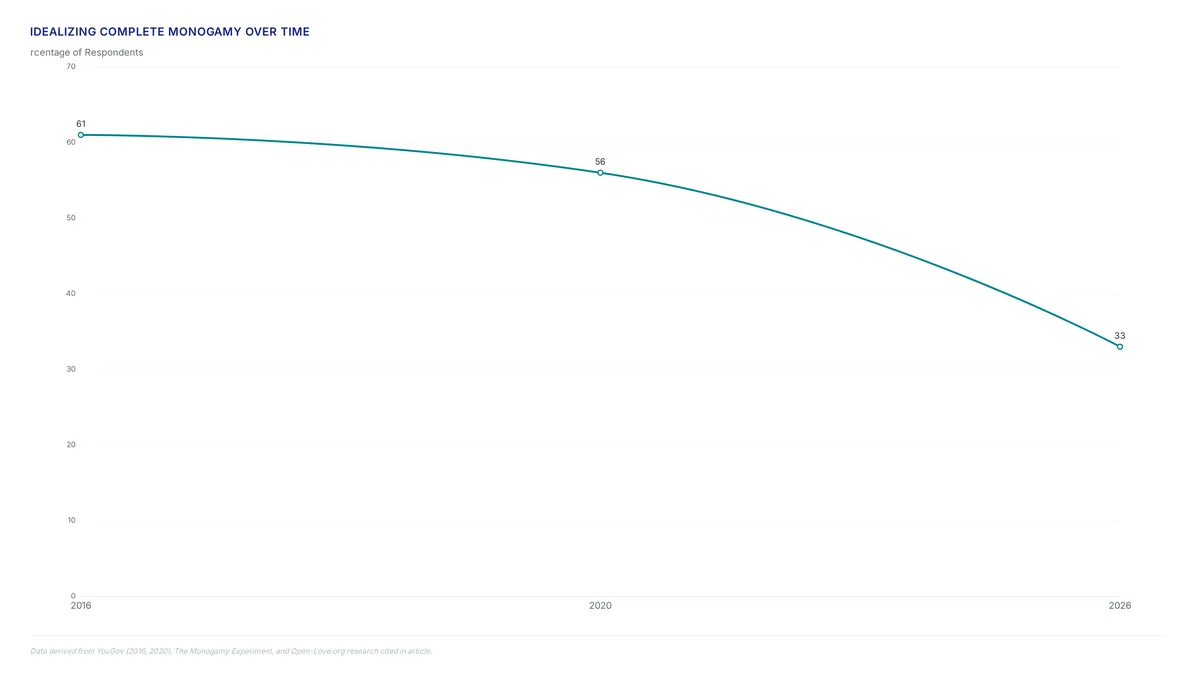
The SexTech App Directory functions as a curated catalog spanning dating platforms to novelty tools currently accepting early access registrations. This inventory maps the expanding digital intimacy environment where one-third of survey respondents describe their ideal relationship as something other than complete monogamy. Defining digital intimacy requires viewing technology not merely as a connector but as a medium for reshaping how partners communicate care and negotiate desire. AI companions represent a specific subset of this scope, appearing in workshops like "AI Companions: What's the real deal?" which explore the reality of synthetic partners. These tools are part of a broader conversation on how digital spaces condition interactions, a topic explored in essays such as "Were Social Media Bots the First Wave of Human-AI Relationships?" and "From protecting kids to policing Adults." While digital tools offer unprecedented access to diverse relationship models, they operate differently than physical presence. Operators and users alike must distinguish between tools that enable genuine connection and those that serve other functions. This distinction drives the need for a structured directory that categorizes apps by their capacity to support conscious relationship agreements rather than just immediate gratification.
Applying Somatic Performances and Substack Essays to Erotic Intelligence
Live demonstrations blend sensual movement and rope to make abstract consent discussions physically tangible for participants. These performances function as embodied data points, allowing audiences to witness vulnerability negotiated in real-time rather than described theoretically. Written narratives extend this work by analyzing digital intimacy trends through weekly essays on a Substack titled "Where Data meets Desire," which covers erotic intelligence, digital intimacy, and the future of connection. Specific articles include "Were Social Media Bots the First Wave of Human-AI Relationships?" and "From protecting kids to policing Adults," alongside inquiries like "AI Companions are the new plus one?"
Using technology to simulate intimacy differs from relying on it to avoid the friction of human negotiation. While erotic intelligence grows through navigating another person's unpredictable responses, algorithmic partners offer a controlled environment. This safety can be a useful training ground, yet it may also reduce the durability required for complex human relationships. Practitioners must distinguish between tools that build capacity for connection and those that merely simulate it without demand.
| Feature | Live Performance | Substack Essay |
|---|---|---|
| Primary Mode | Embodied movement | Narrative analysis |
| Consent Focus | Real-time negotiation | Theoretical framework |
| Tool Type | Physical presence | Digital text |
Operators should view these modalities as complementary layers of a single conscious relationship strategy. Integrating both somatic practice and critical reading fully develops relational autonomy.
Checklist for Selecting Strategy Consults and SexTech Workshops
Select strategic consulting when building commercial products requiring AI automations rather than personal relationship repair. Solopreneurs developing apps at the intersection of sex and wellness need product strategy, whereas individuals seeking clarity on consensual non-monogamy benefit from the "Monogamy To Non-Monogamy Pipeline" or targeted workshops. Services range from app strategy to AI automations to help incorporate tech into sexual wellness practices. A comparison of entry points reveals distinct operational goals for each service tier.
| Feature | Strategy Consults | SexTech Workshops |
|---|---|---|
| Primary Audience | Solopreneurs, Small Businesses | Individuals, Couples |
| Focus Area | App Strategy, AI Automations | Education, Embodiment |
| Output | Product Roadmap, Tech Integration | Skills, Clarity, Community |
| Format | 1:1 Business Guidance | Group Learning, Q&A |
Operators must distinguish between needing a business framework and requiring personal psychoeducation. Those curious about AI companions can attend the "AI Companions: What's the real deal?" session to understand synthetic partners before integrating such tools into a product or relationship. Popular workshop titles include "ABCs of Sexual Submission," "How Do I Know I'm Ready for Sex?," and "Thrice As Nice: The Art of Adding A 3rd." Conversely, the "ABCs of Sexual Submission" offers core knowledge for power dynamics that business strategy cannot address.
Misapplying business logic to emotional vulnerability creates structural risk. A founder might mistakenly treat jealousy as a bug to be patched via automation rather than a signal for deeper agreement work, whereas the coaching container explicitly aims to unpack hidden dynamics including jealousy and attachment. One-third of survey respondents describe their ideal relationship as something other than complete monogamy, suggesting a market need for both technical tools and somatic education.
About
Sofia Reyes is a certified sex educator, somatic intimacy coach, and relationship writer at mysteries.love. Her expertise makes her uniquely qualified to explore relationship agreements, as her daily work centers on guiding individuals through trauma-informed and pleasure-centered approaches to connection. At mysteries.love, an editorial platform dedicated to evidence-based intimacy education, Sofia bridges the gap between theoretical psychology and practical application for modern couples. Her background in somatic sexology allows her to address the detailed emotional and physical dynamics involved in renegotiating relationship structures, whether monogamous or non-monogamous. By integrating body awareness with clear communication strategies, she helps readers navigate complex conversations about boundaries and desire. This article reflects her commitment to providing non-judgmental, inclusive resources that empower adults to build conscious, consensual partnerships grounded in trust and mutual understanding.
Conclusion
Scaling relationship agreements fails when partners treat emotional friction as a technical glitch requiring a patch rather than a signal for deeper renegotiation. Ignoring this distinction erodes trust, as strategies for staying warm during charged discussions are high-level skills that most couples lack without structured guidance. Relying on ad-hoc conversations creates inconsistency, whereas a set container ensures that vulnerability does not collapse into chaos when resources are thin.
Commit to a structured timeline rather than expecting immediate clarity. Engage in the 4-month guided process for fundamental rebuilding, while established couples facing specific resource constraints should opt for the 3-month custom experience. This duration provides the necessary consistency to change abstract desires into actionable, living agreements without burning out between sessions.
Start this week by scheduling a dedicated 60-minute joint session to review your current expectations against your actual capacity. Do not attempt to automate this dialogue or solve it with a single conversation. Use this initial block to identify where your current flexible lacks the container for discussing jealousy or time allocation. This concrete step moves you from reactive conflict to proactive design.
Frequently Asked Questions
Only a portion of American adults currently practice some form of consensual non-monogamy. This small group represents the active user base for individuals seeking structured transitions away from traditional monogamous scripts.
A 2020 survey found only a portion of respondents cited complete monogamy as their ideal. This drop indicates that relationship architecture is increasingly viewed as a configurable spectrum rather than a binary choice.
AI companions function as simulated partners allowing individuals to practice communication scripts safely. While they offer risk-free exploration, practitioners must integrate somatic checks to ensure technology enhances rather than replaces embodied presence.
The Monogamy To Non-Monogamy Pipeline operates as a guided 4-month journey for couples. This structured container includes joint sessions and text support to rebuild healthy agreements while unpacking hidden dynamics like jealousy.
The Build Your Own Pipeline offers a 3-month custom coaching experience designed for specific goals. This flexible framework allows individuals to process breakups or overcome performance anxiety with tailored weekly activities.
References