Sexual conflict isn't about sex; it's emotional distance
Sexual conflict drives 40% to half of divorces, yet the act itself is rarely the culprit. The real fracture lies in deepening emotional distance.
Sexual dissatisfaction acts as a smokescreen for a collapsed foundation of emotional investment. When couples like Maya and Connor let life responsibilities eclipse their connection, they misdiagnose the resulting friction as a libido mismatch. It isn't. It is a failure of vulnerability and empathy. Focusing solely on physical frequency only accelerates the decay. You cannot fix a relational rupture with bedroom mechanics.
Statistics from oneextraordinarymarriage.com highlight the prevalence, but the solution requires a harder pivot: treating emotional intimacy as a core fundamental need. The depth of your connection correlates directly with how much you reveal about yourself and listen to your partner's inner world.
The Hidden Link Between Emotional Disconnection and Sexual Conflict
Defining Emotional Intimacy as the Foundation for Physical Connection
Emotional intimacy is the state where shared vulnerability allows partners to express needs without fearing judgment. Physical intimacy expresses this connection; it does not create it. When sexual friction arises, it points to flexible relational issues, not bedroom mechanics. Research indicates that sexual conflict and dissatisfaction are cited as a contributing factor in 40% to half of divorces. These visible bedroom struggles frequently mask invisible relational fractures. Many couples target the symptom while the cause remains untouched.
Sexual intimacy flourishes only when emotional foundations are strong. Maya and Connor experienced this shift as their talks became transactional. Affection faded while schedules packed tighter. Their core pillars, weakening vulnerability, empathy, intimacy, and emotional investment, deteriorated rapidly. Fixation on sexual conflict replaced focus on underlying distance. Desire weakens alongside the emotional bond when pillars erode. True repair shifts focus from performance metrics to the quality of emotional presence shared between partners.
Case Study: How Maya and Connor Lost Connection Amid Parenting Demands
Unhurried conversations vanish when parenting duties crowd out required vulnerability. Maya and Connor started as best friends and passionate lovers. Natural affection dissolved under exhaustion. Responsibilities replaced emotional presence. Sexual conflict emerged as a visible symptom of invisible distance. Conversations grew transactional while affection frequency dropped. Couples often fixate on absent sex rather than the eroding foundation beneath it. Sex problems rarely concern sex itself. They signal that the four pillars of vulnerability, empathy, intimacy, and investment have weakened notably.
Maya felt overwhelmed by demands as disconnection deepened. Connor interpreted withdrawal as rejection. A cycle of loneliness formed that neither could break alone. Pressure to perform physically widens the emotional gap without intentional repair. Restoring their bond required shifting focus from bedroom metrics to rebuilding safety for honest sharing. Repair becomes possible when couples rebuild connection instead of focusing only on symptoms.
The Risk of Misdiagnosing Sexual Conflict as the Primary Relationship Problem
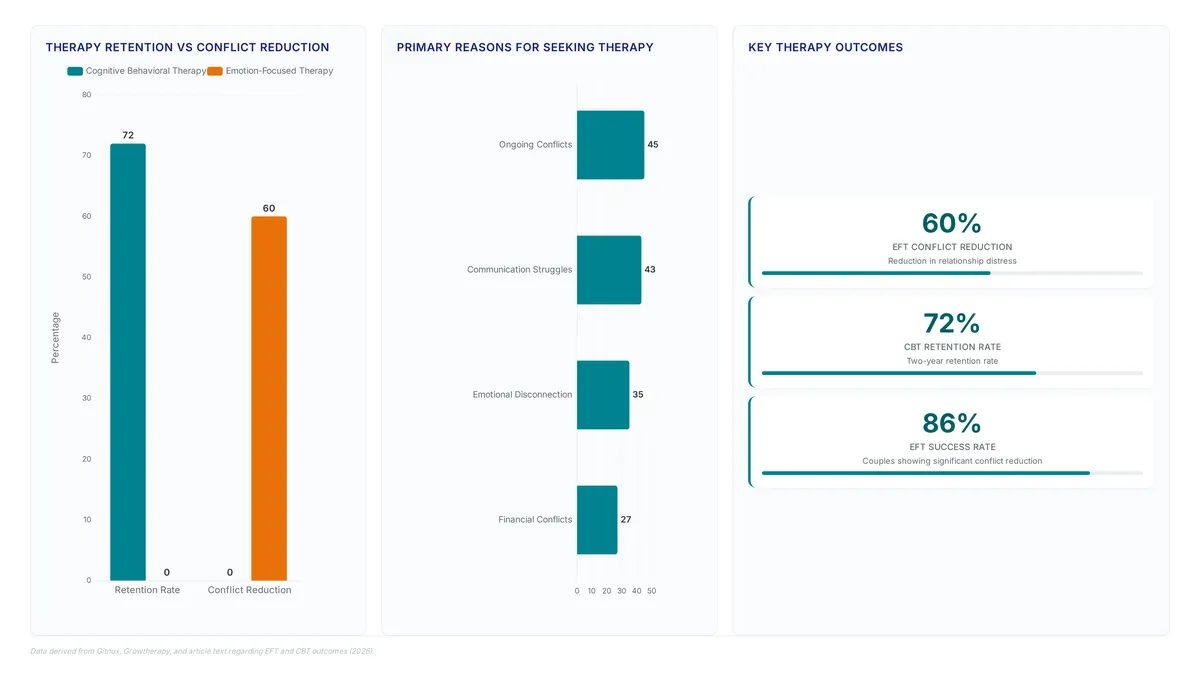
Therapy focusing solely on sexual mechanics often obscures the emotional disconnection driving distress. Treating the symptom rather than the cause risks missing the chance to rebuild the emotional foundation required for intimacy to thrive. Sometimes the sex problem is a manifestation of eroded vulnerability and unaddressed loneliness. Data indicates that a significant share of attendees cite ongoing conflicts creating strain within the relationship as their primary reason for seeking help, yet many mistakenly target physical performance. This misdiagnosis creates a dangerous cycle where partners attempt to fix desire through technique while ignoring relational rupture.
Clinical distinctions note that couples therapy is more appropriate when sexual problems stem from emotional disconnection rather than pure dysfunction. Ignoring this nuance leads partners down different emotional pathways that fail to address root loneliness. Assuming that focusing on sexual frequency addresses core relational deficits is an error. Conflict often expands beyond sex to include loneliness, exhaustion, rejection, resentment, misunderstanding, and emotional disconnection. Visible sexual conflict frequently masks invisible deficits in empathy. Addressing only the physical layer leaves the underlying relational dynamics untouched and vulnerable to collapse. True repair requires shifting focus from the bedroom to the broader context of shared vulnerability. Only by resolving emotional strain can couples create space for genuine desire to return naturally.
How the PACER Model Rebuilds the Four Pillars of Connection
How the PACER Model Defines the Shift from Blame to Pattern Recognition
Recurring conflict stops when the question "Why aren't we having sex?" yields to "What has happened to us?" This linguistic pivot moves partners away from blaming individual performance toward examining systemic emotional disconnection. Maya and Connor discovered their arguments were no longer about physical frequency but had transformed into discussions about loneliness, rejection, pressure, resentment, and exhaustion. Emotional loneliness functions as a psychological bridge between conflict behaviors and physical intimacy, often mediating the impact of stonewalling on sexual desire. Couples who pause to identify these underlying currents stop treating sex as a standalone metric.
They begin addressing Dual Control Model dynamics where stress acts as a brake on arousal. External connections fill the void left by emotional distance, a risk highlighted by data showing emotional affairs now account for a significant portion of reported infidelity. Partners inadvertently reinforce the very isolation they fear without this pause. Instead of negotiating frequency, couples using Mysteries.love resources learn to map the emotional pathways that precede physical closeness. Withdrawal is often a protective response to overwhelm rather than rejection. The cycle of accusation halts when this reality lands. Structural change allows vulnerability to return. Safety emerges. Desire re-emerges naturally once that safety exists.
Applying Accountability to Replace Criticism with Vulnerability in Marriage
Partners must admit feelings of insecurity instead of projecting frustration to apply accountability. This phase in the PACER framework interrupts the cycle where criticism masks loneliness. Connor acknowledged approaching their conflict with anger rather than admitting he felt unwanted. Maya recognized her withdrawal was a defense against overwhelm, not a lack of love. Such specific admissions change empathy from an abstract concept into a functional tool for desire. One partner voices fear instead of fault. Defensive walls lower. Space opens for genuine connection. This shift directly addresses how empathy affects desire by removing the threat response that kills libido.
Couples must listen to understand pain rather than preparing defenses to improve empathy in marriage. Ignoring root causes of distance frequently leads to deepening disconnection and eventual separation. The cost of avoiding this work is steep. True repair happens only when partners stop fighting symptoms and rebuild the emotional foundation together. Mysteries.love provides resources to guide this vulnerable reconstruction safely.
The Risk of Interpreting Exhaustion as Rejection During the Crash Phase
Sleep deprivation creates a physiological state where sexual initiations register as intrusive demands rather than invitations for connection. Maya viewed sex as one more demand at the end of an already impossible day. Her exhaustion triggered a protective withdrawal that Connor misread as personal rejection. This specific failure mode accelerates relational decay because partners react to perceived slights instead of the underlying fatigue. Nearly half of couples seeking help cite these exact ongoing conflicts as their primary reason for attending therapy, highlighting how quickly strain becomes the dominant relationship narrative ongoing conflicts.
One partner feels unloved. The other feels hunted. This cycle reinforces a false binary without intervention. Mismatched desire often masks a synchronization failure between biological needs and emotional expectations. Trying to fix emotional disconnection in relationship dynamics by forcing physical intimacy during this crash phase usually backfires. The brake on arousal tightens while the accelerator of obligation presses down. Rest is a prerequisite for desire, not an obstacle to it. Addressing should I focus on emotional connection first requires admitting that physical performance cannot compensate for a lack of safety. Mysteries.love guides partners to pause these interpretations. They rebuild the emotional foundation necessary for vulnerability to return naturally.
Executing Intentional Intimacy Through the PACER Framework
Application: Defining the PACER Shift from Blame to Pattern Recognition

The core mechanism of the PACER framework interrupts recurring arguments by shifting focus from sexual frequency to underlying emotional patterns. The turning point for the couple occurred when they shifted their question from 'Why aren't we having sex?' to 'What has happened to us?' This pivot reveals that sexual conflict often reflects deeper relationship dynamics rather than problems with sex itself. By pausing, couples identify feelings like loneliness and resentment hidden beneath surface complaints. Reframing conflict as data allows partners to view arguments as opportunities to understand unmet needs instead of signs of failure. This approach aligns with therapeutic trends where conflict becomes a signal for emotional disengagement.
Application: Applying Accountability to Replace Criticism with Vulnerability in Marriage
Executing the Accountability phase helps partners recognize how each contributes to emotional distance. In the case of Maya and Connor, this shift occurred when Connor acknowledged approaching the issue with frustration, anger, criticism, and blame rather than admitting feelings of loneliness or insecurity. Maya similarly replaced her pattern of avoidance with honest admissions about feeling emotionally depleted and overwhelmed by parenting demands. This specific vulnerability transforms sexual conflict into an opportunity for reconnection.
Couples practicing this step focus on rebuilding connection instead of focusing only on symptoms. The process involves stating internal fears directly rather than criticizing external behaviors.
- Identify the surface emotion like anger or annoyance during a conflict.
- Pause to locate the deeper feeling such as rejection or exhaustion.
- Voice the vulnerable emotion to your partner without assigning blame.
- Listen to your partner's underlying fear without preparing a defense.
When partners hide their true feelings, they inadvertently protect themselves from pain while creating more distance. True accountability means recognizing that neither partner intends to hurt the other, but both may be acting out of self-protection. By practicing vulnerability, couples rebuild the emotional foundation necessary for physical closeness to return naturally.
Checklist for Identifying Emotional Distance Before Sexual Conflict Escalates
Stop recurring arguments by auditing communication patterns before sexual dissatisfaction solidifies. Research indicates a significant share of couples cite struggles with communication as precursors to disconnection, signaling a need for immediate relational repair. Use this diagnostic tool to detect early warning signs of emotional distance.
- Partners avoid vulnerable topics to prevent recurring conflicts.
- Conversations about needs change into critiques of character.
- Physical affection feels like a transactional obligation rather than connection.
- One partner withdraws while the other pursues with frustration.
| Symptom | Underlying Emotion | PACER Action |
|---|---|---|
| Criticism | Insecurity | Pause |
| Silence | Overwhelm | Accountability |
| Resentment | Loneliness | Collaboration |
Allowing these signals to persist can allow minor friction to erode the four pillars of vulnerability, empathy, intimacy, and emotional investment. Unlike surface-level disputes, deep disconnection requires structured intervention to rebuild safety. Therapy costs range from a moderate to a higher hourly rate for those seeking specialized counseling. Addressing the root cause prevents permanent relational damage.
Strategic Indicators for Professional Sex Counseling and Therapy
Defining the Dual Control Model as a Diagnostic Framework for Sexual Response
The Dual Control Model operates as a diagnostic framework by mapping sexual response to independent excitatory and inhibitory systems. This technical structure posits that arousal depends on accelerators, which detect erotic stimuli, and brakes, which suppress response due to stress or emotional distance. When relational conflict emerges, these brakes engage automatically, overriding physical desire regardless of partner attraction. Couples often misinterpret this biological suppression as a lack of love rather than a neurological safety mechanism. Understanding these distinct mechanisms helps partners reduce conflict over mismatched desire by shifting focus from performance to safety.
Applying Emotionally Focused Therapy to Restore Intimacy in Couples with Insecure Attachment
Emotionally Focused Therapy directly targets the attachment injuries that silence physical desire in long-term partnerships. Developed by Dr. Sue Johnson, this modality restructures emotional responses to rebuild safety rather than negotiating sexual frequency. Emotionally Focused Therapy (EFT), developed by Dr. Sue Johnson, specifically targets attachment bonds and has been shown to reduce relationship distress by 60%. This statistical advantage matters because sexual avoidance often masks a deeper fear of abandonment or engulfment. When partners interpret a lack of sex as rejection, they enter a cycle of protest and withdrawal that further inhibits intimacy.
CBT Retention Rates Versus Imago Therapy Outcomes for Long-Term Sexual Satisfaction
Cognitive Behavioral Therapy maintains a 72% two-year retention rate by systematically altering thought patterns. This structural approach benefits couples needing immediate behavioral correction without deep historical excavation. Imago Relationship Therapy reports that 69% of participants experience higher intimacy levels after 12 weeks by addressing childhood wounds. The modality targets the root emotional injuries that often manifest as sexual avoidance or performance anxiety.
Couples deciding when to seek sex counselling must weigh timeline urgency against the depth of required emotional repair. Rapid symptom relief favors CBT, whereas restoring core trust often requires the slower, wound-focused work of Imago. A critical tension exists between fixing the mechanical act of sex and healing the relational rupture causing the dysfunction. Prioritizing speed may leave underlying attachment injuries unaddressed, leading to symptom recurrence. Evaluating whether the primary barrier is cognitive distortion or historical emotional trauma is necessary before selecting a path. Operators often overlook that high retention in CBT does not guarantee emotional reconnection if attachment fear remains the driver. The limitation of a purely cognitive approach is its potential inability to process the visceral pain of early abandonment. True sexual recovery requires matching the therapeutic mechanism to the specific nature of the relational break.
About
Sofia Reyes is a certified sex educator, somatic intimacy coach, and relationship writer at Mysteries.love. Her expertise in trauma-informed approaches and body awareness makes her uniquely qualified to explore the thesis that sexual conflict often reflects deeper relationship dynamics rather than mechanical issues. In her daily work guiding individuals through pleasure-centered education, Reyes observes how emotional distance frequently manifests as physical disconnection, mirroring the insights that vulnerability and empathy are necessary for reigniting desire. At Mysteries.love, a practical sex education resource, she bridges the gap between relationship psychology and tangible intimacy techniques. By focusing on somatic healing and communication skills, Reyes helps couples move beyond surface-level symptoms to rebuild genuine emotional investment. Her writing translates complex psychological concepts into actionable strategies for modern intimacy, ensuring readers can cultivate the safety required for true emotional intimacy and lasting connection within their relationships.
Conclusion
Scaling emotional repair fails when couples treat symptoms while ignoring the attachment injuries driving the distance. High retention in cognitive approaches does not guarantee the deep reconnection required for lasting sexual satisfaction if the root trauma remains unprocessed. The ongoing operational cost is a cycle of temporary relief followed by recurring conflict, wasting both time and the hourly investment in specialized counsel. You must match the therapeutic mechanism to the specific nature of your relational break rather than chasing quick fixes. Start this week by identifying whether your primary barrier is a cognitive distortion or a historical wound before booking another session. If childhood patterns dictate your current reactions, prioritize modalities like Imago that target these deep structures over rapid behavioral correction. True recovery demands aligning your chosen path with the depth of the injury rather than the speed of the solution. Build your strategy around rebuilding safety as the non-negotiable foundation for any technical sexual advice to take hold. Commit to the slower work of addressing visceral pain to ensure your relationship infrastructure supports genuine closeness.
Frequently Asked Questions
Couples must address underlying disconnection rather than focusing solely on physical frequency to prevent relationship collapse.
This statistic suggests partners should prioritize rebuilding emotional safety over resolving economic disputes to restore intimacy.
This indicates that resolving relational friction requires addressing communication breakdowns before attempting to fix specific sexual mechanics or performance issues.
Focusing only on sexual mechanics ignores the emotional foundation required for desire to thrive. Since sexual conflict often masks deeper loneliness, couples must rebuild vulnerability and empathy to stop the cycle of rejection and misunderstanding.
Vulnerability, empathy, intimacy, and emotional investment form the essential foundation for lasting sexual connection. Without these four elements, physical affection fades, and partners risk misdiagnosing their emotional distance as a simple libido mismatch.
References