Sex tech for her: Real wellness tools
The global sex toy market reached tens of billions of US dollars in 2023. This isn't a niche curiosity; it is a dominant economic force. Female-focused sexual wellness has moved past the novelty phase. The sector now distinguishes itself from broader femtech categories by treating pleasure as a pillar of mental health. Smart devices are replacing historical silence with data-driven self-discovery, applying biometric feedback to intimate physiology.
Traditional healthcare left a void. A 2019 Wellbeing of Women survey revealed that over 40% of women felt uncomfortable discussing sexual issues with doctors. Digital tools are filling that gap. Platforms like the sexual wellness app Rosy, championed by Dr. Lyndsey Harper, frame pleasure as critical to overall autonomy. From AI-driven relationship resources to intelligent pelvic floor trainers, these innovations empower users through confidence rather than shame.
We need to look at the mechanics. Smart vibrators from brands like Lioness and Dame track bodily responses, discarding the one-size-fits-all approach of the past. These biometric feedback loops help users visualize arousal patterns and understand their unique physiology. By integrating these technologies, the industry is supporting a cultural shift where women take charge of their reproductive health and emotional intimacy through verified scientific engagement.
Defining the Scope of Women-Centered Sex Tech
Defining Sex Tech Versus Femtech Distinctions
Sex tech comprises digital and physical tools engineered to enhance sexual well-being, pleasure, or emotional intimacy. This definition creates a hard line between it and femtech, which primarily addresses fertility, menstruation, and menopause management. Both sectors utilize connected devices, but sex tech distinctively embraces pleasure as a vital component of overall wellness rather than focusing solely on reproductive function. Dr. Lyndsey Harper asserts that pleasure serves as a pillar of mental and physical health, not merely a luxury. This perspective drives a shift where exploring sexuality empowers women to control their overall health outcomes.
Historical design philosophies often neglected female anatomy, favoring penis-shaped forms aimed at simultaneous climax. Modern innovations correct this by prioritizing anatomical correctness and clitoral stimulation over penetration simulation. Stigma remains a tangible barrier; a 2019 survey indicated over 40% of women felt uncomfortable discussing sexual issues with a doctor.
| Feature | Sex Tech Focus | Femtech Focus |
|---|---|---|
| Primary Goal | Pleasure and intimacy | Fertility and cycle health |
| Data Use | Arousal patterns | Hormonal cycles |
| Design Driver | Anatomical correctness | Medical tracking |
Regulatory classification creates friction for manufacturers. Many devices straddle the line between unregulated novelty and medical wellness tool. Companies seeking FDA clearance must demonstrate clinical validation, distinguishing their products from traditional toys. This environment creates a disparity where medical-focused devices seek costly clearance while many other products remain unregulated, creating varied production costs. The cost is high for small startups attempting to enter the medical space without venture backing.
App-Connected Vibrators and AI Relationship Platforms
App-connected vibrators and AI relationship platforms constitute applied sex tech tools that translate biometric data into personalized wellness strategies. These devices move beyond simple stimulation to offer data-driven empowerment, allowing users to map arousal patterns and communicate desires with precision. Unlike historical novelties, modern iterations apply Bluetooth connectivity to sync with smartphone apps, guiding users through exercises or tracking responses for deeper self-discovery. Real-world applications include intelligent pelvic floor trainers that use gamification to ensure correct muscle engagement, directly addressing issues like pelvic strength and postpartum recovery. Simultaneously, AI-driven platforms enable guided intimacy exercises, helping partners navigate conversations that traditional healthcare often leaves unaddressed. This shift targets women and non-binary individuals specifically, correcting a legacy of design that frequently ignored female anatomy and preference.
Reliance on connected devices introduces data privacy considerations that users must evaluate alongside physical benefits. The very sensors enabling personalization also generate intimate datasets requiring strong security protocols to prevent unauthorized access. Users sacrifice some data sovereignty for personalized insights. Despite this constraint, the technology fills a gap by providing a private space for exploration, thereby democratizing access to sexual education and health autonomy. This discomfort prevents accurate diagnosis and limits access to evidence-based care. Technology bridges this divide by offering private, data-rich environments for self-exploration before clinical engagement. Digital tools allow users to track biometric responses and articulate needs without immediate interpersonal vulnerability. The global sex toy market was valued at USbillions in 2023, yet traditional retail often lacks medical rigor or inclusive design. Women-centered devices alter this by seeking regulatory clearance and prioritizing clinical validation over novelty.
| Barrier Type | Traditional Outcome | Tech-Enabled Solution |
|---|---|---|
| Stigma | Avoidance of care | Private data collection |
| Communication | Vague symptom description | Precise biometric logs |
| Access | Limited to clinic hours | 24/7 guided exercises |
The sector faces a "Wild West" environment where medical-focused devices pursue FDA clearance while many other products remain unregulated. This flexible creates a wide disparity in production standards and consumer pricing based on compliance levels. The real tension lies between privacy and the need for professional interpretation of complex arousal patterns. By normalizing these conversations through technology, individuals gain the vocabulary to demand improved care.
Mechanics of Smart Devices and Biometric Feedback
Biometric Sensors in Lioness and Dame Smart Vibrators
Biometric sensors in devices like the Lioness vibrator track physiological contractions to visualize arousal patterns. These smart vibrators function by embedding precision strain gauges that detect minute changes in pelvic floor tension during use. The collected data transmits to a companion application, creating a visual graph of intensity and rhythm over time. This process transforms subjective sensation into objective biometric feedback, allowing users to identify specific physical responses associated with climax. Unlike legacy products lacking technological integration, modern iterations treat sexual health metrics with the same rigor as heart rate monitoring.
| Feature | Traditional Device | Smart Biometric Device |
|---|---|---|
| Data Output | None | Visual arousal graph |
| User Insight | Intuitive only | Pattern recognition |
| Feedback Loop | Static | Flexible app integration |
Raw data collection means nothing without clear visualization; without it, metrics remain abstract noise rather than actionable insight. Anna Lee, Co-founder of Lioness, notes that identifying these patterns sparks a meaningful dialogue with oneself. Consequently, operators of these devices gain agency over their sexual autonomy through verified self-knowledge. While early adopters might struggle with app connectivity, the trade-off yields a personalized roadmap for pleasure that static tools cannot provide. This shift moves the industry from novelty hardware toward data-driven intimacy. Users effectively become researchers of their own bodies, using precision sensors to decode complex biological signals. The result is a quantified understanding of desire that empowers informed health decisions. Mysteries.love advocates for this evidence-based approach to wellness.
Real-Time Feedback Mechanics in Elvie and Perifit Pelvic Trainers
Elvie Trainer and Perifit convert muscle contraction strength into immediate on-screen game actions via Bluetooth Low Energy links. These devices employ pressure sensors to detect pelvic floor engagement, translating raw force data into vertical character movement or object acceleration within a paired mobile application. This mechanism ensures users isolate correct muscles rather than compensating with glutes or abdominals during postpartum recovery protocols. App-Based Guidance confirms that such real-time visual cues significantly improve exercise adherence compared to static routines.
However, reliance on Bluetooth connectivity introduces latency variables that can desynchronize feedback loops on older smartphones. If the wireless signal lags, the visual representation of muscle effort delays, potentially confusing users attempting to match specific rhythm patterns. This limitation necessitates close proximity between the device and the host phone, restricting movement freedom during sessions.
| Feature | Elvie Trainer | Perifit |
|---|---|---|
| Feedback Type | Real-time gamification | Interactive mobile games |
| Primary Goal | Bladder control | Muscle toning |
| Connectivity | Bluetooth Smart | Bluetooth Low Energy |
The operational implication for network-dependent health tools is that local processing must eventually supersede cloud reliance to guarantee millisecond-accurate feedback. Without edge-based computation, variable network conditions will continue to degrade the precision required for effective biometric training.
Bluetooth signal loss interrupts the data stream required for accurate biometric feedback visualization. Wireless interference from other household devices frequently causes transmission gaps that leave arousal graphs incomplete or fragmented. When the link breaks, the application cannot record physiological contractions, creating silent periods in the user's personal health log. Precision sensors depend on continuous connectivity to function as intended for sexual wellness tracking. Interruptions prevent the system from mapping the full arc of a session, reducing the utility of long-term pattern analysis.
| Failure Mode | Technical Consequence | User Impact |
|---|---|---|
| Signal Interruption | Lost data packets | Gaps in arousal history |
| Sensor Lag | Desynced visual output | Confusing real-time feedback |
| Pairing Errors | Failed session start | Inability to record data |
Even with perfect hardware, software algorithms may misinterpret noise as biological signals during unstable connections. This limitation means users should verify signal strength before relying on the device for clinical-grade insights. The industry standard is shifting toward more resilient protocols to support these intimate measurements. Developers are increasingly adopting AI to filter noise and reconstruct missing data points where possible. Such advancements aim to make the technology more reliable for daily use.
- Check device battery levels before initiating a session.
- Minimize distance between the smart device and the smartphone.
- Close background applications that may consume Bluetooth bandwidth.
Reliable data empowers individuals to understand their bodies without technical frustration. Mysteries.love recommends ensuring your environment supports stable wireless connections for the best experience.
Comparative Analysis of Leading Wellness Platforms
Defining Smart Wellness Criteria for Lioness, Dame, and Pelvic Trainers
Biometric tracking separates smart wellness devices from standard vibrators or exercise tools. The Lioness vibrator employs precision sensors to visualize arousal patterns, functioning as a personal fitness tracker for sexual response instead of a simple novelty item. This strategy mirrors a wider industry movement treating sexual health with the same data-driven rigor applied to heart monitoring. Elvie Trainer and Perifit take a different path by focusing on pelvic floor rehabilitation through app-connected games that verify correct muscle engagement during workouts. These tools convert isolated physical acts into measurable health interventions.
Stigma historically hindered discussions around sexual health, making private data collection necessary for user autonomy. A tension remains between seeking clinical validation and maintaining the privacy required for intimate exploration. Individuals considering a smart vibrator must determine if quantifying pleasure supports or hinders their specific connection to their body. The current market prioritizes this data-empowered philosophy over anonymous consumption.
Mapping User Goals to Lioness, Clue, Elvie, and Perifit Features
Aligning specific wellness goals with device capabilities prevents users from buying hardware that fails to address their physiological needs.
Users aiming to understand their sexual response benefit from biofeedback sensors that turn invisible physiological reactions into visible data trends. The Lioness vibrator uses precision technology to help users literally see their own arousal patterns, operating similarly to a heart rate monitor during exercise. Data empowers people to identify patterns and understand their responses, sparking a meaningful internal dialogue rather than guessing at preferences. Individuals managing postpartum recovery or bladder control require pelvic floor trainers that verify correct muscle contraction through interactive mobile games. Devices like Elvie Trainer and Perifit sync via Bluetooth to provide real-time corrections, ensuring users do not compensate with abdominal muscles during exercise. Relying solely on gamification can distract from the somatic awareness necessary for long-term muscle memory retention without app dependency. Those tracking hormonal influences on desire should prioritize apps like Clue or Flo that correlate cycle phases with libido fluctuations. Vibration-based tools offer immediate somatic feedback, whereas cycle apps provide only predictive temporal insights. Understanding these distinct functions allows users to select tools that best align with their personal wellness process.
Lioness vs Dame and Elvie vs Perifit: Feature and Price Breakdown
Sensor fidelity distinguishes the Lioness vibrator from standard massagers by visualizing arousal curves rather than just providing vibration. Dame Products pioneered crowdfunding for wearables to bypass traditional banking barriers, while Lioness focuses on biofeedback data that empowers users to identify personal response patterns. The industry is undergoing a structural shift from novelty items sold in secluded adult stores to wellness and beauty products available in mainstream retailers. This repositioning targets women, non-binary individuals, and the LGBTQ+ community with a focus on anatomical correctness and health outcomes. Pelvic trainers like Elvie Trainer and Perifit shift focus to muscle rehabilitation through gamified interfaces that ensure correct engagement. Unlike simple timers, these devices use real-time pressure metrics to guide users through pelvic floor exercises effectively.
High-fidelity biometric tracking requires consistent app interaction that some users may find burdensome over time. Gamified trainers risk prioritizing entertainment over clinical efficacy if the games do not accurately reflect muscle contraction quality. Users must decide whether their primary goal is understanding arousal physiology or strengthening pelvic infrastructure. Those seeking cycle correlation should note that apps like Clue and Flo complement hardware by tracking libido fluctuations against hormonal shifts. This integrated approach ensures that technology serves specific wellness outcomes rather than functioning as an isolated novelty. The choice ultimately depends on whether the user needs diagnostic insight or rehabilitation support.
Implementing Technology for Intimacy and Pelvic Health
Defining the Pelvic Floor Training Workflow with Elvie and Perifit
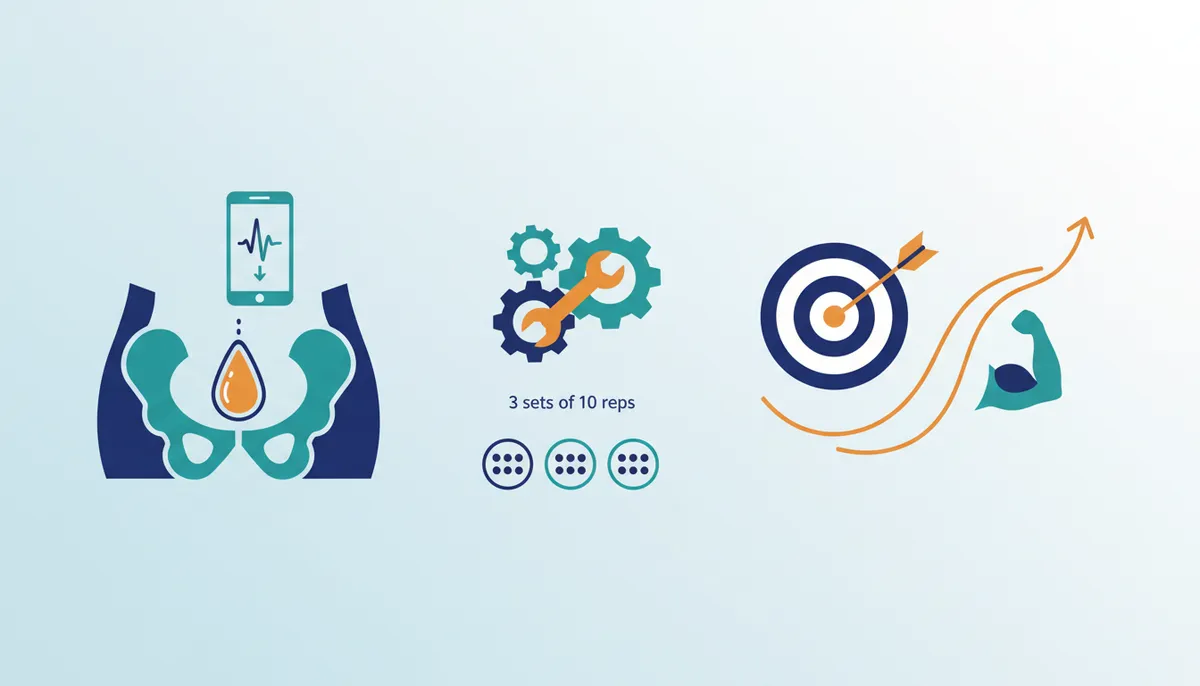
Bluetooth connectivity links physical muscle contractions to on-screen actions inside companion applications for devices like Elvie and Perifit. Users insert the hardware and launch the software to see strength metrics appear instantly. Guesswork disappears when endurance levels visualize in real-time. Gamification drives adherence by turning repetitive Kegel exercises into interactive challenges. A user might steer a character or grow a virtual garden solely through correct muscle engagement. This biofeedback mechanism ensures users isolate the right muscles rather than compensating with abdominal pressure. Such precision supports bladder control improvements and aids postpartum recovery. Many individuals apply these tools to address leakage or seek enhanced sensation.
Tracking Libido Patterns Using Lioness Sensor Data
Precision sensors capture internal muscle activity during arousal to begin visualizing physiological responses. Unlike legacy devices, the Lioness vibrator uses integrated biofeedback to translate subtle contractions into visible data curves within a companion application. This mechanism transforms abstract feelings into concrete arousal patterns, allowing users to observe how their body reacts to specific stimuli over time. Operators of this technology must recognize that data accumulation requires consistent usage to establish a reliable baseline. A significant limitation exists for users expecting immediate gamification; the primary value lies in longitudinal observation rather than instant scoring systems. Consistent engagement allows the software to identify patterns, sparking a meaningful dialogue with oneself.
| Data Point | User Insight |
|---|---|
| Contraction Intensity | Identifies peak arousal windows |
| Duration Metrics | Reveals stamina changes over time |
| Frequency Logs | Correlates desire with cycle phases |
Quantified self-knowledge enables more productive conversations with healthcare providers regarding sexual dysfunction. Relying solely on device metrics can obscure the emotional context of intimacy if not balanced with subjective journaling. Users should treat these biometric sensors as diagnostic aids rather than definitive judges of sexual success. Understanding one's unique response profile fosters autonomy and reduces anxiety surrounding performance expectations. This analytical approach shifts the focus from external validation to internal awareness. Integrating such tools supports complete well-being by grounding personal exploration in observable data.
Validating Female-Founded Sex Tech for Emotional Autonomy
Design philosophy shifts from penetration simulation toward anatomical correctness and clitoral stimulation through this structural choice. Unlike legacy novelty items, these companies often seek regulatory clarity to distinguish their products as medical or wellness devices rather than unregulated toys. The design philosophy directly impacts how users explore pleasure with technology, moving away from male-gaze assumptions.
| Feature | Traditional Novelty | Women-Centered Tech |
|---|---|---|
| Primary Goal | Simultaneous climax | Overall pleasure |
| Design Lead | Male-dominated teams | Female founders |
| Data Use | None | Biofeedback tracking |
| Regulation | Unregulated | Seeking FDA clearance |
Self-knowledge gained through biofeedback sensors that visualize arousal patterns starts steps for improving sexual communication. A critical tension exists between data collection and privacy; users must trust that intimate biometric data remains encrypted and secure. Many women historically felt unable to discuss sexual issues with doctors, yet these tools provide a private vocabulary for sexual communication. Reliance on apps requires digital literacy and consistent device charging. Users should verify that companies explicitly state their commitment to data sovereignty. Prioritizing platforms with transparent privacy policies ensures that the pursuit of health autonomy does not compromise personal security. True empowerment comes from owning both the pleasure experience and the resulting data.
About
Dr. Ethan Voss is a relationship psychologist and intimacy educator at Mysteries Love, specializing in attachment theory and the neuroscience of desire. His expertise makes him uniquely qualified to analyze the rise of women-centered sex tech, as his daily work involves translating complex clinical research into practical guidance for sexual wellness. Unlike generic tech reviews, Voss approaches these digital tools through a psychological lens, evaluating how app-controlled devices and biofeedback tools can genuinely enhance body awareness and couple communication. At Mysteries Love, published by the Center for the Development of Intimate Relationships, the mission is to provide evidence-based education that normalizes intimacy conversations. Voss connects his clinical background in desire discrepancies and relationship dynamics to the article's subject, ensuring that the recommended technologies are not just novel gadgets but therapeutic aids grounded in science. This rigorous, non-judgmental approach ensures readers receive trustworthy advice on navigating modern sexual health tools.
Conclusion
Scaling intimate technology reveals a critical fracture: the very data that fosters sexual wellness creates a high-value target for privacy breaches. While the market expands, the operational cost of maintaining user trust outweighs the expense of hardware production. Companies that treat biometric feedback as a disposable feature rather than a core security pillar will lose their user base to more rigorous competitors. You must prioritize platforms that explicitly guarantee data sovereignty before adopting any new device. Do not wait for a regulatory mandate to demand transparency regarding how your physiological data is stored or shared. The industry shift toward FDA clearance signals that medical-grade security is becoming the baseline for legitimacy, not an optional upgrade. Start this week by reviewing the privacy policy of your current provider to confirm they do not sell anonymized user data to third parties. This single verification step protects your personal autonomy while supporting businesses that respect the sensitivity of their data. True empowerment requires owning both the pleasure experience and the digital footprint it leaves behind.
Frequently Asked Questions
The sector reached billions, proving it is a dominant economic force rather than a niche. This massive valuation signals that investors and developers must prioritize inclusive design to capture this growing sexual wellness app demand.
Over 40% of women feel uncomfortable discussing sexual issues with medical professionals. This silence drives users toward private digital tools that offer data-driven self-discovery without the shame often found in traditional clinical settings.
Unlike femtech that tracks cycles, sex tech prioritizes pleasure as a pillar of mental health. Devices now use biometric feedback to map arousal patterns, shifting focus from mere reproduction to holistic emotional and physical autonomy.
Smart vibrators utilize sensors to track bodily responses during arousal, creating detailed biometric feedback loops. This data helps users visualize unique physiology and understand their own patterns for better self-discovery and communication.
These trainers use gamification and real-time feedback to ensure correct muscle engagement during workouts. By making exercises interactive, they help users strengthen pelvic muscles effectively for postpartum recovery and improved bladder control.
References