Sensate focus therapy: Stop spectatoring now
Sensate focus therapy delivers an 83% success rate for treating diverse sexual difficulties according to 2015 therapist data. This mindful touch protocol cuts through the noise of performance anxiety and spectatoring that strangles modern intimacy. By fusing exposure techniques with present-moment awareness, the practice dismantles the psychological roadblocks stopping natural sexual response.
You will see how structured touch exercises rewire neural pathways to bypass cognitive interference during physical contact. We are looking at the mechanics of reducing negativity around intimacy while forcing deeper communication between partners. The specific eight-week protocol helps couples rediscover stimulation without the crushing pressure of immediate gratification.
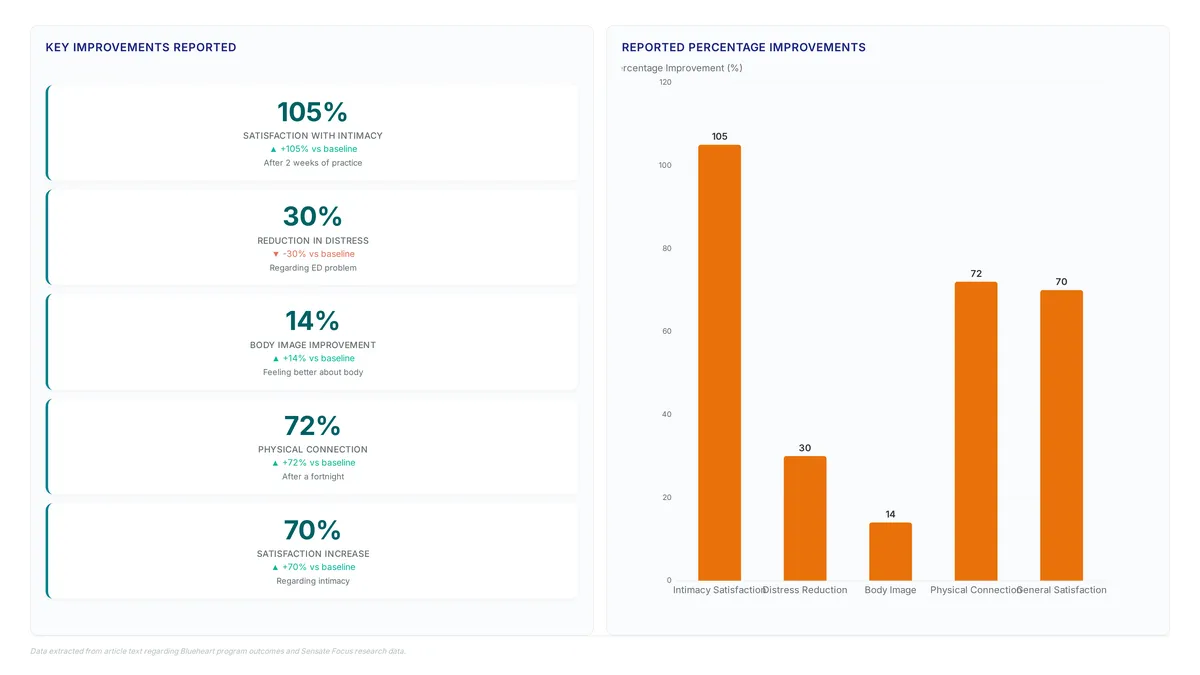
Real-world application shows that participants using Blueheart reported a 105% increase in satisfaction regarding physical intimacy after only two weeks. Users noted a 72% improvement in physical connection and a 70% rise in contentment with touch frequency. These metrics from Sophie Browness and Dr Katherine Hertlein prove that shifting focus from outcome to sensation restores libido compromised by stress or body image concerns.
The Role of Sensate Focus in Modern Mindfulness-Based Sex Therapy
Sensate Focus Therapy and the Elimination of Spectatoring
Therapists developed mindful touch exercises during the 1960s to dismantle sexual anxiety by replacing performance goals with present-moment awareness. This approach specifically targets spectatoring, a psychological state where an individual mentally observes their own sexual performance rather than experiencing sensation. Shifting attention to immediate physical inputs like texture and temperature interrupts the cognitive loop of self-evaluation that fuels dysfunction. The protocol integrates exposure therapy principles to gradually desensitize partners to intimacy without pressure. A 2015 study conducted by therapists found sensate focus therapy to be 83% effective as a treatment for a variety of sexual difficulties.
Applying In Vivo Exposure Through Mindful Touch Exercises
In vivo exposure within sensate focus operates by having partners directly experience touch without the pressure of sexual performance. This method functions as a controlled desensitization where individuals attend to immediate sensory data like texture and temperature rather than anticipating an outcome. Limiting session length prevents cognitive fatigue and maintains the quality of mindful attention on physical inputs. Partners practice mindfulness by focusing on their own sense experiences rather than achieving orgasm. This specific constraint interrupts the spectatoring cycle where anxiety arises from self-evaluation. By removing the goal of climax, the nervous system reassociates intimacy with safety instead of demand.
Mindfulness Versus Traditional Exposure in Sex Therapy Contexts
Sensate focus therapy integrates internal awareness protocols to address sexual avoidance differently than standard exposure models. Traditional exposure therapy typically requires direct confrontation of fear triggers to diminish anxiety responses over time. In contrast, this modality redirects attention toward neutral sensory inputs like temperature and pressure rather than the feared outcome itself. This shift allows individuals to remain present without triggering the defensive arousal patterns common in performance anxiety. Clinical data indicates this method serves as an effective treatment for diverse sexual difficulties. Standard exposure is set as a process where people learn to confront fears directly. However, the strategy used in sensate focus is "in vivo exposure," where the fear-inducing experience is experienced directly but slowly, such as starting by touching one's own arm. Prioritizing mindful observation over fear extinction reduces the risk of re-traumatization during early sessions. Practitioners should note that this approach requires patients to tolerate ambiguity rather than seeking immediate resolution of anxiety. This distinction makes the technique effective for desire, arousal, and orgasmic disorders by eliminating the performance expectations that cause anxiety. The therapeutic mechanism relies on the premise that removing the requirement to perform eliminates the specific anxiety driving the dysfunction.
How Structured Touch Exercises Reprogram Sexual Response Mechanisms
Texture, Temperature, and Pressure as Anxiety Interrupts
Sensate touch interrupts performance anxiety by directing attention to three specific physical attributes: pressure, texture, and temperature. Partners engage in touching activities that prioritize these sensory inputs over erotic outcomes, effectively shifting brain activity away from monitoring sexual performance. This approach distinguishes itself from therapies relying solely on verbal processing by grounding participants in immediate physical reality. The technique emphasizes letting go of expectations, allowing the couple to relax and be mindful of the sensual touching experience without preconceived ideas of what should happen. Cornell Health notes that this practice is not as much about sexual touching as it is about sensual touching. By focusing exclusively on these tangible sensations, individuals break the cycle of spectatoring that fuels anxiety.
The mechanism works because the brain cannot simultaneously process detailed sensory data and maintain complex performance narratives. Focusing on the coolness of a hand or the roughness of skin occupies cognitive bandwidth otherwise dedicated to worry. This redirection allows the body to respond naturally rather than through forced effort. Progress requires patience since comfort increases gradually over time. A drawback exists in the discipline required to avoid escalating to genital focus prematurely. Successful application demands strict adherence to non-goal-oriented interaction so the nervous system recalibrates without pressure.
*Note: This content is for educational purposes and does not constitute professional medical advice or therapy.*
Reversing Sexual Performance Anxiety Symptoms Through Sensory Grounding
Focusing on specific physical sensations directly interrupts the physiological cascade of Sexual Performance Anxiety, an irrational fear of sexual failure. Symptoms like heart palpitations and sweating emerge when the brain monitors performance rather than experiencing pleasure. Grounding attention in immediate tactile input stops this anxiety loop by forcing cognitive engagement with the present moment.
The mechanism requires partners to identify three distinct sensory inputs: pressure, texture, and temperature. This triad acts as a sensory anchor, pulling awareness away from internal worry toward external reality. By prioritizing these non-erotic attributes, couples break the cycle of goal-oriented sex that fuels anxiety.
| Symptom | Sensory Intervention | Outcome |
|---|---|---|
| Heart palpitations | Focus on steady pressure | Regulated rhythm |
| Distraction | Noting texture details | Returned presence |
| Sweating | Tracking temperature shifts | Reduced panic |
Participants must resist the temptation of intercourse even when sexually excited. This behavioral constraint is necessary to reprogram the sexual response mechanism without reverting to performance pressure. Ignoring this rule reinforces the very anxiety the exercises aim to eliminate.
The cost of skipping sensory grounding is a return to spectatoring, where partners watch themselves rather than feel connection. Physical symptoms of anxiety persist without this interruption, creating a barrier to intimacy that medication alone cannot fix. Addressing the root cause requires this deliberate shift from doing to experiencing. This high efficacy extends to Erectile Dysfunction, offering a behavioral alternative where patients learn to enjoy sex again rather than chasing mechanical function. Unlike pharmacological interventions that target blood flow, this approach addresses the psychological root of performance anxiety by removing goal-oriented pressure. The distinction matters because medication often fails when anxiety drives the dysfunction, whereas structured touch rebuilds confidence through gradual exposure.
| Feature | Mindfulness Approach | Medication Approach |
|---|---|---|
| Primary Target | Psychological anxiety | Physiological response |
| Mechanism | Sensory grounding | Chemical alteration |
| Long-term Goal | Natural arousal | Immediate function |
Time commitment represents another constraint, as results emerge over weeks rather than minutes. Couples must navigate initial discomfort without the promise of immediate sexual gratification, a hurdle that deters some from completing the protocol. Despite this barrier, the therapy remains viable for a broad demographic, including those with chronic illnesses or body image concerns. The sustained interest in non-pharmaceutical interventions confirms its enduring relevance in modern clinical practice. Practitioners should validate client readiness for this slower, introspective process before beginning.
Implementing the Eight-Week Sensate Focus Protocol for Couples
Defining the Eight-Week Sensate Focus Stages
The protocol defines distinct phases beginning with non-genital touching to establish safety without sexual demand. Stanford Medicine outlines a progression where Weeks 1 and 2 maintain strict boundaries before advancing. The second stage involves the introduction of breasts or genitals while explicitly prohibiting intercourse to prevent performance pressure. A critical technical rule requires partners to resist proceeding to sex even if excitement occurs, maintaining the therapeutic frame. Prohibitions in early phases ensure the focus remains on sensation rather than outcome.
- Non-genital touching: Giver and receiver explore texture and temperature without reciprocation.
- Introduction of breasts or genitals: Touch expands, yet intercourse remains excluded to reduce anxiety.
- Mutual touching: Both partners touch simultaneously, expanding sensory exploration.
- Sexual intercourse: Introduced slowly only after partners master sensory awareness.
Rushing this sequence is discouraged as it can make things worse. The internal timeline often spans at least eight weeks with distinct phases for mindfulness and couple exercises. Operators must note that separating mindfulness from couple exercises treats them as distinct modalities. This separation prevents the common failure mode where goal-oriented habits corrupt the exposure process.
Implementation: Executing Texture, Temperature, and Pressure Techniques
Execute the initial home session by isolating texture awareness on the neck, calves, hands, and cheeks while the receiver notes the raw sensation. The giver actively scans for smooth versus rough skin surfaces, creating a cognitive anchor that prevents drifting into performance anxiety. This specific focus on physical attributes distinguishes the practice from casual affection by removing erotic goals entirely. Temperature variations provide a secondary focal point, where the toucher identifies warm or cold areas and monitors changes generated by friction or breath. These sensory parameters require strict adherence to non-demand touching, ensuring the brain processes touch as data rather than a prelude to sex.
Couples verify the distinction between individual exercises and shared protocols before beginning any physical contact. Standard models allocate specific weeks to solo mindfulness before introducing partner work, a sequence detailed in research clarifying the Masters and Johnson model.
- Confirm that sexual intercourse and kissing remain excluded to maintain a non-demand environment.
- Prepare for minimal clothing to enable direct skin contact without barriers.
- Sit together for five or ten minutes touching only hands and arms to calibrate texture, pressure, and temperature.
| Feature | Individual Focus | Couples Focus |
|---|---|---|
| Goal | Self-awareness | Shared presence |
| Duration | Variable | 5, 10 minutes |
| Contact | Self-touch | Hands and arms only |
Rushing this validation often undermines the therapeutic frame by reintroducing performance goals prematurely. Operators must recognize that skipping these constraints can replicate the very anxiety the protocol aims to resolve.
Strategic Advantages of Sensate Focus Over Traditional Performance Therapies
Comparison: Defining Sensate Focus as a Slow Process for Diverse Clientele
Sensate focus operates as a slow process where participants systematically build comfort over time rather than rushing toward sexual outcomes. Unlike traditional therapies that often prioritize cognitive restructuring or immediate functional restoration, this modality emphasizes sensory awareness through specific attention to pressure, texture, and temperature. This distinction allows the approach to succeed across a great diversity of clientele, including those who found verbal processing insufficient for their specific anxiety patterns. The strategic advantage lies in removing the pressure to perform, which paradoxically enables the very connection traditional methods struggle to reclaim through directive means.
Blueheart Home Therapy Results for Physical Intimacy Satisfaction
Digital platforms now deliver measurable anxiety reduction through structured, at-home mindfulness exercises. Users engaging with the Blueheart program report feeling 105% more satisfied with physical intimacy after just two weeks of practice. This rapid improvement stems from replacing performance goals with sensory awareness, a core tenet of the therapy. After 2 weeks, Blueheart users reportedly feel 30% less distressed about their problem. After 2 weeks, Blueheart users reportedly feel 14% better about their bodies. Such outcomes suggest that digital delivery provides accessible pathways to the core principles of the therapy. Unlike clinical studies that track progress over several months, home-based protocols rely on user engagement to follow the structured timeline. Individuals asking if they should try sensate focus often seek immediate relief from pressure, and these quantified short-term gains provide a strong evidence-based reason to begin. The trade-off is that deep-seated relational trauma may still require the nuance of a live therapist.
Therapist-Led Sessions Versus Blueheart Alternative Solutions
Specialized sex therapists guide couples through complex emotional landscapes that self-guided apps cannot fully replicate. While traditional care offers personalized feedback, digital alternatives like Blueheart provide accessible, structured protocols for home use. Recent data indicates online interventions yield outcomes comparable to in-person sessions for many users.
| Feature | Therapist-Led Care | Blueheart App |
|---|---|---|
| Guidance | Personalized clinical feedback | Structured audio exercises |
| Access | Scheduled appointments | On-demand availability |
| Cost | Insurance dependent | Fixed subscription fee |
| Pacing | Clinician-determined speed | User-controlled progression |
Participants using the app report feeling 72% more physically connected after a fortnight of practice. This metric highlights how digital tools effectively bridge the gap for those unable to access specialized behavioral health practitioners. The primary trade-off involves the loss of real-time clinical observation, which can be vital for severe trauma cases. However, the scalability of app-based solutions democratizes access to evidence-based intimacy education. Users also note a 70% increase in satisfaction regarding the amount of touch shared with partners. The choice ultimately depends on whether an individual requires deep psychological unpacking or consistent structural support. Both pathways validate the efficacy of removing performance pressure through mindful touch.
About
Sofia Reyes is a certified sex educator and somatic intimacy coach at mysteries.love, making her uniquely qualified to explore the nuances of sensate focus therapy. Her daily work centers on somatic approaches to intimacy and pleasure-centered education, which are the fundamental elements of this therapeutic technique. As a relationship writer, Sofia regularly guides individuals and couples through exercises designed to rebuild physical connection and reduce performance anxiety, directly mirroring the goals of sensate focus. At mysteries.love, a platform dedicated to evidence-based intimacy education, she bridges the gap between clinical theory and practical application for modern couples. Her expertise in trauma-informed care ensures that discussions around touch and body awareness are handled with the necessary sensitivity and depth. By connecting her professional background in sexual wellness with the specific mechanics of sensate focus, Sofia provides readers with actionable, psychologically sound strategies to enhance their intimate lives.
Conclusion
Scaling intimate connection reveals a specific breaking point: the gap between initial motivation and the consistency required for neurological rewiring. While sensate focus therapy offers a proven framework, the operational cost often manifests as user dropout before habits solidify. Digital platforms mitigate this by providing on-demand structure, yet they cannot replace the detailed intervention of a clinician when deep relational trauma surfaces during practice. You must prioritize consistent, low-pressure engagement over perfect execution to see lasting change.
Commit to a six-week trial of structured touch exercises if your primary barrier is performance anxiety or access to specialized care. However, immediately seek a licensed therapist if you encounter overwhelming emotional distress or unresolved past trauma that disrupts daily functioning. The data supports a hybrid approach where technology sustains momentum while professional guidance handles complex psychological undercurrents. Do not wait for a crisis to evaluate your support system; instead, assess your current capacity for self-guided work today. Start by scheduling a dedicated ten-minute window this week to practice non-goal-oriented touch with your partner, focusing solely on the sensation of contact rather than any expected outcome. This small, deliberate action builds the fundamental safety necessary for deeper intimacy to emerge naturally over time.
Frequently Asked Questions
Therapists found this therapy to be 83% effective for treating various sexual difficulties. This high success rate means most couples can expect significant relief from performance anxiety when strictly following the non-demand touch protocol.
Users report feeling 105% more satisfied with physical intimacy after just two weeks of practice. This rapid improvement suggests that shifting focus from performance to sensation quickly restores confidence and connection between partners.
Participants reportedly feel 30% less distressed about their sexual problems after completing the program. This reduction in distress indicates that mindful touch exercises effectively lower the psychological pressure often associated with intimate encounters.
Users note they feel 14% better about their bodies after engaging in these structured touch exercises. This boost in body image helps remove a major barrier to intimacy, allowing for more natural and relaxed sexual responses.
Couples report feeling 72% more physically connected after a fortnight of utilizing the app. This surge in connection highlights how removing goal-oriented pressure fosters deeper emotional and physical bonds during intimate moments.
References