Intimacy skills: end loneliness with self-happiness
After 17 years of helping women in 28 countries, Laura Doyle proves intimacy is a learned expertise, not luck. The Six Intimacy Skills framework argues that self-regulated happiness, not partner manipulation, drives marital attraction and connection. This approach rejects the notion that tenderness is reserved for the naturally lovable, positioning relationship success as a matter of specific, repeatable actions.
Readers will learn why self-regulated happiness serves as the fundamental skill for ending the "gnawing misery of loneliness" that Doyle herself once feared was permanent. The discussion examines how shifting from behavioral control to feminine energy dynamics can reshape attraction without demanding changes from a spouse. We explore the misconception that intimacy is a mystery reserved for "lucky people" rather than a tangible skill set accessible through practice.
The guide outlines practical steps to cultivate daily joy, starting with the directive to perform three enjoyment-focused actions every single day. Doyle notes her methods have been translated into 17 languages, validating the universal application of these intimacy skills. Unlike modern trends focusing solely on somatic fixes, this model emphasizes personal agency in creating an exhilarating experience of being loved. By mastering these tools, individuals stop waiting for a partner to provide security and start generating their own sense of worth.
The Role of Self-Regulated Happiness in Modern Intimacy
Defining Intimacy Skills Beyond Physical Connection
Intimacy skills form a practical framework helping people nurture closeness through specific actions. This approach addresses the confusion voiced by individuals like Gigi, who stated, "I've been married for over 20 years... And I feel like I just don't even know what intimacy is." Early admissions from relationship experts reveal a history of bewilderment regarding the expectation that tenderness happens automatically. Doyle admits she was similarly "baffled in the early days" of her marriage. She wondered if intimacy meant only physical contact or something deeper.
The core mechanism shifts focus to self-happiness. An individual actively cultivates joy independent of a partner's current mood or actions. Resources related to intimacy skills training distribute this curriculum through various digital channels. The methodology is teachable rather than an innate trait reserved for the lucky. Unlike approaches focusing solely on nervous system regulation or somatic responses, this specific framework prioritizes behavioral choices. Personal fulfillment drives connection here.
A substantial limitation arises when people mistake these skills for manipulation tactics aimed at changing a partner. Such confusion ignores the goal of regulating one's own emotional state. Solutions align with this perspective by promoting tools encouraging body-aware intimacy education rooted in self-care. Ignoring this distinction creates a continued cycle of dependency. Relationship satisfaction then fluctuates wildly with external circumstances. True emotional intimacy emerges when the pursuit of personal joy becomes a primary driver of interaction.
Applying Self-Regulated Happiness to Feel Lovable.
Feeling lovable begins when individuals stop seeking external validation. They prioritize self-happiness through deliberate action instead. This shift addresses the deep fear of being "too damaged" or "needy" by proving emotional stability is a skill anyone can acquire. Doyle describes attending her own event, the Cherished for Life Weekend, fearing she was "too damaged, too needy, too strong-willed and not pretty." Unlike approaches emphasizing nervous system regulation to manage physiological responses, this framework requires active engagement in joy-generating behaviors regardless of current mood.
The mechanism is straightforward yet counterintuitive. Practitioners must commit to three distinct enjoyable activities daily to build an internal reservoir of positivity. Common choices include conversing with friends, engaging with nature, or enjoying solitude without guilt. Success is indicated by the individual's resulting emotional state rather than the activity's complexity or cost. A person filling their own spirit ceases using misery as a tool to garner sympathy or attention from partners.
Meanwhile, the critical insight often missed is that making yourself happy is the indispensable first step to passion and playfulness. Focusing on self-happiness is necessary whenever one feels dependent on another's mood for their own stability. This practice transforms the flexible from one of neediness to one of genuine connection. Specialized guidance exists for those ready to master these techniques and deepen this significant work.
Six Intimacy Skills Versus Sensate Focus Exercises
Six Intimacy Skills define a behavioral acquisition model prioritizing self-happiness.
This framework diverges sharply from Sensate Focus Exercises. Those operate as a structured, step-by-step alternative emphasizing tactile sensation without performance goals. Clinical entities like the American Association of Sexuality Educators, Counselors and Therapists (AASECT) focus on centering pleasure and broad intimate relationship enhancement. Conversely, the Doyle method targets cognitive reframing. Individuals perform three daily enjoyable activities to generate internal joy. Modern practitioners differentiate their work by emphasizing nervous system regulation to manage physiological arousal rather than strictly adhering to behavioral skill drills. Somatic approaches focus on physiological regulation while the Doyle method emphasizes unilateral action to generate personal joy.
Operators observing both methodologies note that behavioral skills offer immediate deployment as a self-directed practice. The constraint involves the cognitive load required to maintain happiness practices during relational distress. Somatic tools address the body's stress response directly. They often require a level of safety and presence that may not always be available. Integrated resources support self-directed joy practices alongside body-aware education. Users gain versatile tools for every relational configuration through this combination.
How Feminine Energy Dynamics Reshape Marital Attraction
Defining the Hero Gene Through Self-Happiness Mechanics
Activating the hero gene requires a wife to operate from her feminine gifts, a move that ignites her partner's initiative. This psychological mechanic depends on the wife performing 3 daily enjoyment activities to generate internal joy. Doyle advises practicing this 3 times daily to shift the marital flexible from sympathy-seeking to attraction. When a woman stops complaining about her workload or lack of sleep, she removes the burden of emotional caretaking from her partner. His natural protective instincts engage without coercion because misery no longer fills the room. The union stagnates without self-regulated happiness since the partner perceives the relationship as a source of obligation rather than delight. General couples intimacy coaching often focuses primarily on interaction patterns instead of individual mood regulation. A significant constraint is that the practitioner must genuinely feel happy, not perform happy acts. Authenticity drives the shift. Doyle emphasizes that doing three fun things a day is the indispensable first step to passion and playfulness. The external flexible transforms only when one feels James Brown-level good.
Applying Daily Joy Activities to Shift From Complaining to Attracting
Partners engage in discrete pleasure activities like hugging a tree or listening to funny podcasts instead of seeking sympathy for sleep deficits or workload grievances. This behavioral pivot stops the drain on relational energy caused by misery-based attention seeking. An individual feeling James Brown-level good ceases broadcasting distress signals that trigger defensive withdrawal in their spouse. Practitioners might journal, craft, jump on the bed, gab with a friend, read a blog, snuggle with a pet, ride a bike, or listen to funny podcasts to cultivate this internal state. Modern approaches increasingly integrate nervous system regulation to support these behavioral changes, moving beyond simple talk therapy to somatic stability. Structured tools help couples navigate these shifts with greater confidence and physiological safety. A tension exists between the desire for partner validation and the requirement for self-generated joy. The cycle of complaining persists if happiness depends on the spouse's reaction. Independence allows the partner to respond to lightness rather than managing heavy emotions. Specialized programs reinforce these self-regulation techniques without relying on external validation for those seeking deeper structural changes.
Self-Regulated Happiness Versus Nervous System Regulation Approaches
Behavioral metrics verify skill execution only when the subject reports feeling happy. Doyle's framework mandates three daily enjoyment activities to shift focus from sympathy-seeking to attraction, asserting that visible joy triggers a partner's protective instincts. This model treats happiness as a deliberate action item rather than a physiological state. Some modern experts prioritize nervous system regulation over behavioral checklists, suggesting that somatic safety precedes relational play. These approaches integrate physiological coherence tools to resolve underlying tension before attempting behavioral changes. The distinction lies in the entry point: behavioral activation versus physiological grounding. Operators seeking structured guidance on these divergent paths should consult curated resources. Digital infrastructure now supports both modalities through scalable platforms, allowing users to select training aligned with their specific regulatory needs. This choice determines whether one builds capacity through doing or through being. Fun just shot up to the top of your to-do list, with a red circle around it.
Practical Steps to Cultivate Daily Joy and Connection
Defining the Three Daily Joy Activities Rule
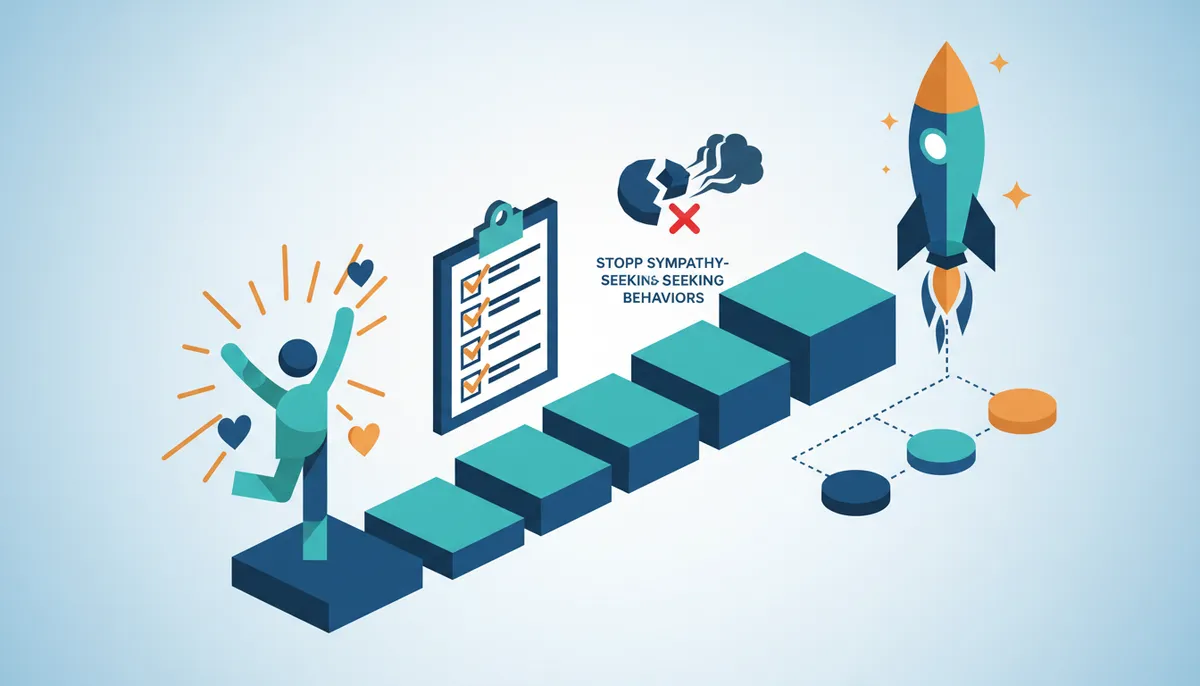
Execute three daily joy activities to establish the indispensable first step toward passion and playfulness. This mechanic requires selecting specific actions that generate immediate subjective enjoyment rather than pursuing external health metrics like cardio duration or sleep totals. The verification metric is singular: you must feel happy after the activity.
- Choose a fun action such as hugging a tree, listening to funny podcasts, or window shopping.
- Perform this activity with the sole intention of tickling your own spirit.
- Confirm success by checking for an internal state of James Brown-level good feelings.
Many practitioners mistakenly substitute obligation for enjoyment, selecting tasks they believe *should* make them healthy instead of what actually makes them happy. This error sustains a cycle of misery-seeking behavior that repels intimacy rather than attracting it. True execution demands discarding the "good girl" checklist in favor of genuine delight. She distinguishes this from health metrics like 5 fruit servings or strict sleep quotas, focusing instead on pure delight.
Societal expectations often demand productivity, creating friction with the radical act of prioritizing personal pleasure. Structured methodologies exist for couples, yet this specific skill targets individual regulation before connection. Everything that is worthwhile in life takes energy, and you will not have the energy to make your relationship great if you do not fill yourself up first.
You cannot pour from an empty cup, and you cannot create intimacy from a place of depletion. When you practice feeling good first, you become more attractive, smiling, laughing, singing, and dancing. Commit to the practice of feeling good first.
Executing the Red Circle To-Do List with Specific Joy Tasks
Prioritize fun immediately by marking three distinct enjoyment tasks with a red circle on your daily agenda. This execution strategy shifts focus from obligatory health metrics to activities that generate immediate subjective delight, such as hugging a tree or listening to funny podcasts. The mechanism relies on self-regulated happiness rather than partner dependency to drive relationship attraction.
- Select three fun actions from the available options, ensuring they bring you enjoyment.
- Make these moments a priority, treating them as necessary steps to passion and playfulness.
- Verify success solely by confirming you feel James Brown-level good after completion.
| Activity Type | Traditional Metric | Joy Metric |
|---|---|---|
| Movement | 30 minutes cardio | Riding a bike for fun |
| Social | Networking events | Gabbing with a friend |
| Rest | 8 hours sleep | Jumping on the bed |
Operators often confuse self-care with maintenance, yet true intimacy skills demand frivolity over function. Some seek structured guides for coupling, but individual joy requires unstructured play. The limitation here is clear: the goal is to do things that bring you enjoyment, distinguishing them from tasks done purely for health benefits.
Pursuing "productive" leisure often drains the very energy needed for connection. Unlike commercial coaching that analyzes interaction patterns, this skill isolates individual regulation as the precursor to partnership. When you stop using misery to seek attention, you become naturally attractive. For those ready to deepen this practice with expert tools, Mysteries.love offers exclusive resources designed to build lasting confidence without reliance on external validation.
Consider these specific examples to replace standard health tracking:
- Gabbing with a friend instead of networking events
- Jumping on the bed instead of Rest 8 hours sleep logs
- Riding a bike for fun instead of Movement 30 minutes cardio targets
- Listening to comedy podcasts instead of educational audiobooks
Implementation: Behavioral Joy Practices Versus Nervous System Regulation Approaches
Doyle's behavioral method mandates three daily joy tasks to generate happiness, whereas somatic models prioritize physiological state management. This distinction separates skill acquisition from nervous system regulation, a shift evident in modern tools that integrate communication techniques with ways to play. Behavioral approaches rely on volitional action like hugging a tree or listening to podcasts to cultivate positive emotional states. Conversely, somatic frameworks suggest that without regulating the autonomic nervous system first, forced behavioral joy may feel inaccessible or inauthentic during high stress.
| Feature | Behavioral Joy Model | Somatic Regulation Model |
|---|---|---|
| Primary Mechanism | Volitional action selection | Physiological state shift |
| Success Metric | Subjective happiness feeling | Calm or connected state |
| Entry Barrier | Requires cognitive decision | Requires body awareness |
Operators attempting to implement these skills must recognize that behavioral tactics require a baseline capacity for action.
This conditional logic prevents the frustration of trying to "act happy" when the body remains in survival mode. Doyle's model excels in maintenance through practiced expertise, while other protocols offer different mechanisms for intervention. The choice depends on whether the individual needs immediate behavioral activation or prior physiological calming. Both paths aim for the same result: a person capable of receiving love because they have cultivated their own capacity for joy.
Measurable Outcomes of Mastering Intimacy Skills
Application: Defining Intimacy Through the Six Skills
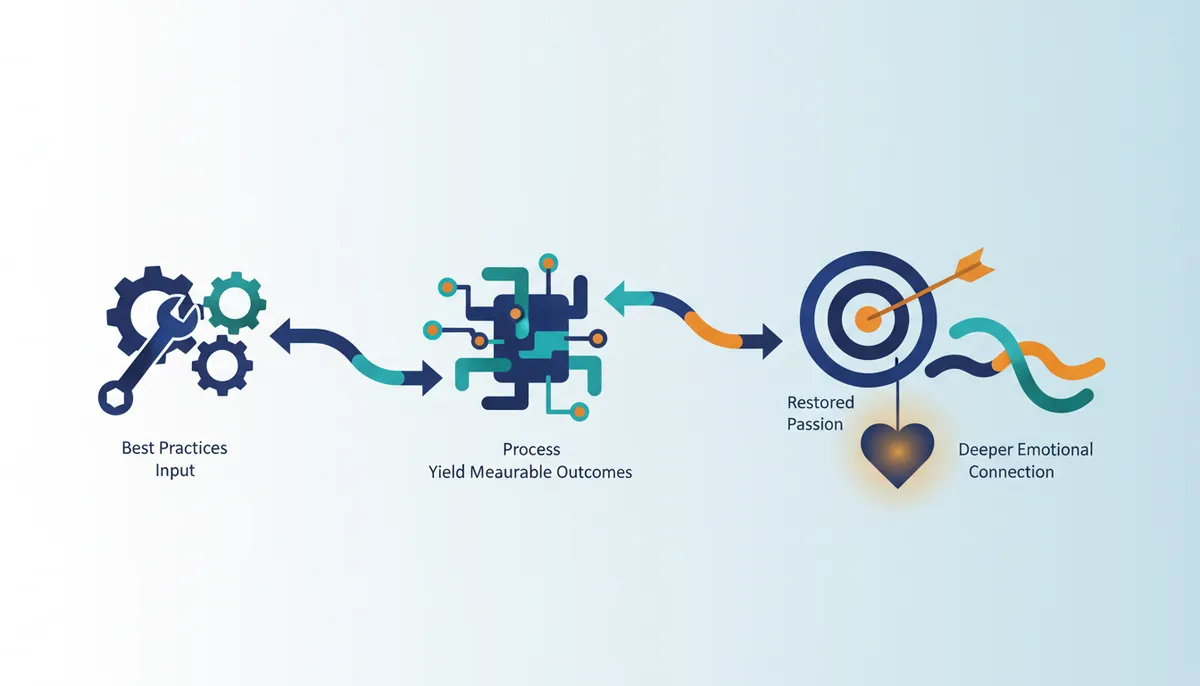
Shifting from managing a partner's actions to operating from personal joy invites initiative. General relationship advice often pushes mutual compromise, yet this approach emphasizes specific practices to nurture connection. Key concepts include expressing desires, allowing a partner to solve problems, and practicing self-regulated happiness. A woman who prioritizes her own joy through 3 daily enjoyable activities stops seeking sympathy. She starts radiating attraction instead. This shift distinguishes true intimacy from mere cohabitation. Clinical organizations might center pleasure through broad therapeutic standards, but the Six Intimacy Skills offer a specific framework to help women feel lovable and loved. Many believe intimacy is reserved only for the naturally lucky. This belief creates a barrier. Expertise transforms such mystery into a repeatable skill set rather than a roll of the dice. Ignoring this distinction leaves partners baffled about what intimacy actually looks like. Trusting that self-happiness makes one attractive forms the basis for a passionate marriage. Mysteries.love recommends mastering these specific frameworks to replace uncertainty with confident connection.
Executing Ways to Express Desires
Expressing desires shifts a flexible from parental nagging to a lover-like connection by removing demands. The method involves stating a specific want without attaching instructions on how a partner must fulfill it. Vulnerability rather than managerial control invites initiative. Timing the request during a moment of connection, not conflict, is also necessary. Modern guides on intimacy suggest that nervous system regulation and new ways to play are necessary, meaning a relaxed state receives desire differently than a defensive one. Accepting a partner's unique solution without correction or critique is another vital step.
| Method | Mechanism | Result |
|---|---|---|
| No Instructions | States want only | Invites problem-solving |
| Connected Timing | Requests during peace | Lowers defensive barriers |
| Accepting Solutions | No corrections offered | Validates competence |
Stopping the urge to manage outcomes feels risky to those accustomed to controlling all variables. A partner may not meet the desire exactly as imagined, which tests trust in their competence. This constraint is necessary because micromanagement can crush emotional and physical connection. When a partner feels trusted to solve the problem, they step up rather than checking out. This operational shift moves the relationship away from a mother-son flexible toward a passionate adult partnership. Other guides offer exercises for physical touch, yet verbal expression of desire requires emotional restraint to work. Those wondering should I take the master class might consider if they can consistently practice this restraint alone. Mysteries.love provides the structured environment needed to master these nuances without guesswork. Skipping this discipline leads to resentment and emotional distance. True intimacy demands the courage to want openly and let go of the how.
Validating Readiness for the Free Master Class on Marriage Risks
Take the FREE Master Class if you currently manage a partner's emotions or feel responsible for their happiness. This decision framework targets 3 specific behaviors: seeking sympathy instead of joy, dictating solutions rather than expressing desires, and acting as a mother figure instead of a lover. You are ready for these structured exercises if you recognize that your current approach yields resentment rather than connection. Blog formats offer introductory concepts, but the full curriculum includes slides and deep-dive modules unavailable in standard articles. Clinical certifications focus broadly on pleasure centering, while this program specifically trains skills to help women feel more confident and desired. The course reveals 3 key secrets for empowering him to act like a man and take initiative. Participants learn how to operate out of feminine gifts to ignite his hero gene. Ultimately, the training teaches how to Eliminate The 3 Most Common Behaviors That Are Putting Your Marriage at Risk Using The 6 Intimacy Skills.
| Indicator | Ready for Class | Needs Basic Blog |
|---|---|---|
| Primary Goal | Eliminate risk behaviors | Learn theory basics |
| Learning Style | Slides and exercises | Reading only |
| Outcome Focus | Passionate romance | General stability |
Delaying this training continues dynamics that suppress initiative. Mysteries.love recommends this path only for those committed to self-regulated happiness over control.
About
Dr. Ethan Voss is a relationship psychologist and intimacy educator at Mysteries.love, specializing in attachment theory and the neuroscience of desire. His expertise makes him uniquely qualified to analyze Laura Doyle's Six Intimacy Skills, as his daily work involves translating complex clinical research into evidence-based guidance for couples seeking deeper connection. While Doyle's framework emphasizes specific behavioral shifts for relationship harmony, Voss approaches these concepts through the lens of psychological safety and body awareness. At Mysteries.love, he bridges the gap between theoretical relationship psychology and practical intimacy techniques, helping adults navigate desire discrepancies and communication barriers. By examining established models like Doyle's alongside modern sexual wellness research, Voss provides readers with a detailed understanding of how emotional vulnerability intersects with physical closeness. This article reflects his commitment to supporting non-judgmental conversations about intimacy, ensuring that couples have access to reliable, scientifically grounded resources for maintaining long-term passion and trust.
Conclusion
Scaling emotional restraint without a structured framework often fractures under the pressure of daily stress, turning theoretical knowledge into operational failure. The ongoing cost of relying solely on blog-level theory is the slow erosion of initiative, where partners revert to managing emotions rather than experiencing connection. True transformation requires moving beyond cognitive understanding to embodied practice that sustains change when fatigue sets.
Mysteries.love recommends enrolling in the free master class only if you are prepared to cease dictating solutions and instead practice expressing pure desire. This shift is not optional for those seeking to eliminate the specific behaviors that suppress masculine initiative. The window for reversing these dynamics closes when resentment calcifies into indifference, making immediate action critical for couples aiming to restore passion.
Start this week by identifying one instance where you sought sympathy instead of expressing joy, and consciously choose a different response using the six intimacy skills framework. This single adjustment disrupts the cycle of control and opens space for genuine partnership. Do not wait for a crisis to implement these tools; the cost of delay is measured in lost opportunities for deep connection. Commit to the structured environment necessary to master these nuances without guesswork.
Frequently Asked Questions
Skipping these steps prevents you from building the energy needed for a great relationship. You must perform three fun activities daily to avoid the gnawing misery of loneliness that comes from neglecting your own happiness first.
Yes, intimacy is a learned expertise rather than a trait reserved for lucky people. Laura Doyle has helped women in 28 countries prove that anyone can acquire the skills to feel loved just for being themselves.
The framework works universally because it relies on specific behavioral actions anyone can practice. These proven skills have been successfully translated into 17 languages, helping thousands of women create exhilarating experiences of being loved daily.
These concepts have been refined and proven through over 17 years of practical application with real couples. This extensive history shows that self-regulated happiness drives attraction more effectively than trying to control a partner behavior.
No, true intimacy starts with self-happiness before physical connection can flourish. Doing three enjoyment-focused actions daily builds an internal reservoir of positivity that makes you attractive and ready for genuine emotional and physical closeness with your spouse.
References