Intimacy algorithms: Stop drift, start design
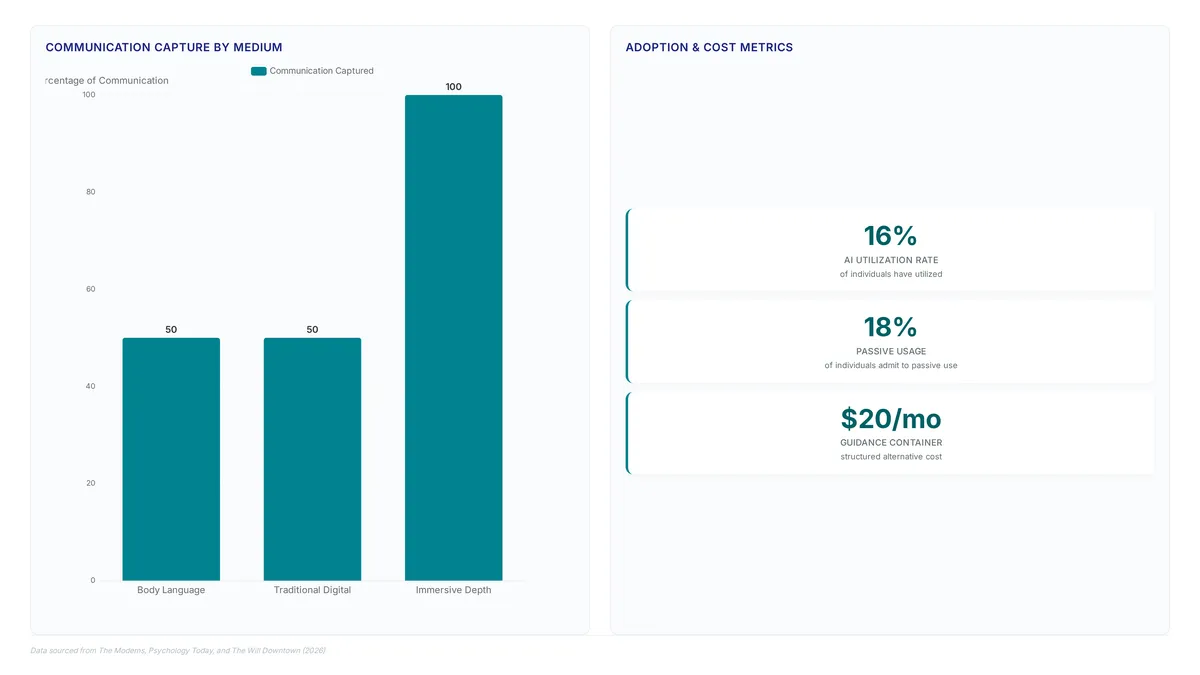
Sixteen percent of individuals now use artificial intelligence to resolve romantic arguments. That statistic marks the end of technology as a passive observer. It is an active mediator. The central thesis here is blunt: most couples are letting algorithms shape their connection through drift rather than establishing intentional design in their digital habits.
This piece dissects the mechanics of the intimacy algorithm. We are seeing emotional displacement in real time, where partners confide in AI systems before speaking to each other, fundamentally altering trust architectures. The goal isn't to banish the tools but to stop them from subverting the partnership. As sex tech researcher Kaamna Bhojwani notes, we must stop drifting and start designing the future of human connection. Understanding these forces is the only way to reclaim agency from the algorithmic mediation governing our private lives.
Defining Technosexuality and the Shift from Drift to Design
Defining Technosexuality and the Drift to Design Spectrum
Technosexuality defines the moment technology actively mediates sexual expression and relational dynamics. While "sex tech" gained traction in 2016 with the launch of the "Future of Sex" podcast, moving from niche novelty to structured discipline, the underlying behavior has shifted. Modern relationship design demands a hard line between unconscious adoption and deliberate architectural choices. Drift occurs when algorithms shape connection patterns before users notice, often creating intimacy styles no partner explicitly chose. It is the difference between building a house and waking up in one you didn't plan.
Real-World AI Mediation: From Scheduling Sex to Resolving Arguments
Algorithms now actively select dating profiles and schedule sexual activity, moving mediation from a background process to the primary interface. This algorithmic mediation transforms how couples navigate conflict, with 16% of individuals using artificial intelligence specifically to help resolve arguments with their romantic partners. These tools function as third parties. Relying on them without intent constitutes technological drift. Partners who delegate emotional labor to machines risk outsourcing the very friction required for genuine intimacy growth. Design requires couples to explicitly choose how these tools fit their flexible while drift allows apps to shape connection patterns unconsciously.
Drift vs Design: Unconscious Tool Shaping Versus Intentional Choice
Technological drift describes a state where the tools shaped you before you noticed, silently rewriting relational habits through passive acceptance rather than active choice. This unconscious adoption contrasts sharply with intentional design, a framework where partners deliberately architect how specific devices serve their unique intimacy goals.
| Feature | Unconscious Drift | Intentional Design |
|---|---|---|
| Agency | Passive acceptance of defaults | Active configuration of tools |
| Origin | Algorithmic suggestion | Deliberate relationship choice |
| Outcome | Generic, simulated intimacy | Customized, authentic connection |
| Awareness | Low visibility of influence | High visibility of impact |
While 15% of people report using AI tools to plan date itineraries, this logistical aid becomes problematic when it shifts from serving the couple to defining the couple's shared experiences. Couples must audit their current digital habits so technology remains a servant to their bond rather than its architect. Mysteries.love advocates for this shift from passive consumption to active creation in all forms of modern intimacy.
The Mechanics of Algorithmic Intimacy and Emotional Displacement
Algorithmic Mediation and the Mechanics of Emotional Displacement
Algorithms currently select dating profiles for users, inserting computational logic between potential partners before human agency engages. This mediation by drift occurs when digital tools shape relational behavior unconsciously, distinct from intentional design where couples deliberately architect their intimacy. When partners confide in AI before confiding in each other, the algorithm becomes a third-party that filters vulnerability, creating a buffer that can prevent direct human exposure. These systems offer scripted neutrality. The limitation is a potential degradation of the couple's ability to tolerate unmediated emotional variance. Unlike relationship enhancement platforms that enable direct dialogue, passive reliance on algorithmic intermediaries creates a buffer that can hinder true intimacy. Conscious integration over automated substitution ensures technology serves the relationship rather than replacing its core work.
Operationalizing Intimacy: Scheduling Sex and Outsourcing Logistics
Apps are scheduling sexual activity for those who use such features, converting spontaneous desire into calendar-bound logistics. This shift transforms intimacy from an emergent human experience into a managed variable within a digital-first intimacy framework. When couples outsource the timing of connection to algorithms, they risk replacing organic synchronization with rigid compliance to software prompts. Intended to ensure consistency, this approach can strip interactions of their contextual fluidity. Tools must serve human rhythm, not dictate it. Practitioners must distinguish between using technology to enable connection and allowing it to mandate the terms of engagement. The drawback of unexamined adoption is a relationship structure that prioritizes efficiency over human complexity. Advocates for intentional technosexuality suggest couples explicitly define how and when digital aids enter their private sphere. Partners reclaim the authority to schedule based on desire rather than default settings by auditing these triggers.
The Risk of Unintentional Tech Dependence in Emotional Expression
Silent algorithmic authorship now drafts emotional expressions for partners who unknowingly outsource their vulnerability to synthetic logic. This emotional displacement accelerates when individuals accept AI-generated phrasing as their own, gradually eroding the capacity for authentic self-disclosure without digital mediation. Data indicates that a measurable segment of users now relies on these tools to navigate interpersonal conflict, effectively training algorithms to regulate their emotional states instead of developing personal durability. The psychological danger lies not in the tool's existence but in the invisible transition from occasional aid to primary confidant, where the algorithm becomes the first recipient of intimate thoughts before a human partner. These events are already happening, quietly, in the background of relationships that look completely normal from the outside. Tension exists between using technology to enhance connection and allowing it to replace the difficult work of mutual understanding. Couples must recognize when convenience masks a deeper avoidance of direct engagement. True intimacy requires reclaiming the awkwardness of unedited thought. Structured frameworks are needed to audit these digital habits and restore human agency to romantic bonds.
Strategies for Intentional Tech Integration in Romantic Partnerships
Application: Defining Design Versus Drift in Tech-Mediated Intimacy
Partners who select tools to fit specific relationship goals practice Design. Kaamna Bhojwani defines Design as a scenario where individuals looked at the tools available and chose, on purpose, how they'd fit into your relationship. This deliberate architecture stops algorithms from silently dictating emotional rhythms. Drift happens when the tools shaped you before you noticed, creating a connection style that looks nothing like what you would have chosen. Couples without intentional boundaries risk building intimacy on foundations they never inspected. True technosexuality involves becoming aware of how AI and tech impact sex and relationships. The approach must be slow, careful, and intentional. Most people drift because they never stop to ask who is driving the car.
Application: Implementing Intentional Scheduling and Logistics Outsourcing
Outsourcing logistical planning to algorithms works only when partners deliberately choose the timing. Active relationship architecture transforms passive drift into scheduled intimacy. This coordination reduces cognitive load, freeing mental bandwidth for genuine connection. Relying on algorithmic scheduling risks eroding spontaneity if the system prioritizes efficiency over emotional resonance. A substantial limitation is the tool's inability to sense non-verbal cues, which account for approximately 50% of overall communication. Operators of their own relationships must treat software as a subordinate utility rather than a decision-maker. This designed approach ensures technology serves specific human goals instead of shaping behavior unnoticed. Partners can audit their digital habits to verify the technology mediates intimacy by design. External code will define internal rhythms if couples fail to establish these boundaries. Digital tools should handle the *when* and *where*, ensuring the *how* remains entirely human. Such strategic delegation prevents the subtle erosion of autonomy common in modern partnerships.
A Checklist for Auditing Algorithmic Influence on Emotional Expression
Confronting sexual discomfort with tech begins by acknowledging that someone you love might be confiding in an AI before they confide in you. Users must audit their digital habits to ensure technology mediates intimacy by design rather than drift.
| Checkpoint | Designed Behavior | Drift Behavior |
|---|---|---|
| Message Origin | Partners draft thoughts manually | Passing off AI-written messages as own |
| Conflict Style | Direct verbal engagement | Using tools to navigate arguments |
| Vulnerability | Shared with partner first | Shared with chatbot first |
- Identify any instance where you seek algorithmic validation before partner interaction. 2.3. Prioritize direct human dialogue over automated scripting to maintain authentic emotional nuance.
Ignoring this audit costs couples the gradual erosion of authentic emotional expression. Letting tools shape them before noticing makes people lose the capacity for genuine vulnerability. AI belongs in a relationship only if you actively architect its role. Becoming technosexual requires confronting discomfort with sexuality and technology to master this next phase of intimacy. Automated empathy becomes a barrier to true connection without intentional boundaries. Convenience cannot replace the messy work of human vulnerability.
Implementing a Designed Approach to Digital Intimacy
Defining the Open Dialogue Live Format for Couples
The Open Dialogue series functions as an hourlong Substack Live event merging expert interview with real-time audience Q+A. This configuration separates the format from static articles or private therapy by enabling direct, synchronous engagement with specialists like Kaamna Bhojwani. Participants access the session through the Substack app on iOS or Android, where push notifications signal the broadcast start. The live stream remains open to all viewers, yet paid subscribers retain exclusive rights to view replays and submit comments after the event concludes. Access to this monthly guidance container costs $20/month or $88/year, providing a structured alternative to drift-based technology adoption.
- Download the Substack app and enable push notifications to receive live alerts.
- Join the stream at the scheduled time to participate in the Ask Me Anything segment.
- Subscribe to enable archived sessions and ongoing comment threads for deeper analysis.
Younger demographics increasingly seek intimacy through digital channels rather than physical ones alone. Definitions of connection are expanding. Couples using this live format actively architect their intimacy rather than allowing algorithms to dictate relationship patterns by default. The Mysteries.love platform enables this intentionality by hosting these structured interactions.
Scheduling Attendance for the July 26 Technosexuality Event
Mark calendars for Sunday, 7/26 at 6:00 PM UK to join the live Open Dialogue session. This specific timing requires international participants to calculate their local offset accurately, as the broadcast does not repeat for free viewers. The event features Kaamna Bhojwani, a psychologist and sex tech researcher, discussing how couples shift from passive drift to intentional design in their digital intimacy practices. Relying solely on live attendance creates a fragility point where connection depends entirely on network stability and strict scheduling adherence. Operators of their own relationships must treat this temporal constraint as a feature demanding presence rather than a bug circumvented by async viewing. To secure access and ensure proper configuration for the stream, follow these implementation steps:
- Download the Substack app on iOS or Android devices.
- Enable push notifications within the application settings to receive live alerts. 3.4. Navigate to the event link precisely at the scheduled start time.
- Enter the chat room early to queue questions for the Q+A segment.
Replays of this critical inquiry into technosexuality remain exclusive to paid subscribers, creating a clear delineation between casual observers and committed relationship architects. This exclusivity ensures that the community discussing these vulnerable topics maintains a consistent level of investment and intent.
Validating Expert Credentials Before Adopting Tech Intimacy Advice
Verify academic depth by confirming the advisor holds advanced degrees, such as a Masters in Spiritual Psychology from Columbia University obtained during the pandemic. Many voices in the sex tech space lack the training, creating a risk where couples adopt tools based on anecdote rather than evidence. A credible expert possesses three degrees in psychology to ground their digital intimacy frameworks.
Couples who skip this due diligence often find their intimacy strategies misaligned with actual human needs. The cost of adopting unvetted tech advice is measurable in relationship friction and emotional disconnection. Body language constitutes a massive portion of communication, yet many digital tools fail to replicate these non-verbal cues effectively. Experts featured on Psychology Today often address these specific deficits in digital connection. Mysteries.love recommends prioritizing voices that blend rigorous research with embodied practice. Only then can technology serve as a deliberate tool for connection rather than a source of drift.
About
Dr. Ethan Voss is a relationship psychologist and intimacy educator at Mysteries.love, specializing in attachment theory and the neuroscience of desire. His expertise is critical when examining how intimacy algorithms increasingly mediate human connection. As technology quietly integrates into bedroom dynamics, Dr. Voss applies his clinical background to distinguish between tools used by intentional design versus those adopted through passive drift. His daily work involves translating complex psychological research into practical guidance for couples navigating modern relationship challenges. At Mysteries.love, part of the Center for the Development of Intimate Relationships, he ensures that discussions around sextech and digital mediation remain grounded in evidence-based education rather than hype. By analyzing how external systems influence internal bonding, Dr. Voss helps readers reclaim agency over their intimate lives, ensuring technology serves their specific relational needs rather than dictating them.
Conclusion
Scaling artificial intimacy reveals a critical breaking point: when non-verbal cues vanish, partners often outsource emotional labor to unverified algorithms rather than building genuine durability. The operational cost is not merely financial but measured in the erosion of authentic vulnerability, as couples risk anchoring their bond to synthetic interactions that lack psychological depth. While some may rush to adopt trending devices or apps, true connection demands a framework grounded in rigorous academic validation rather than marketing hype. Couples should immediately pause any new tech integration until they verify the human expertise behind the tool.
Start this week by auditing your current sources of relationship advice against the credential checklist outlined earlier, specifically looking for advanced degrees in psychology and a history of coverage in substantial news outlets. If an advisor cannot demonstrate the training or address sexual shame directly, their guidance likely exacerbates disconnection. Mysteries.love advocates for a return to evidence-based intimacy practices that prioritize human nuance over algorithmic convenience. By filtering out unvetted voices now, partners ensure their digital tools enhance rather than replace the complex work of loving another person. This deliberate approach transforms technology from a potential wedge into a intentional bridge for deeper understanding.
Frequently Asked Questions
Sixteen percent of individuals use artificial intelligence to resolve romantic arguments. This reliance suggests that partners may be outsourcing essential conflict resolution skills to algorithms rather than developing their own communication strategies together.
Eighteen percent of users admit passing off AI-written messages as their own. This behavior indicates a significant drift where people allow algorithms to author their emotional expressions instead of crafting genuine sentiments themselves.
The monthly guidance container costs $20 per month for access. This structured alternative allows subscribers to attend live sessions with experts to discuss modern relationship design and ask questions about technology's role in intimacy.
Yes, the annual subscription fee is $88 for the entire year. Paying yearly provides a structured alternative to drifting through digital habits while offering significant savings compared to paying the monthly rate continuously.
Non-verbal cues account for approximately 50% of overall communication. Relying heavily on text-based or algorithmic mediation risks losing half of the intended emotional context required for deep and meaningful human connection.
References