Biological anorgasmia: Why willpower can't fix SSRI numbness
Up to a majority of SSRI users face sexual dysfunction, proving anorgasmia is often a biological blockade, not a psychological failure. We need to stop pretending willpower can override chemistry. When SSRIs slam the door on arousal pathways, the result is a physiological dead end. Readers will discover the specific roots of these plateaus, how compounded vasodilators reverse medication-induced numbness, and a concrete protocol for merging medical intervention with mindfulness.
Recent data reveals a dangerous trend where women devalue orgasms as a defense mechanism against repeated failure, a shift that medicalxpress reports is actively widening the existing orgasm gap. While University of Florida professor Laurie Mintz notes that 94% of women climax during masturbation, only 18.4% achieve the same through penetration alone, highlighting a systemic disconnect in standard sexual health advice. When pharmaceuticals like SSRIs create a "biological wall," willpower cannot overcome the chemical suppression of arousal pathways.
The solution lies in acknowledging that clitoral engorgement is a vascular event requiring specific hemodynamic support. By examining the intersection of pharmacology and anatomy, we move beyond the flawed narrative that anxiety alone stifles pleasure. The following sections detail how targeted vasodilators can reopen these closed doors, offering a path to reclaim function without sacrificing mental health stability.
The Biological and Psychological Roots of Female Anorgasmia
Defining Anorgasmia as a Biological Wall Distinct from Psychological Blocks
Anorgasmia appears as a physiological blockade where arousal peaks yet climax stays unreachable despite intact desire. Laurie Mintz, PhD, describes this sensation as hitting a biological wall, separating the mechanical failure of nerves and blood vessels from psychological inhibitors like stress or relationship friction. Disruption aligns with clinical observations where physiological mechanisms involving the brain and vascular system fail to complete the reflex arc even when mental readiness exists. This specific condition represents a hard stop in somatic function rather than a soft barrier of distraction often attributed to relational dynamics within the pleasure gap. Treatment paths diverge sharply based on etiology. Cognitive interventions address anxiety-producing thoughts to remove psychological inhibition yet cannot fix a pharmacological suppression of testosterone or serotoninergic disruption. Mintz's own case study illustrates this separation because her inability to orgasm occurred despite decades of sexual expertise and a stable relationship, pointing directly to SSRI-induced biological interference. Operators treating this condition must recognize that mindfulness practices alone often fail when the underlying trigger is a chemical blockade of the neurological pathway.
Failure to diagnose the biological component leads to futile cycles of talk therapy for patients requiring medical intervention. The Editorial Mission prioritizes identifying this specific physiological issue to prevent misallocation of therapeutic resources. Sudden orgasm loss despite stable hormones often signals escitalopram toxicity rather than psychological distress. This medication-induced anorgasmia manifests as a physiological blockade where arousal peaks but climax remains unreachable. Clinical data indicates that 30% of users experience delayed orgasm specifically linked to this SSRI, creating a distinct failure mode in the sexual response cycle.
Bupropion operates differently by affecting dopamine rather than serotonin, often avoiding the sexual dysfunction associated with SSRIs. Contrast highlights a tension between treating anxiety effectively and preserving sexual function, forcing individuals to weigh symptom management against side effect profiles. Troubleshooting lack of orgasm despite arousal requires identifying whether the root cause is vascular, neurological, or chemical. Patients frequently misattribute this medication-induced dysfunction to relationship issues, delaying the correct identification of the drug as the culprit. Switching agents may resolve the issue yet some individuals require dual approaches involving off-label vasodilators to restore blood flow. No single protocol fits every physiological presentation, demanding personalized adjustment rather than blanket recommendations.
How Compounded Vasodilators Restore Clitoral Blood Flow
Scream Cream operates as an off-label compounded topical containing sildenafil to induce localized clitoral vasodilation where standard options fail. This formulation repurposes the active agent in Viagra to bypass systemic absorption, directing blood flow specifically to genital tissue rather than altering central neurotransmitter levels. No FDA-approved pharmaceuticals currently address this specific indication for premenopausal women, leaving compounded alternatives as the primary medical intervention. Prescriptions for these compounded sexual arousal treatments are projected to expand across multiple states through 2026, filling a regulatory void for patients with medication-induced dysfunction.
Nitric oxide pathway activation relaxes smooth muscle cells within the clitoral cavernous bodies. An orgasm requires coordinated vascular engorgement alongside neurological signaling, a sequence SSRIs frequently alter by elevating serotonin thresholds. Topical application circumvents this blockade by mechanically forcing vasodilation independent of central nervous system inhibition. Restoring blood flow does not automatically resolve the psychological anxiety developed during periods of dysfunction. The physiological mechanism involves complex feedback loops where performance pressure can override pharmacological benefits. Success requires pairing vasodilator therapy with behavioral strategies to address the anticipatory stress that persists after biological capacity returns.
15-Minute Efficacy Window and Prescriber Access Protocols
Mintz applied the topical agent and observed a functional response after exactly 15 minutes, establishing a strict pre-coital timing constraint for clinical success. This narrow window demands precise scheduling. Blood flow induction dissipates without immediate sexual stimulation, rendering delayed intimacy ineffective. Access remains gated behind specific provider credentials, requiring a prescription from a menopause-certified practitioner or gynecologist rather than general primary care physicians. Dr. Suzette Johnson, MD, maintained this protocol for 30 years while colleagues remained unaware of the compounded formulation, highlighting a severe education gap in standard medical training. Broader distribution is anticipated as compounded sexual arousal treatments gain regulatory traction across multiple states during 2025 and 2026. Patients currently face a binary choice between high-cost somatic retreats priced at $15,000 or navigating an fragmented prescription environment for affordable vasodilators.
The market for such interventions aligns with broader sex tech growth projected to reach $6.4 billion by 2027, yet FDA-approved options remain nonexistent for this specific indication. Operators must pair pharmacological timing with mindfulness practices to overcome the psychological anticipation of failure that often accompanies SSRI-induced dysfunction. Success depends on synchronizing the 15-minute vasodilation peak with partner availability, a logistical hurdle absent in oral systemic therapies.
Provider Awareness Gaps Blocking Access to Compounded Solutions
Most gynecologists recommend switching antidepressants because they lack knowledge of existing compounded vasodilator options. This educational deficit forces patients to endure sexual dysfunction or risk mental health stability by altering anxiety medication regimens. Dr. Suzette Johnson, MD, prescribed Scream Cream for 30 years while colleagues remained entirely unaware of the formulation. The industry sees a surge in AI-driven chatbots for sex therapy, yet these digital tools cannot generate the specific prescriptions required for sildenafil compounds. Clinical success with Cognitive-Behavioral Therapy (CBT) reaches 90% for orgasmic disorder, but therapy fails if the physiological barrier remains untreated.
Women facing this dilemma often question if they should switch their antidepressant for sexual side effects, yet switching introduces new risks without guaranteeing resolution. Broader availability of compounded sexual arousal treatments across multiple states in 2026 aims to close this access gap. Patients must actively seek providers familiar with off-label vasodilators to avoid unnecessary treatment changes.
A Step-by-Step Protocol for Integrating Medical and Mindfulness Therapies
The Five-Part Course Structure for Complete Orgasm Recovery
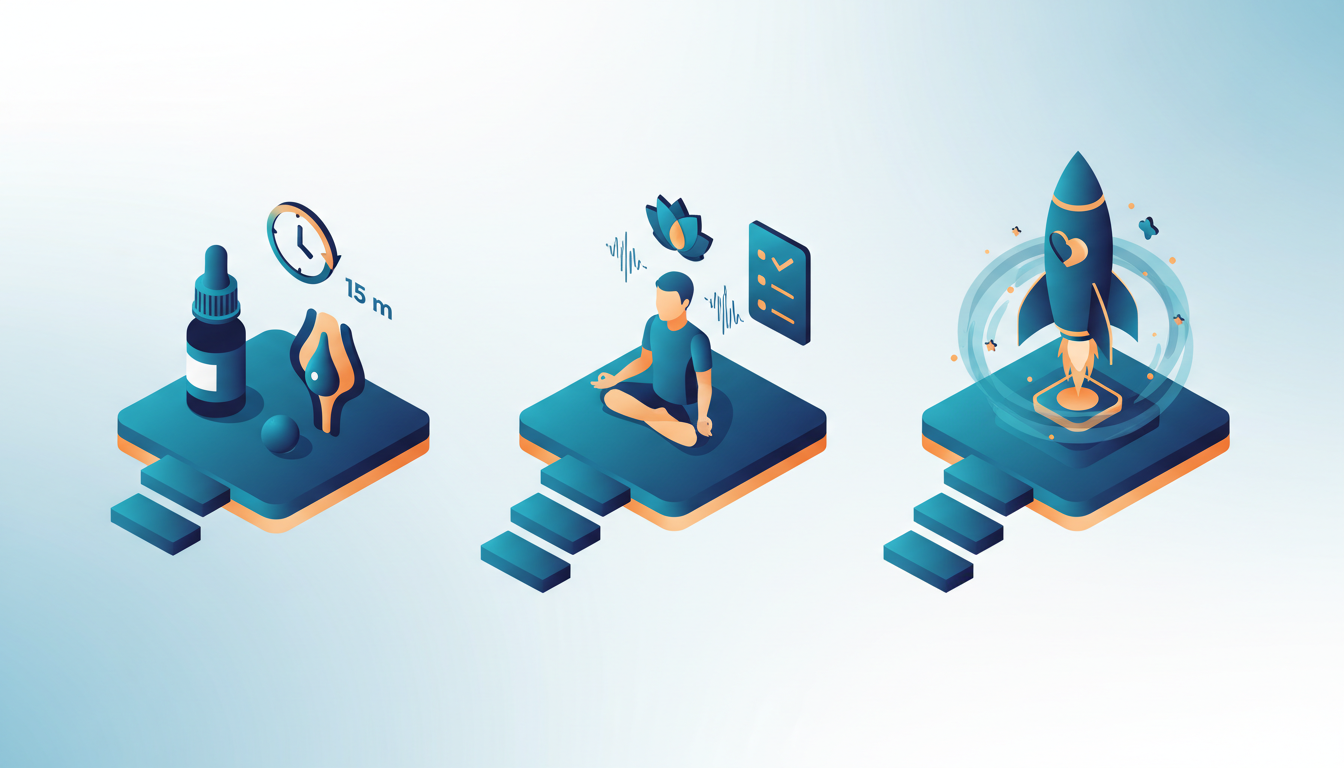
Mintz and Dr. Johnson structured a five-part curriculum with Mojo to treat orgasm loss from SSRIs, menopause, or stress through integrated medical and behavioral protocols. This framework moves beyond isolated pharmacological fixes by embedding sex therapy strategies like mindfulness and communication directly into the treatment timeline. The protocol acknowledges that while vasodilators restore blood flow, psychological barriers often persist after biological function returns.
- Assessment: Differentiating biological blockers from relationship stressors to target the correct intervention.
- Education: Reviewing masturbation statistics showing 94% success rates alone versus 65% with partners to identify technique gaps. 3.
Apply Scream Cream topically and wait exactly 15 minutes before initiating sexual activity to ensure peak vasodilation. This strict timing window aligns with historical data showing women typically require 10 to 20 minutes of play to reach orgasm, contrasting sharply with the four-minute average for men. The protocol fails if intercourse begins before blood flow maximizes, rendering the sildenafil compound ineffective.
- Dispense a pea-sized amount of compounded sildenafil directly onto the clitoral glans.
- Allow the topical agent to absorb without wiping or washing for the full 15 minutes.
- Initiate foreplay immediately after the waiting period to capitalize on induced arousal.
- Engage partners using direct scripts that frame the issue as a biological hurdle rather than a lack of desire.
Open communication dismantles the anxiety loop that often accompanies SSRI-induced dysfunction. Mintz utilized this approach to create a new form of emotional intimacy with her husband, shifting focus from performance to shared sensation. Ignoring this dialogue risks perpetuating the orgasm gap where women climax notably less often than male partners. Cognitive-Behavioral Therapy (CBT) boasts high success rates, yet combining it with precise pharmacological timing addresses both neural and vascular components simultaneously. Partners accustomed to shorter encounters must adjust their pacing to accommodate the extended historical timeline of female response. Failure to synchronize these elements results in wasted medication and reinforced psychological distress.
Validating Success: Pelvic Floor Training and AI Therapy Integration
Postmenopausal pelvic floor muscle training Integrating this physical regimen with digital support creates a verifiable success metric for patients struggling to fix inability to orgasm on antidepressants.
- Perform daily contractions to strengthen the neuromuscular pathways required for climax.
- Deploy an AI-driven chatbot to track mood fluctuations and identify psychological barriers in real-time.
- Schedule sexual activity only after completing both physical warm-ups and mindfulness grounding exercises.
Recent analysis from Rutgers University suggests women may downplay orgasm importance as a coping mechanism, making objective tracking via AI necessary. Over-reliance on algorithmic validation can detach the user from immediate physical sensation. Success requires balancing data-driven insights with the subjective experience of blood flow and nerve response. Editorial Mission recommends treating digital tools as adjuncts rather than replacements for embodied practice.
Evaluating Treatment Efficacy and Navigating Healthcare Barriers
The Coping Mechanism of Downplaying Orgasm Importance
Recent findings from Rutgers University published in March 2026 identify a specific psychological pivot where women devalue climax to manage the distress of consistent absence. This cognitive adjustment functions as a defense mechanism, yet it inadvertently normalizes the orgasm gap by lowering expectations rather than solving the biological blocker. Operators troubleshooting lack of orgasm despite arousal must distinguish between genuine resolution and this form of emotional suppression. The cost of unaddressed suppression is measurable: patients stop seeking medical interventions, assuming dysfunction is an acceptable trade-off for mental stability. Grace Wetzel, a researcher at the institution, notes that this trend perpetuates a cycle where physiological needs go unmet because the perceived value of the outcome has been artificially reduced.
Clinical protocols fail when providers accept patient reports of "not caring" as a successful outcome. The limitation here is that standard intake forms rarely query changes in desire hierarchy, allowing the coping mechanism to mask the need for vasodilator therapy. Restoring function requires challenging the patient's adapted baseline before prescribing compounds like Scream Cream. Mindfulness practice and partner dialogue restore sexual function where pharmacology alone fails to resolve performance anxiety. Mintz reports her sex life is as good as it's ever been, attributing this recovery to being orgasmic again and no longer feeling anxious. This dual approach addresses the psychological residue remaining after vasodilator therapy restores biological capacity.
About
Sofia Reyes is a Certified Sex Educator and Somatic Intimacy Coach at mysteries. Love, where she specializes in pleasure-centered education and body awareness. Her extensive background as a former clinical sexologist at a Barcelona sexual health clinic uniquely qualifies her to address anorgasmia, a complex condition often rooted in both psychological and physiological factors. Through her daily work guiding individuals and couples toward deeper connection, Reyes has developed practical, evidence-based strategies for overcoming orgasmic difficulties. This article directly reflects her professional focus on normalizing conversations about sexual wellness and dismantling the shame often associated with lost desire. By bridging clinical expertise with the accessible, non-judgmental mission of mysteries. Love, Reyes provides readers with actionable insights grounded in real-world therapeutic experience. Her approach ensures that advice on reclaiming orgasm is not only scientifically sound but also deeply empathetic to the diverse experiences of modern adults seeking intimacy.
Conclusion
Scalability fails when clinical protocols ignore the psychological devaluation emerging as a coping mechanism for repeated failure. As women increasingly dismiss orgasmic potential to protect their mental health, the window for proven biological intervention narrows, rendering vasodilators useless without concurrent behavioral recalibration. The current market trajectory toward a $6.4 billion industry risks cementing a two-tier system where only the wealthy access integrated care, while others accept diminished sexual agency as inevitable. This fragmentation creates a hidden operational cost: the long-term erosion of intimate partnership stability due to untreated performance anxiety.
Clinicians must mandate a combined therapy protocol within the next 18 months, refusing to prescribe topical agents without verified partner engagement strategies. Insurance payers should reject claims for standalone pharmacology that lack documented behavioral support components, forcing a shift toward complete treatment models. The medical community cannot wait for perfect FDA approvals while patients retreat into avoidance; the standard of care must evolve immediately to address the mind-body disconnect. Start by auditing your current patient intake forms this week to ensure they explicitly assess partner willingness for vulnerability exercises before authorizing any prescription. This single administrative change filters out candidates destined for failure and directs resources toward those ready for genuine functional recovery.
Frequently Asked Questions
Mindfulness practices often fail when a chemical blockade suppresses arousal pathways. Clinical data indicates that 30% of users experience delayed orgasm specifically linked to this SSRI, requiring medical intervention rather than just psychological coping mechanisms.
A physiological blockade can stop the reflex arc even when mental readiness exists. Laurie Mintz notes that 94% of women climax during masturbation, yet medication can create a hard stop in somatic function regardless of sexual knowledge.
Standard sexual health advice often overlooks the systemic disconnect in arousal mechanics. Only 18.4% of women achieve climax through penetration alone, highlighting why clitoral engorgement requires specific hemodynamic support beyond simple intercourse.
Up to 73 percent of SSRI users face sexual dysfunction including decreased libido and reduced arousal. This high rate proves anorgasmia is frequently a biological side effect rather than a psychological failure or relationship issue.
Medication-induced anorgasmia manifests as a physiological blockade where arousal peaks but climax remains unreachable. Unlike stress-related issues, this biological wall stems from serotoninergic inputs disrupting the neurological pathway required for release.