Women's orgasm decline: Why 50 isn't the end
A July 2025 MedicalXpress study of 900 women proves orgasm satisfaction remains rock-solid well into the seventies, debunking the myth that aging kills desire.
The prevailing narrative that menopause permanently switches women off is a fabrication born of autopilot intimacy rather than biological inevitability. Lucy-Anne Holmes reveals that the modern orgasm gap stems not from broken bodies, but from a collective failure to audit how life changes have rendered old sexual scripts obsolete. While women like Jayne, a solicitor in her mid-50s, confess feeling defective, the data confirms their physiology is intact; the disconnect lies in ignoring the somatic mechanics required for arousal at different life stages.
This guide dismantles the shame surrounding dwindling desire by exposing the root causes of unsatisfying sex. Readers will learn to execute a personal sex audit to identify exactly which habits no longer serve their pleasure, moving beyond the superficial fixes often peddled by the wellness industry. We will also explore specific breath-work techniques that reconnect the mind to the body, replacing anxiety with the physical capacity for climax. As the 2026 surge in real sex education demonstrates, prioritizing self-pleasure is not a luxury but a necessary recalibration for women who refuse to accept mediocrity in the bedroom.
The Root Causes of Dwindling Desire and the Modern Orgasm Gap
Living in Our Heads: The Mental Barrier to Female Libido
Cognitive dissociation strips midlife intimacy of its physical potential. Mental distraction overrides physiological capacity long before hormones shift. Holmes observes women experiencing sex through a partner's gaze rather than their own somatic feelings. This external focus builds a mental barrier disconnecting women from their bodies. Structural issues drive this disconnect more than biology does. The Great British Sex Report 2026 reveals men are twice as likely to orgasm during partnered sex, with 48% of men climaxing versus only 24% of women. Casual encounters widen this gap further, showing a large majority of men reaching orgasm compared to a minority of women. A perception mismatch complicates resolution; 85% of men believe their partners climax, while only 64% of women report doing so. The industry responds to this specific deficit by funding platforms like OMGYes which secured $4.6 million to teach female-centric techniques. Solitary practices highlight the disparity, as 37% of women always orgasm alone using vibrators or toys. Treating libido loss as a hormonal issue ignores the root cause of performing for an audience. Women must shift from asking "Am I desirable? " to "What do I desire? " to reclaim agency. Internal realignment restores the somatic connection necessary for genuine arousal. Physical interventions remain ineffective against the habit of living entirely in one's head without this cognitive shift.
Partnered sex data reveals a structural pleasure deficit where male satisfaction rates double those of females. Superdrug. Html) quantifies this disparity, showing men consistently reach climax at twice the frequency of women during shared intimacy. This gap persists even when controlling for relationship length, indicating a systemic issue in sexual scripting rather than individual dysfunction. Male consistency remains stable across contexts. Female outcomes fluctuate based on whether the encounter is self-directed or partnered. This variance proves the orgasm gap stems from external focus rather than internal incapacity.
Low desire frequently manifests as a rational response to unrewarding encounters. The brain deprioritizes partnered sex when it fails to deliver reliable physiological release. Operators of their own bodies must recognize that dwindling libido often signals a misalignment between effort and reward. Shifting the male vs female pleasure focus requires dismantling the assumption that penetration alone constitutes a complete sexual act. Desire will remain suppressed regardless of hormonal status or emotional connection without addressing this mechanical imbalance. Women typically require specific clitoral stimulation to climax, a condition automatically met during masturbation but frequently omitted during intercourse. Men often assume their partner has climaxed due to a perception gap where male estimates notably exceed female self-reports. Operators of their own sexuality must re-evaluate intimacy when partnered sequences ignore the specific mechanics required for female release. The limitation lies in the default assumption that penetration equals completion, a script that bypasses the necessary somatic engagement for women. Shifting focus from partner performance to self-directed sensual mindfulness resolves this structural inefficiency. Women achieve reliable satisfaction only when they reclaim agency over the stimulation route.
Somatic Mechanics of Arousal Through Breath-Work and Mindfulness
The Physiology of Electric Breath-Work
Holmes prescribes a strict 10 to 15 minute duration for synchronized breathing to shift neural control from cortical analysis to somatic sensation. This protocol requires partners to lie supine, inhaling exclusively through the nose and exhaling orally without pauses between cycles. Such continuous rhythm prevents the cognitive interruptions that typically suppress arousal signals in midlife women.
- Inhale deeply through the nose to fill the diaphragm.
- Exhale audibly through the mouth to release tension.
- Maintain zero gaps between breath cycles for fifteen repetitions.
- Hold the final inhalation for ten seconds to spike intensity.
This specific cadence forces the nervous system to abandon its default state of vigilance. Orgasm functions mechanically as the expulsive discharge of neuromuscular tension once stimuli cross a physiological threshold. Breath-work accelerates this accumulation by bypassing the mental filtering that blocks signal propagation. The technique directly counters the educational shift toward purely intellectual understanding of pleasure by demanding physical enactment instead.
| Phase | Action | Physiological Target |
|---|---|---|
| Initiation | Nasal inhale, oral exhale | Parasympathetic activation |
| Acceleration | No gaps, added sound | Limbic system engagement |
| Climax Trigger | 10-second hold | Neuromuscular tension peak |
The limitation remains that partners often revert to conversational patterns before the 15 breath minimum is reached. Premature cessation leaves the autonomic nervous system in a semi-aroused state rather than achieving full release. Consistent application trains the body to recognize non-genital stimuli as valid triggers for climax.
Executing the Pre-Sex Breathing Protocol
Lying supine with a partner for 15 minutes creates the physical proximity required to shift focus from mental analysis to somatic sensation. This protocol demands partners align their bodies closely, inhaling through the nose and exhaling orally without pauses to alter cortical vigilance.
- Synchronize breath cycles for fifteen repetitions to establish a continuous rhythm.
- Hold the final inhalation for ten seconds to spike physiological intensity.
- Introduce sound and movement to deepen the neuromuscular tension release.
Continuous breathing prevents the cognitive interruptions that typically suppress arousal signals in midlife women. Orgasm occurs when stimuli reach a threshold triggering the spinal cord to emit sympathetic impulses for the expulsive discharge of tension. This mechanical process requires abandoning the polite, controlled behavior that keeps women disconnected from their own pleasure.
The limitation of this approach is its reliance on mutual participation; a reluctant partner breaks the feedback loop necessary for somatic mindfulness. Unlike solo practices where control is absolute, this method exposes the relational flexible that often causes the orgasm gap. Women who prioritize male performance over their own feelings find the silence of breath-work uncomfortable because it removes the distraction of caregiving. Making noise during the exercise further engages the limbic system, countering decades of social conditioning that equates quietness with propriety. Research subjects in sexual health studies often receive a pittance for participation, yet the personal value of reclaiming bodily agency exceeds any external compensation. The protocol works only when participants refuse to endure mediocre connection and instead demand electric presence.
The Sex Audit Checklist for Desire Clarity
Executing a sex audit requires answering five specific questions to shift focus from external validation to internal desire. Women must identify when intercourse occurs, whether they initiate contact, what sensations they endure versus enjoy, their mental distractions during acts, and their emotional state post-coitus. This diagnostic process targets the cognitive dissonance where middle-aged women incorrectly attribute low libido to aging rather than unexamined habits. The goal remains answering "What do I desire? " instead of "Am I desirable? " to dismantle performance anxiety.
| Audit Question | Target Insight |
|---|---|
| Timing of intimacy | Identifies fatigue-based routines |
| Initiation patterns | Reveals passive participation |
| Enjoyment vs endurance | Highlights unspoken boundaries |
| Mental distractions | Exposes cognitive dissociation |
| Post-sex feelings | Measures emotional satisfaction |
Reconnecting with the body involves making everyday moments sensual by focusing entirely on physical textures during mundane tasks. Such mindfulness practices correlate with findings that sexually active participants report significantly less physical discomfort regardless of age. This approach trains the nervous system to prioritize somatic input over cortical analysis. Ignoring this audit leaves women trapped in automated sexual scripts that prioritize partner completion over personal fulfillment. Structural change demands replacing passive endurance with active sensual mindfulness.
Executing a Personal Sex Audit to Prioritize Self-Pleasure
Implementation: The Sex Audit: Shifting from Desirability to Desire

A sex audit functions as a diagnostic protocol replacing the question "am I desirable" with Holmes' framework of "what do I desire. " This shift targets the cognitive dissonance where women endure unsatisfying routines rather than analyzing specific pleasure gaps. Recent findings from the University of Innsbruck confirm that sexual scripts systematically prioritize male satisfaction, leaving female needs unaddressed without deliberate intervention. The audit requires operators to document timing, initiation patterns, and the ratio of enjoyed versus endured acts.
- Record the specific time and context of every sexual encounter for two weeks.
- Catalog mental distractions present during intimacy, such as body image concerns or task lists. 3.
Jayne, a solicitor in her mid-50s, admitted she hadn't had an orgasm in years because she never tracked her own endurance limits. Execute this diagnostic by logging five specific variables after every intimate encounter to identify patterns of obligation versus genuine desire. 1. Record the exact time of day and whether fatigue influenced the decision to proceed. 2. Note who initiated the contact and whether the response was enthusiastic or resigned. 3. Distinguish clearly between sensations that felt pleasurable and those merely endured to satisfy a partner. 4. Catalog mental distractions, such as worry about appearance or household tasks, that interrupted somatic presence. 5. Describe the post-act emotional state, focusing on feelings of connection or relief that it ended.
| Variable | Data Point to Log |
|---|---|
| Initiation Source | Self, Partner, or Mutual |
| Sensation Ratio | Enjoyed minutes vs. Endured minutes |
| Mental State | Present, Distracted, or Anxious |
| Aftermath | Satisfied, Neutral, or Depleted |
This process reveals how often sexual scripts systematically prioritize male pleasure while leaving female needs unaddressed without deliberate intervention, a flexible confirmed by recent University of Innsbruck researchers. Women frequently discover they are operating on autopilot, repeating routines that no longer serve their changing bodies. The historical stigma surrounding self-focused pleasure, once challenged by pioneers like Betty Dodson often still suppresses honest reporting in these logs. A critical limitation exists: tracking alone does not fix the problem if the operator refuses to act on the data. Without the willingness to refuse bad sex or demand changes based on audit findings, the log becomes merely a record of dissatisfaction rather than a tool for transformation. True agency requires using these insights to negotiate new terms of engagement.
The Broken Feeling: Recognizing Communication Gaps in Satisfaction
Jayne's admission that "something's broken" reflects a personalization of systemic communication gaps rather than actual physiological failure. Internalizing these discrepancies as individual dysfunction ignores data showing men's perception of partner satisfaction significantly overestimates reality. This cognitive distortion prevents operators from addressing the root cause: unaligned expectations regarding self-pleasure versus partnered performance.
- Identify specific moments where satisfaction discrepancies arise between internal feeling and external assumption.
- Log instances where silence masks a lack of orgasmic ability during shared encounters.
- Compare solo success rates against partnered outcomes to isolate relational friction points.
Treating this as a personal defect leads to unnecessary medical interventions instead of relational recalibration. Emerging 2026 trends highlight mindfulness practices as predictors for resolving these specific awareness deficits. The cost of misdiagnosis is continued endurance of unsatisfying routines while the partner remains unaware of the disconnect. Shifting focus from fixing a "broken" body to fixing the feedback loop restores agency. Operators must reject the narrative of biological decline in favor of auditing the partner dynamics that suppress genuine desire.
Sustainable Strategies for Midlife Intimacy and Long-Term Satisfaction
Defining the Three-Minute Game Protocol for Intimacy
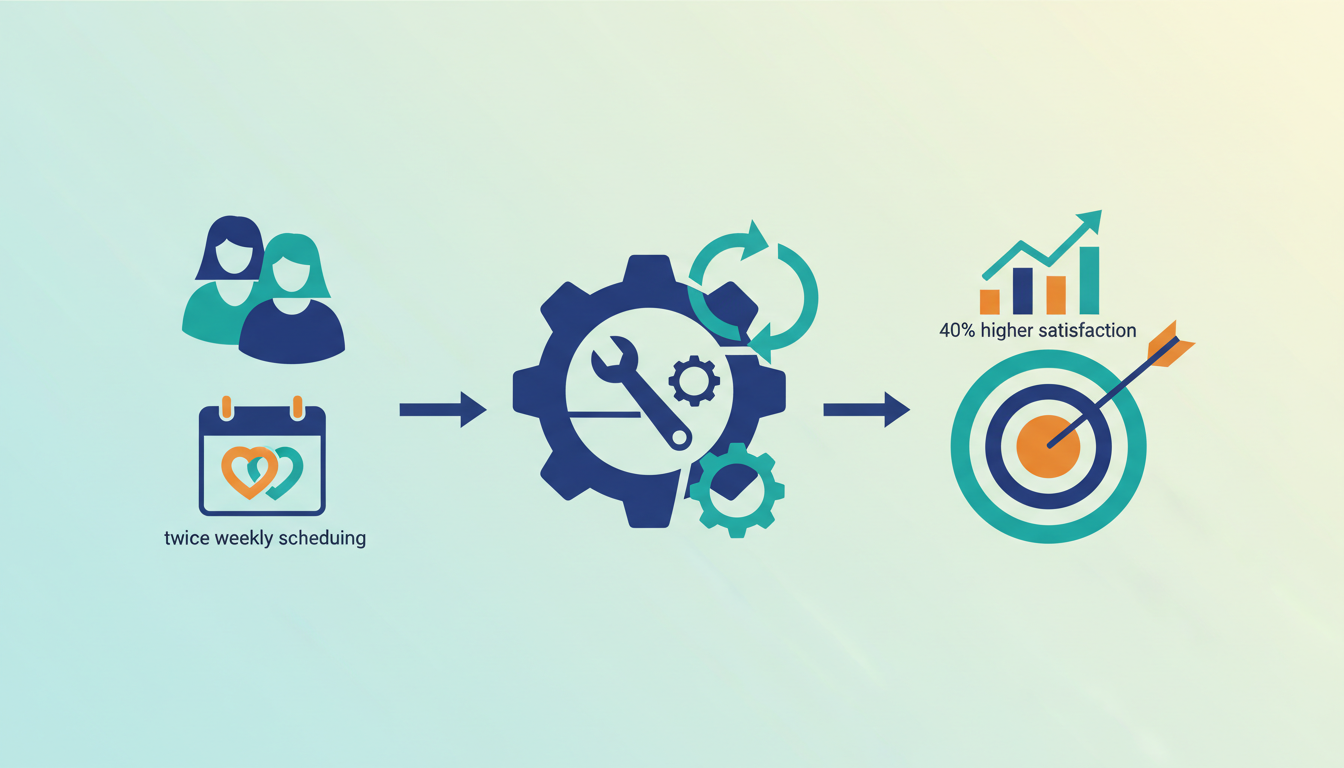
Harry Faddis invented the three-minute game to force a hard stop on performance anxiety using a strict timer constraint. Dr. Betty Martin pioneered this protocol to shift focus from partner satisfaction to self-directed somatic awareness. The rule requires partners to set a 3-minute timer and engage only in touch that feels good, stopping immediately when the alarm sounds. Operators must treat the timer as an absolute circuit breaker against the habit of enduring unwanted stimulation. The psychological shift demands that participants ignore the gaze of their partner Studies of 900 women confirm that maintaining such active intimacy reduces pain and dryness regardless of age. Failure occurs if either party attempts to extend the session past the limit, reintroducing the obligation the game seeks to remove. Surrendering control over the session's duration creates a safe container where sexual agency returns because the exit ramp is guaranteed. Many find this loss of control initially unsettling.
Executing the 15-Breath Pre-Sex Connection Ritual
Initiate the protocol with exactly 15 breaths before holding to force a transition from cognitive distraction to somatic presence. This specific count disrupts the default neural pathway where women prioritize partner performance over internal sensation, a habit that leaves only a minority of females satisfied during standard encounters. The procedure requires lying supine in close physical contact, inhaling through the nose and exhaling through the mouth without gaps for a duration of 10 to 15 minutes. Operators must treat this interval as a non-negotiable handshake sequence that validates connection before any genital stimulation occurs. Disengage prefrontal cortex 2 1015 minute hold Establish somatic awarenesshttps:/ Skipping this initialization sequence guarantees a return to autopilot intimacy where desire remains dormant. Research indicates that decade-long practice in stimulation-free techniques yields sensory satisfaction comparable to clitoral orgasms, proving that mental presence drives physiological response more than mechanical friction. Strict adherence is necessary. Any deviation below the 15-breath threshold fails to clear the mental cache required for genuine arousal. This method directly addresses the menopause focus Superficial contact reinforces the feeling that something is broken when the full duration is not executed. Success manifests as a shift from enduring sex to actively desiring it, closing the satisfaction gap without pharmaceutical intervention.
Evaluating DIY Audits Versus $15,000 Immersive Retreats
Quercus publishes Holmes' *Your Sexual Self* for £18.99, offering a standalone sex audit framework that costs less than one percent of the $15,000 "Back to the Body" retreat. The premium tier delivers immersive group sessions where sexually dormant participants "mainline pleasure" under direct facilitation, a resource intensity impossible to replicate with static text. Mass-market solutions reach 64 million users via apps, proving scalability often beats exclusivity for routine intimacy gaps. High costs exclude operators lacking significant capital, creating a class-based barrier to sexual agency. Most midlife women require only the structured questioning found in Holmes' eight-point checklist rather than expensive immersion. The decision hinges on whether the barrier is knowledge or deep-seated somatic dissociation. Editorial Mission recommends starting with the book; escalate to retreats only after three months of failed self-auditing.
About
Sofia Reyes is a Certified Sex Educator and Somatic Intimacy Coach at mysteries. Love, where she specializes in pleasure-centered education and body awareness. Her extensive background as a former clinical sexologist in Barcelona uniquely qualifies her to address the complexities of the female orgasm across all life stages. Unlike theoretical approaches, Reyes' daily work involves guiding individuals through somatic practices that reconnect them with their physical sensations, directly mirroring the practical methods discussed in this article. At mysteries. Love, operated by the Center for the Development of Intimate Relationships, she bridges the gap between modern sexual wellness research and actionable intimacy techniques. This expertise allows her to translate clinical insights into accessible advice, ensuring that the conversation around female pleasure remains grounded in both evidence-based science and compassionate, real-world application for women seeking deeper sexual fulfillment.
Conclusion
Scaling intimacy education reveals a critical fracture: mechanical techniques fail when partners lack the somatic vocabulary to articulate specific needs, rendering even well-funded apps ineffective for deep dissociation. The operational cost of ignoring this relationship attrition, but the calcification of a perception gap where men assume success while women disengage. Relying solely on breathwork or cheap audits creates a false ceiling for those whose barriers are trauma-based rather than informational. You must distinguish between a knowledge deficit and a nervous system block before investing further time or capital.
Commit to a ninety-day self-audit protocol using low-cost frameworks before considering premium retreats. If genuine arousal remains inaccessible after consistently applying structured questioning for three months, only then does the $15,000 immersive tier become a justifiable medical expense rather than a luxury. Do not gamble on expensive facilitation if the root cause is simply unpracticed communication. Start by scheduling a twenty-minute non-sexual dialogue with your partner this week to map exactly where sensation stops and performance anxiety begins. Write down the specific physical cues that signal disconnection rather than assuming mutual understanding. This concrete data point determines whether you need a book or a therapist, preventing wasted resources on solutions that address the wrong layer of the problem.
Frequently Asked Questions
Casual sex significantly widens the pleasure gap compared to committed partnerships. Data shows only 32% of women reach climax in casual encounters, whereas partnered sex generally offers higher consistency for female satisfaction rates.
Most men incorrectly assume their partners are satisfied more often than reality reflects. While 85% of men believe their partners climax, only 64% of women actually report experiencing an orgasm during those same encounters.
Self-pleasure tools provide a much more reliable route to climax than intercourse alone. Statistics indicate that 37% of women always achieve orgasm when using vibrators or toys during solitary sexual practices.
Significant investment is flowing into education startups designed to close the orgasm gap. The platform OMGYes recently secured $4.6 million in funding specifically to develop interactive tutorials on female pleasure.
Aging does not permanently destroy a woman's capacity for sexual pleasure or desire. The disparity where 48% of men climax versus only 24% of women stems from mental barriers, not broken physiology.