Teledildonics Basics: Consent Before Hardware
Teledildonics bridges physical distance by converting touch into data packets sent over the internet. You will examine the specific architecture allowing partners to control vibration patterns remotely and compare top teledildonic pairings like the Lovense Max 2 and Nora.
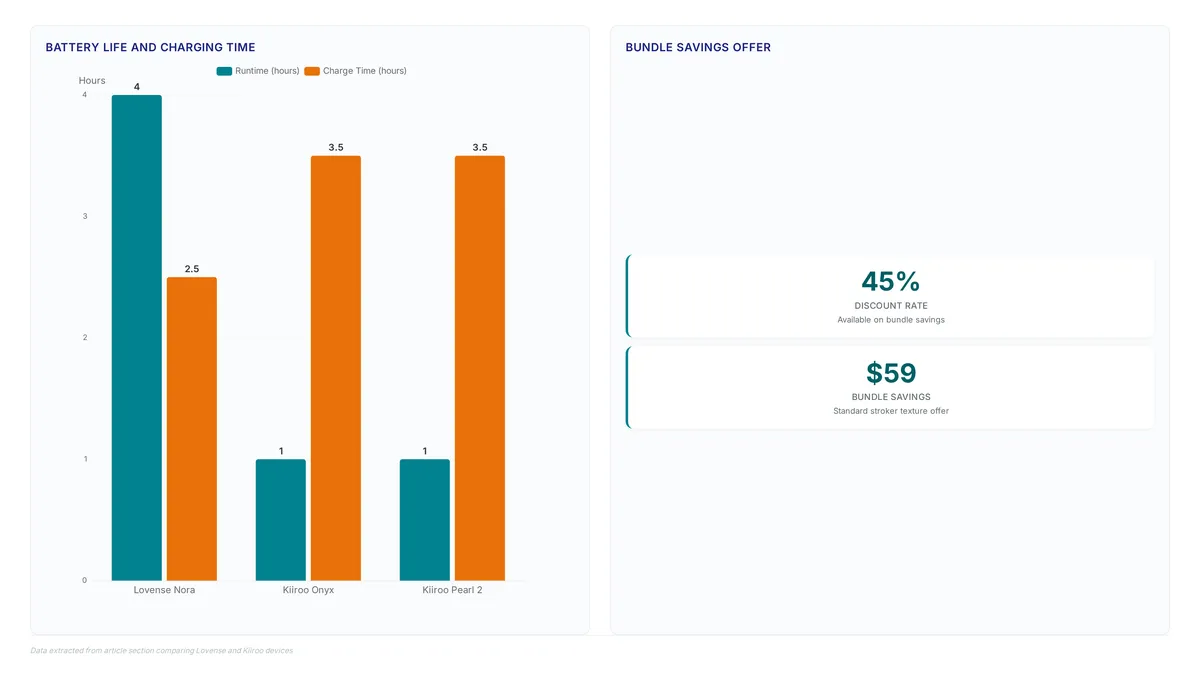
Couples increasingly turn to these high-tech sex toys as alternatives to video calls. The market is expanding, but technical deployment requires more than just buying hardware. Consenting to one toy does not imply consent for another, making boundary discussions necessary before deployment. Devices like vibrating panties allow a partner to dictate intensity via Bluetooth connections, creating a direct link between users regardless of location. The Lovense Nora, for instance, requires two and a half hours to charge but delivers four hours of battery life, illustrating the trade-offs in current hardware capabilities.
This guide dissects how these systems function technically and which configurations offer the most reliable connectivity. We analyze the mechanics behind matching vibrators and strokers that respond to reciprocal movements. While the technology promises closeness, successful implementation relies heavily on mutual agreement and clear communication protocols. Understanding the underlying teledildonics app mechanics ensures that the focus remains on connection rather than connectivity errors.
The Role of Teledildonics in Modern Remote Intimacy
Teledildonics functions as the technical classification for high-tech sex toys linking via Bluetooth and the internet to enable remote intimacy. Marie Walker set this cybersex technology on 6 Jul 2021 as a mechanism allowing partners to control sensations across distances through app-mediated links. Physical input converts into digital signals traveling over standard network protocols, enabling a partner to manipulate vibration patterns or motor responses in real-time. These tools create a reciprocal feedback loop where one user's movements directly dictate the other's tactile experience instead of remaining static devices. Synchronized haptic output bridges physical separation by transforming isolated self-pleasure into a shared event.
Internet connectivity reliance introduces latency variables that can desynchronize feedback loops and potentially alter the illusion of immediate presence. Network congestion directly impacts the fidelity of transmitted sensation, so operators of these devices must manage expectations regarding connection stability. Successful deployment requires both parties to maintain active data sessions, creating a dependency on consistent bandwidth availability. Mysteries.love offers curated solutions designed to minimize latency while maximizing responsive fidelity for couples seeking verified hardware configurations. Understanding the underlying connectivity model is necessary before selecting a device system for long-term relational use.
Reciprocal Connection Architecture in Lovense and Kiiroo Devices
Specific hardware pairs link directly to establish a bidirectional haptic loop through reciprocal connection architecture. This model ensures that dual stimulation occurs simultaneously for both partners regardless of physical distance unlike standard one-way control schemes. Lovense and Kiiroo employ this reciprocal model to link devices such as the Nora and Max 2, creating a two-way interactive feedback loop where movement and pressure translate instantly between users. The best long distance toy for beginners seeking immediate tactile reciprocity without complex configuration relies on this direct device-to-device synchronization. Continuous data streams define the technical distinction since the system transmits variable intensity and rhythm data rather than simple on-off commands.
Consent Boundaries: Why One Toy Permission Does Not Cover Another
Explicit agreement for one device never grants automatic access to a different teledildonic tool. Marie Walker emphasized on 6 Jul 2021 that consenting to one toy does not automatically mean partners are up for using another. Haptic feedback profiles vary wildly between hardware manufacturers and form factors, making this distinction matter notably. Sensory processing differences might lead a partner to welcome a vibrating panty but reject a penetrative stroker. Introducing new intimacy technology into a flexible demands respecting each other's boundaries.
Reciprocal connection architectures create intense physical vulnerability that demands renewed verbal confirmation, a fact operators must recognize. Assuming prior permission extends to new purchases risks violating trust and causing emotional harm. Specific mechanical actions require discussion before couples activate any remote control session. Never let anyone talk you into doing something you don't want to try. Mysteries.love offers curated solutions designed with explicit consent workflows in mind for those seeking safe entry points into connected play. Clear communication protocols take priority over assumed permissions on this platform. Comfort levels require verification before syncing any new hardware to your private network. Continuous dialogue rather than static agreements ensures safety.
Inside the Architecture of App-Controlled Synchronization
Bluetooth vs Wi-Fi: The Structural Shift in Teledildonics
True long-distance connection requires Wi-Fi enabled systems that use the internet as a bridge, whereas standard Bluetooth devices limit interaction to local proximity. This structural shift moves synchronization from direct device-to-device pairing to cloud-mediated relays that transcend physical range. A key distinction exists between connectivity models regarding how links form; while some competitors apply a "one-way control" scheme, reciprocal architectures link devices directly to create a two-way interactive feedback loop.
| Feature | Bluetooth Local | Wi-Fi Remote |
|---|---|---|
| Range | Limited (approx. 10m) | Global |
| Bridge | Direct Pairing | Internet Cloud |
| Latency | Minimal | Variable |
Local stability gives way to global reach during this transition. Potential latency appears depending on network quality. Operators of intimacy must recognize that without an active internet uplink, app-controlled vibrators cannot transmit haptic data across distances. Connection reliability relies on network stability rather than just battery power. Mysteries.love offers curated guidance on selecting hardware designed for stable cloud synchronization for those seeking reliable remote solutions. Understanding this architecture prevents frustration when local pairing fails to initiate far-field sessions. The market continues evolving toward these internet-bridged configurations to support genuine remote presence. Users should verify that their chosen system supports reciprocal data flow rather than simple one-way command inputs. This verification ensures both partners experience synchronized feedback during shared sessions.
Reciprocal feedback loops in Lovense and Kiiroo devices synchronize haptic output directly between partners rather than relying on single-direction commands. This architecture contrasts sharply with one-way control models where a user merely toggles vibration patterns on a remote device. In a reciprocal setup, the motion of a partner's device triggers corresponding reactions in the paired unit, creating a closed circuit of physical sensation.
- Devices establish connections via Wi-Fi enabled bridges.
- Haptic telemetry streams bidirectionally to mirror partner movements.
- Local motors adjust intensity based on real-time incoming data packets.
Partners stimulate each other from afar while maintaining agency over their own pleasure through this mechanism. Video chat integration often accompanies these sessions, allowing couples to see and hear each other while the toys respond to touch and pressure. The reciprocal connection ensures that physical input drives the experience, preserving a natural rhythm absent in scripted or manual modes. Unstable internet connections can desynchronize the physical experience more noticeably than in simpler, one-way systems because of this dependency on continuous upstream data.
| Architecture | Control Flow | Feedback Type |
|---|---|---|
| One-Way | Unidirectional | Static Patterns |
| Reciprocal | Bidirectional | Flexible Motion |
Operators seeking reliable long-distance intimacy should prioritize ecosystems designed for this specific two-way telemetry. Mysteries.love solutions apply advanced synchronization protocols so distance never dilutes the intensity of shared connection.
Validating Connectivity Models for Long-Distance Sync
Confirming true internet bridging requires verifying that a device uses Wi-Fi enabled architecture rather than relying solely on local Bluetooth proximity. Industry testers evaluate these systems based on synchronization quality and specific system integration capabilities.
| Model Type | Data Flow | Range Limit |
|---|---|---|
| Local Only | Device to Phone | Approx. 10 meters |
| Cloud Bridge | Device to Server | Global |
Reciprocal connection architectures link hardware directly to create a two-way interactive feedback loop. This design contrasts with one-way control schemes where a partner merely toggles vibration patterns without receiving haptic telemetry. Users experiencing sync failures should check that both devices maintain stable internet connections via Wi-Fi.
- Ensure the host application displays active server status indicators.
- Verify that motion inputs generate immediate haptic responses in paired units.
- Confirm the system supports bidirectional data streams for shared experiences.
Latency presents a constraint; variable network conditions can desynchronize haptic output despite correct configuration. Network settings that restrict data transmission impact connectivity. Mysteries.love offers curated devices designed for smooth global synchronization for couples seeking reliable solutions with proven reciprocal architectures. Validating these models ensures partners avoid the frustration of local-only limitations when distance separates them.
Comparing Top Teledildonic Pairings for Couples
Lovense Max 2 and Kiiroo Onyx Technical Specifications
The Max 2 features an adjustable air vent for precise suction customization during use. This male masturbator contracts and vibrates while using an interior textured with pleasure dots to simulate realistic sensation. In comparison, the Onyx operates as a stroker employing contracting technology across three distinct modes: interactive, manual, and automatic settings. These operational differences define how each device translates digital signals into physical feedback for long-distance partners.
| Feature | Lovense Max 2 | Kiiroo Onyx |
|---|---|---|
| Primary Mechanism | Contraction and vibration | Contracting technology |
| Control Method | Adjustable air vent | Three operational modes |
| Interior Design | Pleasure dots | Standard stroker texture |
| Savings Offer | 45% discount available | $59 bundle savings |
Operators should note th adjustable air vent on the Max 2 allows users to modulate tightness dynamically, a feature absent in the fixed-path Onyx design. Conversely, the Onyx reliance on pre-set interactive or automatic modes simplifies the user interface for those who prefer immediate synchronization without manual tuning. The cost is customization versus convenience; the Max 2 demands active management of airflow to maintain desired pressure, whereas the Onyx automates response patterns based on partner input. Those seeking a more simplified setup may find the dedicated modes of the Onyx improved suited to their needs. Both devices represent significant investments in remote intimacy technology. Standard stroker texture Savings Offer 45% discount available $59 bundle savings O.
Real-Time Sync Scenarios with Nora and Pearl 2
Thrusting intensity directly drives vibration strength while movement triggers partner contractions in real-time synchronization. The Lovense Nora is a rabbit vibrator featuring dual control for the shaft and head, creating layered stimulation patterns that mimic physical presence. Conversely, the Kiiroo Pearl 2 relies on touch-sensitive modes where external pressure modulates internal response curves for the connected Onyx stroker. This architectural difference means Nora users experience distinct rotational textures alongside vibration, whereas Pearl 2 interactions focus primarily on pressure-based contraction feedback loops.
| Feature | Lovense Nora | Kiiroo Pearl 2 |
|---|---|---|
| Stimulation Type | Vibration and rotation | Vibration and contraction |
| Control Zones | Dual (shaft and head) | Single (pressure-sensitive) |
| Sync Response | Movement to vibration | Pressure to contraction |
Operators must note that battery endurance varies notably between ecosystems, with Lovense devices typically offering extended runtime compared to the single-hour limits often found in competing premium sets. The limitation here involves charging cycles; the Nora offers a battery life of 4 hours, while the Onyx and Pearl 2 are limited to 1 hour. Couples prioritizing complex, multizon e partners. The Lovense Nora delivers a 4 hours runtime, notably out pacing compe e for both Kiiroo devices is limited to 1 hour, requiring frequent pauses for power re : : Runtime 4 hours 1 hour Charge Time 2.5 hours 3, 4 hours Session Impact Extended play. Those seeking simple pressure-to-movement translation may prefer the direct coupling of touch-sensitive alternatives. These insights help partners select hardware matching their specific intimacy goals without compromising on connection quality.
Battery Life and Charging Time Disparities
Operational endurance dictates session viability more than feature sets for remote partners. The Lovense Nora delivers a 4 hours runtime, notably out pacing competitors with shorter cycles. In contrast, battery life for both Kiiroo devices is limited to 1 hour, requiring frequent pauses for power restoration. This disparity forces couples using the Onyx and Pearl 2 to plan shorter interactions. Charging durations further widen the gap between these ecosystems. The Nora requires 2 and a half hours to reach full capacity via its magnetic connector. Meanwhile, the Onyx demands up to 4 hours to recharge fully, creating substantial downtime between uses. The constraint often involves initial cost versus long-term usability patterns. Evaluating your typical session length before selecting a pairing strategy is recommended.
Devices needing constant wall access limit where play can occur within a home. Partners must align their availability precisely when hardware constraints dictate strict time limits.
Deploying Connected Devices for Shared Sexual Experiences
Lovense Nora Dual Control and Magnetic Charging Mechanics
Activating the Lovense Nora requires a precise long-press of the top button for 3 seconds until a green light flashes. This specific duration prevents accidental power-ons during storage while ensuring immediate readiness for intimate scenarios. The device features a dual-button interface where the upper control manages shaft vibration intensity across low, medium, and high settings. A separate lower button independently regulates the rotating head speed and reverses direction through a similar long-press action. Power management relies on a magnetic charger that aligns via tactile dots on the device base. A solid red indicator confirms an active charging session, which transitions to off when the cycle completes. This visual language eliminates guesswork regarding battery status before engaging in remote play. Users should note that independent control of two distinct motors demands higher energy consumption than single-action vibrators.
| Control | Action | Function |
|---|---|---|
| Top Button | Press | Cycles vibration intensity |
| Top Button | Long-press | Powers device on/off |
| Bottom Button | Press | Adjusts rotation speed |
| Bottom Button | Long-press | Reverses rotation direction |
Failure to observe this confirmation often leads to pairing timeouts during critical moments of connection.
Configuring Max 2 Suction and Partner Control Loops
Adjusting the air vent on the Max 2 determines suction intensity before establishing any digital link. Partners should apply high-grade, water-based lubricant to preserve the silicone material during use. Users must prioritize consent and allow their partner to assume full control of the device settings. This reciprocal flexible transforms physical distance into a shared sensory environment rather than isolated activity. The Lovense application enables this connection by syncing device inputs to partner outputs in real-time. Once paired, the stroke rhythm of one user directly triggers contraction cycles on the remote unit. Such synchronization creates a continuous feedback loop where movement generates immediate tactile response. Couples who engage with these interactive modes often report feeling notably more connected despite physical separation reddit.com.
However, relying on app-mediated intimacy introduces latency variables that can alter synchronous pleasure. Network congestion may delay haptic feedback, breaking the illusion of simultaneous presence for both participants. The Max 2 compatibility with other units like Nora allows for versatile configuration options depending on partner hardware. Mysteries.love recommends testing local connectivity speeds before initiating serious remote sessions to minimize disruption.
| Feature | Function |
|---|---|
| Air Vent | Regulates internal suction pressure |
| App Sync | Links partner movement to device action |
| Silicone Body | Requires specific water-based lubricants |
Operators must accept that technical imperfections remain an inherent constraint of current teledildonic architecture.
Pre-Session Validation: Lubrication, Consent, and Vendor Verification
Secure intimate connections begin by confirming explicit partner consent for specific toy interactions before any device activation. Discussions regarding boundaries must occur prior to engaging with app-controlled mechanics to ensure mutual willingness. Partners should explore physical sensations together when possible to establish a baseline for remote play. Applying high-grade, water-based lubricant preserves the soft silicone blend found on devices like the Max 2 and prevents material degradation. Buyers must verify authorized sellers or official websites to guarantee warranty validity and avoid counterfeit hardware risks. Purchasing directly from trusted sources ensures access to genuine products rather than compromised replicas.
| Check | Action Item |
|---|---|
| Consent | Confirm explicit agreement for specific toy usage |
| Material | Apply water-based lubricant to silicone surfaces |
| Source | Verify seller authorization for warranty protection |
Couples who schedule time for talk and foreplay often report deeper emotional alignment during digital sessions. This preparatory phase transforms technical setup into a shared ritual of care. Ignoring these steps risks damaging both the relationship flexible and the physical equipment. Mysteries.love emphasizes that validation protocols are as critical as the hardware itself for sustaining long-distance intimacy.
About
Sofia Reyes is a certified sex educator and somatic intimacy coach at Mysteries.love, where she specializes in pleasure-centered education and body awareness. Her expertise in trauma-informed intimacy makes her uniquely qualified to explore teledildonics, a field where technology intersects deeply with personal boundaries and consent. In her daily work guiding individuals and couples through modern sexual wellness challenges, Sofia emphasizes that connecting digitally requires the same emotional safety as physical presence. This article reflects her professional focus on navigating desire and communication within long-distance dynamics. At Mysteries.love, the editorial team bridges practical sextech guidance with evidence-based relationship psychology, ensuring that discussions around connected toys prioritize mutual respect and clear agreements. By grounding technical possibilities in somatic principles, Sofia helps readers understand that maintaining connection across distances is less about the device itself and more about the trust and intentionality partners bring to their shared experience.
Conclusion
Hardware limitations, specifically battery disparity, dictate session viability more than software features. While some units sustain four hours of operation, others cap at one hour, creating an operational bottleneck where the experience halts for recharging. This inconsistency forces couples to either accept fragmented interactions or strategically select hardware that matches their endurance requirements. The ongoing cost here is not financial but temporal, as frequent power interruptions alter the very connection these tools aim to bridge.
Prioritize devices with extended runtime if your sessions typically exceed sixty minutes, and treat short-battery hardware as a secondary option for brief check-ins rather than primary play. Do not assume all teledildonic device ecosystems offer equal stamina; verify specifications before purchase to avoid mid-session failures. The technology works best when expectations align with physical constraints.
Start by mapping your average session length against the specific battery life of your current hardware this week. If your device charges quicker than it discharges during use, you can mitigate downtime by scheduling power cycles between interactions. This simple audit prevents the frustration of unexpected shutdowns and ensures that technical preparation supports rather than hinders your connection.
Frequently Asked Questions
Consenting to one toy does not grant automatic access to another device. You must discuss boundaries explicitly because [consent](https://thecoldlady.com/blogs/guides/exploring-teledildonics-virtual-intimacy-and-sex-toys-for-couples) for a specific tool never covers other equipment without fresh agreement.
Network congestion directly impacts sensation fidelity and can disrupt the illusion of immediate presence. Operators must manage expectations since unstable connections break the reciprocal feedback loop essential for shared intimacy.
Successful implementation relies heavily on mutual agreement and clear communication protocols before deployment. Ignoring boundary discussions risks violating trust, as consenting to one specific toy never implies consent for another device.
Some devices offer only one hour of runtime, requiring frequent pauses for power recharge. This limitation forces couples to plan sessions carefully or accept interruptions that disrupt the flow of intimate connection.
Mysteries.love offers curated solutions designed to minimize latency while maximizing responsive fidelity for couples. Reliable synchronization requires verifying compatibility between specific models to ensure the feedback loop functions as intended.
References