Sexual autonomy after testosterone shifts
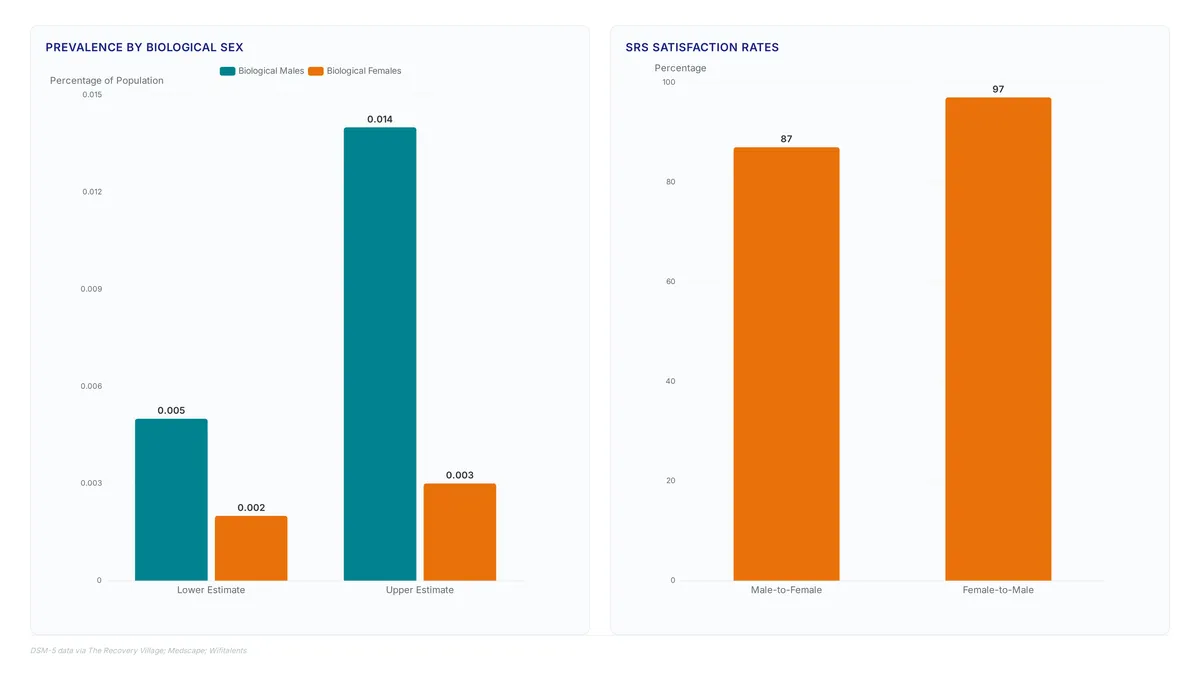
DSM-5 data estimates gender dysphoria prevalence in biological males between a small fraction and a slightly higher fraction, yet individual struggles with sexual autonomy remain acute. This guide defines sexual desire within trans contexts, decodes inclusive language around genital penetration, and applies boundary setting to manage contraceptive anxieties.
Conflict often arises when a partner's demand for exclusivity clashes with an individual's need for internal penetration. This friction usually stems from misplaced ownership of another's body. When testosterone alters libido, the demand for sexual autonomy becomes critical, particularly when external constraints like scheduling or family interference limit intimacy. Gender dysphoria complicates these dynamics further; refusing sex toys can trigger deep psychological distress.
Anyone facing similar relational impasses must understand the mechanics of consent and contraception. The core issue is enforcing boundary setting as a non-negotiable aspect of healthy sexual activity. Personal autonomy cannot be sacrificed for a partner's insecurity.
Defining Gender Dysphoria and Sexual Desire in Trans Contexts
DSM-5 Gender Dysphoria vs ICD-11 Gender Incongruence Definitions
The DSM-5 mandates clinically significant distress to diagnose gender dysphoria, while the ICD-11 uses gender incongruence to describe the mismatch without requiring impairment. This divergence is not semantic; it dictates access to care and shapes self-perception. The American Psychiatric Association retains the condition within mental health disorders, strictly requiring that feelings of identification cause significant distress or impairment in social or occupational functioning. Conversely, the World Health Organization reclassified the condition under sexual health, removing distress as a defining criterion to focus on the persistent mismatch itself. Pathologizing distress rather than identity changes everything.
Applying Sexual Desire Definitions to Genital Activity and Pregnancy Fear
Distinguishing sexual desire from biological drive clarifies why testosterone initiation often triggers intense genital interest alongside persistent pregnancy anxiety. While testosterone influences arousal and bone health, the resulting surge in libido does not eliminate the psychological reality of gender dysphoria or fears regarding uterine implantation. Approximately a significant number of people in the United States identify as transgender, a demographic where separating hormonal effects from emotional safety remains a primary clinical consideration. Conflating high desire with reduced pregnancy risk leads to inadequate contraceptive planning during periods of heightened sexual activity. Partners may misinterpret this hormone-driven urgency as unconditional consent for specific acts, ignoring that gender dysphoria can make genital contact feel discordant regardless of physical arousal levels. Addressing pregnancy fear requires concrete medical information rather than relying on the dampening effects of hormones, which do not guarantee infertility. Mysteries.love recommends prioritizing inclusive language and firm boundaries to navigate these complex interactions between body changes and relationship dynamics. Understanding that desire is a feeling, not a mandate, allows individuals to explore penetration tools without compromising their sense of safety or autonomy.
Female-to-Male vs Male-to-Female Satisfaction Rates Post-Surgery
Post-surgical satisfaction metrics indicate a divergent trajectory between transition pathways, with female-to-male patients reporting higher contentment rates than their counterparts. Clinical data reveals that satisfaction rates reach a very high level for female-to-male individuals following sex reassignment surgery, whereas male-to-female patients report a high satisfaction rate. While testosterone effects on desire often catalyze a clear alignment between body and mind, the complexity of genital reconstruction in male-to-female transitions may introduce additional variables affecting long-term sexual comfort. Defining success requires distinct benchmarks for each group rather than a unified standard. Mysteries.love emphasizes that understanding these differential outcomes allows partners to set realistic expectations regarding sexual function and emotional recovery. Medical transition successfully mitigates incongruence for the vast majority, yet the path to reaching that state varies notably by physiological starting point.
Mechanics of Penetration and Inclusive Genital Language
Defining Vaginal Intercourse as Collaborative Movement
Bodies move together during vaginal intercourse while the vagina holds a penis or toy within the internal passage extending from the vulva to the cervix. Discard "penetration." The word means to pierce, suggesting force and injury instead of mutual engagement. Framing sex as collaborative movement highlights the active role of the receptive partner rather than presenting the act as something done to them. Words shape experience. Selecting terms that emphasize holding over being pierced aids those managing gender dysphoria. Defining the act by force rather than function hides consent and shared pleasure. Different kinds of sex represent different things people choose to do to actively express or enact sexuality and sexual feelings.
| Term | Implication | Anatomical Accuracy |
|---|---|---|
| Penetration | Suggests force, injury, or one-sided action | Ignores vaginal agency |
| Intercourse | Indicates mutual movement and shared space | Reflects internal passage dynamics |
People reclaim autonomy as operators of their own bodies by demanding language reflecting biology instead of violence. The vagina actively holds rather than passively receives, a physiological fact erased by martial metaphors. Mysteries.love encourages partners to adopt precise, inclusive terminology honoring the collaborative nature of intimacy.
Dildo vs Penis: Agency in Genital Insertion
Selecting a dildo over a penis shifts mechanical control entirely to the receptive partner, directly altering agency during insertion. A penis introduces biological variables like ejaculation and rigid angularity that the user cannot modulate in real-time. Conversely, a silicone device allows precise management of depth, girth, and withdrawal speed without requiring negotiation with another person's physiology. This distinction is vital for individuals on testosterone who may experience heightened libido but retain anxiety about pregnancy.
| Feature | Penis Insertion | Dildo Insertion |
|---|---|---|
| Control Source | Shared/Insertive partner | Receptive partner |
| Pregnancy Risk | Present without contraception | None |
| Dysphoria Trigger | High (biological association) | Low (configurable) |
| Termination | Requires partner cooperation | Immediate user command |
Partners insisting their penis remains the "only" option often create barriers to intimacy. Such restrictions ignore how inclusive language and tool selection can change sex from an act of endurance into one of sexual autonomy. The limitation lies in partner resistance; some individuals view exclusive access as a relationship requirement rather than a shared preference. Selecting a tool that aligns with one's gender identity fosters euphoria, whereas forced reliance on biological parts can reinforce distress. Users must prioritize their internal sense of safety over external expectations of what sex "should" look like.
Linguistic Risks: How 'Penetration' Triggers Assault Associations
Penetration etymologically means to pierce, linguistically embedding concepts of force and injury that improved describe sexual assault rather than consensual intimacy. Sexual assault occurs when someone is attacked, or attacks someone else, in a sexual way, creating a semantic conflict for individuals managing gender dysphoria during sex. Using language rooted in violence can inadvertently activate trauma responses or exacerbate discomfort with assigned sex characteristics. The ICD-11 replaced older diagnostic terms with gender incongruence to reduce stigma, yet colloquial vocabulary often lags behind clinical progress. Individuals seeking gender euphoria must recognize that words framing sex as an act of piercing reinforce passive victimhood rather than active participation. Mysteries.love advocates replacing this terminology with descriptions of collaborative holding to align language with safety. Prioritizing inclusive language allows partners to decouple physical sensation from historical associations of violation. This linguistic shift supports the process of reclaiming sexual autonomy. Without rejecting terms implying injury, transgender individuals may struggle to distinguish desire from defensive survival mechanisms.
Applying Sexual Autonomy Through Boundary Setting and Contraception
Sexual Partner Agency and Body Autonomy Rights
A sexual partner is someone with whom you have intentionally explored sexual feelings, not an owner of your body. S.e. Smith asserts that a partner does not get to call dibs on your vagina or any of the rest of your body, establishing that bodily agency remains yours alone regardless of relationship status. This distinction clarifies that emotional distress often arises when partners mistakenly equate intimacy with exclusive access rights, leading to attempts to control genital exploration or toy usage. Understanding that libido fluctuates due to hormones or stress helps separate physical urges from relational obligations, allowing individuals to prioritize their own gender euphoria without guilt.
Mutual masturbation eliminates pregnancy risk by allowing partners to experience sexual pleasure separately yet together. This approach directly addresses fear of pregnancy while maintaining intimacy during periods when penetrative sex feels unsafe or inaccessible. Individuals often find they are most comfortable exploring through self-stimulation before introducing new dynamics with a partner. To implement this strategy, couples can establish a shared space where each person stimulates themselves while maintaining eye contact or verbal connection.
- Define specific times for this activity to accommodate busy schedules and reduce pressure.
- Use the session to observe what triggers gender dysphoria or euphoria in a low-stakes environment.
Accepting a partner's insistence that only their penis is allowed violates collaborative sexual agency. This restriction frames the vagina as a passive receptacle rather than an active participant in intimacy, ignoring that vaginal intercourse functions best when the vagina acts collaboratively. When a partner objects to sex toys, they often attempt to monopolize access to your body, a flexible s.e. Smith identifies as an invalid claim of ownership. Such control prevents individuals from managing gender dysphoria through tools that might otherwise provide necessary relief or euphoria. The danger lies in conflating a partner's insecurity with a valid relationship boundary. True sexual autonomy requires that you retain the right to explore internal penetration despite external objections. Partners may feel threatened by objects that replicate their function, yet allowing a dildo does not diminish human connection. Instead, suppressing this exploration to appease a partner often exacerbates anxiety regarding pregnancy and bodily mismatch.
| Restriction Type | Impact on Autonomy |
|---|---|
| Penis-only rule | Enforces passive role |
| Toy ban | Limits dysphoria management |
| Access control | Violates bodily agency |
Resisting these demands protects your right to define what feels safe. You do not need permission to seek pleasure that aligns with your gender identity.
Implementing Safe Toy Usage and Partner Communication Strategies
Implementation: Defining Sexual Partner Agency and Body Autonomy Rights
A sexual partner never owns your body, regardless of relationship duration or commitment level. The ICD-11 now classifies gender incongruence under sexual health rather than mental disorders, affirming that managing one's physical comfort is a health priority, not a pathology. Ray has agency, and his boyfriend does not get to call dibs on his vagina or any of the rest of his body; body autonomy remains exclusively his.
- Assert that sexual agency stays with you, meaning no one else dictates your internal exploration methods.
- Note that libido can change significantly, such as after starting hormone therapy, creating new desires for exploration.
- State clearly that if he has feelings about your choices, managing those emotions is his responsibility.
Many individuals find self-stimulation with tools like vibrators to be a healthy way to understand personal pleasure without external pressure. The tension here lies between maintaining relationship harmony and preserving selfhood; yielding control over your body to appease a partner ultimately erodes the trust required for intimacy. # Implementation: Implementing Mutual Masturbation to Reduce Pregnancy Anxiety.
Mutual masturbation allows partners to maintain intimacy while respecting boundaries around gender dysphoria and pregnancy concerns. This approach separates sexual release from penetrative risk, which can help manage anxiety when getting grounded in information about contraception and fertility.
- Establish a shared space where both individuals stimulate themselves simultaneously, creating visual and auditory connection without physical penetration.
- Introduce a dildo for solo use if internal sensation is desired, ensuring the toy remains under your exclusive control to prevent partner conflict.
- Communicate that this practice helps clarify personal preferences without the pressure of performance.
Partner insistence that only a penis may penetrate creates relational tension by challenging body autonomy. This restriction treats your anatomy as exclusive property rather than a shared site for sexual agency. When a partner demands his penis be the only allowed insertion, it can complicate your ability to manage gender dysphoria through safe, self-directed exploration. Such dynamics may exacerbate anxiety and suppress the very desire they claim to protect.
- Identify that partner conflict over toy use often involves differing comfort levels regarding internal penetration.
- Recognize that refusing non-penile tools may limit options for navigating sexual anxiety alongside a partner.
- Determine if therapy is necessary when objections persist despite clear communication about your testosterone process, especially if fear is overshadowing your sex life.
| Risk Factor | Consequence |
|---|---|
| Exclusive Penetration Demand | May complicate management of gender dysphoria |
| Denied Solo Exploration | Can strain relationship intimacy due to unmet needs |
| Unmanaged Sexual Anxiety | May benefit from professional intervention |
Large insurers like UnitedHealthcare recognize that covering diagnostic criteria for gender dysphoria is necessary, yet domestic partners often ignore these medical realities. If his objections prevent you from using tools that alleviate distress, you face a choice between compliance and self-preservation. Mysteries.love advises that firm boundaries are necessary prerequisites for safe intimacy. When a partner cannot respect your need for diverse stimulation, the relationship itself becomes the barrier to wellness. Ray should explain to his boyfriend that his body is his own to explore, noting that solo play can lead to more intimate, enjoyable intercourse together. The author critiques the boyfriend's insistence that his penis be the only thing allowed in Ray's vagina, as this stance undermines the necessary balance of mutual respect and individual health.
About
Sofia Reyes is a certified sex educator and somatic intimacy coach at Mysteries.love, specializing in sexual wellness and body awareness. Her expertise makes her uniquely qualified to address the complexities of sexual autonomy within relationships. In her daily work, Reyes guides individuals through pleasure-centered education, helping them navigate personal desires while managing external pressures or partner expectations. This article directly reflects her professional focus on empowering adults to claim ownership over their bodies and intimate choices without shame. At Mysteries.love, the editorial mission centers on providing evidence-based resources that normalize conversations about desire discrepancies and self-discovery. By connecting somatic practices with practical relationship tools, Reyes and the Mysteries.love team offer a safe space for readers to explore their authentic sexual selves. Her approach ensures that advice on maintaining autonomy remains grounded in trauma-informed care and respectful communication, aligning perfectly with the need to balance personal exploration with relational dynamics.
Conclusion
When relational demands clash with medical necessity, the operational cost is often a decline in mental health and relational stability. At scale, enforcing exclusive penetration as a condition of intimacy creates a bottleneck that prevents effective dysphoria management, particularly as identification rates among youth double in recent years. This flexible shifts the burden from mutual adaptation to individual suppression, which rarely sustains long-term partnership viability. You must prioritize your physiological reality over a partner's rigid definition of sex before anxiety becomes entrenched.
Mysteries.love recommends establishing non-negotiable boundaries regarding sexual autonomy immediately if a partner refuses to acknowledge tools that alleviate distress. Do not wait for a crisis point; if communication regarding testosterone processes fails to shift the flexible within two weeks, professional intervention is the logical next step. Your body requires diverse methods of exploration to maintain equilibrium, and a partner who views this as a threat rather than a health requirement is obstructing your wellness.
Start this week by drafting a clear statement that separates your need for specific stimulation from your commitment to the relationship, explicitly noting that denying these tools complicates your ability to function. This concrete action forces a decision point that protects your personal autonomy in sexual activity without ambiguity.
Frequently Asked Questions
This rarity means many individuals feel isolated, requiring intentional community building to find shared experiences and reduce the psychological burden of navigating sexual autonomy alone.
This large community faces unique challenges regarding sexual desire and contraception, necessitating inclusive resources that address specific fears like pregnancy without invalidating gender identity.
Testosterone often triggers intense genital interest alongside persistent pregnancy anxiety. Partners may misinterpret this hormone-driven urgency as unconditional consent, so clearly stating that desire does not equal mandatory access to one's body remains essential.
Refusing sex toys can trigger deep psychological distress for those with gender dysphoria. Partners must recognize that demanding exclusivity over penetration methods often stems from misplaced ownership rather than genuine safety or health concerns within the relationship.
A surge in libido does not guarantee infertility or eliminate pregnancy risk. Individuals must separate hormonal effects from emotional safety by securing concrete medical information and establishing firm boundaries to manage contraceptive anxieties effectively during heightened sexual activity.
References