Pain-free sex tech: Wearable rings that help
Most sex tech products target a $122.96 billion market by 2027 rather than building robots, according to Stratistics.
The industry has shifted from novelty gadgets to serious sexual wellness tools that solve specific physiological problems like pain during intercourse. While early adopters chased virtual fantasies, current wearable solutions now prioritize tangible health outcomes for couples. Readers will learn how connected devices like the OhNut apply stackable rings to externally limit penetration depth for pain management. Finally, the text outlines practical protocols for using these wearable rings and mechanical aids to enhance partner connection without relying on unproven digital gimmicks.
The Role of Connected Devices in Modern Sexual Wellness
Defining Sex Tech Beyond Novelty Robots
Sex technology covers digital and material tools built to improve sexual health, intimacy, and access without mimicking human partners. Pop culture fixates on robots, yet the industry targets physiological hurdles like pain management and arousal awareness for people engaging with other people. This sector has expanded rapidly, expanding from a $30 billion valuation in 2017 to a projected $122.96 billion by 2027. The definition now includes neuromodulation gadgets that inhibit nerve signals to delay ejaculation alongside material-science fixes for deep-penetration pain. Studies show a clear move toward women-led solutions addressing specific medical issues rather than male-focused pleasure toys.
Data privacy creates friction as innovation accelerates because these devices gather intimate biometric details, raising user risk profiles substantially. Connected gadgets process user data by default, introducing cybersecurity concerns unknown to earlier mechanical predecessors. Such changes mean sexual wellness is now viewed clinically, merging into wider healthcare discussions. Market trends indicate future adoption relies less on novelty and more on proven therapeutic results for conditions traditional medicine often ignored or stigmatized.
OhNut Wearable Rings for Depth Control
OhNut products are sets of 4 stackable, interlocking rings worn externally. This wearable sex tech tackles dyspareunia by letting partners customize effective penis length during intercourse. Stacking all 4 rings creates a 7 cm buffer, offering a configurable barrier against deep-penetration pain. Each ring stretches up to 20.3 cm in circumference, fitting various anatomies without hurting comfort or cutting circulation.
These sexual health devices allow real-time tuning where users add or remove rings to adjust depth precisely. Modularity solves "size mismatch" problems fixed-length alternatives cannot handle dynamically. One documented case involved a user avoiding intimacy due to pain anticipation who found the device transformed their sex life by shifting focus from pain to connection. The standard retail price for a set is an accessible amount, positioning it as an accessible intervention compared to ongoing therapy costs.
Functioning only as a mechanical stop, the device does not treat underlying physiological causes like endometriosis or vaginismus. Immediate symptom relief contrasts with long-term diagnostic clarity; rings enable pain-free intimacy yet might mask symptoms needing distinct therapeutic care. Experts increasingly prescribe OhNut as part of a complete treatment plan including breathwork and mindset exercises rather than a standalone cure.
Classic vs Wider OhNut Sizing Models
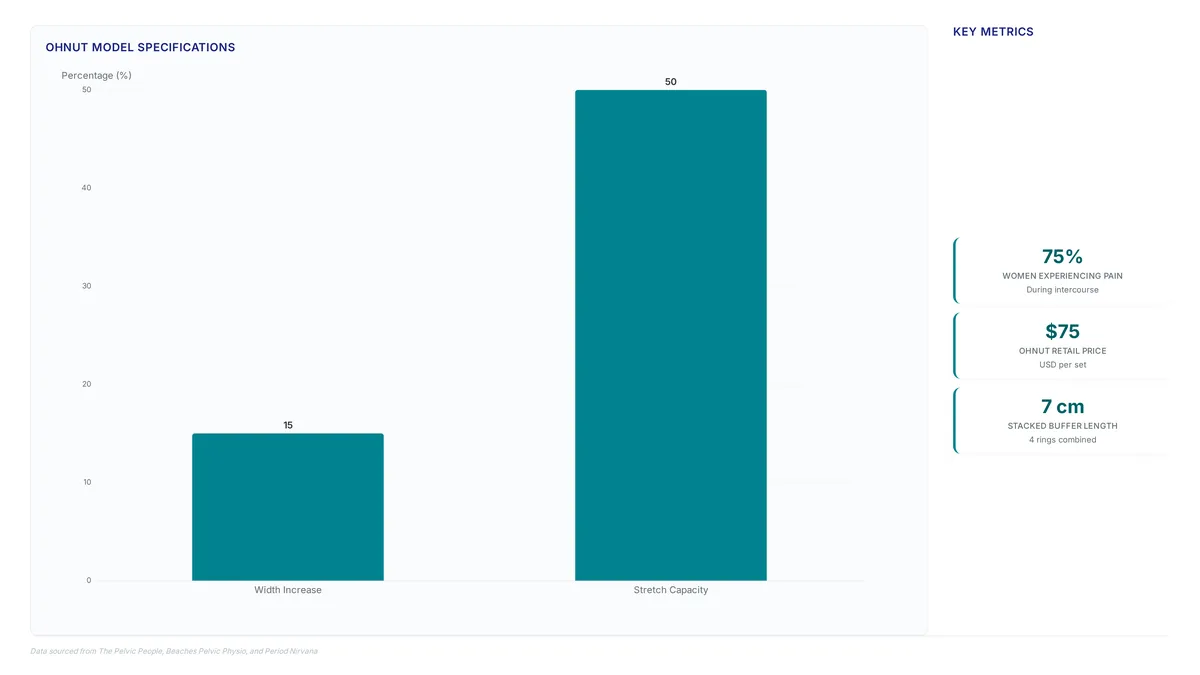
The Wider OhNut model features a modest width increase over the Classic to accommodate diverse girths. This dimensional change shows how modern devices prioritize anatomical precision over generic sizing. The Wider version also offers significantly more stretch capacity, enhancing adaptability for users with larger requirements without sacrificing the buffer effect. A genderless sex toy like the OhNut acts as a medical aid by separating pleasure from pain through physical limitation. This shift requires users to measure and understand their anatomy, turning a simple ring into a data-informed health tool. The "Wider" version of the OhNut is engineered to improved accommodate different anatomies where the standard size may feel restrictive.
Mechanisms Behind Sensor-Based Arousal and Neuromodulation
Lioness Generation 2 Sensor Architecture and Arousal Visualization
Internal accelerometers inside the Lioness Generation 2 translate physical vibrations into visual arousal patterns on a mobile screen. Standard vibrators merely stimulate, yet this hardware captures pelvic floor contractions to map orgasmic events across time. Fretz highlights how technology and data instruct people with vaginas on optimizing pleasure. Competitors often fixate on vibration intensity alone. This architecture prioritizes data visualization so users grasp their unique sexual response cycles. Sensor-driven monitoring differs sharply from mechanical adaptations like the OhNut, which manages depth via physical barriers instead of biometric tracking. Such dependency frames the device as an educational tool for sexual wellness. Value shifts from immediate sensation toward long-term physiological awareness. Blind stimulation cannot achieve the targeted intimacy gains found by understanding internal states.
OhNut Ring-Stacking Mechanics for Customizable Penetration Depth
Four interlocking rings form the OhNut system, creating a stackable buffer worn at the penile base. Penis-owners wear these rings to control penetration depth directly. Deep dyspareunia finds relief through this mechanical limitation rather than muscular control or positional shifts alone. Static toys lack this flexibility. Manual stopping methods feel clumsy by comparison. Partners add or remove rings to tune depth in real-time. Stacking all four rings creates a total buffer length of 7 cm. Precise limits emerge for those managing pain during intercourse.
| Feature | OhNut Rings | Traditional Control Methods |
|---|---|---|
| Mechanism | External physical buffer | Muscular restriction / Positioning |
| Adjustability | Modular (1-4 rings) | Variable / Unpredictable |
| Primary Use | Medical pain management | General pacing / Stamina |
Clinicians recommend this design specifically for medical conditions like deep dyspareunia, separating it from generic size-adjusting rings. Fretz calls it a favorite wearable toy because simple design solves a huge medical problem without complex electronics. Modular construction lets users tune penetration depth precisely. Static-length toys fail to address "size mismatch" concerns this way. Externalizing depth control removes the cognitive load of monitoring thrust distance. Both partners focus on sensation instead of pain avoidance.
Morari Patch Transdermal Neuromodulation Versus Pharmaceutical Treatments
Pharmaceutical treatments distribute active ingredients throughout the entire body to delay ejaculation. This localized approach stands in contrast. Cole notes that wearable technology offers a distinct alternative to existing pharmaceutical options and their associated side effects.
| Feature | Morari Patch | Pharmaceutical Treatments |
|---|---|---|
| Delivery Method | Transdermal patch | Oral ingestion |
| Target Area | Localized perineal nerves | Systemic nervous system |
| Onset Speed | Immediate upon application | Delayed by digestion |
| Side Effect Profile | Minimal systemic exposure | Potential whole-body effects |
A Band-Aid-like patch placed on the perineum delays ejaculation through nerve inhibition. Specialized medical tools cost a minor fraction compared to cumulative expenses for surgeries or ongoing therapies, according to some users. Gastrointestinal distress avoidance provides a strong advantage for individuals with sensitive constitutions. Mechanical inhibition strategies represent a model shift from chemical alteration of neurotransmitters to physical nerve modulation. Pilot studies continue as the team evaluates device efficacy.
Practical Protocols for Using Wearable Rings and Patches
Morari Patch Neuromodulation Mechanism for Delayed Ejaculation
The Morari Medical Premature Ejaculation Device functions as a transdermal-based patch applying neuromodulation to inhibit penile nerves. This mechanism offers a distinct alternative to oral pharmaceuticals by targeting local nerve activity rather than systemic chemistry. Cole describes the wearable patch as a solid alternative to existing treatments, noting that the team is currently conducting a pilot study with promising results. Operators apply the Band-Aid-like device directly to the perineum to achieve delayed ejaculation.
- Clean the perineal skin surface to ensure proper adhesion.
- Place the patch centrally on the perineum between the scrotum and anus.
- Allow the neuromodulation signal to inhibit nerve transmission locally.
Download the mobile application to pair the Lioness Generation 2 hardware via Bluetooth for real-time data streaming. Users must create a personal profile within the interface to calibrate baseline sensitivity before the first session begins. The system records pelvic floor contractions and maps them against time to generate a visual waveform of the experience. Fretz notes this use of technology teaches people with vaginas how to have the best orgasm by making internal states visible. Review the resulting graphs post-session to identify specific stimulation patterns that correlate with higher intensity peaks. This data-driven approach transforms subjective feeling into objective metrics for improved self-understanding.
- Navigate to the device settings menu to adjust vibration intensity curves.
- Select the historical data tab to view previous session waveforms side-by-side.
- Export the arousal patterns file for discussion with a pelvic floor therapist if needed. Visualizing these physiological responses allows individuals to replicate successful protocols rather than guessing at technique. Operators should note that consistent tracking over several weeks reveals cyclical trends invisible during single uses. This longitudinal view supports targeted improvements in sexual satisfaction without requiring expensive clinical equipment.
OhNut Ring Stacking Protocol for Custom Penetration Depth
Start with a single ring to establish a baseline depth before adding layers for gradual adjustment. This approach addresses the reality that a significant majority of women experience pain during intercourse, often requiring precise control rather than static limits. The device functions as a physical buffer, allowing partners to tune penetration depth in real-time without interrupting intimacy.
- Place one stackable ring at the penile base to gauge initial comfort levels.
- Add additional interlocking rings only if deeper penetration triggers discomfort.
- Stop stacking once the desired depth limit prevents cervical contact.
- Remove rings immediately if numbness or excessive pressure occurs.
| Rings Stacked | Approximate Buffer | Use Case Scenario |
|---|---|---|
| 1 | Minimal reduction | Mild sensitivity checks |
| 2 | Moderate limit | Standard depth control |
| 3 | Significant barrier | Pain avoidance protocol |
| 4 | 7 cm total | Maximum depth restriction |
Users reporting avoidance of sex due to pain anticipation find that customizable depth restores intimacy by removing the fear of sudden discomfort. The mechanical simplicity solves a complex medical problem without requiring pharmaceutical intervention or extensive training. Couples should communicate openly about pressure sensations to optimize the penetration depth configuration. Mysteries.love recommends treating this stacking process as an iterative dialogue between partners rather than a fixed setup.
Strategic Adoption of Smart Toys for Couples and Individuals
The Lover App initiates compatibility by guiding users through a Myers-Briggs type personality test to determine their specific sexual phenotype. This science-based methodology translates abstract preferences into actionable data, allowing partners to articulate desires that often remain unspoken due to social hesitation. After establishing a profile, users connect with a partner to engage in a synchronized matching game that reveals shared interests without exposing mismatches. Once you connect with your partner on the app, you can each play a game which decides what sort of kinks and fantasies you'd be down for, and only the ones you both select are revealed. This mechanism protects vulnerability while encouraging exploration of new dynamics within a set safety perimeter.
- Users first complete the individual personality assessment to generate a sexual phenotype profile.
- Partners link accounts to activate the mutual discovery game for kink alignment.
- The system reveals only overlapping interests, maintaining privacy for non-matched preferences.
- Audio and video content supplements these interactive profiles to improve sex life.
Released in February, the platform provides practical exercises alongside its digital assessments. Digital matching cannot replace the nuance of real-time physical feedback during intimate encounters.
Application: Deploying Morari Patch Neuromodulation for PE Management
The Morari Medical device functions as a Band-Aid-like patch placed directly on the perineum to inhibit penile nerves via neuromodulation. This transdermal-based approach offers a non-pharmaceutical alternative for individuals managing premature ejaculation without systemic side effects. Unlike oral medications that affect the entire body, this localized application targets specific neural pathways to delay ejaculation. Cole notes that the wearable patch provides a solid alternative to existing treatments, addressing a gap where many users seek discretion and ease of use. The team is currently conducting a pilot study with reported positive outcomes, suggesting potential for broader clinical adoption. Operators and users must weigh the benefit of a drug-free mechanism against the emerging nature of the technology compared to established pharmaceutical options. For those evaluating smart solutions, this device represents a shift toward wearable medical technology rather than recreational enhancement. Individuals asking if they should try a smart vibrator for performance issues might find this targeted neuromodulation more appropriate than general vibration tools. The distinction lies in the mechanism: one stimulates arousal patterns, while the other actively modulates nerve response to extend duration.
Selection Framework for Wellness-Focused Sex Tech Adoption
Most sextech focuses on improving sexual health and wellness with practical solutions rather than simulating intimacy with robots or virtual girlfriends. Many products now tackle real-world problems such as pain during sex or premature ejaculation. Users asking should I try a smart vibrator must first identify if their goal is arousal tracking or pain management. The market sees a distinct rise in intimate wearables blending technology and biology to solve biological pain points. OhNut serves as a prime example by using material science to address depth issues without electronics. Data collection competes with immediate relief in the current product environment. Devices like the Lioness offer deep insights into arousal patterns, yet a user in acute pain may benefit more from a passive mechanical solution like stackable rings. Selecting a tool requires matching the intervention to the specific complaint rather than chasing feature density. This targeted approach ensures resources address actual barriers to connection.
About
Dr. Ethan Voss is a relationship psychologist and intimacy educator at Mysteries.love, specializing in attachment theory and the neuroscience of desire. His expertise makes him uniquely qualified to analyze the evolving sex tech environment, as he daily translates complex clinical research into practical guidance for adult relationships. While the industry often highlights futuristic robots, Dr. Voss focuses on how smart vibrators and app-controlled devices can genuinely enhance human connection and sexual wellness. At Mysteries.love, published by the Center for the Development of Intimate Relationships, his work bridges the gap between evidence-based psychology and modern intimacy tools. By evaluating these products through a lens of body awareness and communication, he ensures recommendations support deeper emotional bonds rather than just mechanical pleasure. This approach aligns perfectly with the article's thesis that true sex tech growth lies in improving sexual health and supporting authentic connection between partners, grounded in credible science.
Conclusion
The rapid expansion of the sex tech products market reveals a critical breaking point where generic stimulation tools fail to address specific physiological barriers. As the industry valuation climbs, the operational cost of ignoring pain management becomes evident in user abandonment and relationship strain. The shift toward women-led solutions addressing medical issues demands that consumers stop evaluating these tools solely on connectivity or app integration. Instead, the priority must be mechanical efficacy and biological compatibility.
Adopt a strict selection framework by [mid-year] that favors passive, material-based interventions for acute physical complaints over data-heavy electronics. If the primary goal is immediate pain relief during intercourse, choose stackable buffers or width-adjusted rings before considering neuromodulation devices. This approach ensures that the solution matches the biological constraint rather than adding unnecessary complexity. Users should immediately audit their current wellness toolkit to identify if they are using arousal trackers for pain issues, a mismatch that delays effective treatment. Start by replacing one electronic device with a non-motorized, adjustable buffer this week to test if mechanical limitation offers superior comfort compared to active vibration. This tangible swap clarifies whether the barrier to intimacy requires nerve modulation or simple physical accommodation.
Frequently Asked Questions
A standard set costs $75 making it an accessible option for many couples. This price point allows users to access mechanical pain relief without the high cost of ongoing therapy sessions or medical procedures.
The Wider model features a 15% width increase to better accommodate diverse anatomies. This specific design change ensures that users with larger girth requirements can still achieve effective depth control without discomfort or circulation issues.
Approximately 68% of women experience pain during intercourse that depth-limiting tools can help manage. By using stackable rings, partners can customize penetration depth to eliminate this pain and restore intimacy without avoiding sexual activity entirely.
The Wider version provides up to 50% more stretch capacity than the standard model. This enhanced adaptability allows the device to fit various body types securely while maintaining the necessary buffer to prevent deep-penetration pain effectively.
No, these rings function only as a mechanical stop and do not cure conditions like endometriosis. They provide immediate symptom relief for pain, but users should still seek professional diagnostic care for long-term physiological health issues.
References