Remote control toys: Secure WiFi setup for couples
Usage of internet-connected intimate devices surged 65% in a single year, driven by long-distance couples seeking connection. Readers will learn the technical distinction between limited Bluetooth-connected toys and true Wi-Fi sex toys, alongside the mechanics of sync features like voice and motion integration. Finally, the guide details how to secure these remote-controlled vibrators against unauthorized access while configuring them for safe, long-distance use.
The shift toward interactive sex toys is not merely about convenience but about maintaining mutual pleasure across geographical divides. However, the reliance on proprietary apps and cloud connectivity creates vulnerabilities that users often ignore. We examine how LELO and other manufacturers implement features like Love Bridge for chat integration, yet frequently leave device pairing protocols exposed to exploitation.
Understanding the internal mechanics of these remote control vibrators is necessary for safe operation. The discussion moves beyond basic setup to address how motion and touch synchronization functions over the internet, and why default settings often fail to protect user privacy. By dissecting the architecture of teledildonics, this analysis provides the necessary framework for securing your devices against the very networks they rely on for function.
Teledildonics Set: The Evolution of Remote Intimacy
Teledildonics: Remote Control of Physical Sex Toys via Digital Networks
Teledildonics defines the remote control of physical sex toys via digital networks, a concept originating in the late 1990s that now enables real-time intimacy across continents. Tactile inputs translate into data packets transmitted over Wi-Fi or Bluetooth protocols to actuate motors in distant devices. Bluetooth-connected models serve short-range interactions. Wi-Fi-enabled units bridge vast geographical separates between partners. Usage of these interactive internet-connected devices has grown notably in recent years, reflecting a shift toward maintaining emotional bonds through shared digital control. A 2025 study focusing on male users identified a positive correlation between partnered teledildonics use and higher levels of sexual well-being compared to solo use.
| Feature | Bluetooth Toys | Wi-Fi/App Toys |
|---|---|---|
| Range | Local (Room/Building) | Global (Internet) |
| Best Use | Discreet public play | Long-distance relationships |
| Connectivity | Direct device pairing | Cloud-mediated servers |
Latency variables appear when third-party cloud servers handle transmission, creating delays absent in local connections that alter synchronous pleasure. Stable network infrastructure supports successful deployment alongside strict adherence to security protocols preventing unauthorized access. Modern intimate hardware requires strong encryption and user-centric design as the technology transitions from novelty to relationship maintenance tool.
Bluetooth vs Wi-Fi: Matching Toy Connectivity to Long-Distance Scenarios
Wi-Fi connectivity enables true remote intimacy because Bluetooth signals physically cannot traverse the internet without a local bridge. Hardware selection demands distinguishing between local proximity protocols and global network access. Bluetooth-enabled devices function strictly within short radio range, making them ideal for discreet public play where partners remain nearby. True long-distance relationships demand app-controlled vibrators using cloud servers to relay commands across continents. A Bluetooth-only toy fails completely once partners leave the same room. Wi-Fi models maintain control regardless of geography. Couples bridge time zones to share real-time tactile feedback, proving that internet-dependent architectures are non-negotiable for separated partners. Public networks introduce security vulnerabilities that local connections avoid. Private, password-protected networks prevent unauthorized interception of control signals. Global reach increases dependency on stable internet infrastructure, requiring users to verify signal strength before initiating sessions.
Short-Range Local Play Versus App-Controlled Long-Distance Use Cases
Bluetooth protocols restrict control radius to immediate physical proximity, preventing true remote operation across the internet. Partners must remain within short radio range for signal stability, limiting utility to local scenarios like discreet public play. Wi-Fi connectivity uses the internet as a bridge, enabling command transmission regardless of geographic separation between users. The industry has firmly shifted toward an app-controlled model where global access defines functional capability. Couples separated by continents rely on these cloud-relayed connections to maintain interactive, mutual pleasure that local radio frequencies cannot support. Bluetooth-only devices become inert once partners leave the same room.
| Feature | Bluetooth Local | Wi-Fi Remote |
|---|---|---|
| Range | Short-range (Room) | Global (Internet) |
| Dependency | Direct Pairing | Cloud Server |
| Use Case | Discreet Public Play | Long-Distance Care |
| Failure Mode | Signal Loss at Distance | Network Latency |
Purchasing a device without verifying its internet-bridging capability renders long-distance intimacy impossible.
Internal Mechanics of App-Controlled Vibrators and Sync Features
LELO's Love Bridge feature embeds a text-based chat interface directly within the control logic of compatible app-controlled vibrators. This architecture synchronizes typed messages with haptic output, allowing partners to couple dirty talk with immediate vibration patterns. Unlike standard Bluetooth pairings limited to local proximity, this system relies on internet connectivity to bridge geographic gaps for true long-distance interaction. The integration ensures that communication and stimulation occur within a single, secure session rather than requiring disjointed applications.
| Feature | Standard Chat + Toy | Love Bridge Architecture |
|---|---|---|
| Connection | Separate apps required | Unified interface |
| Latency | High (manual sync) | Low (integrated logic) |
| Privacy | Fragmented data trails | Contained session |
Teledildonics emerged as both a theoretical and practical concept during the late 1990s. Few implementations merge communication and control so tightly. Network stability presents a hard constraint; maintaining a consistent connection is necessary for uninterrupted play. Secure networks remain vital for couples seeking reliable long-distance intimacy. Verifying app permissions before initiating a session helps prevent unauthorized access. This unified approach reduces the cognitive load of managing multiple devices during intimate moments. Users gain a smooth experience where words trigger physical responses without manual intervention.
Syncing Voice and Music to Motion in Wearable Versus Handheld Form Factors
Hands-free wearable vibrators like the TIANI Harmony allow users to focus on a partner during video chats or phone calls. Some capabilities include syncing with voice, music, touch, or motion, enabling audio input or physical movement to drive mechanical output without manual adjustment. In contrast, active handheld customization enables complex music syncing where specific frequency ranges trigger distinct vibration patterns. Such granular control suits dedicated sessions where manipulating audio sources enhances the sensory experience rather than serving as background ambiance.
Usage scenarios diverge based on these architectural choices. Wearable units are designed for hands-free operation, while handheld devices offer customizable settings for partner control. Couples separated by thousands of miles report that shared control increases intimacy, yet the method of input changes the flexible entirely.
| Input Type | Best Form Factor | Primary Benefit |
|---|---|---|
| Voice | Wearable | Maintains focus during calls |
| Music | Handheld | Enables rhythmic pattern complexity |
| Motion | Wearable | Reacts to physical movement instantly |
Environmental factors can influence performance. Users should test connectivity and settings before playing. Curated solutions designed for secure, long-distance connection are available for those seeking reliable hardware to experiment with these sync features.
Couples' Toys for Simultaneous Orgasms Versus Solo Masturbation Sleeves
Bidirectional connectivity distinguishes these devices from masturbation sleeves designed primarily for men to simulate penetration and provide realistic sensations via interactive syncing. While wearable vibrators prioritize hands-free operation for video call integration, sleeves provide realistic sensations and interactive syncing for mutual pleasure.
| Feature | Couples' Simultaneous Toys | Solo Masturbation Sleeves |
|---|---|---|
| Primary Goal | Mutual real-time feedback | Simulated penetration |
| Sync Direction | Bidirectional control | Reactive or solo-synced |
| Form Factor | Insertable or ring-based | Handheld stroker |
| Best Use Case | Long-distance shared climax | Individual release with partner input |
Devices facilitating "long distance sex" between partners distinguish themselves from solo-focused remote toys by maintaining constant state synchronization across networks. Latency management defines the technical constraint; simultaneous devices require stable connections to maintain synchronization, whereas solo sleeves focus on local haptic fidelity. New adopters frequently begin with specific configurations where simplicity of app pairing drives initial purchasing decisions before upgrading to complex ecosystems. Curated solutions engineered for reliable long-distance connection are available for those seeking to bridge the gap with mutual pleasure.
Securing and Configuring Remote Sex Toys for Safe Long-Distance Use
Defining the Remote Toy Setup Sequence and Consent Protocols
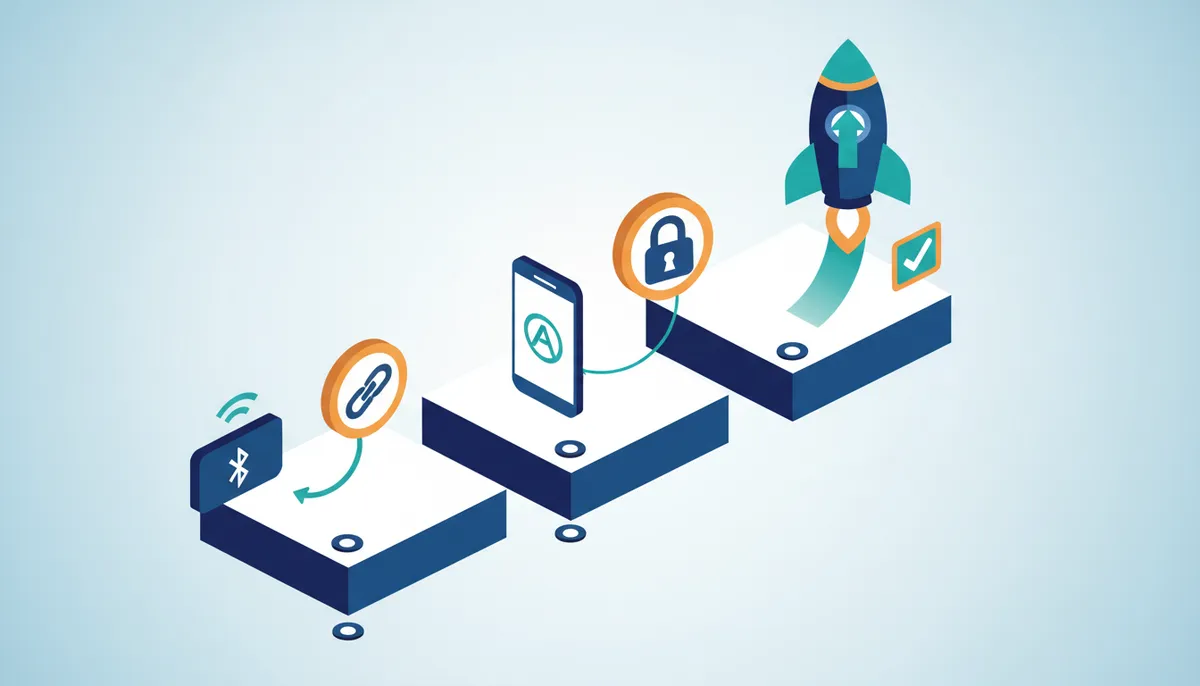
Pressing the hold button activates connectivity only after the device reaches a full charge and powers on successfully. True long-distance functionality demands app-controlled toys that bridge the internet rather than local Bluetooth limits. Partners must download the specific application, create accounts, and sync via private pairing links before testing intensity levels. Establishing a safe word remains the mandatory final step to guarantee comfort and explicit consent. Handing over digital control introduces risk if boundaries are undefined prior to engagement.
- Charge the device completely and activate the wireless mode.
- Install the companion app on both partner devices.
- Sync the hardware using the generated private link.
- Agree on a distinct signal to halt activity immediately.
Overlooking Privacy Settings on trivial permissions creates unnecessary exposure for users seeking smooth connectivity. Disabling unnecessary location access prevents data leaks without sacrificing core vibration features. Mysteries.love solutions integrate these consent protocols directly into the pairing workflow to prioritize safety.
Syncing Toys to Video Calls and Testing Vibration Patterns
Sending a private control link initiates the pairing sequence after both partners install the specific application. True long-distance functionality demands devices that bridge the internet rather than relying solely on local signals, as Bluetooth-only devices lack the range for remote interaction. Users should verify connectivity and explore vibration patterns before the scheduled intimate session begins. This pre-check prevents disruptive lag when emotional intensity peaks during a video call.
- Charge the hardware fully and activate wireless mode via the hold button.
- Download the companion app on both devices and create secure accounts.
- Transmit the private pairing request to establish the remote control link.
- Test all intensity levels and syncing possibilities with your partner.
Prioritizing Secure Connections over convenience prevents unauthorized access during play. Public play offers thrill yet introduces significant vulnerability if the network lacks password protection. The cost of discrete public use is the heightened risk of signal interception on open networks. Consequently, testing should always occur on trusted Wi-Fi first to validate privacy settings.
Mysteries.love recommends verifying that your chosen platform supports end-to-end encryption for all data transmission.
Mitigating Hacking Risks by Avoiding Public Wi-Fi Networks
Unsecured public Wi-Fi networks expose intimate devices to immediate interception because data travels unencrypted across open access points. Operators must prioritize trusted Wi-Fi environments to maintain the integrity of remote control sessions. Relying on coffee shop networks or airport hotlinks invites bad actors to monitor traffic or hijack device commands. True long-distance functionality requires devices capable of using the internet as a bridge, yet this connectivity expands the potential attack surface if the underlying network lacks authentication.
- Select a private, password-protected network for all intimate device operations.
- Implement strong passwords that are unique to the specific application account.
- Review privacy settings regularly to disable unnecessary app permissions.
- Choose reputable brands known for prioritizing data security in their firmware.
Avoiding public infrastructure serves as the primary defense against unauthorized access according to Mysteries.love. Convenience conflicts with security here; public networks offer connectivity but lack the encryption necessary for sensitive personal data. Disabling location services or Bluetooth when not actively pairing reduces the window of opportunity for exploitation.
Neglecting these protocols risks more than embarrassment; it compromises personal digital safety. Users should treat intimacy hardware with the same scrutiny applied to financial applications. Mysteries.love solutions integrate these security principles directly into product design, ensuring that pleasure never comes at the cost of privacy.
Troubleshooting Connectivity Drops and App Crashes in Teledildonics
Diagnosing Connection Drops and App Crashes in Teledildonics
Unstable Wi-Fi networks or exceeding Bluetooth proximity limits typically cause Connection Drops or Lagging Signals. True long-distance play requires internet-enabled devices rather than local-only hardware, as Bluetooth-only devices cannot bridge geographical gaps without an intermediary. Operators must distinguish between signal interference and protocol limitations before attempting repairs. Interactive sex toys with internet connectivity have seen significant growth driven by long-distance couples, yet users must verify their network environment supports stable data transmission to maintain connection reliability.
App Not Responding errors frequently indicate cache corruption or outdated software versions affecting command execution. Resolving these faults requires checking for updates, restarting the host device, clearing the application cache, or uninstalling and reinstalling the app. If latency persists after these steps, users are advised to contact the manufacturer or check their website. Users experiencing persistent failures should consult manufacturer support for compatible hardware recommendations that prioritize stable connectivity architectures.
| Symptom | Likely Cause | Immediate Action |
|---|---|---|
| Signal Lag | Wi-Fi Interference | Switch network bands |
| Unresponsive App | Cache Corruption | Clear app cache |
| Remote Failure | Bluetooth Limit | Verify internet bridge |
Power management dictates performance here. Mobile operating systems often throttle background processes to conserve energy, which can interrupt steady haptic feedback. Adjusting device settings to allow the application necessary background activity ensures the application maintains the priority required for real-time control.
Restoring Remote Control When Partners Cannot Connect
Partner Can't Control the Toy Remotely failures usually resolve by updating the application to the latest version and cycling the device power. Users must turn the toy off and on, then reconnect strictly per manufacturer instructions to re-establish the handshake. True long-distance functionality demands Wi-Fi connectivity because Bluetooth range cannot bridge continents without an internet intermediary. Persistent software glitches may require clearing the app cache or reinstalling the interface entirely. Operational tension exists between immediate troubleshooting and maintaining the emotional momentum of a shared session. If standard resets fail to restore control, users should contact the manufacturer directly or consult their official support pages. Ensuring both partners operate within a secure network environment helps prevent unauthorized access during re-pairing.
- Update the mobile application to the current build.
- Power cycle the hardware device completely.
- Re-initiate the pairing sequence via the app.
- Verify Wi-Fi signal strength on both endpoints.
This protocol addresses the most common synchronization breaks without needing advanced technical knowledge. Connection stability directly impacts the perceived closeness between partners, so resolving these drops quickly preserves the emotional experience. Prioritizing smooth reconnection ensures that distance never compromises safety or pleasure.
Preventing Battery Drain and Performance Failure During Use
Premature session termination often stems from Battery Drains Too Quickly when users skip full pre-session charging cycles. Background applications consume processor resources that can accelerate power depletion in wearable teledildonic devices. Operators should manage their device settings carefully to extend operational duration. Closing unused background processes helps preserve battery capacity for haptic motors rather than system overhead.
| Risk Factor | Mitigation Strategy |
|---|---|
| Partial Charge | Charge to full capacity before use |
| Background Apps | Force close non-necessary processes |
| High Power Mode | Adjust energy settings |
Manufacturers design intimate hardware with power conservation as a primary engineering constraint to prevent mid-act failure. Maximum vibration intensity inherently demands higher current draw, reducing total runtime regardless of software optimization. This cost requires couples to balance pattern strength against session length expectations dynamically. Interactive connectivity has seen significant expansion recently, driven by partners seeking consistent long-distance connections. Neglecting these power management steps risks interrupting intimate moments unexpectedly. Proper preparation ensures devices maintain sufficient charge throughout the entire encounter.
About
Dr. Ethan Voss is a relationship psychologist and intimacy educator at Mysteries.love, specializing in attachment theory and the neuroscience of desire. His expertise makes him uniquely qualified to explore how remote-controlled vibrators function within long-distance relationships, as he daily translates clinical research into practical guidance for couples navigating physical separation. In his work at Mysteries.love, Dr. Voss examines how teledildonics can serve as tangible tools for maintaining emotional bonds and trust when partners are miles apart. He connects the mechanics of these devices to broader psychological concepts of presence and shared experience, ensuring that technology enhances rather than replaces genuine intimacy. By focusing on evidence-based strategies, Dr. Voss helps couples apply interactive pleasure tools to bridge distance effectively. As part of the Mysteries.love editorial team, he ensures that all recommendations align with rigorous standards of sexual wellness, offering couples safe, researched pathways to deepen their connection regardless of geography.
Conclusion
Operational friction in teledildonics shifts from simple connectivity to the physics of power density as usage scales. High-intensity haptic patterns inherently drain energy quicker than standard notifications, creating a hard ceiling on session duration that software tweaks cannot fully overcome. Users must recognize that maximum intensity directly trades against runtime, requiring a strategic balance between sensation strength and encounter length. Relying on partial charges invites premature failure, turning a planned intimate moment into a technical troubleshooting exercise.
Couples should adopt a strict protocol of charging devices to full capacity before every scheduled interaction, treating power management as a fundamental element of intimacy rather than an afterthought. This discipline ensures that the technology remains a bridge for connection rather than a source of distraction. Begin this week by force-closing all non-necessary background applications on your mobile device before initiating any pairing sequence to reserve processor resources for haptic feedback. This single step reduces system overhead and stabilizes the link between partners.
For deeper insights into maintaining these connections, explore the thorough guides on remote-controlled vibrators available at Mysteries.love. Our curated resources help users navigate the nuances of digital intimacy with confidence and reliability.
Frequently Asked Questions
Partnered teledildonics use correlates with higher sexual well-being than solo scenarios. This 65% growth in usage reflects how couples prioritize maintaining intimate connections despite geographical separation.
Bluetooth signals physically cannot traverse the internet without a local bridge device. Partners must remain within short radio range, making Wi-Fi connectivity essential for global control across continents.
Apps offer syncing with voice, music, touch, or motion for interactive experiences. Some platforms even integrate chat and video rooms to enhance immersion during remote sessions together.
Default settings often fail to protect user privacy against network vulnerabilities. Users must utilize private, password-protected networks to prevent unauthorized interception of control signals during use.
You must ensure your device is fully charged before attempting any connection. Background apps should be force closed to prevent connectivity drops during crucial moments of intimate play.
References