Orgasm reflexes: separating climax from satisfaction
Wanting more sex after climax isn't a dysfunction; it is a standard biological response ignored by reductive cultural scripts.
The prevailing myth that an orgasm equals completion forces many to pathologize their natural capacity for continued desire. Heather Corinna's 2026 analysis of reader experiences dismantles the assumption that reaching a peak necessitates an immediate end to intimacy, framing this persistence not as addiction but as a valid pursuit of complete sexual satisfaction. This perspective aligns with broader 2026 wellness trends identified by Sex City Shop, which highlight a critical shift away from performance-based metrics toward experiences prioritizing safety, presence, and nervous system regulation over rigid optimization.
Readers will learn to distinguish between automatic orgasm reflexes and the conscious choice to extend intimacy, rejecting the notion that physical sensitivity mandates cessation. The discussion exposes how cultural myths regarding reproductive efficiency clash with biological reality, where post-climactic desire often signals deep connection rather than insufficiency. Finally, the text offers concrete communication strategies for partners to navigate these extended sessions, ensuring that the drive for "seconds" fosters deeper emotional bonds rather than anxiety about never feeling "done.
The Distinction Between Orgasm Reflexes and Complete Sexual Satisfaction
Orgasm as Involuntary Nervous System Reflex Versus Emotional Satisfaction
Genital contractions hit every 0.8 seconds. That is the orgasm. It is an involuntary reflex, a nervous system spike defined strictly by Silvia Cintrano as a physiological response to stimulation. It carries no inherent signal that the emotional experience is over. The reflex concludes; the urge for intimacy frequently does not. Sexual satisfaction encompasses emotional connection and sustained arousal, refusing to terminate at the climax. Research indicates that post-orgasmic desire and genital temperature decrease more quickly for men than for women, allowing females to maintain higher arousal potential. This biological divergence explains why partners may experience different endpoints for the same encounter despite shared chemical releases like oxytocin.
Cultural myths equating climax with completion force individuals to interpret normal continued desire as a deficit. Market data reflects this confusion through significant consumer spending on tools designed to bridge satisfaction gaps, suggesting many seek mechanical solutions for a definitional error. Untreated misconceptions about dysfunction can lower the desire to participate in intercourse, potentially impacting long-term relational stability. Operators of intimate relationships must decouple the reflex from the relationship goal. Extending interaction past the involuntary spike allows couples to align physical output with emotional needs. Ignoring this distinction risks pathologizing healthy variance in sexual response cycles.
Morgan's Case Study: Multiple Orgasms Without Feeling Sexually Done
Morgan sought continued intimacy after multiple climaxes. This illustrates that orgasm satisfaction differs fundamentally from emotional fulfillment. Heather Corinna identifies this pattern not as a disorder but as a normal variation where the involuntary nervous system reflex concludes while desire persists. Physiological data confirms that women often possess a non-existent refractory period), allowing sustained arousal where men typically face a hard stop. This biological reality means physical climax does not signal the end of sexual desire) for many individuals. The distinction lies in oxytocin release patterns that maintain bonding motivation long after the initial reflex fades.
Cultural myths incorrectly equate a single peak with completion, causing unnecessary anxiety about whether one's sexual desire is normal. Morgan's case proves that wanting more sex after climax represents healthy engagement rather than addiction. Corinna explicitly states there is no such thing as sex addiction, framing the urge for "seconds" as a positive indicator of enjoyment. Operators of intimate relationships must decouple the mechanical event from the complete experience. Extending intimacy beyond the peak requires rejecting the reproductive-only model of sex. The limitation of ignoring this distinction includes reduced relationship quality and unfounded self-doubt regarding emotional satisfaction.
Pop culture depictions frame orgasm as a terminal event, yet physiological evidence confirms sexual activity often continues past climax. This myth stems from reproduction-focused ideals rather than the reality of complete sexual satisfaction. A narrative review of neurochemical mechanisms 1093/sxmrev/qeaf023/63129163/qeaf023. Pdf) reveals that post-climactic brain chemistry frequently sustains arousal instead of inducing immediate satiety. The belief that one must stop creates unnecessary psychological friction for partners seeking extended connection. Expanded Sexual Response case studies document individuals experiencing continuous trains of orgasms, directly contradicting the single-climax cultural belief Such data proves that ending sex immediately after an orgasm ignores the potential for deeper intimacy. The constraint of adhering to this restrictive script includes reduced relational quality and unmet emotional needs. Operators of their own sexual lives must recognize that the involuntary nervous system reflex does not mandate cessation.
- Pop culture dictates a hard stop after climax.
- Neurochemical data supports sustained desire post-orgasm.
- Case reports validate extended pleasure sequences.
- Restrictive myths undermine potential relationship stability.
- Biological variance demands flexible relational scripts.
Ignoring these biological realities limits couples to deeply average experiences. Extending intimacy beyond the initial reflex allows partners to explore the full spectrum of orgasm satisfaction.
Cultural Myths Versus Biological Reality in Post-Orgasmic Desire
Cisgender Refractory Periods Versus Sustained Female Arousal Capacity
Cisgender men face a physiological impossibility: immediate re-orgasm. A distinct refractory period) triggers neurochemical shifts that block further climax. This biological constraint contrasts sharply with the capacity for sustained arousal found in many women and queer experiences, where the refractory window is often non-existent or negligible. Post-orgasmic sexual arousal and genital temperature decrease more quickly for males compared to the sustained arousal potential observed in females, creating a fundamental divergence in sexual timelines.
| Biological Factor | Cisgender Male Response | Female/Queer Capacity |
|---|---|---|
| Refractory Mechanism | Immediate physiological block | Short or absent duration |
| Neurochemical Shift | Dopamine drop, prolactin surge | Sustained dopamine levels |
| Re-orgasm Potential | Physiologically impossible | Multiple peaks possible |
The cultural script equating orgasm with completion fails because it universalizes male biology rather than reflecting human diversity. Queer people usually know improved because their experiences differ from heteronormative expectations, yet straight couples often struggle with this mismatch. The limitation of this male-centric model is that it forces partners to cease intimacy precisely when one party retains high desire. Operators of relationships must recognize that feeling "not done" is a normal variation driven by slower neurochemical cooldowns. Extending intimacy beyond the single climax requires discarding the reproduction-focused narrative in favor of evidence-based understanding. Couples addressing incomplete feelings after climax should evaluate satisfaction using six specific factors rather than biological finality. Dana Ménard and Peggy Kleinplatz found that partners reporting mutually extraordinary sex prioritize elements beyond the involuntary reflex of orgasm. These individuals treat climax as a bonus event, not the termination signal for intimacy.
| Factor Type | Focus Area | Continuation Signal |
|---|---|---|
| Internal State | Being fully present | Desire for sustained connection persists |
| Relational | Intense emotional connection | Partner seeks deeper vulnerability |
| Experiential | Feelings of transcendence | Activity feels like play, not performance |
Operators of sexual relationships often misinterpret the neurochemical cascade as a shutdown command when it actually supports prolonged bonding. Dopamine drives desire while oxytocin fosters attachment, chemicals that remain active post-climax especially in women. The limitation of the "orgasm equals done" script is its failure to account for this sustained arousal potential which outlasts the brief 0.8second contraction intervals of the reflex itself.
Apply these criteria to decide whether to continue:
- Assess if emotional connection feels unfinished despite physical release.
- Determine if the interaction retains qualities of authenticity and surrender.
- Verify that continued activity serves transcendence rather than mere repetition.
Ignoring these signals creates a tension where partners stop prematurely to satisfy cultural myths, inadvertently lowering relationship quality. The cost of untreated dissatisfaction includes reduced relational stability, a risk observed in clinical updates regarding post-orgasmic distress syndromes published in the International Journal of Impotence Research. Couples who extend intimacy based on these factors report higher satisfaction rates than those adhering to rigid biological endpoints.
The Satisfaction Gap: 85% Male Belief Versus 64% Female Self-Report
Stopping intimacy based on a partner's climax creates a physiological mismatch where 85% of men assume completion while only 64% of women self-report the same level of finality. This statistical divergence drives the common problem of feeling incomplete after sex, as male partners often cease activity precisely when female sustained arousal potential remains high. The biological mechanism involves divergent neurochemical timelines; while prolactin induces satiety in men, oxytocin release in women frequently fosters continued attachment and desire post-orgasm. Couples must decouple the mechanical event of climax from the emotional metric of satisfaction to prevent chronic dissatisfaction. Extending intimacy beyond the first peak allows partners to align their disparate biological recovery curves. Ignoring this gap perpetuates a cycle where one partner feels rushed while the other feels confused by the lack of closure. True resolution requires active communication rather than relying on assumed physiological cues.
Strategies for Extending Intimacy and Communicating Needs Beyond Climax
Defining Open Curiosity as a Framework for Post-Orgasm Exploration
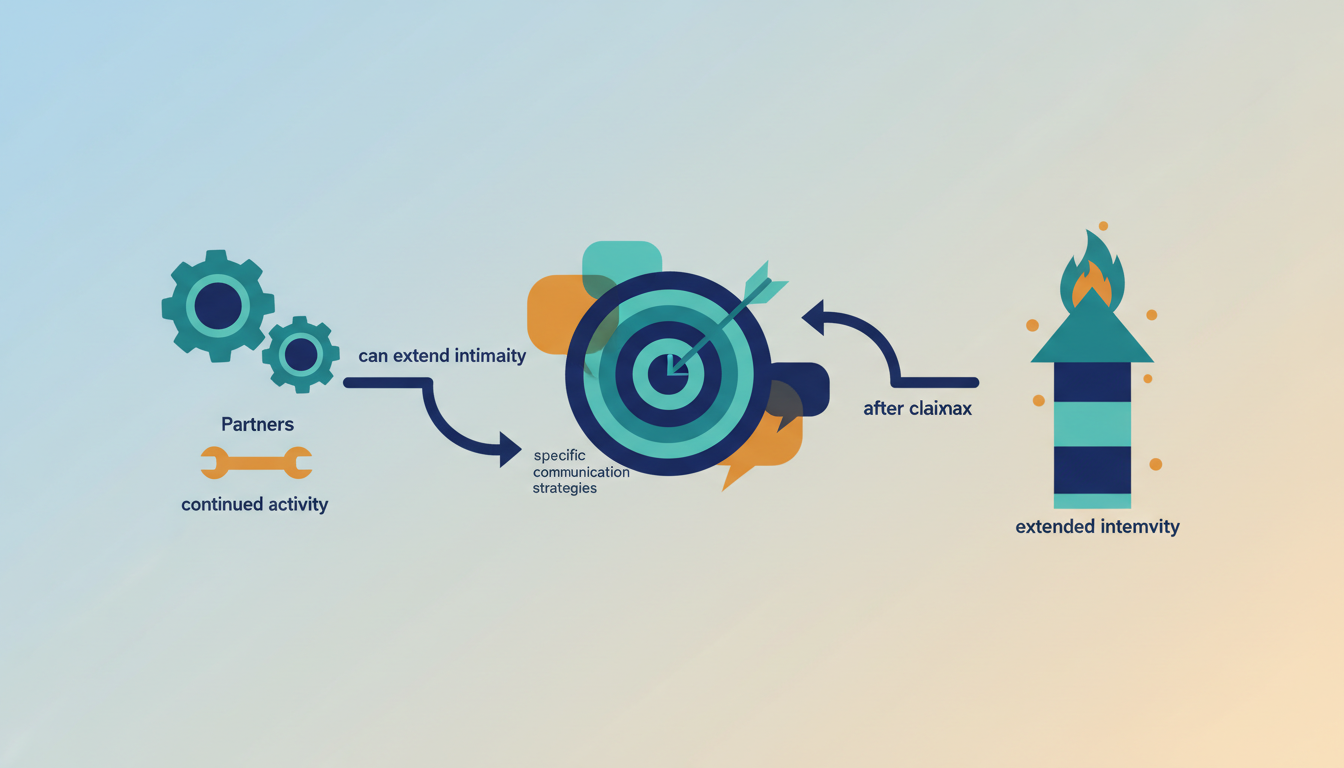
Treat post-climax desire as data. This replaces the urge to fix a perceived error with a chance to learn. Corinna advises partners to enter this phase with open, stress-free curiosity, acting like explorers mapping unknown territory rather than technicians repairing broken hardware. This mental model discards the cultural rule that orgasm signals an end point. Neurochemical dips in men often contrast with sustained oxytocin release in women, a biological reality that drives further connection instead of closure. Intent defines the operational difference here. Problem-solving attempts to eliminate feelings of incompleteness while curiosity seeks to understand their origin. Couples adopting this stance investigate whether the drive for continuation stems from high-quality engagement or unmet specific satisfaction factors.
Home-based programs using this non-linear approach report that roughly 72% of participants achieve improved orgasm-related outcomes by decoupling climax from finality. Vulnerability remains the primary constraint of this framework. Partners must resist the urge to label sustained arousal as addiction or dysfunction. True sexual satisfaction emerges when couples accept that nervous system reactions do not dictate relationship timelines. Editorial Mission guidance suggests that viewing the search for answers as its own kind of fun transforms potential conflict into an enriching joint venture.
Many years, sometimes decades, are required for couples to fully map the specific satisfaction factors that extend intimacy beyond a single climax. This extended timeline allows partners to move past the involuntary nervous system reflex of orgasm and identify unique desires for different dynamics or additional activities. Familiarity and connection over time serve as the primary mechanism for this discovery. Partners understand exactly what they want without the pressure of immediate performance. They approach this phase with open curiosity, treating the post-orgasm window as an opportunity for exploration rather than a signal to stop.
Neurochemistry supports this extension. Dopamine dips in men often induce sleepiness while women frequently experience continued oxytocin release that fuels the motivation for post-coital cuddling. Ignoring this biological divergence creates unnecessary distance when one partner remains chemically primed for connection. Untreated misunderstandings about these timelines can lead to reduced quality of life and potential relationship tolls if dissatisfaction persists unaddressed. Couples who use long-term familiarity avoid these pitfalls by normalizing the desire for more.
Operational success depends on rejecting the cultural myth that orgasm equals completion. Partners must actively communicate needs using clear dialogue scripts that frame further activity as enrichment. This approach transforms the post-climax period from an awkward silence into a sustained period of mutual discovery. A relationship functioning on autopilot is the penalty for skipping this step. Deep, evolving connection requires active participation.
Checklist for Identifying Specific Satisfaction Factors Beyond Orgasm
Partners must distinguish between high-quality engagement and unmet depth needs by auditing specific satisfaction factors. Corinna suggests the desire for continuation often signals that current experiences are highly proven rather than defective. Operators should verify if the drive to proceed stems from genuine enjoyment or a gap in relationship psychology integration.
- Assess whether the post-orgasm urge feels like an extension of pleasure or a compulsion to fix a deficit.
- Determine if the partner seeks different dynamics such as power exchange to access deeper emotional layers.
- Evaluate if the refractory period mismatch creates a false signal of completion for one participant.
| Indicator | Quality Signal | Depth Need |
|---|---|---|
| Physical Sensation | Sustained arousal without pain | Numbing or disconnect |
| Emotional State | Playful curiosity | Anxiety about ending |
| Partner Sync | Mutual exploration pace | Divergent energy levels |
Biological constraints differ notably. Men face a physiological impossibility for immediate re-orgasm whereas women often lack this hard stop. Ignoring this divergence risks relationship tolls where one partner misinterprets the other's continued desire as dissatisfaction. Data indicates that 75% of subjects in clinical trials restored function through targeted stimulation, yet Morgan's case requires no repair. The Editorial Mission advises treating this phase as an expedition where open curiosity replaces problem-solving protocols. Couples failing to identify these factors often truncate intimacy prematurely. They miss the complete wellness potential inherent in extended connection.
Reframing Sexual Success Through Individual Variation and Emotional Connection
Defining Sexual Success Beyond the Reproductive Script
Corinna compares post-orgasm desire to asking for seconds and maybe even thirds of a meal, framing continuation as valid appetite rather than pathology. This perspective dismantles the reproductive script where climax equals termination, a myth largely derived from pop culture depictions instead of biological reality. An orgasm functions as an involuntary nervous system reflex that does not inherently signal completion or satisfaction for every individual. The cultural assumption that sex must end after climax often ignores the sustained arousal potential present in many partners, creating a mismatch in expectations.
| Expectation Source | Set Outcome | Actual Variation |
|---|---|---|
| Reproductive Script | Climax ends activity | Desire often persists |
| Cultural Myth | Orgasm equals finish | Satisfaction is complete |
| Physiological Reality | Reflexive release | Continued connection possible |
Consumer behavior reflects this disconnect, with 59% of users purchasing technology specifically for arousal, indicating a market demand for tools that extend pleasure beyond single events. Untreated discrepancies in sexual expectations can lead to significant relationship tolls, reducing quality of life when partners misinterpret continued desire as dysfunction. Success requires shifting focus from a binary finish line to a complete model of emotional connection and shared exploration. Couples who reject the "orgasm equals done" mandate often discover deeper intimacy through extended engagement. Defining success by individual variation allows partners to validate their unique timelines without pathologizing normal responses.
Operators must audit whether the post-orgasm drive stems from genuine enjoyment or a deficit. Sexual health education now incorporates pleasure anatomy to support this complete wellness framework. Ignoring these signals leads to unnecessary pathologizing of normal variation. Editorial Mission advises couples to treat the post-climax window as a data collection phase instead of a closure event. This approach transforms confusion into actionable insight regarding deep emotional needs.
The Risk of Misdiagnosing Desire as Dysfunction or Addiction
Labeling sustained post-orgasm desire as pathology ignores the strong consensus rejecting sex addiction in favor of normal individual variation. Heather Corinna asserts there is no such thing as sex addiction, framing continued arousal as a valid appetite for more of a good thing rather than a defect. Clinicians face a diagnostic consensus gap where conflicting studies on female dysfunction complicate standardized treatment protocols for patients reporting unmet needs. Diagnostic Consensus reveals that some research cites hypoactive sexual desire disorder as primary while others identify difficulty achieving orgasm, creating confusion for those feeling not done after climax.
About
Dr. Ethan Voss serves as a Relationship Psychologist and Intimacy Educator at mysteries. Love, bringing specialized expertise in the neuroscience of desire and attachment theory to this discussion on sexual satisfaction. His background as a former clinical psychologist and researcher at the University of Amsterdam uniquely qualifies him to address why individuals like Morgan may feel incomplete despite experiencing multiple orgasms. In his daily practice, Voss analyzes the complex interplay between chemical responses and emotional connection, helping couples distinguish between physical release and genuine psychological fulfillment. This article directly reflects his professional work bridging evidence-based research with practical intimacy education. By using insights from his tenure at mysteries. Love, a platform dedicated to modern sexual wellness, Voss provides a factual, non-judgmental framework for understanding post-orgasmic dissatisfaction. His approach ensures readers receive grounded guidance on navigating the detailed environment of modern intimacy and deep relational bonding.
Conclusion
Relationship friction often stems not from dysfunction, but from the operational cost of ignoring the 0.8-second reflex gap. When partners treat the post-climax window as a hard stop rather than a transition, they inadvertently manufacture dissatisfaction where none biologically exists. The data suggests that continuing engagement beyond the initial contraction cycle is not compulsive but a valid physiological requirement for the majority of women to reach parity with male perception. Ignoring this mismatch creates a recurring debt of unmet needs that compounds over time, eroding intimacy quicker than any single conflict could.
Couples must adopt a nonlinear engagement model immediately, specifically committing to a minimum fifteen-minute continuity protocol after the first peak for the next thirty days. This timeline allows the nervous system to recalibrate without the pressure of immediate performance or the assumption of finality. Do not wait for a crisis to implement this; start by auditing your current post-climax routine this week to identify exactly where the interaction terminates relative to the 0.8-second interval. Measure the duration of connection after the initial reflex and extend it by five minutes per session. This specific, measurable adjustment bridges the statistical gap between assumed and actual satisfaction, turning a moment of potential disconnect into a verified opportunity for deeper alignment.
Frequently Asked Questions
No, wanting more sex is not addiction but a normal desire for a good thing. Heather Corinna confirms there is no such thing as sex addiction in this context.
Orgasm is an involuntary reflex with contractions every 0.8 seconds, distinct from emotional satisfaction. This brief physical event often ends while the urge for intimacy persists.
A physiological mismatch exists where 85% of men assume completion while only 64% of women feel the same. This gap causes confusion about whether the encounter should continue.
Yes, women often have a non-existent refractory period, allowing sustained arousal where men typically face a hard stop. This biology supports continued desire after the initial reflex.
No, experiencing multiple orgasms without feeling done is a healthy variation, not a disorder. Roughly 72% of participants using a nonlinear approach report achieving improved orgasm outcomes.