Multisensory intimacy: Why touch beats talk therapy
Satisfaction rates with multisensory intimacy technologies reportedly double compared to non-multisensory alternatives like traditional pornography. This isn't just a feature upgrade; it's a biological imperative. Modern healing tools addressing the nervous system deliver superior outcomes for disconnected couples because they bypass the cognitive bottlenecks that stall conventional talk therapy.
We are looking at how multisensory integration, layering touch, sound, and scent, regulates biological stress responses in real-time. Unprocessed relational trauma and shame around sexual identity often render standard communication skills useless. Engaging multiple senses signals safety directly to the brain, allowing individuals to sidestep the deep-seated anxiety that blocks physical closeness.
Organizations like Embodied Wellness and Recovery apply these neuroscience-grounded principles to treat relational wounds where words fail. Embodied awareness practices outperform isolated talk therapy for mismatched libidos or chronic stress because true intimacy demands a physiological state of safety. Only complete, multi-sensory strategies reliably restore that state.
The Neurobiology of Connection and the Role of Somatic Therapy
Somatic Therapy and Polyvagal Theory in Sexual Healing
Somatic therapy rejects the idea that cognition drives emotion. Instead, it centers the body's lived experience of memory and safety. This modality helps individuals locate the specific physical tension blocking pleasure, rewiring shame-based responses through direct bodily awareness. Providers like Embodied Wellness and Recovery use these methods to soothe stored stress and restore an internal "yes."
Polyvagal theory maps the mechanism: safety signals regulate the nervous system. When the ventral vagal pathway activates, the body shifts from defense to social engagement. This is the biological prerequisite for connection. Without it, intimacy triggers survival states, not joy.
Trauma-informed care integrates these insights to prevent re-injury. Standard sex advice often ignores nervous system capacity, overwhelming survivors with unprocessed wounds. A trauma-informed approach prioritizes consent, pacing, and choice. Safety must precede desire. Bypassing these protocols reinforces trauma pathways rather than healing them.
Neural processing of multisensory integration occurs in distinct latency windows. Early modulation happens between 100, 200 ms and late modulation between 300, 700 ms after stimulus onset. This rapid timeframe highlights why engaging multiple senses is non-negotiable for regulation. It activates the ventral vagal pathway, signaling to the brain that it is safe to connect and receive pleasure.
Repattern Touch Experiences Using Consent-Based Exercises
Consent-based exercises rewire neural pathways by cultivating an internal "yes" and an authentic "no" before physical contact occurs. This shifts intimacy from anxiety-driven performance to embodied safety, directly addressing how nervous system dysregulation blocks connection. Practitioners use parts work to support internal alignment, ensuring all aspects of the self agree to touch. This prevents retraumatization. Unlike talk therapy alone, this somatic approach restores safety through direct bodily experience.
Multisensory integration deepens this repatterning by engaging touch, sound, and scent simultaneously. Satisfaction rates with multisensory intimacy technologies are reported to double compared to non-multisensory alternatives, suggesting layered sensory input accelerates nervous system co-regulation. However, technology cannot replace the detailed guidance of a trained therapist when complex trauma surfaces. Assuming tools alone suffice is a mistake; without professional support, individuals may inadvertently reinforce old patterns while seeking new sensations.
| Approach | Primary Function | Limitation |
|---|---|---|
| Parts Work | Supports internal alignment | Requires skilled facilitation |
| Somatic Experiencing | Restores safety and regulation | May trigger intense emotional release |
| Multisensory Tech | Doubles satisfaction rates | Cannot replace human attunement |
Body-centered methods offer unique access to stored tension that conversation cannot reach. The Embodied Wellness and Recovery model demonstrates that combining these modalities creates a strong framework for healing relational wounds.
*This content provides educational information about somatic practices and is not a substitute for professional mental health therapy or medical advice.*
Retraumatization Risks When Ignoring Trauma-Informed Care
Attempts to improve sexual function without trauma-informed care often trigger defensive nervous system responses in survivors of boundary violations. Trauma-informed care defines a framework where safety, trustworthiness, and peer support guide every interaction to prevent re-injury. The physiological capability for multisensory integration does not appear in humans until approximately 4 weeks of age and requires several months to mature to an adult-like condition. Establishing nervous system safety is a critical precursor to engaging in complex sensory experiences during intimacy.
Individuals asking if they should seek somatic therapy for intimacy issues must prioritize providers who integrate attachment-focused modalities before introducing performance goals. Organizations like Embodied Wellness & Recovery distinguish their practice by weaving trauma protocols into technological recommendations, ensuring tools enhance rather than bypass safety mechanisms. Today's intimacy-focused tech is about deepening presence, consent, and connection, not stimulation. By prioritizing safety and relational context, these tools support couples in creating rituals of connection rather than forcing connection through stimulation alone.
Mechanisms of Multisensory Integration and Embodied Awareness
Neural Latency Windows and the 4-Week Maturation Threshold
Biological safety signals depend on split-second timing. Early neural modulation occurs between 100, 200 ms after a stimulus begins. This narrow window dictates how the body savors touch before the mind even names it. Late modulation follows between 300, 700 ms, completing the cycle of sensory convergence necessary for deep embodiment. Trauma scrambles these specific latencies, making arousal feel distant or confusingly delayed. When responses drift outside expected biological rhythms, the nervous system misses the very first cues of safety.
Developmental history sets the ceiling for adult connection. The physiological machinery for weaving multiple senses together does not exist at birth, first appearing around 4 weeks of age. Full maturation to an adult-like state demands several months of consistent, safe sensory dialogue. Rushing complex intimacy work before establishing core regulation accidentally mimics those early developmental hurdles.
Practitioners at Embodied Wellness and Recovery warn that speeding up this biological clock invites retraumatization instead of healing. Healing asks us to honor the slow, non-negotiable timeline of the nervous system.
Activating the Ventral Vagal Pathway via Somatic Breathwork and Aromatherapy
Syncing scent with rhythmic breathing directly engages the ventral vagal pathway to signal biological safety. This mechanism relies on input converging from at least five primary modalities, including tactile and olfactory systems, to settle nervous system arousal. Scent and breath align, telling the brain the room is safe, allowing intimacy to replace defensive shutdown.
Safety must arrive before pleasure can bloom. Dr. Stephen Porges (2011) notes that connection shuts down when the nervous system is dysregulated. Calming aromatherapy lowers ambient threat detection instantly.
- Practice synchronized somatic breathwork to anchor the body in the present moment.
Attempts to upgrade sex without trauma-informed care risk retraumatizing individuals carrying early attachment wounds. The constraint here is time; pushing for sensory depth before establishing safety recreates the exact dysregulation healing seeks to resolve.
Repeated multi-sensory practices strengthen neural pathways for embodiment, effectively reducing dissociation over time. Reclaiming pleasure through these grounded methods activates the brain's reward centers, supporting a durable sense of wholeness. This approach turns routine interactions into rituals of safety, ensuring the drive for connection remains wise and protected.
Performance-Driven Models Versus Embodied Intimacy Protocols
Performance-driven intimacy models prioritize mechanical output over the biological necessity of safety, often triggering defensive arousal rather than connection. These frameworks ignore that perceptual load directly modulates how effectively the brain processes multisensory stimuli, leading to missed cues of distress or desire. The efficacy of detecting multisensory stimuli is directly modulated by perceptual load, set as the amount of information involved in processing the stimuli. Embodied protocols apply sensory integration to reduce dissociation and strengthen neural pathways for genuine presence. The sharp distinction lies in shifting focus from achieving a specific sexual result to regulating the nervous system through ventral vagal engagement.
| Feature | Performance Model | Embodied Protocol |
|---|---|---|
| Primary Goal | Mechanical completion | Nervous system regulation |
| Safety Signal | Ignored for speed | Prerequisite for touch |
| Trauma Response | Risk of retraumatization | Supports internal alignment |
| Tech Integration | Stimulation focused | Presence enhancing |
A significant drawback of performance models is their failure to account for the 100, 200 ms latency window required for early neural modulation, causing partners to misinterpret delayed responses as rejection. Efforts to improve function without trauma-informed care can actively retraumatize individuals with histories of boundary violations. This creates a paradox where trying harder to perform actually decreases the physiological capacity for pleasure.
Evaluating Intimacy Technology Against Traditional Therapeutic Methods
Defining Intimacy Tech Versus Traditional Talk Therapy Modalities
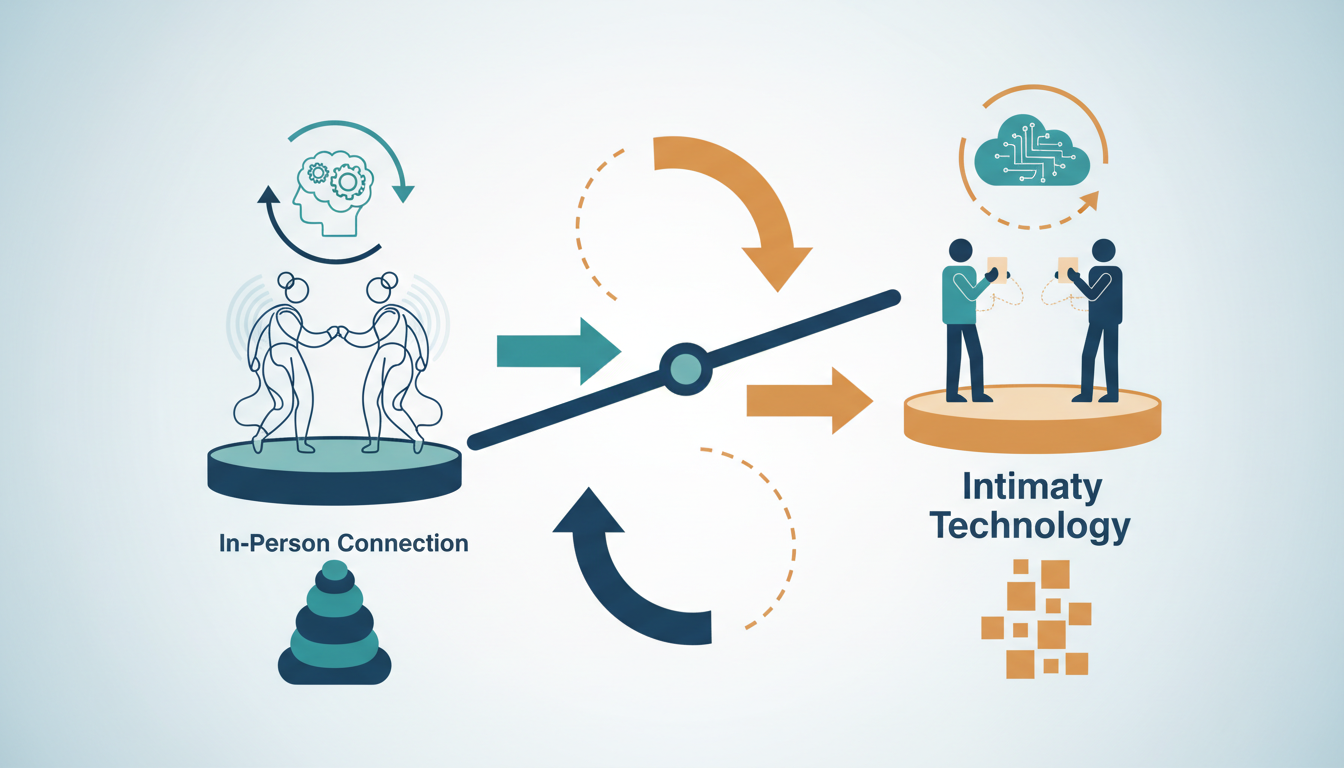
Haptic wearables and biofeedback apps settle the nervous system long before words ever could. Talk therapy leans heavily on changing thoughts to fix emotional distance, yet it frequently skips right over the body's urgent signals for safety. Somatic work steps in to handle that physical tension, though digital tools bring something new to the table with their ability to show real-time physiological data.
| Feature | Intimacy Technology | Traditional Talk Therapy |
|---|---|---|
| Primary Input | Biometric sensors, haptic feedback | Verbal narrative, memory |
| Safety Signal | Ventral vagal activation via touch | Cognitive reassurance |
| Feedback Loop | Immediate physiological adjustment | Delayed insight integration |
| Trauma Risk | Low if consent-based design used | High if somatic cues ignored |
Satisfaction rates with multisensory intimacy technologies reportedly double compared to non-multisensory alternatives because they satisfy specific sensory desires directly. This jump in numbers points to a hard truth: talking cannot recreate the biological safety that synchronized touch provides. Relying only on gadgets might ignore the messy relational history that language is so good at unpacking.
Cost is the main factor here. Technology shines at creating instant somatic safety, whereas dialogue makes sense of that safety over time. Anyone guiding relational health needs to see that nervous system regulation often happens before cognitive understanding takes hold. Without this deep bodily calm, verbal efforts might bounce right off layers of shame. Blending these approaches helps couples actually feel connection in their bones instead of just chatting about it.
Deploying Biofeedback Wearables for Long-Distance Connection Rituals
Biofeedback wearables turn distant heart rate variability into haptic pulses that sync up nervous systems across miles. These gadgets build a real bridge for couples dealing with mismatched desire by showing internal states without needing a single spoken word. When one partner feels anxiety creeping up, the wearable spots the shift and suggests a shared breathing rhythm through an app, turning vague emotional data into a coordinated bodily experience. This setup supports trauma survivors who need slow exposure to intimacy, letting them practice regulation before trying physical touch. Research indicates satisfaction rates with these multisensory intimacy technologies reportedly double compared to non-multisensory alternatives because they satisfy specific sensory desires rather than just visual ones satisfaction rates.
Depending entirely on tech risks skipping the messy verbal negotiation needed for deep relational repair. Devices measure physiology but cannot interpret the complex history behind a partner's flinch or sigh.
| Dimension | Biofeedback Wearables | Traditional Talk Therapy |
|---|---|---|
| Feedback Speed | Real-time physiological data | Delayed cognitive processing |
| Primary Modality | Haptic and visual cues | Verbal narrative |
| Trauma Safety | Gradual, user-controlled exposure | Potential for immediate retraumatization |
Relationship builders should use wearables to set a baseline of safety, then move into dialogue. June 22, 2026, marks a shift where companies like Lovense launched initiatives specifically addressing the orgasm gap, signaling industry recognition that relational equity requires more than just hardware Lovense. The drawback remains that emotional attunement ultimately demands a presence no sensor can fully replicate.
Multisensory Tech Satisfaction Rates Versus Non-Multisensory Alternatives
This sharp rise happens because digital tools hit specific multisensory desires that static media simply cannot reach. Somatic therapy focuses on how the body feels emotion, yet technology speeds up access to these states through immediate haptic feedback.
| Dimension | Multisensory Technology | Traditional Methods |
|---|---|---|
| Sensory Input | Touch, sound, visual sync | Verbal, visual only |
| Nervous System | Direct ventral vagal activation | Indirect cognitive regulation |
| Feedback Speed | Real-time biometric response | Delayed session processing |
Choosing between intimacy tech and in-person connection brings a constraint: devices give consistent physiological regulation without asking for the vulnerability of another person's presence. Comparing somatic therapy to traditional talk therapy shows that digital aids miss the detailed co-regulation a skilled human guide offers. The limitation is clear; technology regulates arousal but cannot process complex relational history.
Those guiding relational health must see that doubling satisfaction metrics does not mean healing attachment wounds. A real advantage appears when partners use these tools to create safety rituals before trying deeper emotional work. Ignoring this sequence means high-arousal states might trigger defensive shutdown instead of connection. Embodied Wellness and Recovery uses these insights to ensure technology serves as a bridge, not a replacement, for human attunement.
Implementing Trauma-Informed Rituals for Relational Healing
Defining Trauma-Informed Sexual Healing Through Somatic and Relational Lenses
Regulating the nervous system happens first, long before skin meets skin. This fundamental step separates trauma-informed sexual healing from standard sex therapy that often chases performance metrics. Pushing for sexual acts before establishing physiological safety can accidentally hurt people who have experienced boundary violations. Somatic experiencing restores regulation while parts work supports internal alignment and a clear, resounding yes. Providers like Embodied Wellness & Recovery weave attachment-focused EMDR into treatment plans to reach early attachment wounds that talk therapy alone misses. Sexuality lives as emotional, neurological, and spiritual all at once, demanding whole-person integration instead of mechanical fixes.
| Component | Standard Sex Therapy | Trauma-Informed Healing |
|---|---|---|
| Primary Goal | Sexual function improvement | Nervous system regulation |
| Method | Cognitive behavioral techniques | Somatic experiencing |
| Consent Model | Verbal agreement | Internal alignment |
Hardware used to be just for recreation, yet the industry now builds tools that support connection and process relational trauma. Technology without therapeutic guidance risks skipping the deep emotional work required for true safety. Devices serve as helpful companions rather than replacements for professional relational repair. Healing demands rebuilding intimacy from the ground up so every touch honors the body's history.
Application: Deploying Biofeedback Wearables and AI-Guided Meditations for Connection Rituals
New intimacy-focused technology deepens presence, consent, and connection rather than just chasing stimulation. Wearables and apps track emotional states or provide biofeedback for couples wanting to feel more aligned. These devices help partners externalize internal states, offering a lifeline for those who struggle with vulnerability. Guided practices prompt a shared breathing rhythm when anxiety rises, turning abstract emotional data into a coordinated somatic experience. Trauma survivors need this gradual exposure to intimacy, allowing them to practice regulation before attempting physical touch.
Couples layer AI-guided meditations over these signals to establish consistent rituals of connection. Providers differentiate themselves by integrating trauma-informed practices into technological recommendations to ensure safety during exploration. Soundscapes designed to promote safety and arousal work best when paired with these practices because engaging multiple senses activates the ventral vagal pathway to signal safety. Efforts to improve sex without trauma-informed care can retraumatize individuals with histories of sexual trauma or boundary violations. Digital tools enable regulation but cannot replace the deep internal alignment work of parts work or somatic experiencing.
| Feature | Biofeedback Wearables | AI-Guided Meditations |
|---|---|---|
| Primary Input | Emotional states, biofeedback | Voice tone, breathing pace |
| Feedback Loop | App-based tracking, haptics | Auditory cues, pacing |
| Safety Signal | Co-regulation support | Nervous system soothing |
Sexuality remains emotional, neurological, and spiritual, requiring compassionate attunement beyond mere data tracking. Professional support stays necessary for those navigating complex relational trauma to rebuild trust from the ground up.
Validating Safety in Touch Exercises Using Attachment-Focused EMDR Principles
Practitioners build a greater sense of internal "yes" and authentic "no" before initiating physical contact to prevent re-triggering attachment trauma. This validation process uses attachment-focused EMDR to process relational and sexual trauma while establishing a baseline of safety. Efforts to improve intimacy can inadvertently retraumatize individuals with histories of boundary violations without this neurological groundwork.
- Engage parts work to support internal alignment and verify an authentic "yes" from all aspects of the self.
- Apply somatic experiencing techniques to restore safety and regulation within the nervous system prior to touch.
- Repattern touch experiences using consent-based exercises that prioritize an authentic "no" as much as agreement.
| Phase | Focus Area | Outcome |
|---|---|---|
| Internal Check | Parts work | Aligned internal consent |
| Regulation | Somatic experiencing | Restored physiological safety |
| Action | Consent-based exercises | Repatterned touch response |
Rushing physical connection disrupts the ventral vagal signaling required for genuine bonding. This approach ensures sexuality is treated as emotional, neurological, and spiritual rather than purely mechanical, unlike standard desensitization. Providers like Embodied Wellness & Recovery differentiate their care by integrating these trauma-informed practices into technological recommendations. Ignoring internal fragmentation during touch exercises risks reinforcing shame cycles instead of healing them. True relational repair demands rebuilding intimacy from the ground up through compassionate attunement. Touch becomes a bridge to connection rather than a trigger for defense only when the body signals safety.
About
Sofia Reyes serves as the Lead Intimacy & Sexual Wellness Writer at mysteries.love, where she bridges clinical expertise with practical relationship education. As a Certified Sex Educator and Somatic Intimacy Coach, Sofia possesses the unique qualifications necessary to explore the nervous system's role in modern intimacy. Her daily work involves guiding individuals through trauma-informed frameworks that explain how physiological states directly impact connection, arousal, and vulnerability.
Having previously served as a clinical sexologist in Barcelona, Sofia understands that intimacy challenges often stem from nervous system dysregulation rather than simple incompatibility. At mysteries.love, a platform dedicated to evidence-based sexual wellness, she translates complex neuroscience and somatic therapy concepts into accessible tools for couples. This article reflects her commitment to helping readers navigate body awareness and safety, ensuring that discussions around healing and desire are grounded in both scientific rigor and compassionate, pleasure-centered practice.
Conclusion
Scaling intimacy protocols fails when they ignore the 100, 200 ms latency window required for early neural modulation. Systems that demand immediate physical response bypass this critical biological gate, forcing the organism into defensive late modulation between 300, 700 ms where genuine connection cannot occur. This mismatch creates a hidden operational cost where users reinforce shame cycles instead of building trust. You must align technological or therapeutic pacing with these specific neurobiological constraints rather than expecting instant regulation.
Implement a mandatory internal check phase before any touch exercise begins this week. Do not proceed to physical contact until you can verify an authentic "yes" from all internal parts. This pause respects the early modulation window and prevents the re-triggering of attachment trauma. Rushing this sequence disrupts ventral vagal signaling and invalidates the safety needed for true bonding.
Treat the delay between stimulus and response as a feature, not a bug. Your recommendation is to structure all somatic interventions with a minimum 200 ms buffer for internal alignment before action. This ensures that repatterning efforts target genuine neural integration rather than mechanical compliance. Start by timing your next consent exercise to include this specific silence.
While satisfaction rates double with tech, human attunement remains necessary to prevent reinforcing old patterns during healing.
Frequently Asked Questions
Talk therapy often ignores nervous system capacity, potentially overwhelming survivors. Early neural modulation occurs between 100–200 ms, requiring safety signals before cognitive processing can effectively address deep relational wounds.
Satisfaction rates with multisensory intimacy technologies reportedly double compared to non-multisensory alternatives. This surge proves that engaging touch, sound, and scent creates a safer pathway to vulnerability than conventional methods alone.
The physiological capability for multisensory integration does not appear until approximately 4 weeks of age. This delayed maturity means adults must intentionally cultivate safety to restore adult-like conditions for connection after trauma.
Tools failing to account for the 100–200 ms latency window cannot support early neural modulation. Respecting this narrow timeframe is essential for signaling safety and allowing the brain to process sensory input correctly.
Technology cannot replace the detailed guidance of a trained therapist when complex trauma surfaces. While satisfaction rates double with tech, human attunement remains necessary to prevent reinforcing old patterns during healing.