Intimate devices adapt via neural interfaces
More than 140 AI-enhanced sextech products existed in 2023. That statistic alone confirms smart intimate devices have graduated from niche novelty to mainstream reality. Algorithms now dissect over 200 biomarkers to tailor experiences. Brain-machine interfaces like BrainSync grant mental control to users with limited mobility. Multisensory simulators are rewriting remote intimacy through synchronized haptic and sensory feedback.
Generative AI allows premium hardware to evolve alongside user patterns, forging a flexible relationship between human and machine that static devices simply cannot match. The adaptation of medical-grade neural technology proves intimate devices (intimate devices) are becoming essential tools for accessibility and therapy. When you combine these technologies with haptic feedback systems, the result is a fully immersive environment. Data from MIT researchers and industry pioneers like Sensify shows real-time biological adaptation replacing pre-programmed routines. We are looking at a sector where neural interfaces and biometric sensors drive personalization that was scientifically implausible just five years ago.
Generative AI and Neural Interfaces Redefine Intimate Technology
Generative AI Algorithms Analyzing 200 Biomarkers
Forget static routines. Generative AI now acts as a predictive engine, constructing unique, machine-learned pleasure profiles. The French startup Sensify developed a system analyzing more than 200 biomarkers to create experiences described as unique fingerprints for each user. This technical approach shifts the industry focus from simple stimulation intensity to complex body awareness metrics. Algorithms process physiological inputs like heart rate variability and micro-contractions to adjust output patterns in real-time. Multisensory simulators expand this definition by synchronizing tactile stimuli with these algorithmic adjustments. The market contained more than 140 AI-enhanced sextech products in 2023, indicating rapid adoption of these adaptive capabilities.
Collecting extensive biometric data introduces significant privacy overhead for operators managing user databases. High-fidelity personalization requires sophisticated sensor integration to accurately capture subtle physiological responses. Networked intimate devices must incorporate advanced security protocols to minimize exposure risks. Device complexity increases alongside the depth of the resulting flexible relationship between human and machine. Users gain a partner that evolves with their physiology. The infrastructure supporting this adaptability demands rigorous security protocols.
BrainSync Noninvasive Headsets for Mobility-Limited Users
BrainSync technology enables direct device control via noninvasive headsets that translate neural signals into mechanical actions without physical movement. This architecture allows users to modify patterns, intensities, and activate specific sequences, bypassing the need for manual dexterity. Such direct neural mapping is particularly valuable for people with limited mobility, notably expanding access to pleasurable experiences for all bodies and abilities. The technical shift prioritizes sensing user intent over reacting to tactile input, creating a responsive loop driven entirely by cognitive command.
Devices now prioritize understanding physiological states over merely delivering intensity. Multisensory technologies reportedly double the rate of user satisfaction compared to traditional media consumption by actively engaging complex desires. Dependency on continuous data collection introduces data management considerations that static devices avoid entirely. Networked learning requires strong processing capabilities to handle evolving algorithms securely. Device firmware becomes more complex to manage these evolving algorithms securely. Operators must balance personalization depth with immediate haptic response times.
Multisensory Biosensors and Haptic Feedback Drive Real-Time Adaptation
Ultra-Sensitive Biosensors Detecting Blood Flow and Micro-Contractions
Next-generation devices integrate ultra-sensitive biosensors to detect subtle physiological responses, such as changes in blood flow and micro-contractions, adjusting behavior in real-time. These systems function by continuously monitoring vascular dilation and involuntary muscle tension, translating raw biological data into immediate haptic adjustments. This mechanism creates a feedback loop where the device responds to physiological responses quicker than conscious thought occurs. Dr. Elena Ramírez explains it is like having a lover who knows exactly what works for you, even before you know it yourself.
The technical implementation relies on distinguishing signal from noise within the body's complex electrical environment.
| Feature | Function | Operational Constraint |
|---|---|---|
| Vascular Monitoring | Tracks blood volume changes | Requires stable skin contact |
Neurosoma's Pinpoint Synchronization of Tactile, Visual, and Olfactory Stimuli
Neurosoma eliminates haptic desynchronization by aligning tactile output with visual and olfactory cues. The Japanese company Neurosoma has launched the first device synchronizing tactile stimuli with visual, auditory, and olfactory effects. Dr. Yuki Tanaka notes this pinpoint synchronization exponentially amplifies the experience of pleasure compared to isolated stimulation. Traditional setups often suffer from latency where visual triggers precede physical feedback, breaking immersion and reducing therapeutic efficacy for users addressing trauma.
| Feature | Single-Sense Devices | Neurosoma Synchronization |
|---|---|---|
| Sensory Input | Tactile only | Tactile, Visual, Olfactory |
| Latency Impact | High disconnect risk | Negligible via clock sync |
| Therapeutic Value | Limited engagement | Enhanced presence |
This alignment transforms passive consumption into active multisensory engagement, doubling satisfaction rates by actively engaging desires rather than relying on static content.
Validating Hybrid Physical-Digital Synchronization on Sensual Horizons
Platforms like Sensual Horizons create digital spaces where physical devices synchronize tactile sensations with virtual interactions to ensure remote intimacy feels indistinguishable from in-person connection. Wei Zhang states long-distance relationships no longer exist in terms of sensory experience due to this hybridization allowing remote intimate experiences indistinguishable from in-person interactions.
Operators verify technical performance to prevent desynchronization artifacts:
| Component | Validation Target | Failure Mode |
|---|---|---|
| Biosensors | Real-time blood flow detection | Latency spikes |
| Neural Link | Signal-to-noise ratio | Dropout events |
Users engaging with these haptic systems report double the satisfaction rates compared to traditional media, validating the need for precise multisensory alignment. Future satisfaction will depend on satisfying "multisensory desires," driving the adoption of haptic feedback that mimics tangible reality more closely than screen-based media.
Deploying Smart Wearables and VR for Therapeutic and Remote Intimacy
Defining Smart Intimate Wearables and Haptic Underwear
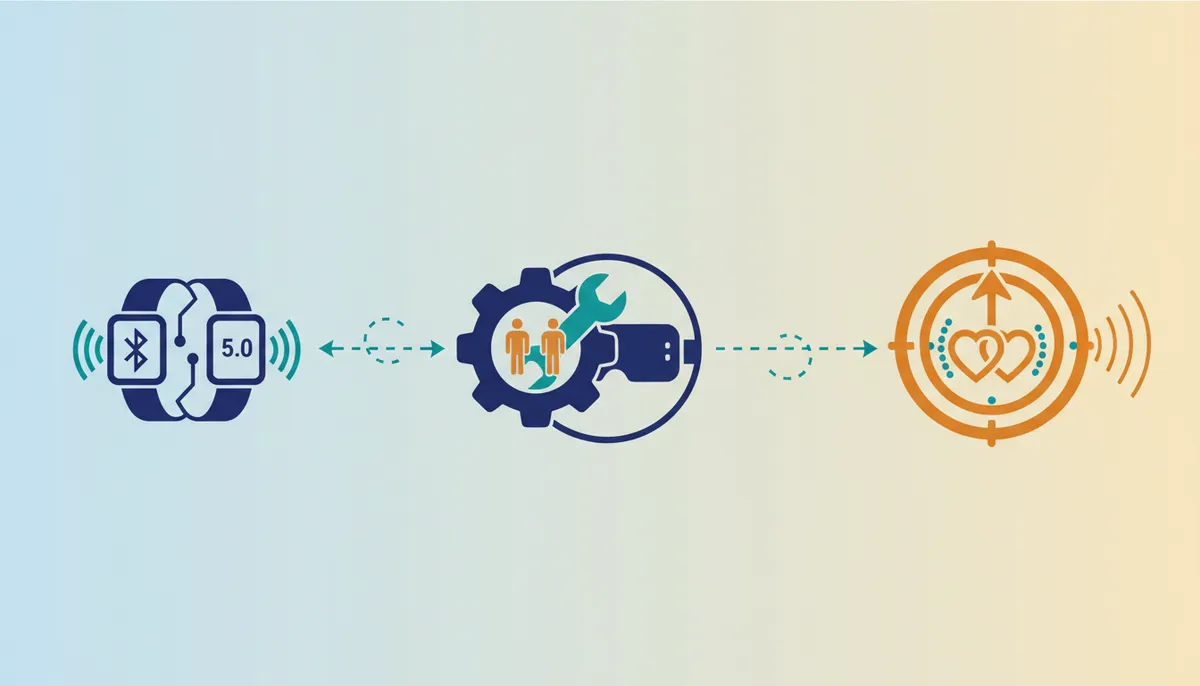
Sensual Fabric leads a surge in intimate wearables with underwear embedding haptic technology and temperature sensors invisible to the naked eye. These garments link discreetly to mobile applications, distinguishing themselves from legacy mechanical devices by prioritizing form factors that function within daily life. Such design choices support a broader industry movement toward precision health tracking and biometric integration. Users configure these devices through mobile applications that map inputs to specific tactile outputs, enabling remotely controlled experiences. Partners manage stimulation across distances, effectively collapsing physical separation in intimate scenarios. The market now contains over 140 AI-enhanced products, signaling rapid adoption, yet true differentiation lies in sensing capabilities rather than mere vibration strength. Adaptive systems learn user physiology to provide responsive feedback loops. Increased complexity in setup procedures represents a constraint compared to traditional toys. Users benefit from personalized experiences that evolve, though they must manage additional privacy considerations regarding biometric data storage. Astrid Lindqvist, a tech-savvy fashion designer, predicts traditional underwear will be obsolete in five years.
Deploying HeelVR for Sexual Dysfunction and Trauma Therapy
Sex therapists apply specially designed virtual environments to treat sexual dysfunction, vaginismus, premature ejaculation, and related trauma. This application isolates anxiety triggers while allowing patients to practice intimacy skills safely. Clinical data indicates superior effectiveness compared to conventional therapies in 40% of cases involving sexual dysfunction. The mechanism relies on graded exposure, where the software adjusts environmental stressors based on real-time user tolerance. Unlike static educational videos, these interactive platforms for sex education provide immediate biofeedback loops that reinforce positive neural pathways. Successful deployment requires careful calibration because overwhelming a patient with excessive sensory input can exacerbate existing trauma responses rather than resolve them. Therapeutic protocols emphasize controlled environments to maintain safety during exposure exercises. Remote access to therapeutic virtual reality democratizes treatment for individuals unable to travel or those fearing stigma. This shift demands strong data privacy protocols to protect sensitive biometric logs generated during sessions. Ignoring these security layers could undermine patient trust in digital intimacy tools. The technology serves as a bridge, not a replacement, requiring skilled clinicians to interpret progress metrics.
Remote Versus In-Person Intimacy via Hybrid Physical-Digital Platforms
Platforms synchronize tactile sensations with virtual interactions to replicate in-person presence. This hybridization blurs physical and digital lines, allowing remote intimate experiences that feel indistinguishable from shared physical space. Experts note that long-distance relationships no longer exist regarding sensory experience within these synchronized environments. Multisensory technologies, including haptics and AI, reportedly double the rate of user satisfaction compared to traditional media consumption. This metric highlights a shift from passive viewing to active, embodied participation in digital spaces. A tension exists between data richness for personalization and user privacy regarding biometric tracking. Over 140 products apply biometric sensors to adjust stimulation, creating vast datasets of intimate user behavior. Practitioners should advise clients on data sovereignty when selecting devices for therapeutic or recreational remote intimacy.
Sustainable Materials and Market Viability Shape Future Adoption
Biodegradable Biopolymers Versus Traditional Plastic Vibrators
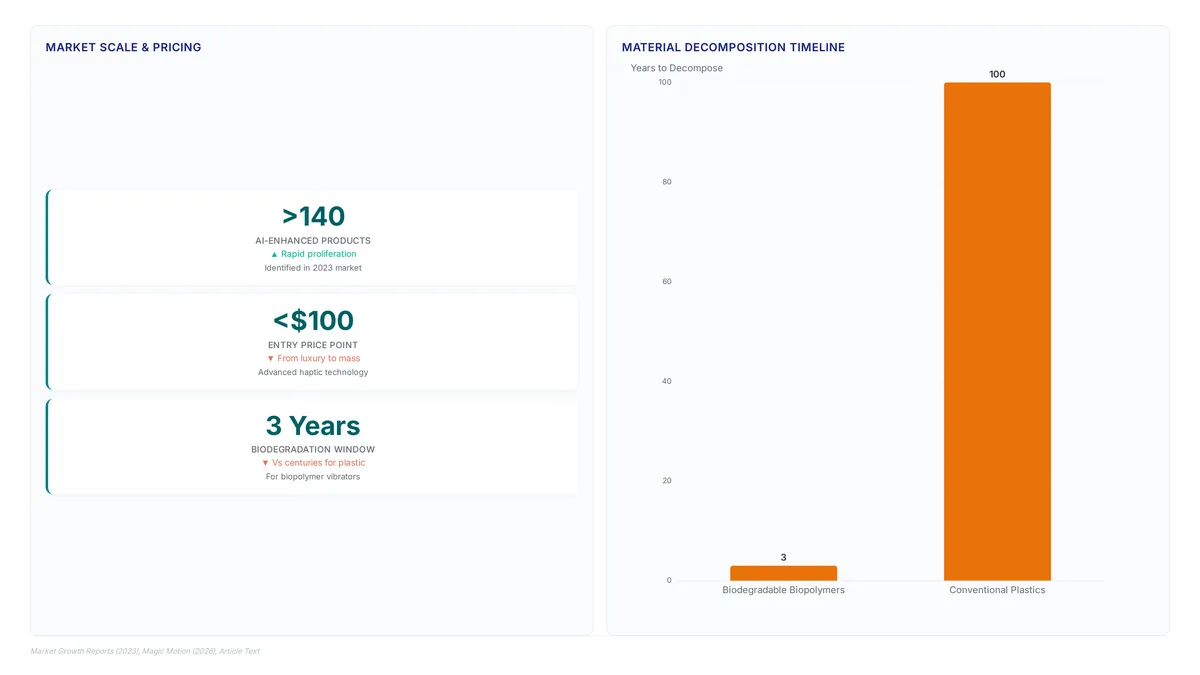
NaturTech manufactures the first completely biodegradable vibrator using biopolymers that decompose in three years without toxic residues. Conventional plastic vibrators persist indefinitely in landfills, creating a distinct waste stream that ecological awareness now challenges. The material science distinction lies in molecular structure; synthetic polymers resist natural breakdown, whereas engineered biopolymers allow microbial digestion within a set window. Frieda Müller argues that sustainability is sexy, signaling a shift where environmental impact influences purchase decisions as much as functionality. This transition addresses a limitation: traditional manufacturing often ignores end-of-life disposal, whereas biodegradable design integrates it into the product lifecycle.
Affordable Haptic Technology Under $100 From LoveTech
LoveTech delivers advanced haptic technology for under $100, shifting market dynamics from luxury exclusivity to mass accessibility. This price point removes the primary financial barrier preventing consumers from accessing multisensory experiences that double satisfaction rates compared to passive media. Carlos Mendoza identifies this shift as a true democratization of technological pleasure, enabling broader adoption of features once reserved for high-end devices. Lower entry costs introduce a tension between affordability and material longevity. Operators and retailers must recognize that while affordable sextech devices expand the user base, they do not yet fully align with the sustainable sextech products required for zero-waste goals. Consumers seeking both affordability and sustainability currently encounter a market gap where these two desirable traits rarely coexist in a single product configuration. Cost is the driver here, but it creates a secondary challenge regarding waste management.
AI-Enhanced Sextech Market Growth Versus User Satisfaction Rates
Market proliferation reached over 140 AI-enhanced sextech products in 2023, signaling rapid artificial intelligence integration across consumer devices. This surge reflects substantial venture capital interest, yet raw device count fails to measure actual user fulfillment or functional efficacy. Data indicates that engaging with haptic and immersive technologies reportedly doubles satisfaction rates compared to consuming traditional pornographic media. The mechanism driving this increase involves synchronizing tactile stimuli with visual and auditory inputs to satisfy complex multisensory desires. The sheer volume of new startups suggests a booming sector, but the real value lies in this qualitative leap rather than quantity alone. Investors should note that market saturation poses a risk if new entries lack genuine biometric feedback loops. The industry focus is shifting definitively from simple stimulation intensity to complex control and body awareness metrics. A conflict exists between funding sheer volume versus supporting products that deliver verified multisensory efficacy. Capital flows best toward firms proving their algorithms adjust to physiological responses, not those claiming smart connectivity. Prioritizing proven satisfaction metrics over hype ensures resources support tools that genuinely enhance intimacy.
About
Dr. Ethan Voss is a relationship psychologist and intimacy educator at mysteries.love, where he specializes in the neuroscience of desire and attachment theory. His expertise makes him uniquely qualified to analyze the revolutionary sextech trends shaping 2025, particularly the integration of generative AI and advanced haptics. In his daily work, Dr. Voss translates complex clinical research into practical guidance, helping couples navigate how new technologies can deepen emotional connection rather than replace it. As the mysteries.love blog bridges hands-on product guidance with evidence-based education, Dr. Voss ensures that discussions around smart devices and biofeedback tools remain grounded in sexual wellness and psychological safety. By connecting emerging tech with established relationship psychology, he provides readers with a trusted framework for exploring modern intimacy. This approach aligns with the platform's mission to normalize conversations about desire while using insights from leading institutions to inform adult education.
Conclusion
Scaling production of affordable sextech devices exposes a critical fragility: low entry prices often bypass the durability required for long-term sexual health outcomes. While haptic advancements under $100 democratize access, they frequently lack the reliable engineering needed for repeated sanitization and sustained performance, creating a hidden operational cost for consumers who must replace units frequently. This cycle undermines the very accessibility the sector champions. The industry must pivot from merely counting product launches to validating longitudinal efficacy. Investors and manufacturers should immediately prioritize biometric feedback integration that proves lasting physiological benefit over superficial connectivity features.
Retailers must stop treating sustainability and affordability as mutually exclusive constraints. By Q3, supply chains should begin sourcing modular components that allow users to repair rather than discard hardware. This approach bridges the gap between mass-market pricing and zero-waste goals. Start by auditing your current inventory for repairability scores and identifying one flagship product where battery or motor replacement is feasible. Implementing a take-back program for this specific item this week will establish the infrastructure for a circular economy model. Such proactive measures ensure that the shift toward multisensory intimacy remains both economically viable and environmentally responsible without relying on perpetual consumption.
Users must ensure networked devices incorporate advanced security protocols to minimize potential exposure risks.
Frequently Asked Questions
Advanced haptic technology is now available for under $100, lowering economic barriers. This price point allows broader access to quality sextech experiences previously reserved for luxury market segments only.
VR platforms show superior effectiveness in 40% of sexual dysfunction cases versus standard care. This data suggests therapists should consider integrating virtual environments for treating trauma or specific physiological conditions.
BrainSync technology utilizes noninvasive headsets to translate neural signals without surgical procedures. This approach enables users with limited mobility to control device patterns using only their cognitive commands.
Sensify systems analyze more than 200 biomarkers to generate unique pleasure profiles. This deep analysis allows the device to evolve dynamically with user physiology rather than relying on static routines.
Collecting extensive biometric data introduces significant privacy overhead for operators managing user databases. Users must ensure networked devices incorporate advanced security protocols to minimize potential exposure risks.
References