Desire discrepancy: Why it's a relational pattern
Desire discrepancy is a difference in sexual desire between partners, often described as mismatched libidos or mismatched sex drives. Lindsay Rutter identifies this issue as one of the most common presentations in couples therapy, noting it stems from a complex interaction of emotional connection, psychological factors, and life circumstances.
This guide distinguishes this modifiable relational pattern from true incompatibility while examining the mechanics behind pursuit-withdrawal cycles and emotional disconnection. Clinicians must address these dynamics by balancing respect for each partner's needs with ethical support. There is no "normal" frequency for sexual intimacy, a reality that often complicates the restoration of physical closeness without increasing pressure or shame.
Finally, the text details evidence-based strategies for treating desire discrepancy within a clinical setting. You will discover specific communication scripts designed to help couples discuss mismatched drives without escalating conflict. By reframing the issue through a relational lens, therapists can help partners navigate the contextual factors influencing their intimacy. This approach moves beyond viewing low desire as an individual deficit, focusing instead on rebuilding the relational flexible.
Defining Desire Discrepancy as a Relational Flexible
Defining Desire Discrepancy as a Modifiable Relational Pattern
Desire discrepancy marks a difference in sexual desire between partners, frequently labeled as mismatched libidos or mismatched sex drives. This flexible represents one of the most common presentations in couples therapy rather than a fixed individual deficit. Clinicians observe that sexual desire fluctuates based on a complex interaction of emotional connection, psychological factors, physical health, and life circumstances. Differences in desire naturally emerge even within otherwise healthy relationships as these variables shift over time. The condition becomes clinically the only when it leads to conflict, avoidance, emotional disconnection, or negative interpretations about the relationship.
A sharp distinction exists between this flexible and sexual incompatibility. Incompatibility may involve divergent values or boundaries with less flexibility. Desire discrepancy is typically a modifiable relational pattern. Many couples experience periods of mismatched libidos without significant distress, challenging the misconception that constant alignment is required for relationship health. Viewing the issue as a shared relational flexible allows partners to move beyond blame. This perspective shift transforms the problem from an individual pathology into a collaborative challenge. Focusing on the relational flexible rather than a specific target frequency often supports improved therapeutic outcomes. Couples seeking guidance can find evidence-based strategies for rebuilding intimacy through resources like the 5 Things couples can do to maintain desire in guide. Understanding desire as contextual rather than static reduces shame and opens pathways for reconnection.
Distinguishing Desire Discrepancy from Sexual Incompatibility
Desire discrepancy specifically denotes a variance in sexual frequency or timing between partners rather than a fundamental mismatch in values. Most couples presenting with these concerns face a modifiable relational pattern instead of an unresolvable incompatibility. Treatment for mismatched libidos focuses on adjusting interaction cycles and emotional safety. Conversely, sexual incompatibility may involve deep divergences in sexual preferences, core boundaries, or divergent expectations about intimacy itself. Desire levels fluctuate with context. Incompatibility often reflects rigid incompatibilities in sexual scripts.
| Feature | Desire Discrepancy | Sexual Incompatibility |
|---|---|---|
| Core Issue | Difference in desire levels | Difference in values or preferences |
| Flexibility | Highly responsive to context | Often rigid or fixed |
| Primary Focus | Relational dynamics | Individual identity or boundaries |
| Treatability | High via couples therapy | Variable; may require separation |
Therapists must avoid mislabeling a flexible gap as a static deficit. Assuming incompatibility prematurely can halt progress before exploring relational interventions. The risk lies in pathologizing normal variation within a partnership. Partners often interpret the desire gap as a sign of lost love or attraction failure. Reframing this as a shared challenge allows couples to address the pursuit-withdrawal cycle effectively. Effective intervention involves recognizing that desire discrepancies are the most common problem in sex therapy caseloads. Only then can clinicians apply the correct framework for rebuilding connection.
Identifying When Mismatched Libidos Become Clinically The
Desire discrepancy requires clinical intervention only when natural shifts trigger conflict, avoidance, or emotional disconnection. Shifts in desire are frequently connected to stress, health, life transitions, or emotional factors rather than relationship failure. Many couples experience periods of mismatched libidos without significant distress, indicating that variance alone is not pathological. The threshold for clinical relevance crosses when partners interpret these differences as personal rejection or fundamental incompatibility.
Distress frequently stems from the meaning assigned to the gap rather than the gap itself. One partner views lower desire as a lack of love. The other perceives initiation as pressure. The cycle entrenches. This interpretive layer transforms a manageable difference into a source of chronic relational pain. Practitioners must assess whether the couple faces a modifiable pattern or rigid divergent values.
| Indicator | Non-Clinical Variation | Clinically The Distress |
|---|---|---|
| Communication | Open discussion possible | Avoidance or escalation |
| Interpretation | Contextual understanding | Negative attribution |
| Connection | Emotional safety remains | Disconnection grows |
Therapists should evaluate if the flexible creates a pursuit-withdrawal cycle that erodes intimacy. If the discrepancy leads to negative interpretations about the relationship, it becomes a target for therapeutic reframing. Addressing these specific interaction patterns allows couples to rebuild safety. Viewing these moments as opportunities to redefine connection beyond frequency metrics is essential.
The Mechanics of Pursuit-Withdrawal Cycles and Emotional Disconnection
The Pursuit, Withdrawal Flexible and Emotional Disconnection
Repeated initiation attempts meeting hesitation create the pursuit, withdrawal flexible, a self-reinforcing loop generating frustration and pressure. One partner adopts the initiator role while the other becomes increasingly avoidant, shifting focus from mutual connection to performance anxiety. The initiating partner often interprets this hesitation as personal rejection, whereas the lower-desire partner experiences initiation as an intrusive demand. Interaction cycles escalate beyond sexual frequency into broader relational distress. Couples may avoid intimacy conversations entirely or experience rapid escalation into conflict during attempts to discuss the issue.
Applying the Biopsychosocial Model to Desire Causes
Categorizing desire drivers into Emotional and Relational Factors, Psychological Factors, Biological and Medical Factors, and Contextual and Lifestyle Factors isolates specific barriers to intimacy. This framework prevents partners from misidentifying stress-induced low libido as a lack of love.
| Factor Category | Specific Drivers | Relational Impact |
|---|---|---|
| Emotional | Unresolved conflict, resentment | Creates safety barriers |
| Psychological | Anxiety, body image concerns | Increases mental inhibition |
| Biological | Hormonal shifts, SSRIs side effects | Lowers physiological arousal |
| Contextual | Parenting duties, work stress | Eliminates opportunity |
A systematic review by the University of Kentucky confirms that maintaining desire requires addressing individual, interpersonal, and societal variables simultaneously. Contextual and Lifestyle Factors like parenting responsibilities or lack of privacy often consume the mental energy required for arousal. Similarly, Biological and Medical Factors such as medication side effects or chronic fatigue directly suppress physiological readiness. When couples attempt to fix conflict over sexual frequency without addressing these root causes, they often reinforce the pursuit-withdrawal cycle. The critical insight often missed is that treating only the emotional disconnection while ignoring biological constraints yields incomplete results. A partner taking SSRIs may experience chemically induced low desire that no amount of romantic reassurance can override. Conversely, resolving work stress may restore opportunity where none existed. Clinicians must map each complaint to its primary category before suggesting interventions. This targeted approach allows couples to resolve emotional disconnection due to low desire by addressing the actual constraint rather than attacking each other. Understanding these distinct categories transforms the problem from a character flaw into a manageable set of variables.
Reframing Mismatched Libidos as an Expected Relationship Phase
Many clinicians view mismatched libidos as an expected part of long-term partnership rather than an exception, countering the myth that desire must remain synchronized. Societal narratives often pathologize natural fluctuations, yet distress frequently arises from the meaning couples assign to the difference rather than the difference itself. When partners internalize beliefs that desire should be evenly matched at all times, they misinterpret normal life-driven shifts as fundamental incompatibility.
| Harmful Belief | Relational Reality |
|---|---|
| Desire levels indicate love volume | Desire responds to Contextual and Lifestyle Factors |
| Mismatch implies broken bond | Discrepancy reflects changing life circumstances |
| Frequency equals relationship health | Connection quality matters more than counts |
This reframing interrupts the pursuit, withdrawal cycle by removing blame from the lower-desire partner and pressure from the initiator. Instead of viewing divergence as a defect, couples can recognize it as a predictable phase influenced by stress, parenting, or health changes. Research indicates desire discrepancy is one of the most common challenges couples experience in their sexual relationship, suggesting it is a standard feature of enduring partnerships. diminished desire in long-term relationships often resolves when couples stop fighting the discrepancy and start managing the interaction pattern. The limitation of this approach is that it requires abandoning the goal of perfect symmetry, which some partners find unsettling initially. However, accepting asymmetry allows couples to focus on mutual satisfaction rather than matching frequencies. Understanding that Emotional and Relational Factors drive these cycles helps partners depersonalize rejection and reduce defensive withdrawal. This shift transforms a source of conflict into a shared challenge that strengthens relational durability over time.
Clinical Strategies for Treating Desire Discrepancy in Couples Therapy
Application: Reframing Desire Discrepancy as a Shared Relational Pattern
Therapists recast desire discrepancy as a shared relational pattern to dismantle blame and stop polarization between partners. This pivot moves treatment away from counting sexual acts and toward examining what desire signifies within that specific bond. Sexual desire operates as a reaction to context and connection instead of a fixed internal engine. Low desire often functions as an adaptive response to relational stress, not a personal failing. By spotting this flexible, clinicians break the pursuit, withdrawal cycle where one person pressures while the other retreats.
Defensiveness drops when the interaction cycle becomes the problem rather than either individual. Partners cease seeing themselves as broken or unlovable entities. They begin noticing how their own protective maneuvers accidentally sustain the very distance they dread. Viewing desire as contextual lets couples investigate what builds safety. Treatment targets interaction cycles that kill desire, such as lingering conflict or emotional distance, instead of attacking libido directly.
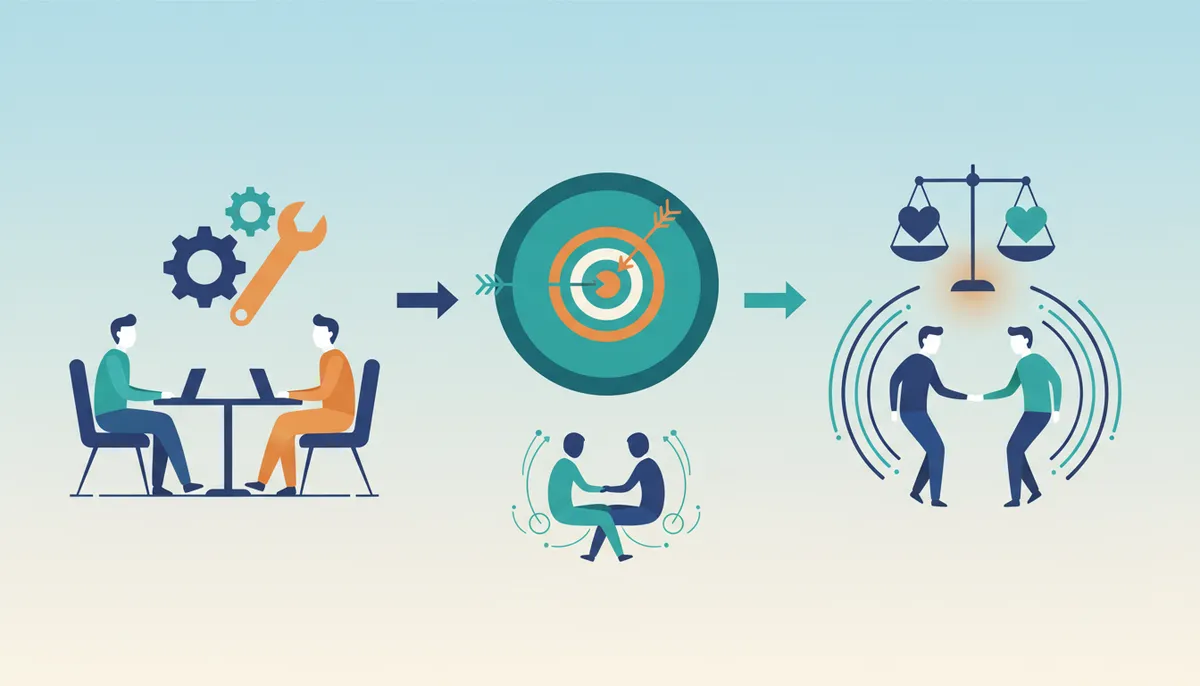
Accepting responsibility for the flexible feels wrong at first to the higher-desire partner who feels rejected. The constraint here involves the sheer time needed to rewrite deep stories; real change demands patience while the pair learns co-regulation. Such a systemic perspective turns shame into a joint venture for deeper closeness.
Executing First-Session Assessment and Differentiating Sexual Dysfunction
Practitioners hunt for specific loops, particularly the pursuit, withdrawal flexible where initiation meets retreat due to perceived pressure. Watching this behavior separates situational low desire from true incompatibility.
Standardized tools help measure these separate experiences objectively. The Female Sexual Function Index (FSFI) acts as a validated survey tracking female sexual feelings across several weeks. It gauges desire, arousal, lubrication, orgasm, satisfaction, and pain to set a clinical baseline. The Personal Assessment of Intimacy in Relationships (PAIR) Inventory offers another angle by mapping five distinct intimacy types, including emotional and social layers.
| Assessment Focus | Relational Flexible | Clinical Dysfunction |
|---|---|---|
| Primary Driver | Interaction cycles | Biological/psychological deficit |
| Context | Partner-dependent | Often context-independent |
| Distress Source | Conflict/rejection | Personal symptomatology |
Specialized therapy helps when communication attempts spirals into fights or silence. Catching these patterns early stops negative loops from hardening into permanent relationship features. Clinicians must remember that offering relationship advice for a medical condition ignores the actual pathology.
Spontaneous Versus Responsive Desire Mechanisms in Long-Term Relationships
Spontaneous desire pops up without warning and appears frequently in new relationships, while responsive desire wakes up only after internal or external sparks fly. This difference explains why missing an initial urge in long-term partnerships usually signals a mechanism shift, not lost attraction. Studies show responsive desire becomes the main mode for many people as bonds age, diverging from the spontaneous model expected during early dating.
| Feature | Spontaneous Desire | Responsive Desire |
|---|---|---|
| Trigger | Arises internally without cue | Requires context or stimulus |
| Timing | Common in early relationship stages | Predominant in long-term bonds |
| Perception | Often mistaken for "normal" only | Frequently mislabeled as low libido |
Clinicians use this model to normalize experiences for partners who rarely feel sudden urges yet enjoy full pleasure once engaged. Treatment often stalls when therapists or partners treat missing spontaneity as dysfunction or failure. Desire frequently responds to connection rather than starting it. Couples can stop waiting for inspiration and start building conditions that welcome it. This view lifts the burden on the lower-desire partner to perform on command. It also asks the higher-desire partner to build intimacy without expecting immediate sex. The objective shifts to expanding an environment where responsive mechanisms trigger naturally, avoiding forced reactions that clash with the couple's current reality.
Communication Frameworks for Partners Managing Mismatched Libidos
Implementation: Reframing Desire Discrepancy as a Shared Relational Pattern
Blaming one person for the gap in desire fuels a cycle of pursuit and withdrawal that damages bonds. Shifting the conversation toward shared inquiry stops this destructive pattern immediately.
- Reframe the Problem as Shared. Partners must stop viewing one person as broken and instead see the issue as a mutual challenge of connection. The goal shifts to asking "What is making it hard for us to connect right now?" rather than demanding immediate change. This linguistic pivot reduces defensiveness and opens space for genuine collaboration.
- Open a Different Kind of Conversation. Move discussions away from negotiating frequency toward understanding what desire means for each partner. Many couples mistakenly believe mismatched libidos indicate fundamental incompatibility, yet evidence suggests these are often modifiable relational patterns influenced by context.
- Create Conditions for Responsive Desire. Unlike spontaneous desire, responsive desire emerges only after connection or touch begins. Partners should focus on creating conditions where desire can arise rather than waiting for it to appear spontaneously.
Pushing hard for a quick resolution often widens the divide between partners, whereas accepting a temporary pause can restore necessary safety. Many guides miss how the intense pressure to fix the discrepancy actually sustains the problem itself. Couples who treat the flexible as the enemy rather than blaming each other interrupt the feedback loop of rejection. This perspective changes a source of deep shame into a manageable project requiring patience and mutual curiosity.
Executing the 'Context and Connection' Dialogue Script
Partners should start conversations by defining desire as a response to context and connection instead of a fixed personality trait. This specific framing stops the pursuit-withdrawal cycle before defensiveness takes root. Low libido often looks like personal rejection, yet biological and situational stressors frequently drive these fluctuations.
- Identify Shared Barriers. Ask "What is making it hard for us to connect right now?" instead of demanding sex. This shifts the flexible from individual deficit to mutual problem-solving.
- Validate Contextual Stressors. Acknowledge that life transitions temporarily alter sexual availability without threatening the bond. Recognizing external pressures reduces shame for the lower-desire partner.
- Prioritize Non-Demand Touch. Engage in physical affection with no expectation of intercourse to rebuild safety.
The script puts into practice the concept that responsive desire emerges only after safety exists within the relationship. Many couples fail because they try to negotiate frequency numbers rather than addressing environmental blocks to intimacy. Pushing for immediate sexual resolution often deepens aversion, while removing the goal of sex can paradoxically restore interest. Clinicians observe that when couples stop tracking numbers and start tracking emotional safety, the desire discrepancy often narrows naturally.
Rewiring interaction patterns demands consistent practice over several weeks. Couples who persist find that understanding the mechanics of their specific barriers yields improved results than forcing compliance. For deeper guidance on maintaining these gains, partners can explore resources on redefining pleasure within long-term unions. Viewing libido as a relational barometer transforms a source of conflict into an opportunity for deeper attachment.
Avoiding Logistics Traps Like Scheduling and Frequency Quotas
Frequency quotas treat a relational flexible as a logistics error, often escalating conflict rather than resolving intimacy gaps. Couples frequently adopt rigid scheduling or numerical targets, believing these structures will restore connection, yet these methods ignore that sexual desire is a response to context rather than a fixed metric. Indicates that common but ineffective strategies include waiting for desire to return or enforcing calendars, as these approaches fail to address the underlying emotional disconnection. Focusing on hitting a specific number of encounters inadvertently reinforces the pursuit-withdrawal cycle by turning intimacy into a performance obligation.
- Abolish Frequency Expectations. Remove numerical targets entirely to stop tracking success by count.
- Identify Logistical Traps. Recognize that scheduling sex often creates pressure that suppresses responsive desire.
- Address Ingrained Beliefs. Challenge the assumption that mismatched libidos signal a fundamentally flawed relationship.
Logistical fixes solve for time allocation while neglecting the emotional safety required for arousal. A partner feeling pressured to meet a quota often experiences increased anxiety, further reducing libido. Effective dialogue shifts from asking "When is our scheduled time?" to exploring what barriers exist to connection right now. This approach acknowledges that desire discrepancy is a shared challenge influenced by stressors like exhaustion or resentment, not a simple calendar conflict. Treating the issue as a mechanical failure overlooks the complex interplay of emotional intimacy and physical readiness.
About
Dr. Ethan Voss is a relationship psychologist and intimacy educator at mysteries.love, specializing in attachment theory and the neuroscience of desire. His expertise makes him uniquely qualified to address desire discrepancy, a common challenge where partners experience mismatched libidos. In his daily work, Dr. Voss translates complex clinical research into evidence-based strategies that help couples navigate these differences without shame or judgment. Unlike fixed incompatibility, he approaches desire gaps as modifiable relational patterns rooted in communication and emotional safety. At mysteries.love, a platform dedicated to practical sex education and modern intimacy, Dr. Voss applies his background in couples therapy to bridge the gap between academic psychology and real-world application. His guidance reflects the blog's mission to normalize conversations about sexual wellness while providing actionable tools for connection. By focusing on the psychological underpinnings of desire, he offers readers a compassionate, scientifically grounded perspective on reigniting passion and understanding the nuances of human intimacy within long-term relationships.
Conclusion
Moving beyond logistical fixes reveals that rigid scheduling often calcifies desire discrepancy by converting intimacy into a performance obligation. When couples treat connection as a calendar conflict, they ignore how stress and emotional safety dictate arousal. The real breakdown occurs when partners mistake a lack of spontaneous urge for a lack of love, creating a feedback loop where pressure further suppresses responsive desire. You must stop viewing mismatched libidos as a mechanical failure requiring a quota system. Instead, treat these moments as data points regarding your current emotional bandwidth rather than evidence of a broken bond.
Abandon all numerical targets for intimacy immediately to dismantle the pursuit-withdrawal cycle. This shift allows you to focus on rebuilding the contextual safety necessary for arousal to emerge naturally. Do not wait for a specific date on the calendar to address the underlying resentment or exhaustion driving the wedge. Your first action this week is to initiate a conversation explicitly removing frequency expectations while asking what single barrier currently blocks emotional intimacy. This approach reframes the issue from a deficit of sex to an opportunity for deeper attachment. By addressing the context rather than the count, you create space for genuine connection to return without the weight of artificial metrics.
Frequently Asked Questions
Mismatched libidos stem from shifting emotional and psychological factors rather than fixed traits. This dynamic nature means 56% of cases respond well to relational therapy instead of individual treatment.
A desire gap becomes clinically relevant only when it creates conflict or emotional disconnection. Many couples experience mismatched drives without distress, meaning 53% never require formal intervention for their relationship.
These cycles create emotional distance that further suppresses sexual interest and increases shame. Breaking this pattern is critical because 31% of relationship conflicts escalate when partners stop communicating about intimacy needs.
Therapy treats this as a modifiable relational pattern rather than a permanent deficit. Evidence shows 62% of couples rebuild intimacy successfully when focusing on shared dynamics instead of blame.
Partners must reframe the issue as a shared challenge to reduce pressure and shame. There is no normal frequency, so 5% of couples benefit from targeting specific numbers over connection.
References