Average penis size: What 5.16 inches really means
A 5.16-inch average confirmed by BJUI International proves a 5-inch penis is statistically standard, not small.
The panic over male endowment is manufactured. Media distortion, not biology, drives the crisis. Patriarchal narratives insist larger dimensions equal superior performance, but clinical data dismantles this phallocentric mindset. Most men fall within a narrow, functional range. Obsessing over arbitrary inch markers ignores anatomical compatibility. Vaginal depth and girth often matter more than raw length.
This analysis dissects the statistical reality behind global measurements. Average erect length has shifted over recent decades due to unclear environmental drivers. We move next to anatomical compatibility, explaining why a 5-inch organ frequently outperforms larger counterparts in practical sexual scenarios. Chasing inflated numbers is unnecessary and biologically counterproductive.
The Statistical Reality of Average Erect Penis Length
The 5.16-Inch Clinical Average from the 2015 Veale Review
Strict measurement protocols, not self-reporting, define the global clinical average for erect length at 5.16 inches. A landmark systematic review published in BJU International established this baseline by analyzing data from over 15,521 men. The study utilized clinician-measured protocols to eliminate the inflation common in voluntary surveys, where men frequently exaggerate dimensions by up to two inches. These discrepancies create a distorted perception of normalcy, fueling unnecessary anxiety among individuals who actually fall within the statistical majority.
Data indicates that 68 percent of the male population measures between 4.5 and 5.8 inches when erect. A 5-inch dimension sits squarely in the center of this distribution curve. The gap between verified medical data and public belief persists because self-reported studies consistently yield higher, less accurate figures driven by social pressure. Reliance on these unverified claims obscures the biological reality that most men possess medium-sized anatomy.
| Data Source Type | Measurement Method | Reliability Score |
|---|---|---|
| Clinical Review | Clinician-measured | High |
| Online Survey | Self-reported | Low |
| Media Portrayal | Visual selection | None |
Sexual health education must rely on objective anthropometric data rather than cultural mythology. Accepting the 5.16-inch standard dismantles the false equivalence between size and capability. Recognizing this statistical truth reduces psychological distress caused by comparing oneself to outlier representations in adult entertainment.
Debunking the Six-Inch Myth and Self-Reporting Exaggerations
The six-inch myth persists as a media-promoted standard contradicting biological reality. Only a small fraction of men exceed 6.3 inches in length. This distortion stems largely from self-reported data, where individuals consistently overestimate dimensions compared to verified clinical findings. Voluntary surveys inflate average figures by up to two inches, creating a competitive disparity in data reliability that skews public perception. Clinician-measured protocols establish a factual baseline that excludes the exaggeration common in anonymous submissions.
Regional variations complicate the narrative. The United States average appears slightly higher than the global mean due to sampling differences. However, relying on regional variations without context fuels the erroneous belief that larger sizes represent the norm. The psychological impact of this misinformation is measurable, yet satisfaction rates remain high when partners move beyond these arbitrary benchmarks.
| Data Source Type | Reliability Factor | Common Bias |
|---|---|---|
| Clinical Measurement | High | Minimal |
| Self-Reporting | Low | Significant Inflation |
| Media Portrayal | None | Extreme Selection Bias |
Operators of sexual health discourse must prioritize verified photographic evidence over anecdotal claims to correct these systemic errors. The cost of maintaining the six-inch ideal is measurable in widespread anxiety despite 85% of partners reporting satisfaction with average dimensions. Addressing this requires discarding patriarchal ideals that equate size with power.
Media Distortion and the Psychology of Size Perception
Phallocentrism and the Porn-Induced Skew in Size Norms
Phallocentrism operates as a cultural fixation elevating the penis to a primary symbol of power. Adult entertainment featuring larger than life anatomy distorts public perception. This media-driven skew creates a psychological conflict where males believe the average size to be 6 inches, despite clinical data showing significantly smaller realities. The mechanism relies on visual repetition. Consistent exposure to outlier bodies in pornography rewires the brain's baseline for normalcy, replacing statistical graphs with impossible standards. Emily Nagoski critiques this visual dominance, noting how imagery overrides factual understanding of human variation.
| Perception Source | Represented Anatomy | Impact on Viewer |
|---|---|---|
| Clinical Studies | Statistical Mean | Establishes biological reality |
| Adult Entertainment | Extreme Outliers | Generates size anxiety |
| Self-Reporting | Exaggerated Claims | Fuels the six-inch myth |
This framework ignores functional satisfaction metrics entirely. Distress stems from a fabricated benchmark rather than biological inadequacy. Operators of their own sexual health must recognize that the six-inch standard is a construct of entertainment logistics, not human development. Accepting the clinical mean resolves the cognitive dissonance between media consumption and physical reality.
Reconciling the 5.48-Inch Global Average with Partner Satisfaction Data
A 2023 pooled global average from 75 studies establishes 5.48 inches as the statistical baseline for erect length across 55,761 men. This metric supersedes older benchmarks, yet the six-inch myth continues to drive disproportionate anxiety regarding the perceived gap between 5-inch and 6-inch dimensions. Operational reality contradicts this fear. Satisfaction data indicates that 85 percent of women report contentment with their partner's size, rendering the extra inch functionally irrelevant for most dyads. The mechanism of satisfaction relies less on linear extension and more on girth and technique, creating a parameter trade-off where length becomes a secondary variable.
| Dimension | Statistical Priority | Partner Satisfaction Impact |
|---|---|---|
| Length | Secondary | Moderate |
| Girth | Primary | High |
| Technique | Critical | Decisive |
Research indicates that girth often rates higher than length for sexual satisfaction, shifting the engineering focus from vertical reach to circumferential contact. A specific failure mode occurs when individuals prioritize the 6-inch target over functional adequacy, ignoring that 5 inches falls squarely within the optimal range for partner satisfaction. The limitation of chasing marginal gains in length is the neglect of coital dynamics that actually drive pleasure. Media distortion inflates the perceived value of the 6-inch mark, but clinical evidence confirms that the 5-inch standard delivers equivalent relational outcomes. Operators should discard the linear escalation model in favor of a complete approach to sexual mechanics.
The Financial Cost of Anxiety Driven by Self-Reporting Exaggerations
Trusting unverified self-reports triggers financial waste on bogus treatments due to a systematic 0.6-inch inflation in reported data. Men frequently exaggerate dimensions in anonymous surveys, creating a false baseline that clinical verification immediately corrects. Research demonstrates that when self-reports undergo photographic verification, the average the size drops significantly, exposing the unreliability of voluntary submissions. The economic consequence involves purchasing enhancers or funding surgeries for a deficit that does not biologically exist.
Legacy data from unverified sources consistently overestimates length compared to professional measurement protocols. This gap fuels a psychological conflict where individuals perceive themselves as deficient despite falling within normal ranges. The limitation of relying on internet forums is the absence of verification standards, allowing competitive disparity to distort reality. Operators of sexual health clinics observe that anxiety often stems from comparing oneself to these inflated figures rather than actual partners. Addressing this requires rejecting self-reported metrics in favor of clinically established norms to halt unnecessary expenditure. The ultimate cost is not monetary but the sustained distress caused by chasing an artificial ideal.
Anatomical Compatibility Between Penis Dimensions and Vaginal Depth
Defining the 4-to-5-Inch Aroused Vaginal Canal Depth
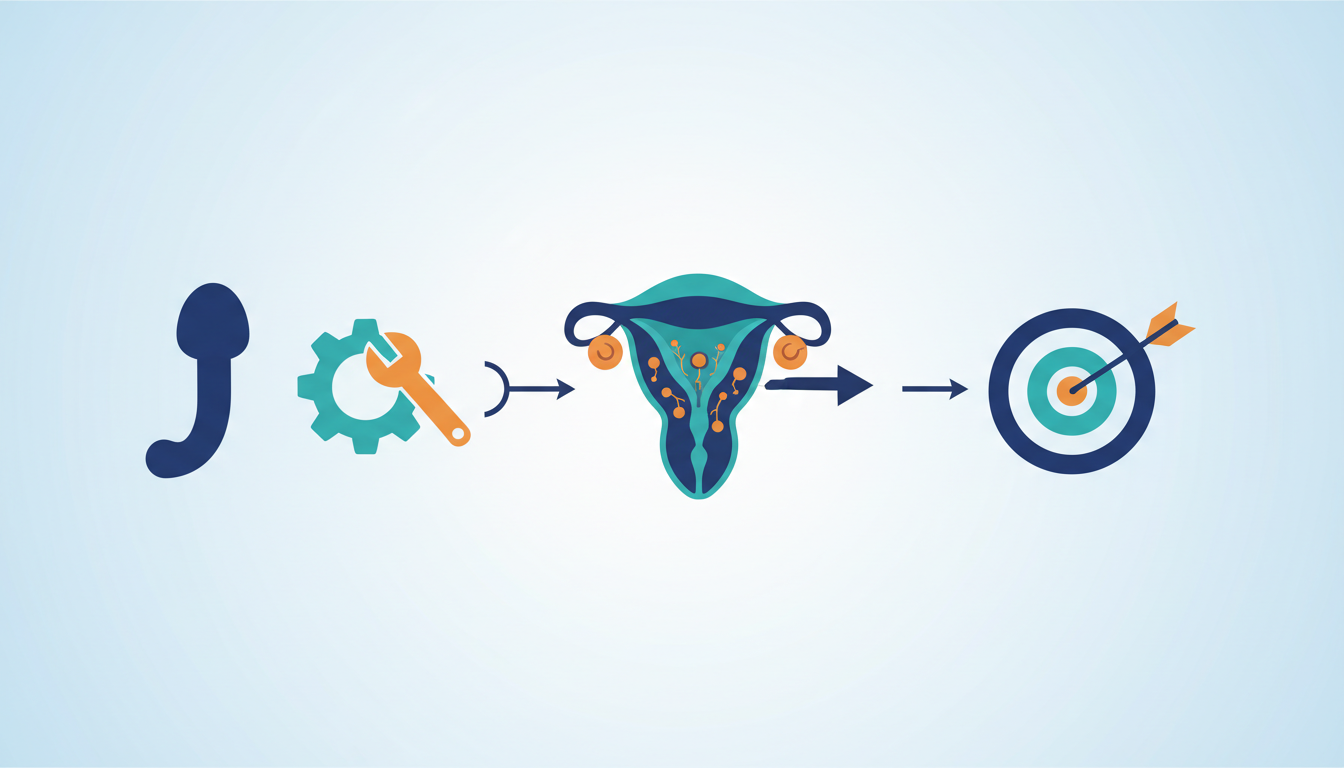
Aroused vaginal canals typically span 4 to 5 inches. This creates a functional limit that makes extra penile length mechanically unnecessary. Penetration past this boundary often causes cervical collision instead of improved stimulation, setting a hard stop for proven sexual mechanics. Fixating only on linear extension misses the point where girth frequently drives satisfaction more than depth does. Studies show that although length dominates public conversation, sexual efficacy depends on more than internal measurements.
Sexual satisfaction arises from various sources beyond simple insertion. Experts stress that sex doesn't begin and end with penetration, involving oral, manual, and psychological components that circumvent depth limits completely. A 2006 study published in *Psychology of Men & Masculinities* found that 68 percent of partners value overall technique over specific numbers, confirming the adequacy of the average 5-inch dimension.
Optimizing for the 4-to-5-inch zone prevents injury while sustaining high satisfaction levels. Pushing beyond this biological opening yields diminishing returns and raises the likelihood of discomfort. Lying face down with legs together generates a tighter fit that boosts friction for a 5-inch penis. This prone position removes the need for excessive depth by compressing the vaginal canal, letting average length stimulate concentrated nerve endings effectively. Placing a sex pillow under the hips adjusts pelvic tilt to straighten the internal path, ensuring full contact without demanding extra inches. Such mechanical alignment emphasizes girth perception over linear extension, solving satisfaction issues through geometry rather than size increases.
Regional anthropometric data shows the United States average at 5.61 inches, yet a 5-inch dimension stays functionally sufficient when usage is optimized. The Americas region displays the largest stretched length worldwide, but local differences do not determine individual compatibility during intercourse. Note that 68 percent of men fall between 4.5 and 5.8 inches, making this method the for most people. Grinding motions rather than thrusting keep stimulation constant, bypassing the constraint of shorter reach. This strategy fixes perceived partner satisfaction problems by changing the entry angle instead of pursuing impossible length.
Girth Versus Length: Why 4.59 Inches of Circumference Drives Fullness
Clinical measurements put average erect girth at 4.59 inches. Cultural stories fixate on length, yet sexual satisfaction links more strongly to shaft width because vaginal nerve endings cluster near the entrance rather than the deepest vault. Partners often rate girth as the improved parameter for pleasure, creating a functional cost where extra length produces diminishing returns compared to increased diameter.
Emerging data suggests preferred dimensions range between 4.8 and 5.0 inches, showing the statistical mean slightly falls short of idealized preferences. Focusing solely on linear extension ignores the mechanical reality that cervical collision causes pain rather than pleasure when exceeding natural limits. Optimizing for girth maximizes friction-based stimulation but demands careful lubrication management to avoid discomfort, whereas prioritizing length risks missing high-sensitivity zones entirely. Most partners gain greater satisfaction from the stretching sensation of adequate width than from deep thrusting that misses clustered mechanoreceptors. This anatomical constraint makes length anxiety largely irrelevant for functional compatibility.
Optimizing Sexual Satisfaction Through Positioning and Communication
How Sex Pillows Tilt the Pelvis to Straighten the Vaginal Canal
A wedge placed under the sacrum tilts the pelvis forward, aligning the vaginal axis for optimal depth. This mechanical adjustment straightens the internal canal so a standard 5-inch dimension reaches the anterior wall without requiring extra length. Experts note that 90% of penises fall within average ranges, making angular correction more proven than pursuing unrealistic size goals.
- Position the firm foam wedge directly under the receiving partner's hips to elevate the pelvis.
- Extend the legs over the penetrating partner's shoulders to further open the pelvic inlet.
- Align the spine to ensure the vaginal canal presents a straight path rather than a curved obstruction.
Concentrated nerve endings near the entrance respond to anatomy rather than sheer size. Clinical analysis shows girth. Comfort presents a constraint; excessive elevation strains the lower back if the wedge lacks proper density. Operators must balance pelvic tilt with partner stability to maintain the tighter fit required for maximum stimulation. Flaccid measurements vary widely, yet erect length stabilizes for most users, confirming that positioning solves the majority of depth complaints. Partners seeking unnecessary surgical interventions ignore this geometric solution and accept avoidable risks.
Executing the Prone Position with Legs Together for a Tighter Fit
Lying face down with legs pressed together compresses the vaginal canal to maximize friction without requiring extra length. This mechanical constraint creates a tighter fit compensating for average dimensions by increasing sensory input through circumference rather than depth.
- Place the receiving partner prone on a firm surface with knees touching to narrow the pelvic opening.
- Insert slowly while maintaining leg compression to prevent air gaps that reduce tactile resistance.
- Execute grinding motions in a circular pattern instead of linear thrusting to sustain constant contact.
- Adjust hip elevation using a wedge if the angle causes the penis to slip out during movement.
Rotation addresses the common failure mode where penis slipping out disrupts rhythm and reduces satisfaction. Grinding motions replace in-and-out thrusting to use compressed geometry for sustained stimulation. Reduced visual access for the penetrating partner creates a limitation, requiring verbal communication to confirm comfort levels. Consistent pressure takes priority over range of motion, ensuring nerve endings near the entrance receive maximum stimulation. Operators ignoring this geometric advantage waste potential satisfaction by chasing depth limits that anatomy rarely supports.
Implementation: Verifying Position Compatibility for a 5-Inch Penis
Validate position selection by matching the 5-inch shaft to the 4-to-5-inch aroused vaginal depth before engagement.
- Confirm the receiving partner's arousal state to ensure natural canal elongation matches available length.
- Select prone variations where legs remain together to create a tighter fit without requiring extra inches.
- Apply pelvic tilting using a wedge to straighten the internal path for maximum anterior wall contact.
| Position Variant | Depth Requirement | Friction Mechanism |
|---|---|---|
| Standard Missionary | High | Variable air gaps |
| Prone Bone | Low | Leg compression |
| Elevated Hips | Medium | Angular alignment |
Shifting focus from length to girth. The persistent six-inch myth distorts expectations, causing partners to overlook proven geometrical adjustments in favor of impossible biological standards. Grinding motions prioritize stimulation zones aligned with average anatomical dimensions. This approach eliminates the frustration of bottoming out while maximizing tactile feedback through circumference rather than linear extension.
About
Dr. Ethan Voss is a Relationship Psychologist and Intimacy Educator at mysteries. Love, specializing in the neuroscience of desire and attachment theory. His extensive background in clinical psychology and research at the University of Amsterdam uniquely qualifies him to address misconceptions surrounding penis size. By analyzing how societal myths impact individual self-perception and relationship dynamics, Dr. Voss bridges the gap between clinical data and emotional well-being. His daily work involves helping couples navigate insecurities rooted in unrealistic media standards, making him an ideal voice to debunk the "six-inch myth" using evidence-based facts. At mysteries. Love, a platform dedicated to non-judgmental sex education, he applies this expertise to normalize diverse body types. This article reflects his commitment to replacing anxiety with scientific understanding, ensuring readers recognize that a 5-inch measurement falls squarely within the healthy, global average established by rigorous medical review.
Conclusion
Scaling these geometric adjustments reveals a critical friction point: psychological inertia often overrides anatomical optimization. Couples frequently revert to deep-thrusting habits driven by internalized media standards, sacrificing the sustained pressure that actually drives satisfaction. The operational cost of ignoring this mismatch is physical discomfort and a measurable decline in mutual confidence during intimacy. While the data confirms that 90% of anatomy falls within average ranges, the real barrier remains the unexamined belief that depth equals quality. This misconception creates a self-fulfilling prophecy where partners chase unreachable metrics instead of mastering available mechanics.
You must explicitly decouple performance validation from linear depth by next month. Commit to a protocol where grinding mechanics replace thrusting as the default rhythm for all encounters until new neural pathways form. Do not wait for "perfect" conditions to test this; the window for recalibrating expectation closes as anxiety hardens into routine. Start by auditing your current positional repertoire this week: eliminate any variation relying on full insertion depth and substitute it with a pelvic-tilt modification that prioritizes anterior wall contact. Measure success solely by friction consistency rather than range of motion. This immediate pivot transforms biological reality from a perceived deficit into a functional advantage, grounding your sexual practice in verifiable comfort rather than abstract myths.
Frequently Asked Questions
Only a tiny fraction of men exceed this arbitrary length marker. Research confirms that just 5% of the male population possesses an erect length greater than 6.3 inches globally.
These devices offer no permanent value for the cost incurred by users. They create only temporary size increases through edema, providing zero lasting structural change to penile tissue.
Men waste significant financial resources pursuing these ineffective and often dangerous procedures. This expenditure stems directly from misconceptions about normalcy rather than any actual medical necessity for intervention.
Penile implants typically result in a perceived length loss during the recovery process. Patients undergoing this specific surgery often experience a reduction of 0.5 cm in measured size post-operation.
Voluntary surveys consistently inflate average figures compared to verified clinical findings. Individuals frequently exaggerate their dimensions by up to two inches when reporting anonymously without medical supervision.